Should You Buy a Space Heater with a Thermostat?
Yes, buy a space heater with a thermostat if you will use it for more than a few minutes at a time or want steadier room temperature. Skip it only for occasional, close-range spot warming. Without one, rooms can swing between too hot and too cool, and you may waste energy chasing comfort. Here’s how a thermostat affects comfort, runtime, and safety, and when it is worth paying for.
Thermostats for steady vs quick heating needs
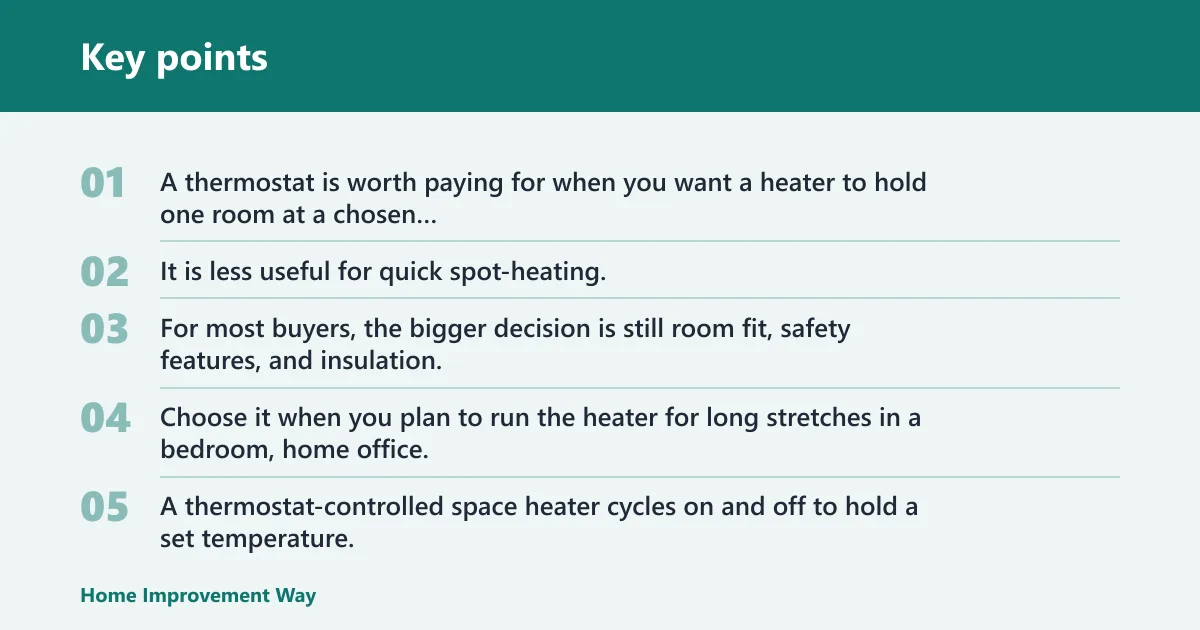

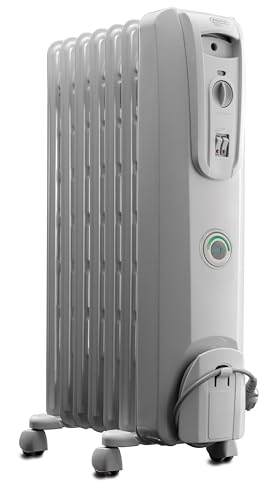

A thermostat is worth paying for when you want a heater to hold one room at a chosen temperature instead of running flat out. It is less useful for quick spot-heating, where you only want warmth within a short distance, roughly about 4.5 feet. For most buyers, the bigger decision is still room fit, safety features, and insulation.
When the thermostat matters most
Choose it when you plan to run the heater for long stretches in a bedroom, home office, or other small room that you use often. A thermostat-controlled space heater cycles on and off to hold a set temperature, often through auto mode or similar temperature controls. That feels steadier than a simple on/off heater in repeated use.
When a basic control is enough
A high/low switch or manual setting can be enough if you only need brief, direct warmth while you sit near the heater. In that case, the thermostat adds convenience, not much performance. Space heaters are for supplemental heat in small, targeted spaces, not for heating an entire home.
📊 In the tip-over test, a heater earns a perfect score if it shuts off within 10 seconds. Source: Space Heater Buying Guide.
What a space heater thermostat actually does
A thermostat does one job: it watches the sensed temperature and turns the heater on and off to stay near your target setting. That can cut overheating in the room and reduce wasted runtime. It does not change the heater’s basic output limit, and it does not replace safety cutoffs. (Wikipedia)
How cycling on and off works
When the room is below the setpoint, the heater runs. When the sensed temperature reaches that target, it shuts off or drops to a lower state. As the room cools, it starts again. That cycling is normal, and it is why a thermostat can feel steadier than a heater that only has fixed heat levels.
Thermostat control versus high/low settings
A simple high/low control changes output level, but it does not always hold a room near one temperature. A thermostat tries to keep a target. That difference matters most in a closed room where you want comfort without constantly adjusting the knob. It matters less for short, close-range use.
Programmable thermostat versus simple temperature control
A programmable thermostat lets you set on/off times, which can reduce unnecessary runtime if you use the heater at the same times each day. It may add cost to the heater, and it is still mainly a comfort and convenience feature rather than a safety feature. It does not make a heater inherently safer.
Space heater thermostat decision table
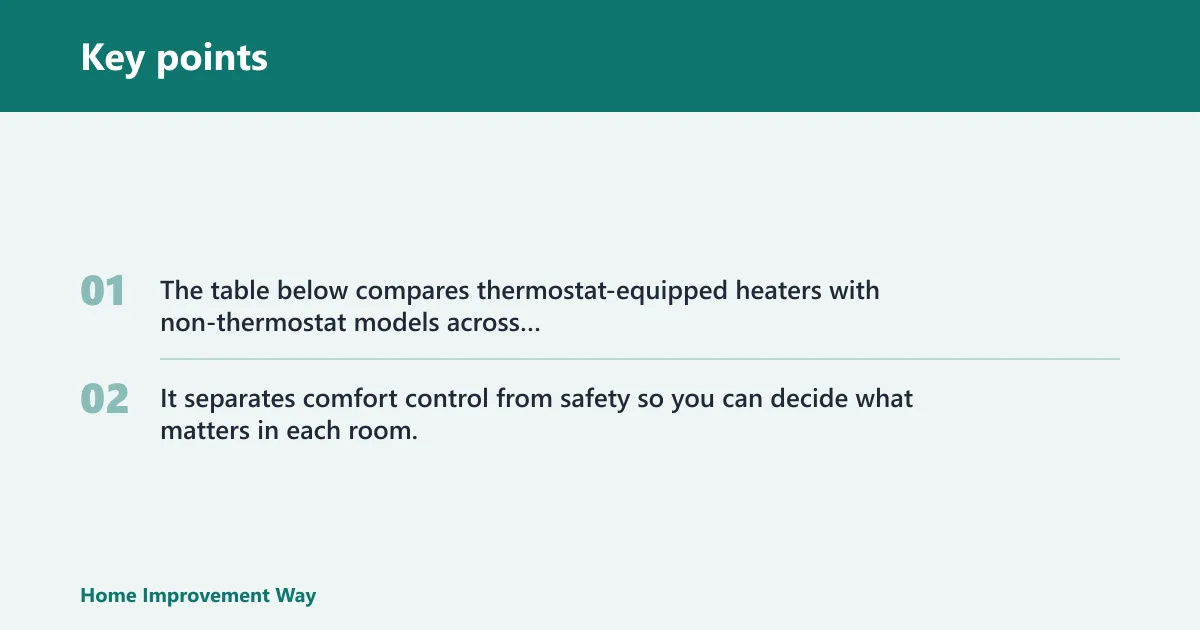
The table below compares thermostat-equipped heaters with non-thermostat models across common use cases. It separates comfort control from safety so you can decide what matters in each room.
| Use case | Recommended heater type | Is a thermostat worth paying for? | Priority safety features | Likely downside | Buy / don’t-buy recommendation |
|---|---|---|---|---|---|
| Bedroom | Oil-filled or quiet ceramic | Yes, if you want steadier sleep comfort | Tip-over shutoff, overheat protection, timer | Can cycle on and off through the night and disturb sleep | Buy one with a thermostat and timer; avoid overnight use if you can |
| Home office | Ceramic or radiant | Usually yes | Tip-over shutoff, overheat protection | Thermostat may react after you feel warm or cool if the sensor sits poorly | Buy if you work there for long blocks; otherwise a simple model may be enough |
| Drafty room | Ceramic with strong fan or oil-filled | Yes, but only after air leaks are reduced | Tip-over shutoff, overheat protection | Short cycling and overshoot are common near drafts and cold walls | Buy only after sealing leaks; otherwise thermostat control will feel unstable |
| Bathroom | Portable heater rated for damp areas, if allowed by the maker | Usually not the main reason to buy | Tip-over shutoff, overheat protection, water-safe placement | Moisture and cramped space raise risk; many units are not suited here | Don’t buy based on the thermostat; buy only a model meant for that location |
| Basement | Oil-filled or ceramic | Yes, if the space is occupied for long periods | Tip-over shutoff, overheat protection | Cold concrete and leaks can make the sensor read poorly | Buy if you can improve insulation; otherwise the heater may work harder than expected |
| Overnight use | Oil-filled with timer, if used at all | Not enough by itself | Tip-over shutoff, overheat protection, timer | Night use still carries risk even with a thermostat | Don’t buy one expecting safe all-night operation; a timer is the better control |
Does a thermostat save electricity?
Sometimes, yes. A thermostat and timer can help avoid overheating a room or wasting electricity by shutting the heater off when the target temperature is reached. But savings are not guaranteed. They depend on room size, drafts, insulation, the setpoint you choose, and how often the heater cycles.
Why less runtime can help
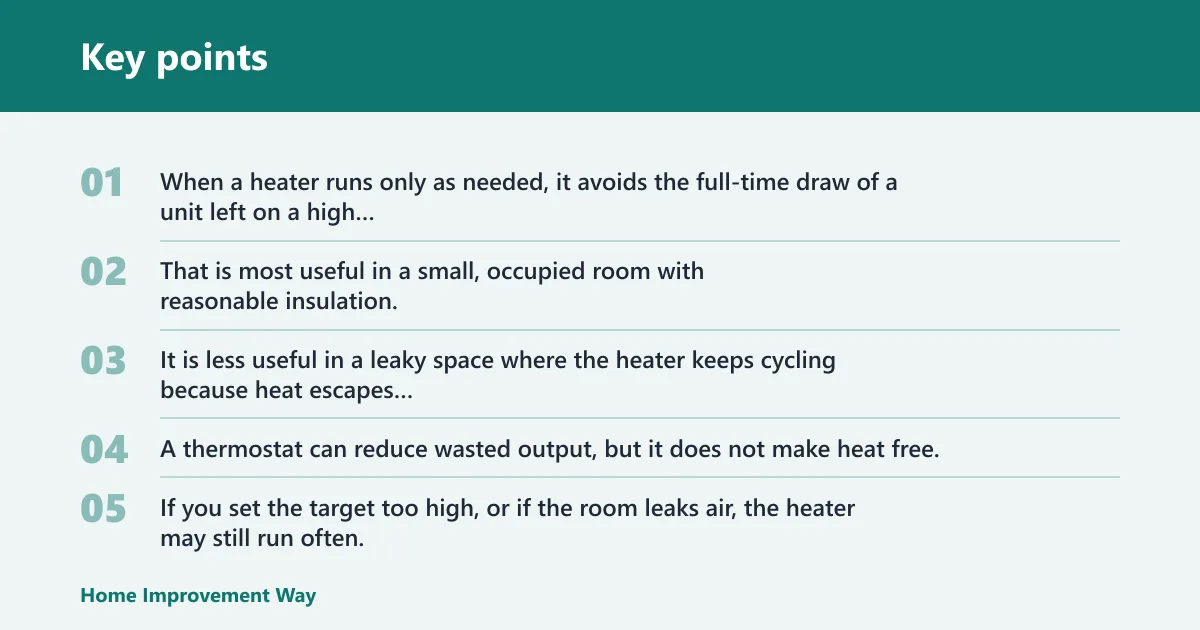
When a heater runs only as needed, it avoids the full-time draw of a unit left on a high setting. That is most useful in a small, occupied room with reasonable insulation. It is less useful in a leaky space where the heater keeps cycling because heat escapes quickly.
Why savings are not guaranteed
A thermostat can reduce wasted output, but it does not make heat free. If you set the target too high, or if the room leaks air, the heater may still run often. A poor sensor location can also cause extra cycling or overshoot, which wastes comfort and may waste power too.
How insulation and drafts change the result
Before relying on a space heater, Safe Electricity recommends sealing air leaks and adding insulation. That advice matters because a better-sealed room needs less supplemental heat. A heater may be reasonable for a home office or bedroom after efficiency fixes, but it is a poor substitute for them.
Picture a 120-square-foot office with a small draft around a window. A thermostat may help hold a set temperature once the leak is sealed. Leave the leak open, and the heater will cycle more often, feel less steady, and may cost more to run than expected.
Is a thermostat safer on a space heater?
No. A thermostat improves comfort control, not core fire safety. The features that matter most are tip-over shutoff and overheat protection, plus a timer if you want the heater to stop automatically. A thermostat may reduce unnecessary runtime, but it is not a substitute for those safety cutoffs.
Why tip-over shutoff matters more
Tip-over shutoff is a critical fire-safety feature. In Consumer Reports testing, a heater earns a perfect score in the tip-over test if it shuts off within 10 seconds. That matters more than thermostat control because a knocked-over heater can become dangerous even at a low setting.
Why overheat protection is nonnegotiable
Overheat protection shuts the unit down when internal temperatures rise too high. That is a basic safety standard for consumer space heaters. If a model lacks it, skip it. A thermostat cannot protect a heater from blocked airflow, internal failure, or unsafe placement.
Why a timer still matters for safety
A timer can turn a heater off automatically after a set time, which helps reduce overnight risk. That is useful because family guidance commonly advises against leaving a space heater on overnight. A timer is not a guarantee, but it is a better safeguard than memory alone.
Suppose you set a bedroom heater to 68 degrees and fall asleep. If the room warms quickly, the thermostat may shut the unit off, then restart later as the room cools. A timer adds a second layer of control, which is why it matters even when the heater has auto mode.
Which heater types benefit most?
Thermostats are most useful when a heater is meant to stay on for long periods and hold a room temperature. They matter less for quick, direct warmth. The heater type changes how noticeable the thermostat feels, how much noise you hear, and how steady the warmth feels.
Ceramic heaters
Ceramic heaters often benefit from thermostats because they heat quickly and are common for supplemental use. A thermostat helps keep the room from swinging too hot after the initial warm-up. They are a strong fit for offices and bedrooms where you want moderate, repeatable heat.
Radiant and infrared heaters
Radiant and infrared heaters are often better for spot-heating than for trying to warm an entire room evenly. A thermostat can still help, but the user usually feels the heat first, not the room air. If your goal is personal warmth within about 4.5 feet, a thermostat is less important than safe placement and direct output.
Oil-filled heaters
Oil-filled heaters are often considered safer because they do not have exposed heating elements. They also tend to be quieter and better suited to longer run times. A thermostat is useful here because these heaters are often chosen for steady background warmth in bedrooms, basements, and offices.
What temperature should you set a space heater thermostat to?
Start with the lowest comfortable setting for the room you are occupying. There is no universal number that fits every space, but the right setpoint is usually the one that keeps you comfortable without making the heater cycle constantly. Lower settings also reduce the chance of overheating the room.
Comfort setpoints for occupied rooms
For a bedroom or office, choose the temperature that feels comfortable when you are actually in the room, then adjust slowly. A smaller change can matter more than people expect. If the room feels stuffy or the heater runs too often, lower the setpoint before buying a bigger heater.
Lower settings for spot-heating
If you only want warmth at a desk or reading chair, a lower setting often works better than trying to heat the whole room. Spot-heating matters more than whole-room output for some buyers. In that case, the thermostat is mostly there to prevent the heater from running hotter than needed.
Why the thermostat sensor location matters
Thermostat sensors can misread the room if they sit near drafts, cold walls, or the heater’s own exhaust. That can lead to short cycling or overshoot. If the heater keeps turning on and off too quickly, move it away from windows, vents, and exterior walls before changing the setpoint.
Frequently asked questions
Should I buy a space heater with a thermostat?
Buy one if you plan to use the heater for longer stretches or want steadier comfort in a small room. Skip it only if you mainly need brief spot heat. The thermostat helps with control, but room fit, tip-over shutoff, and overheat protection matter more.
Do space heaters with thermostats save electricity?
They can, because they may reduce unnecessary runtime and keep you from overheating the room. The savings are situational, though. Drafts, poor insulation, and a high setpoint can erase much of the benefit. A timer can help too, but it is not a guarantee of lower bills.
Can a space heater with a thermostat heat a room evenly?
More evenly than a heater without one, sometimes, but not perfectly. Thermostats reduce big temperature swings, yet drafts, room shape, and sensor placement still affect results. These heaters are best for supplemental heat in one room, not for whole-house evenness.
Are programmable thermostats on space heaters worth it?
They can be worth it if you use the heater on a repeat schedule, such as mornings in a home office. They add convenience and may reduce wasted runtime. If you only turn the heater on occasionally, simple temperature control is usually enough.
Can I leave a space heater with a thermostat on overnight?
Usually no. Family guidance advises against overnight use for safety reasons, even when the heater has a thermostat. If you do use one in a bedroom, a timer is the safer control to look for. Tip-over shutoff and overheat protection are still required, not optional.
What features matter most when buying a space heater?
Start with tip-over shutoff, overheat protection, and the right heater type for the room. Then look at a thermostat, timer, noise, and portability. Match the heater to the space, not the other way around. A 1500-watt electric space heater is a common maximum wattage for portable units, but size and room fit still matter more than the number alone.
Sponsored / affiliate links. As an Amazon Associate I earn from qualifying purchases. I may earn additional commission from eligible campaigns.
 AZEUS Portable AC and Heater Unit, 420W 110V Compact Air Conditioner for Tent RV Truck Cabin and Small Room, 1400W Cooling, 800W Heating, Remote Control, Dehumidifier, Sleep Timer, Champagne
 Faryuan Bladeless Heater Fan, 25inch Heating & Cooling & Filter Combo Tower Fan 80° Oscillating with Remote, 9H Timer, 8 Speeds, Portable Quiet for Indoor, Bedroom, Home Office Room, White&Sliver