Can You Use a Space Heater in a Bathroom?
You can use a space heater in a bathroom only if the heater’s manual and listing allow bathroom or damp-location use, the outlet is GFCI-protected, and the unit stays far from water, towels, and splash zones. Get that wrong, and you risk shock, fire, or a tripped circuit. This guide separates safe setups from unsafe ones.
This guide is part of our Space Heaters, Fireplaces and Winter Humidity Guide series.
When bathroom use is off-limits
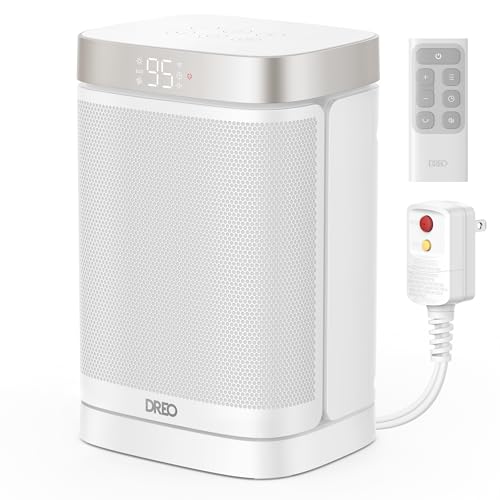
- Designed and rated safer for bathroom use
- Quiet and fast heating airflow structure
- Multiple energy-efficient modes and thermostat settings
Start with the heater’s manual. Many portable space heaters are not approved for bathrooms, and that rule comes before any clearance or feature check. If the manual forbids bathroom use, do not look for a workaround.
What changes by bathroom layout
A bathroom is not one hazard zone. A half-bath with only a toilet and sink is different from a full bath with a tub or shower, and a shower-adjacent layout adds spray, steam, and wet-floor risk. The heater’s listing must match the room and the exposure level.
A bathroom-safe setup depends on three things: the exact model, the bathroom layout, and whether the heater is listed for damp or wet-area use. A portable electric space heater that may be acceptable in a bedroom may still be prohibited in a bathroom.
When the answer is no
The answer is no if the manual bans bathroom placement, if you cannot verify GFCI protection at the outlet, if the room has active splash exposure, or if the heater would sit in a path where it could be knocked over. Do not treat an ALCI plug as blanket permission.
📊 Bathrooms built since 1975 require GFCI outlets. Source: Consumerreports.
Bathroom heater decision table
| Bathroom condition | Minimum safety requirement | Acceptable heater features | Do-not-use triggers |
|---|---|---|---|
| Half-bath | Heater manual allows bathroom use; outlet is GFCI-protected; dry, level floor only | Tip-over switch, thermal cutoff, overheat shut-off, listed for damp-location use if the manual says so | Manual forbids bathroom use, no verified GFCI, counter or shelf placement, extension cord use |
| Full bath | Manual allows bathroom use; no active splash or puddles; unit stays out of traffic paths | Bathroom-safe space heater features, moisture-aware use allowed by the manufacturer, closed-case design | Shower spray, wet tile, towels draped near the heater, unattended operation |
| Shower-adjacent bath | Manual allows bathroom use and local zone rules permit the location | Strong shock protection, tip-over switch, thermal cutoff, overheat shut-off | Any placement where spray, steam, or splash can reach the unit |
| Older home without verified GFCI | Confirm the outlet has test and reset buttons and works correctly | Only a heater whose manual allows bathroom use and whose plug is suited to the room | Cannot confirm GFCI, outlet feels warm, breaker trips, or the bathroom circuit is unclear |
| Wall-mounted vs portable options | Wall-mounted model must be listed for bathroom or damp-area installation; portable model must be allowed by the manual | Wall-mounted heater, infrared heater, or other unit specifically listed for the location; portable only if the listing allows it | Generic portable heater used like a permanent fixture, or any unit mounted or placed outside its listing |
What makes a bathroom heater safer?
Look for built-in shock protection, tip-over protection, overheat shut-off, and thermal cutoff. In wet-area use, the manufacturer should also specify moisture-aware placement rules. A bathroom-safe space heater is not defined by size alone; it is defined by the listing and the protections built into the model.
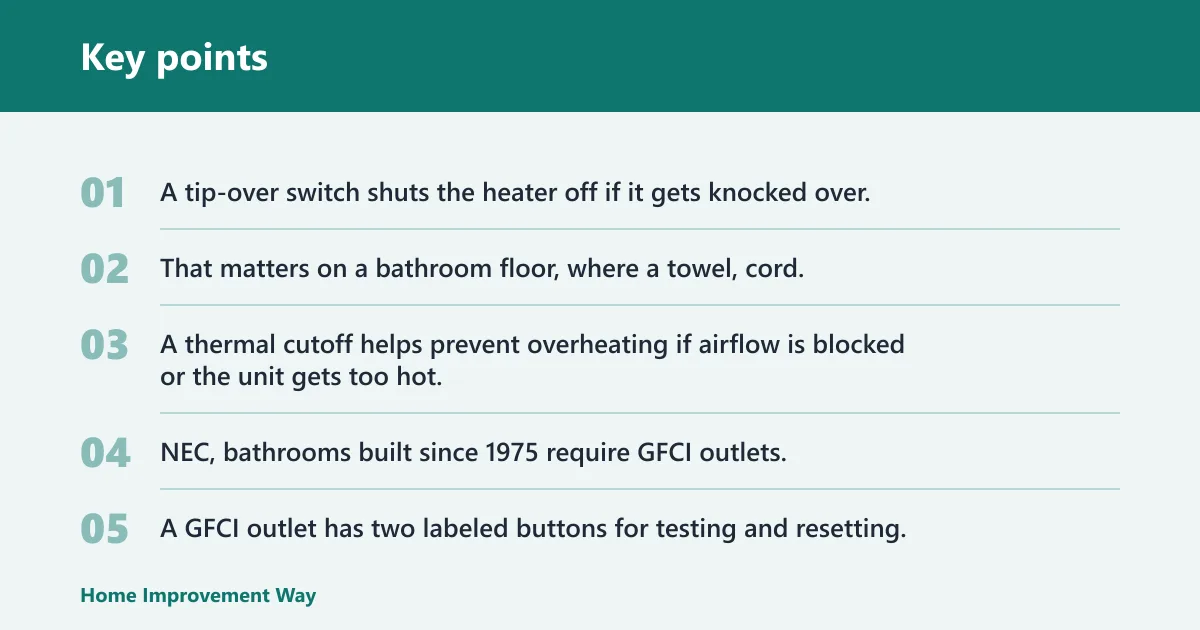
Tip-over switch and thermal cutoff
A tip-over switch shuts the heater off if it gets knocked over. That matters on a bathroom floor, where a towel, cord, or slippery tile can make a portable heater unstable. A thermal cutoff helps prevent overheating if airflow is blocked or the unit gets too hot.
GFCI outlet and ALCI plug
In the U.S. NEC, bathrooms built since 1975 require GFCI outlets. A GFCI outlet has two labeled buttons for testing and resetting, and it shuts off when it detects current leakage. That provides shock protection, but it does not make every heater safe for every bathroom.
An ALCI plug, or appliance leakage current interrupter, adds shock protection. It is commonly used on hair dryers and is rare on space heaters; Consumer Reports notes that only two of more than 80 rated space heaters had ALCI plugs. Even then, an ALCI does not override a manual ban on bathroom placement.
Infrared, ceramic, and wall-mounted options
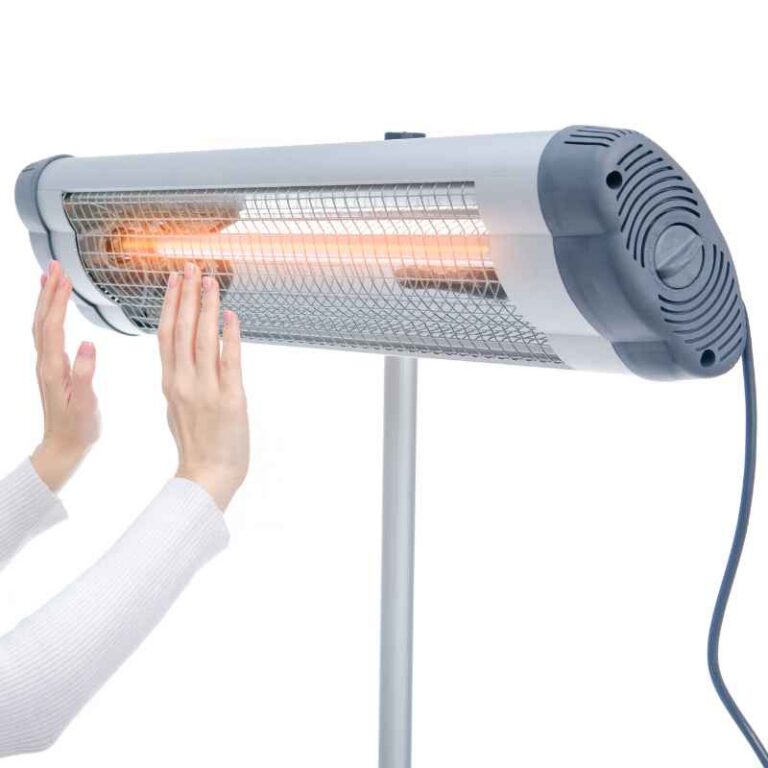
Infrared heaters heat people and objects directly, so they can feel fast in a small space. Ceramic heaters are compact, heat quickly, and often use a fan to move warm air. Wall-mounted bathroom heaters keep the heating element off the floor, which can help in rooms where a portable unit does not belong.
How close can it be to water?
There is no universal distance that makes every heater safe. Placement depends on the heater’s manual, its listing, and bathroom zone rules. Keep the unit away from tubs, showers, and sinks, and use it only on a dry, level floor if the manufacturer allows bathroom use.
Tubs and showers
Bathroom-safe placement should avoid puddles and splash areas. A heater near a tub or shower is a bad idea if spray can reach it, if steam condenses on the floor, or if a towel or mat can slide into it. If the manual gives a location limit, follow that exact instruction.
Sinks and countertops
Do not set a portable heater on a sink edge, vanity, counter, shelf, or toilet tank. Those spots raise tip-over risk and place the unit closer to water. A countertop also makes it easier for a cord to hang where it should not.
Dry floor placement
HeaterGuides advises placing bathroom heaters on dry, level surfaces only. That is the only floor placement worth considering, and only if the manual allows bathroom use. If the floor is wet, slick, or recently splashed, do not turn the heater on.
Picture a small full bath with a shower curtain, a tile floor, and a portable ceramic heater on the vanity. The heater may seem out of the splash zone, but the vanity is still the wrong surface. A towel falling off the edge can block airflow or pull the unit down.
Can you use a space heater in the bathroom while showering?
Do not run a bathroom heater while showering unless the manufacturer specifically allows wet-area use and the installation appears to meet local requirements. Steam, splash, and wet surfaces raise shock and slip risk. The safest default is to keep the heater off until the room is dry.
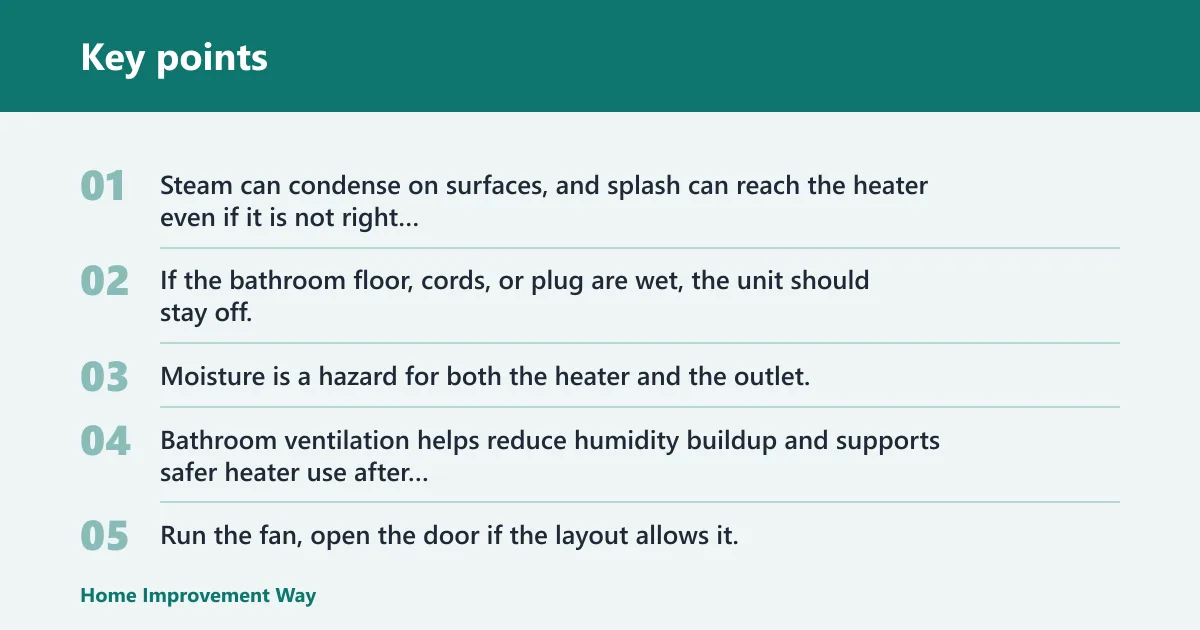
Splash, steam, and wet-surface risk
Steam can condense on surfaces, and splash can reach the heater even if it is not right beside the shower. If the bathroom floor, cords, or plug are wet, the unit should stay off. Moisture is a hazard for both the heater and the outlet.
When ventilation matters
Bathroom ventilation helps reduce humidity buildup and supports safer heater use after showering. Run the fan, open the door if the layout allows it, and wait until the room is dry enough that no puddles or visible condensation remain near the heater’s location.
Why “after the shower” is not a blanket yes
“After the shower” is not a safe rule by itself. Residual steam and splash can remain on floors, mirrors, and fixtures. A heater should stay off until the room is dry and the unit can sit in a permitted location with no water nearby.
A common first-timer mistake is to turn on a compact ceramic heater two minutes after a shower because the mirror looks clear. The mirror is not the issue. The floor by the tub may still be damp, and that is where a knockover or leakage problem can start.
Older home without verified GFCI?
If you cannot verify GFCI protection, stop and confirm the outlet before using any heater in the bathroom. Bathrooms built since 1975 require GFCI outlets in the U.S. NEC, but older homes may have outdated or modified wiring. Without verified protection, do not assume the circuit is safe.
What to verify at the outlet
Look for the test and reset buttons on the receptacle. Press test and then reset if the outlet is known to be on a proper GFCI circuit and the manufacturer’s instructions allow that check. If the outlet does not have those buttons, or if the outlet behaves oddly, do not use the heater there.
What to do if you cannot confirm protection
Do not use the bathroom heater until an electrician confirms the circuit and outlet protection. HVAC Optimizer recommends a dedicated outlet that can handle the required wattage, and it warns against using extension cords with bathroom heaters. A power strip is not a substitute.
When to stop and choose another heating method
If the home has no verified GFCI, if the outlet is overloaded, or if the heater’s manual forbids bathroom use, stop. A wall-mounted bathroom heater, a towel warmer, or heat from another room can be the better choice.
Safer alternatives for a cold bathroom
If a portable heater is not allowed, choose a heat source designed for the room. Wall-mounted bathroom heaters, towel warmers, and whole-room heat from outside the bath can reduce the need to put a portable unit near water.
Wall-mounted bathroom heaters
Wall-mounted bathroom heaters keep the heating element off the floor and can be listed for bathroom use more clearly than a portable unit. They still need proper installation and the correct listing, so check the manufacturer’s instructions before buying or mounting one.
Towel warmers
Towel warmers can take the edge off a cold bathroom and warm linens without placing a portable heater in a wet area. They are not a substitute for whole-room heat, but they can be a better fit when the main goal is comfort after a shower.
Whole-room heat from outside the bath
In some homes, the safer option is to warm the adjacent hall or bedroom and let heat drift in with the door open. That keeps electricity and moisture separated. It also avoids the extra shock risk that comes with a portable heater in a bathroom.
Pre-use checklist
- Check the owner’s manual for bathroom, damp-location, or wet-area permission.
- Confirm the outlet has GFCI protection and the test/reset buttons work.
- Make sure the floor is dry and level.
- Keep the heater away from tubs, showers, sinks, towels, and puddles.
- Do not use extension cords or power strips.
- Confirm the heater has tip-over protection and overheat shut-off if the manual allows bathroom use.
- Do not leave the heater unattended.
- Run ventilation after showering until the room is dry.
Frequently asked questions
Can you use a space heater in a bathroom?
Only if the specific heater’s manual allows bathroom or damp-location use, the outlet is GFCI-protected, and the heater stays away from water and splash zones. Many portable space heaters are not approved for bathrooms, so the manual is the first gate, not the last check.
Can you use an electric heater in a bathroom?
Yes, but only when the heater is listed for the location and the bathroom outlet and layout support that use. Some wall-mounted bathroom heaters and certain infrared or ceramic models are intended for small spaces. A generic portable electric heater is not automatically suitable.
Do bathroom outlets need GFCI protection?
In the U.S. NEC, bathrooms built since 1975 require GFCI outlets. A GFCI outlet has test and reset buttons and shuts off when it detects current leakage. That protection is important in bathrooms, but it does not make every heater acceptable for every location.
How far should a space heater be from a tub or shower?
There is no universal distance that works for every model. Follow the heater manual and the local electrical zone rules first. As a practical matter, keep the heater out of splash areas, away from puddles, and only on a dry, level floor if bathroom use is allowed.
What are safer alternatives to a space heater in a bathroom?
Wall-mounted bathroom heaters are often a better choice when a portable model is not allowed. Towel warmers can add comfort without putting a floor heater near water. If neither option fits, heat the adjacent room and let warm air move into the bathroom instead.
Sponsored / affiliate links. As an Amazon Associate I earn from qualifying purchases. I may earn additional commission from eligible campaigns.
 AZEUS Portable AC and Heater Unit, 420W 110V Compact Air Conditioner for Tent RV Truck Cabin and Small Room, 1400W Cooling, 800W Heating, Remote Control, Dehumidifier, Sleep Timer, ChampagneMEGAWISE Portable Air Conditioner and Heater, 420W 110V Compact AC Unit with Remote Control, 1400W Cooling Capacity, 800W Heating, Dehumidifier, Fan, Sleep Timer, Champagne