Can You Put a Space Heater on Carpet?
Usually no: put a space heater on carpet only if the manufacturer allows it, the unit has a stable, cool base, and the carpet is low-pile and flat; if any of those fail, place it on hard flooring or a rigid board. A bad setup can overheat the carpet, tip the heater, or start a fire. This guide explains which heater types can sit on carpet, how carpet thickness changes the answer, and a quick yes-or-no safety checklist.
This guide is part of our Space Heaters, Fireplaces and Winter Humidity Guide series.
Why carpet makes the floor unstable


Usually no. The final answer depends on the owner’s manual. Carpet is a poor surface because it can make the heater less stable, trap heat under the base, and block airflow at the intake or outlet. If the manual bans soft flooring, follow that rule.
A space heater is a portable electric heating appliance, and it needs a stable, level surface with clearance from combustibles. Carpet can look flat while still compressing under the feet or base, which changes the heater’s stance. Thick carpet, area rugs, and rug pads can raise that risk.
Why the final answer depends on the manual
The manufacturer safety instructions decide the placement rule for that exact model. Some heaters call for hard, level flooring only. Others may allow a low-pile carpet if the base stays stable and all clearance distances are met, but that is a model-specific exception, not a default.
Check the manual for surface restrictions, minimum clearances, and any language about rugs, mats, or soft flooring. If the instructions are unclear, treat carpet as disallowed until you can confirm the rule from the product documentation.
When carpet becomes the wrong surface
Carpet is the wrong surface when the heater rocks, sinks, or sits close to loose fibers, rug fringe, or a pad. It is also the wrong surface if the base covers intake openings or if the heater’s feet do not keep the body level. Those conditions raise tipping and overheating risk.
Even heaters with tip-over shutoff and overheat protection should not be placed on unstable flooring. Those features help stop operation after a problem starts. They do not make a soft, compressible surface safe by themselves.
Why carpet changes the risk
Carpet changes the risk in three ways: it can reduce stability, trap heat under the heater base, and interfere with airflow. All three matter for a small room heater, especially one that runs for long periods in a cold or unconditioned space.
Stability on a soft surface
A stable heater should sit flat and level. Carpet fibers compress unevenly, especially under heavier units or narrow feet, and that can tilt the appliance slightly. A small tilt may be enough to make a heater easier to bump or more likely to move when it vibrates or cycles on and off.
Tip-over shutoff is useful, but it is a backup feature. It stops operation after the heater falls; it does not stop the fall itself.
Heat buildup under the base
Soft flooring can reduce heat dissipation under the heater base. That matters because heat has to go somewhere. If the bottom of the unit sits close to fibers, a rug pad, or a compressed pile, the surface under it can warm more than the same heater on tile or concrete.
This is one reason a rigid board is sometimes used as a safer platform when a manufacturer allows it. The board gives the heater a hard, level surface and separates the base from the carpet below.
Air intake and outlet blockage
Many space heaters need open airflow around the sides, rear, or front. If carpet fibers reach the intake or outlet area, they can restrict the air path or collect dust near hot surfaces. That can trigger overheat protection or create a hotter-than-intended spot at the base.
Overheat protection lowers fire risk by shutting the heater off when internal temperature rises too far. It does not fix blocked airflow, and it does not make a poor placement acceptable.
Which heater type are you using?
The type of heater matters because the base, weight, and airflow pattern change how it behaves on carpet. Ceramic, oil-filled, infrared, and convection heaters do not all sit the same way, and they do not all fail the same way when the floor is soft.
Ceramic heaters
Ceramic heaters often have a lighter body and a fan that moves air through the unit. That can make them more sensitive to intake or outlet blockage from carpet fibers, dust, or an uneven rug edge. A light heater also tends to shift more easily if the surface compresses.
If a ceramic heater requires a hard, level surface in the manual, do not place it on carpet even if the carpet feels firm.
Oil-filled electric heaters
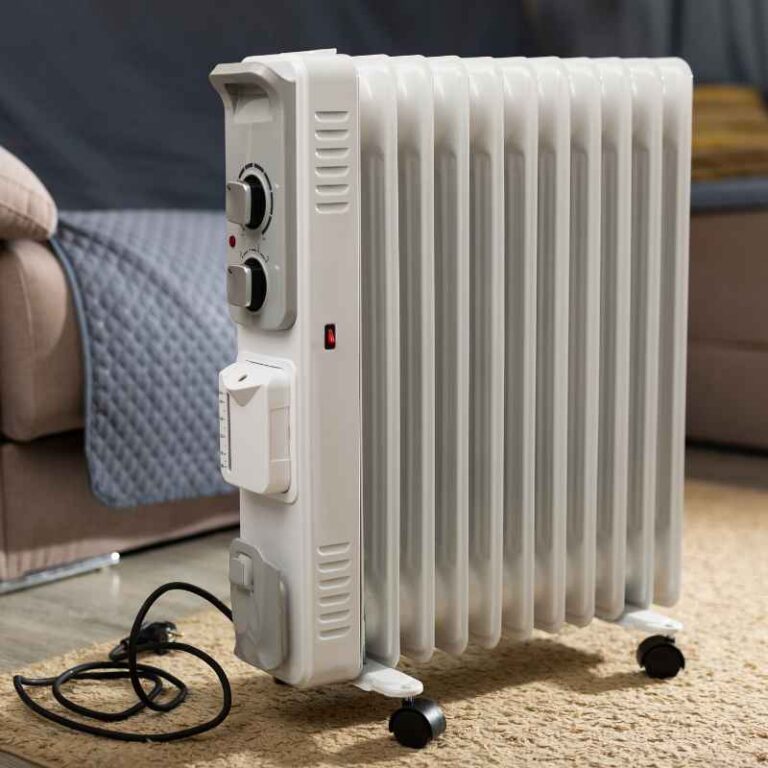
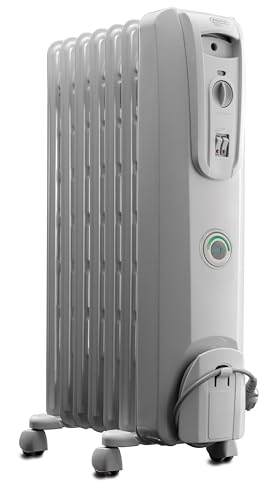
An oil-filled electric space heater is heavier and often has a wider base than many ceramic models, so it may feel more planted on the floor. Even so, it still needs a hard, level surface if the manual calls for one. Weight helps stability, but it does not make soft flooring automatically safe.
Oil-filled heaters give quiet, sustained heat, which is useful in an unconditioned space or a lightly insulated garage. That does not change the placement rule. If the base sits on thick pile, a rug pad, or an uneven area rug, the heater can still tip or trap heat.
Infrared and convection heaters
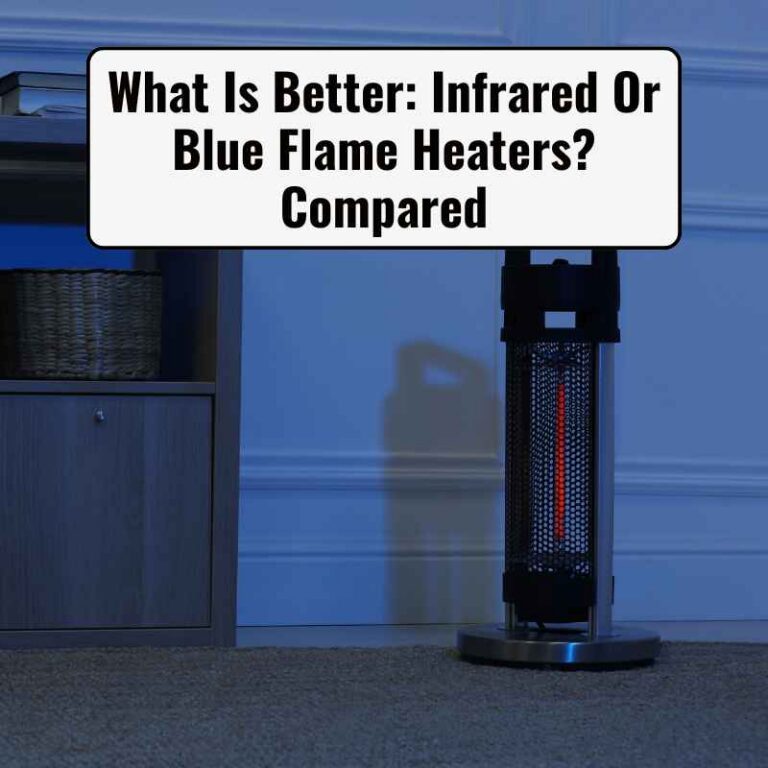
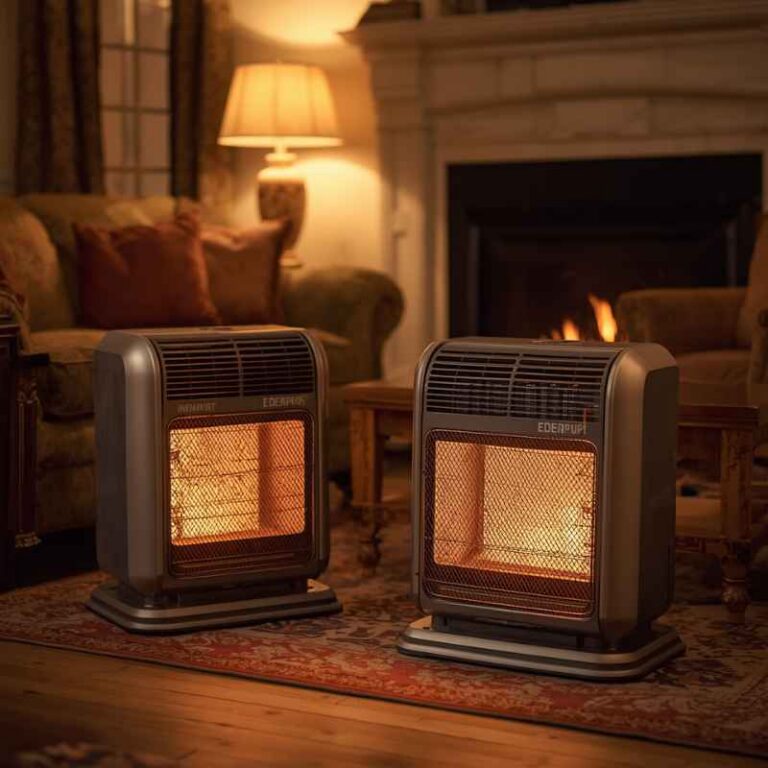
Infrared heaters warm objects and people in front of them, so front clearance matters. Convection heaters move room air across a heated surface, so intake and outlet paths matter. Both types still need a stable base and enough separation from any material that can compress or block flow.
Do not assume a “cooler-feeling” heater can sit on carpet safely. The base and airflow path matter more than the marketing term on the box.
Carpet, rug, or pad: what matters
Low-pile carpet is the least problematic soft surface, but it is still not a free pass. Thick pile carpet, area rugs, and rug pads raise the risk because they compress more, shift more, and can hold heat under the heater base for longer.
Low-pile carpet
Low-pile carpet is flatter and less compressible than thick pile. If the manual explicitly allows soft flooring and the heater sits level with full clearance, this is the closest carpet setup to acceptable. Even then, check for wobble and make sure no intake or outlet is near the fibers.
Thick pile carpet
Thick pile carpet is the higher-risk version of carpet. It can sink under the heater feet, tilt the base, and leave the body less stable than it appears. For most heaters, thick pile carpet should be treated as unsafe unless the manual specifically says otherwise and the heater is on a rigid board.
Area rugs and rug pads
Area rugs and rug pads are often worse than wall-to-wall low-pile carpet because they can bunch, slide, or add extra cushioning. A rug pad under a heater is especially risky: it changes stability and can insulate the bottom of the unit. If the heater sits on a rug, check the rug’s edges and the pad below it, not just the top surface.
Say your oil-filled heater sits in a garage with low-pile carpet over concrete. If the manual allows carpet and the heater stays level on a rigid board, that may be acceptable. Change only one detail to thick pile carpet, and the same setup can become unsafe because the board no longer solves the compression under the rug.
Space heater safety decision table
This table gives a text-only decision aid for common heater and floor combinations. Use it as a screen before you plug anything in, then confirm the manual. If the recommendation says “no,” do not try to make it work by changing the outlet or the timer.
| Heater type | Carpet type | Risk level | Recommendation |
|---|---|---|---|
| Ceramic | Low-pile carpet | Moderate | Only if the manual allows it, the base is level, and intake and outlet paths stay clear; otherwise use hard flooring or a rigid board. |
| Ceramic | Thick pile carpet | High | Do not place directly on carpet; use hard flooring or follow a manual that explicitly approves a rigid board. |
| Ceramic | Rug pad | High | Unsafe in most setups because the pad can shift, compress, and block stability. |
| Oil-filled | Low-pile carpet | Moderate | Possible only with manual approval and a stable, level surface; do not assume the heavier base makes carpet safe. |
| Oil-filled | Thick pile carpet | High | Use hard flooring or a rigid board if the manual permits; otherwise do not use on carpet. |
| Infrared | Low-pile carpet | Moderate | Check front and side clearance carefully; soft flooring is acceptable only if the manual allows it and the base does not rock. |
| Infrared | Area rug or rug pad | High | Do not use directly on the rug or pad unless the manual clearly permits it and the heater remains stable on a rigid platform. |
Unsafe placement conditions
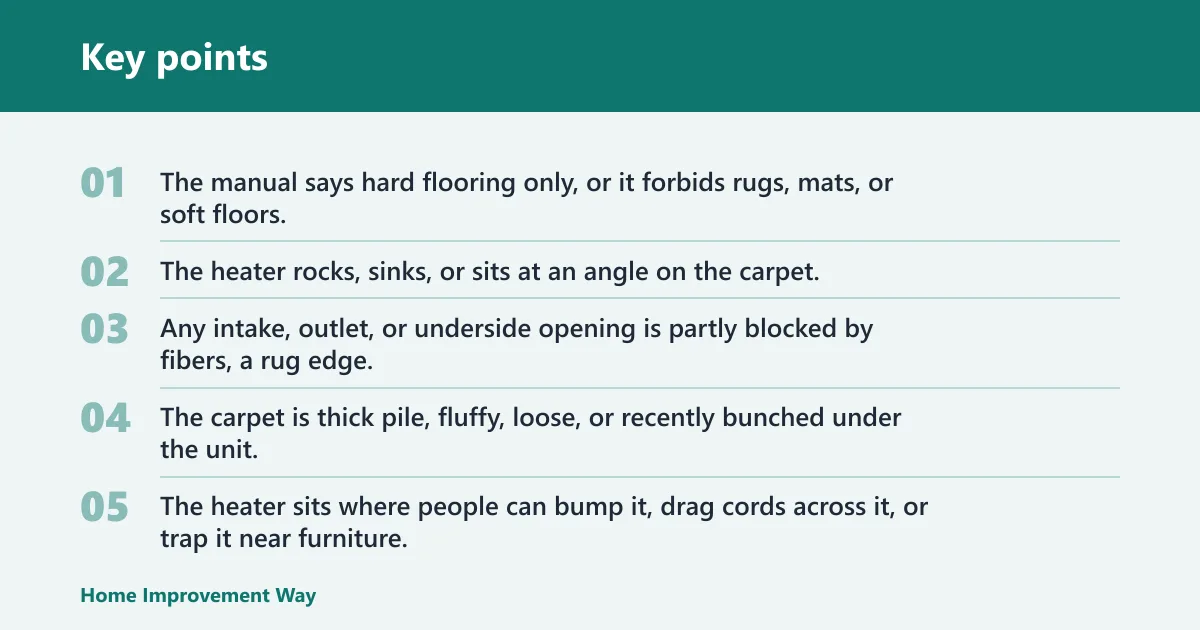
- The manual says hard flooring only, or it forbids rugs, mats, or soft floors.
- The heater rocks, sinks, or sits at an angle on the carpet.
- Any intake, outlet, or underside opening is partly blocked by fibers, a rug edge, or a pad.
- The carpet is thick pile, fluffy, loose, or recently bunched under the unit.
- The heater sits where people can bump it, drag cords across it, or trap it near furniture.
- You plan to bypass the heater’s built-in controls with a timer or smart outlet.
What to check before you plug it
Use this short checklist before any heater goes onto carpet. If one item fails, the safe answer is no. Move the heater to a hard surface or a board that the manual allows.
- Read the manual first. Look for surface rules, clearance distances, and any note about carpet, rugs, or pads.
- Check the surface. The heater should sit flat, level, and stable with no rocking.
- Check clearance. Keep combustible items away from the heater body, front, rear, and sides as the manual requires.
- Check airflow. Make sure carpet fibers, rug edges, or cords are not near the intake or outlet.
- Check safety features. Tip-over shutoff and overheat protection should be present, but treat them as backup features only.
- Check the power setup. Plug the heater directly into a suitable outlet unless the manual allows a specific control device.
Smart plugs and smart outlets
Smart plugs or smart outlets may not be compatible with some heaters, especially high-draw units or heaters that rely on their own controls after an outage. A smart outlet should never be used to override built-in safety controls or to justify a risky carpet setup.
Some heater setups fail to restore operation after a power interruption when a smart outlet is involved. If the heater depends on a timer or remote control, confirm that the manual allows that control method and that it does not bypass tip-over shutoff, overheat protection, or temperature controls.
Suppose a small ceramic heater is placed on a low-pile rug in a home office and connected to a smart outlet. If the outlet cycles power after an outage, the heater may restart in a way the setup did not expect. That is a control problem, not a floor-safety fix.
Frequently asked questions
Can you put a space heater on carpet?
Usually only if the manual says it is allowed and the carpet is low-pile, flat, and stable. Thick pile carpet, rug pads, and loose rugs are a poor choice. A heater should sit level with full clearance and no blocked airflow. If the manual is silent, choose hard flooring.
Can you put a space heater on carpet floor?
Carpet floor is not automatically safe. The key questions are heater type, carpet thickness, and the manufacturer’s placement rule. A heavy oil-filled heater may still need a hard surface, and a fan-driven ceramic heater can be more sensitive to intake blockage. Follow the manual first.
Can you place a space heater on carpet?
Only when the instructions allow it and the heater stays stable on the carpet. Low-pile carpet is less risky than thick pile, but it can still compress under the base. If the unit rocks, tilts, or sits near a rug edge, move it to a hard surface.
Can you use an oil space heater on carpet?
An oil-filled electric space heater is heavier than many other models, which can help stability, but weight does not make carpet safe by itself. Check the manual for surface limits. If the heater must sit on a level, hard surface, do not rely on carpet or a rug pad.
Can you put a portable heater on carpet?
Portable heater is a broad category, so the answer depends on the exact model. Many portable heaters need a stable, level surface and clear space around the body. Carpet can be acceptable only when the manual permits it and the surface does not compress or block airflow.
Can you put a small space heater on carpet?
Small size does not equal lower risk. A small heater can still tip, overheat, or block airflow if the carpet is thick or the base is uneven. Check the manual, then confirm that the unit stands level with no soft material pressing against its underside or openings.
Sponsored / affiliate links. As an Amazon Associate I earn from qualifying purchases. I may earn additional commission from eligible campaigns.
 MEGAWISE Portable Air Conditioner and Heater, 420W 110V Compact AC Unit with Remote Control, 1400W Cooling Capacity, 800W Heating, Dehumidifier, Fan, Sleep Timer, ChampagneAZEUS Portable AC and Heater Unit, 420W 110V Compact Air Conditioner for Tent RV Truck Cabin and Small Room, 1400W Cooling, 800W Heating, Remote Control, Dehumidifier, Sleep Timer, Champagne