What Is Creosote and How Dangerous Is It?
Creosote is a flammable chimney deposit. If buildup reaches about 1/8 inch or more, stop using the fireplace or stove and call a chimney professional. Ignoring it can lead to chimney fires, smoke backup, and costly flue damage. This guide explains what creosote is, how dangerous it gets, and the warning signs that mean you should shut the appliance down.
This guide is part of our Space Heaters, Fireplaces and Winter Humidity Guide series.
What is creosote?
Creosote is the tar-like residue that forms when wood smoke cools in the chimney flue after incomplete combustion. It collects on cooler surfaces inside the flue, along with soot and unburned particles. In chimney settings, it can catch fire, so buildup matters long before the flue is fully blocked. (Familyhandyman)
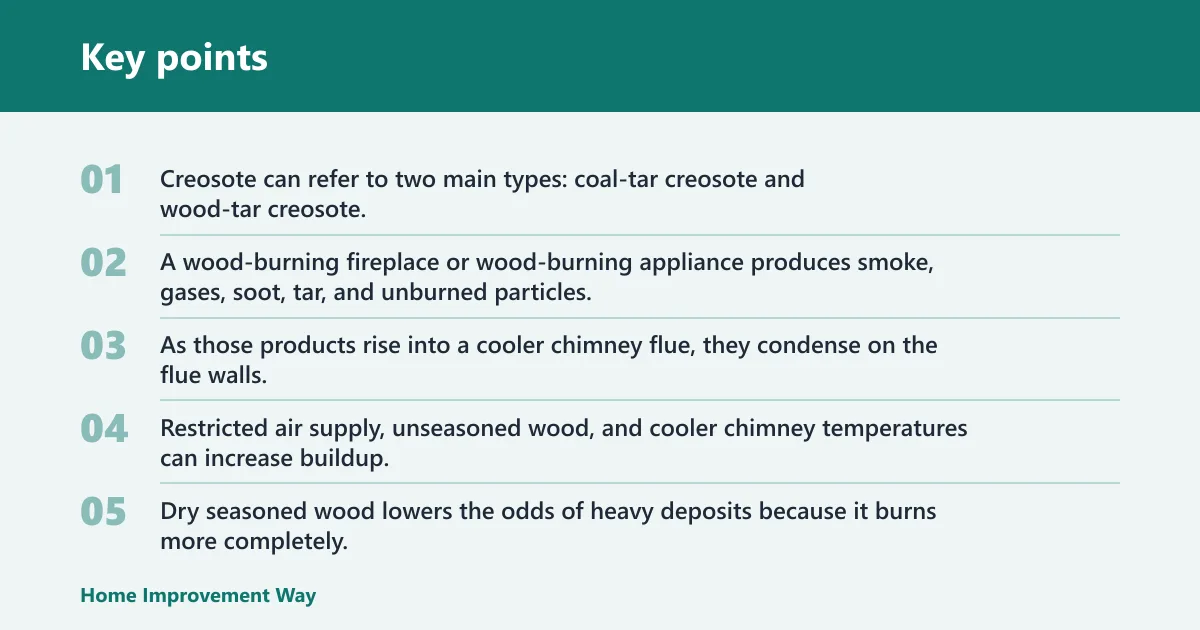
Creosote can refer to two main types: coal-tar creosote and wood-tar creosote. Coal-tar creosote is used as a wood preservative for industrial purposes like railroads and utility poles, while treated wood products are used outdoors against termites, fungi, mites, and other pests. That is a different use from chimney residue, but the name overlap causes confusion.
How it forms in a chimney
A wood-burning fireplace or wood-burning appliance produces smoke, gases, soot, tar, and unburned particles. As those products rise into a cooler chimney flue, they condense on the flue walls. Restricted air supply, unseasoned wood, and cooler chimney temperatures can increase buildup.
Dry seasoned wood lowers the odds of heavy deposits because it burns more completely. HETAS says wood with moisture content under 20% reduces creosote formation. Wet wood does the opposite: it cools the fire, increases smoke, and leaves more tar behind.
Why creosote becomes dangerous
Creosote becomes dangerous when deposits thicken enough to restrict airflow or ignite. A thin film is common. A thicker layer can help feed a chimney fire, reduce draft, and push smoke back into the room. Poor draft also raises the chance that combustion gases, including carbon monoxide, enter the living space instead of leaving through the flue.
Health risk depends on type and exposure. Creosote is a known carcinogen, though average homeowners usually are not exposed to harmful amounts from normal chimney use. Short-term contact can still irritate the eyes, skin, and lungs, especially around soot, dust, or heavy deposits that are disturbed during cleaning.
What creosote buildup looks like
Creosote buildup does not look the same at every stage. Light residue may appear as dry soot or loose black flakes. Advanced deposits often look shiny, sticky, and glazed, sometimes like hardened varnish on the flue wall. That glazed form is the bigger warning sign because it is harder to remove and more likely to feed a fire.
Some warning signs show up in the room before you see the flue. Smoke may spill into the fireplace opening, the glass on a stove may darken faster, or a smoky odor may linger after the fire goes out. Popping sounds, poor draft, and visible flakes under the damper also point to buildup.
Sooty residue versus glossy glazed deposits
Normal residue is often powdery, dusty, or flaky. It may wipe away more easily during routine sweeping. High-risk glazed deposits are harder, darker, and shinier. They can cling to the liner in thick layers and may require rotary tools or power sweeping to remove.
Say your fireplace leaves a light black dust on the firebox floor after a few burns. That can fit normal residue. Suppose the same chimney develops a hard, glossy coating that narrows the flue opening. That is a stop-use problem, not a wait-and-see issue.
Common signs inside the fireplace and flue
- Strong smoke smell after fires
- Smoke backing into the room
- Black flakes or sticky deposits in the firebox
- Reduced draft or a sluggish fire
- Popping, crackling, or a roaring sound from the flue
- Shiny, tar-like buildup on the chimney walls
What causes creosote to build up?
Creosote builds up when the fire burns cool and smoky. Wet or unseasoned wood, a closed-down air supply, and a cold flue all push smoke to condense before it exits. Smoldering fires are a common cause because they make more smoke and less complete combustion.
Wood stoves and fireplaces can both create creosote, but operating temperature affects the rate. A hot, clean-burning fire makes less residue. A low-temperature, oxygen-starved fire makes more. That is why the same appliance can stay relatively clean with good fuel and airflow, then load up quickly when conditions change.
Wet or unseasoned wood
Wood with high moisture content burns less completely and gives off more water vapor, smoke, and unburned material. The same source says moisture content under 20% reduces creosote formation. Freshly cut wood, damp logs, and partially dried split wood all tend to create more buildup than properly seasoned fuel.
Smoldering, low-temperature fires
Turning the air supply down too far can make the fire smolder instead of burn cleanly. That lowers combustion temperature and increases smoke. In a fireplace or stove, the result is more tar on the cooler chimney surfaces and a faster rise in creosote layers.
Cold flues, poor draft, and restricted airflow
A cold chimney cools smoke faster, which helps residue stick to the flue. A blocked cap, a dirty liner, or a restricted damper can worsen draft. Once buildup gets thick enough, the narrowing flue makes the draft problem worse, creating a cycle that keeps adding more creosote.
A common first-timer mistake is assuming a smoky smell means only a dirty firebox. If the draft is weak, smoke smell may point to deposits higher up in the flue, where you cannot see them from the room.
Creosote risk check
| Buildup stage | Normal residue | High-risk glazed deposit | Visible signs | Likely causes | Homeowner action | Urgency level |
|---|---|---|---|---|---|---|
| First degree | Loose soot, dusty film, light flakes | No glaze; residue remains powdery | Black dust in the firebox, mild smoky odor | Normal use, brief cool-downs, modest draft issues | Schedule routine sweeping and keep using only if draft is normal | Routine |
| Second degree | Thicker flaky buildup, dull crust, tar specks | Possible early hardening in spots | More smoke smell, slower draft, flakes near the damper | Wet wood, repeated smoldering, cooler flue temperatures | Book a chimney inspection and sweep soon; reduce use until cleaned | Prompt |
| Third degree | Very little normal residue; deposits have hardened | Shiny, glassy, tar-like glaze on flue walls | Roaring sound, popping, heavy smoke, poor draft, visible shiny coating | Long-term smoldering, restricted airflow, repeated cool burns | Stop using the appliance and call a chimney professional immediately. | Urgent |
How to reduce creosote buildup
Reducing creosote starts with better combustion and regular inspection. Dry seasoned wood, an open enough air supply, and a hot fire all lower residue. Routine chimney sweeping removes loose buildup before it hardens, and an inspection can catch liner, damper, cap, or masonry issues that keep the flue too cool or too restricted.
-
Burn dry seasoned wood.
Use fuel that is fully seasoned and, when possible, split and stored so it stays dry. The same source says moisture content under 20% reduces creosote formation. Wet wood makes more smoke, cools the fire, and leaves more tar on the flue walls.
-
Keep the fire hot enough.
Do not choke the air supply so much that the fire smolders for long periods. A hotter, cleaner fire makes less smoke and fewer unburned particles. That matters in both fireplaces and wood stoves because low-temperature burns are a common cause of buildup.
-
Schedule routine sweeping.
Have the chimney swept and inspected on a regular schedule, especially if you burn often. A sweep may need rotary tools or power sweeping for harder deposits. The inspection should include the liner, damper, cap, and masonry so hidden damage does not keep the problem going.
Suppose a stove burns dry wood but still leaves soot-like residue after a season of light use. That may only call for routine cleaning. If the same stove starts making the room smell smoky after every fire, the issue has moved past simple residue and needs inspection before the next burn.
After a suspected chimney fire
If you suspect a chimney fire, stop using the fireplace or stove at once. Even a short fire can damage the liner, masonry, and roof-adjacent structures. The chimney should be inspected before relighting, because hidden cracking or warping can leave the flue unsafe even if the fire appears to be over.
-
Shut the appliance down.
Close the appliance and stop adding fuel. If you can do so safely, reduce air supply according to the appliance design. Do not keep burning to “see if it clears,” because continued use can spread damage.
-
Leave the chimney alone.
Do not climb onto the roof or poke at the flue. Hot deposits can reignite, and damaged masonry can fail without warning. Let the system cool completely before any inspection or cleaning begins.
-
Arrange a professional inspection.
Have a chimney sweep or inspector check the liner, damper, cap, masonry, and nearby structure before any relighting. If hard, glazed deposits are present, the pro may need power sweeping or rotary tools and may also look for heat damage beyond the flue.
Creosote can also matter outside the fireplace. Treated landscaping timber or recycled railroad ties may contain creosote from coal-tar treatment, which is used outdoors in industrial settings. That is not the same as chimney residue, but it can still be an exposure concern if you handle cut ends, dust, or oily surfaces without protection.
Frequently asked questions
What is creosote and why is it dangerous?
Creosote is the tar-like residue that forms in chimneys when wood burns incompletely and smoke cools on the flue walls. It is dangerous because it can ignite, restrict airflow, and increase smoke backup. Heavy buildup can also make a chimney fire more intense and more damaging.
Is creosote safe?
Light residue in a chimney is common, but creosote is not something to ignore. It is safe only in the sense that a thin layer does not mean an emergency. Once buildup thickens, becomes glazed, or starts affecting draft, you should stop using the appliance and have it inspected.
Is creosote toxic?
Creosote can be irritating to the eyes, skin, and lungs, and it is a known carcinogen. Average homeowners usually are not exposed to harmful amounts from normal chimney use, but exposure risk rises when deposits are disturbed, when smoke enters living space, or when you handle treated wood containing coal-tar creosote.
How do you know if creosote is building up?
Look for smoke smell, poor draft, black flakes, sticky deposits, and smoke backing into the room. A shiny or glazed coating in the flue is a stronger warning sign than loose soot. If you notice these symptoms together, the chimney needs cleaning and likely a professional inspection.
Can creosote cause a chimney fire?
Yes. Creosote can catch fire in chimney settings and ignite when enough heat builds up. A chimney fire may sound like roaring or cracking and may throw sparks or flames above the chimney. If that happens, stop using the appliance and get the chimney inspected before lighting it again.
When should you call a chimney sweep?
Call a chimney sweep when buildup reaches 1/8 inch or more, when deposits look glazed, or when draft problems keep returning. You should also call after a suspected chimney fire. A sweep can remove harder deposits and inspect the liner, damper, cap, and masonry for damage.
Sponsored / affiliate links. As an Amazon Associate I earn from qualifying purchases. I may earn additional commission from eligible campaigns.