How to Tell If Your Furnace Is Leaking Carbon Monoxide
Treat a furnace carbon monoxide alarm, symptoms in people or pets, or soot or rust around the unit as an emergency: turn off the furnace if you can do so safely, leave the home, and call 911 or local fire services. A real leak can cause poisoning, unconsciousness, or death. Acting on a false alarm can still be safer than waiting while carbon monoxide builds. This guide shows furnace-specific warning signs, detector pitfalls, and the exact steps to take next.
Furnace carbon monoxide warning signs


Yellow flame or rollout
A blue flame in a gas unit is the normal sign of complete combustion. A yellow flame points the other way and can mean incomplete combustion, which may raise carbon monoxide output. Flame rollout, where flame leaves the burner area, is also a serious warning and should not be treated as a normal quirk.
That said, a yellow flame alone does not prove a leak. It is a clue that the burner, gas pressure, or combustion air needs professional attention, especially if it appears alongside soot, odd odors from fuel combustion, or other symptoms in the house.
Soot, stains, or rust near the cabinet
Carbon soot can appear as yellow, brown, or black residue near the heating device. Soot marks, rust streaks, or discoloration around the cabinet, flue connection, or nearby wall can signal incomplete combustion, spillage, or venting trouble. They are meaningful because they point to exhaust that is not behaving normally.
Do not treat soot as proof by itself. Dust, old stains, and cosmetic rust can mislead you. What matters is a fresh change, especially when it appears with poor furnace performance, a yellow flame, or a detector alarm.
Condensation, venting, or airflow clues
Condensation near a furnace is not always a leak sign. High-efficiency equipment can produce normal condensate, and some modern furnaces use PVC vent pipe that carries exhaust outdoors. The concern is unexpected moisture paired with blocked venting, disconnected pipe sections, or signs that exhaust is not leaving the home as it should.
Backdrafting is one reason to take airflow clues seriously. Exhaust fans, a running dryer, or chimney sizing issues can pull exhaust indoors and affect furnaces or water heaters. If venting looks damaged or blocked, stop using the system and get a qualified inspection.
Carbon monoxide detector alarms?
What the alarm means
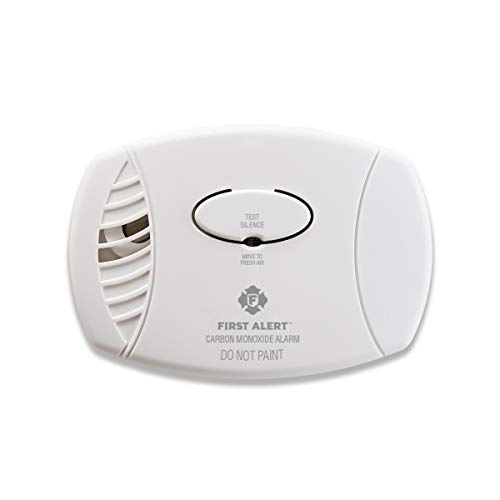
A carbon monoxide detector is designed to alert you to dangerous CO levels before the gas can keep building up. Detectors should be installed near sleeping areas, and both battery and hardwired models are relevant. If the alarm sounds, evacuate immediately. Call 911 if anyone has headache, dizziness, nausea, confusion, weakness, fainting, or trouble staying awake. (EPA)
Do not dismiss the alarm because the furnace sounds normal or because nobody feels sick yet. Carbon monoxide has no color and cannot be visually detected. It also has no scent, so people can breathe it in unknowingly.
Why it may not point to one source
An alarm does not automatically mean the furnace is the only source. Water heaters, boilers, fireplaces, generators, and even a blocked attached garage can contribute. In homes with more than one fuel-burning appliance, source identification can take professional testing.
A detector also does not remove all risk. It can fail, be missing, or be placed too far from the problem area. That is why the alarm should be treated as a warning, not as a complete diagnostic answer.
First steps before you reenter
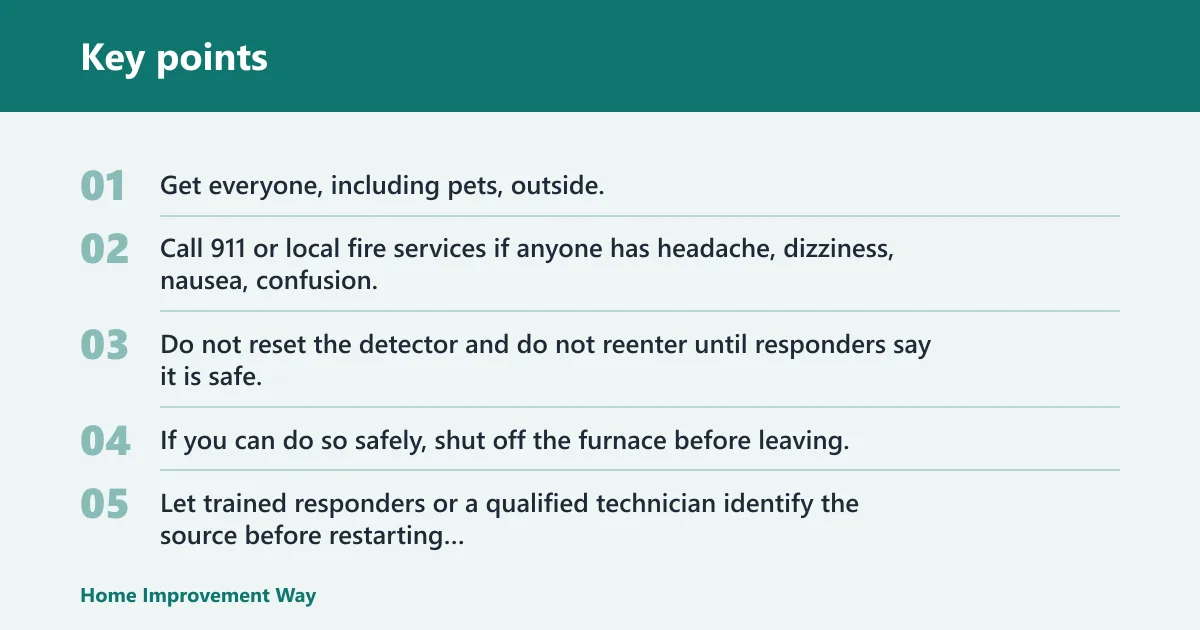
- Get everyone, including pets, outside.
- Call 911 or local fire services if anyone has headache, dizziness, nausea, confusion, weakness, fainting, or trouble staying awake.
- Do not reset the detector and do not reenter until responders say it is safe.
- If you can do so safely, shut off the furnace before leaving.
- Let trained responders or a qualified technician identify the source before restarting any fuel-burning appliance.
Suppose the detector sounds at 2 a.m. and two adults feel dizzy while a child is nauseated. That is not a wait-and-see situation. Leave first, then let emergency responders decide whether the furnace, the water heater, or both need to be taken out of service.
Symptoms in more than one person?
Headache, dizziness, nausea
Carbon monoxide symptoms can look like the flu. Headache, dizziness, and nausea are common early signs, and they can appear in more than one person at the same time if the source is indoors. Pets may also act unwell before the family links the issue to the furnace.
Symptoms matter even when no alarm sounds. A furnace leak can exist without a detector warning, especially if the detector is absent, poorly placed, or not functioning. Multiple sick people raise the urgency fast.
Confusion, weakness, fainting
More severe exposure can bring confusion, weakness, or unconsciousness. One emergency service page cites readings above 100 ppm as dangerous enough to cause confusion and unconsciousness within hours. That is why new confusion or collapse in the home should be treated as an emergency, not as ordinary illness.
Do not wait to see whether people improve after fresh air alone if several occupants are affected. Leave immediately and get help. A furnace, boiler, fireplace, or water heater may be feeding the problem.
When to call emergency services
Call emergency services at once when symptoms affect more than one person, when anyone faints, or when a detector alarms and someone feels ill. If you can shut the furnace off safely on the way out, do so. If not, leave and let responders handle it.
Furnace carbon monoxide decision table
How to read the table
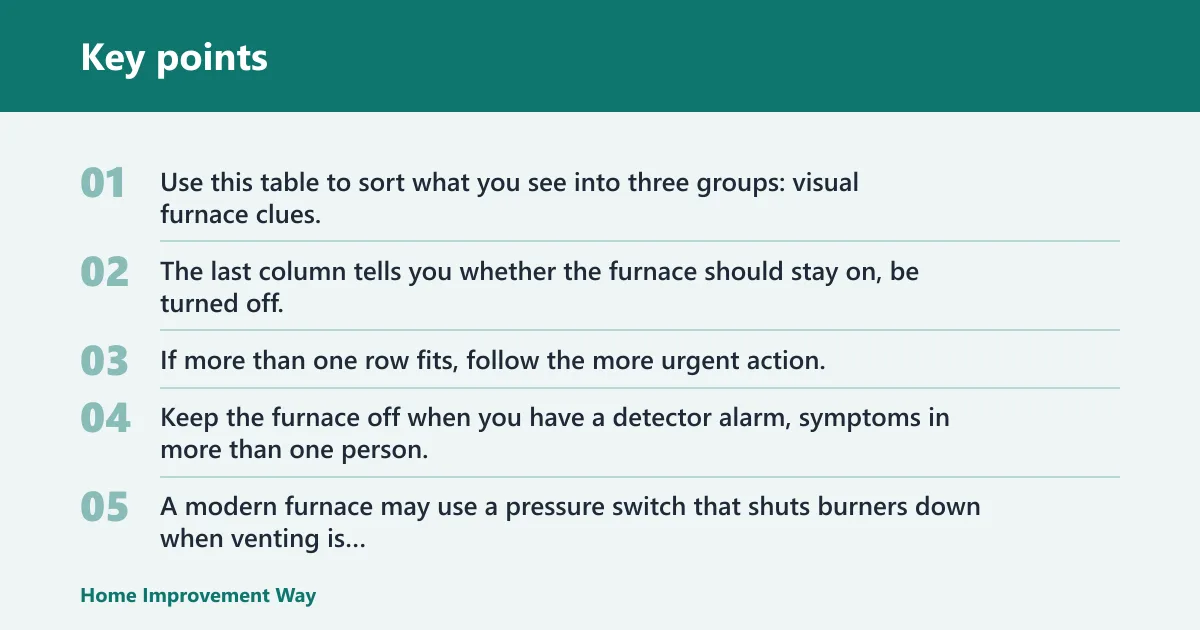
Use this table to sort what you see into three groups: visual furnace clues, detector alarms, and body symptoms. The last column tells you whether the furnace should stay on, be turned off, or be left to responders. If more than one row fits, follow the more urgent action.
| Observation | What it may mean | Immediate homeowner action | Should the furnace be shut off? |
|---|---|---|---|
| Yellow flame | Incomplete combustion, possibly from dirty burners, wrong gas pressure, or too little combustion air | Turn off the furnace if you can do so safely and schedule professional service | Yes, if the flame is abnormal or the furnace is acting strangely |
| Soot near the cabinet or vent connection | Possible combustion or venting problem; may be residue from carbon soot | Leave the unit off and have the system inspected before use | Yes |
| Condensation near the unit | May be normal on some high-efficiency furnaces, or may point to venting, drainage, or combustion issues if it is new or unusual | Check for blocked or disconnected vent pipe and call for inspection if the moisture is not expected | Usually no, unless paired with other warning signs |
| Detector alarm | Dangerous CO may be present somewhere in the home | Evacuate immediately and call 911 if anyone is symptomatic | Yes, if you can do so safely before leaving |
| Headache, dizziness, nausea in multiple occupants | Possible carbon monoxide exposure from a furnace or another fuel-burning appliance | Get everyone out and call emergency services | Yes, if you can do so safely before leaving |
| Blocked vent | Spillage or backdrafting risk from nests, debris, snow, or separated pipe sections | Stop using the furnace and arrange professional repair | Yes |
| No alarm and no symptoms, but unusual furnace behavior | Could be an early venting, combustion, or control issue | Keep the furnace off if the problem is obvious and schedule inspection soon | Usually yes until inspected |
When the furnace should stay off
Keep the furnace off when you have a detector alarm, symptoms in more than one person, visible soot, a blocked vent, or a flame that is clearly wrong. A modern furnace may use a pressure switch that shuts burners down when venting is blocked. That safety device should never be bypassed.
A common first-timer mistake is to clear an error code and restart the furnace because the house still feels cold. That can be the wrong move if the code came from venting trouble, a draft inducer problem, or a pressure switch lockout. Cold is inconvenient. CO exposure is not.
How a furnace leaks carbon monoxide
Incomplete combustion
Fuel should burn cleanly, but incomplete combustion can happen when burners are dirty, gas pressure is wrong, or there is too little combustion air. That can increase carbon monoxide output. A yellow flame is one of the visible clues that often goes with this problem.
This is not limited to gas furnaces. Oil furnaces can also produce carbon monoxide if combustion is off or venting is poor. The fuel type changes the equipment, not the safety rule.
Cracked heat exchanger
A heat exchanger can crack with age and thermal cycling. When that happens, combustion gases can mix with household air. That is a common furnace CO failure point and a reason technicians take cracks seriously instead of treating them as a cosmetic flaw.
You cannot verify a heat exchanger crack by smell or by looking at one part of the cabinet. It usually needs a qualified inspection and proper testing. Do not keep running the furnace while hoping the issue is minor.
Blocked venting and backdrafting
The flue or vent pipe carries exhaust outside. If it is blocked, damaged, or disconnected, exhaust can spill or backdraft into the home. Modern furnaces may use PVC vent pipe, so the material is not the key issue; the condition and routing are.
The draft inducer motor in high-efficiency furnaces pulls exhaust gases out through the vent. If that system fails, exhaust can backdraft indoors. Exhaust fans, a running dryer, and chimney sizing issues can also contribute to backdrafting in homes with multiple appliances.
Can your furnace leak without an alarm?
No alarm, no symptoms, unusual furnace behavior
Yes. A furnace can leak carbon monoxide without an alarm going off, especially if the detector is absent, too far away, expired, or not working. Unusual furnace behavior, such as repeated shutoffs, new soot, or poor venting, should still be treated seriously even before symptoms appear.
That is why visual clues and symptom patterns matter alongside the detector. Carbon monoxide has no color and cannot be visually detected, so the home may look normal until the problem has already grown.
Multiple appliances and source confusion
Homes with a furnace, water heater, boiler, or fireplace can make source identification confusing. A detector alarm in the hallway may not point straight to the furnace. It may be the furnace, another appliance, or a shared venting problem that affects more than one unit.
If several appliances are involved, do not try to sort it out by smell. Carbon monoxide has no scent. Professional testing is the safer way to identify the source.
Why detector placement matters
Detectors should be installed near sleeping areas so they can alert people before dangerous levels reach bedrooms. They should be tested monthly, and they need replacement per the manufacturer’s lifespan. Battery or hardwired units can both be used, but either type can fail if it is old, missing, or poorly placed.
If you have only one detector, place it where it can wake sleeping occupants. That is the point of the device. One detector in the wrong spot is not enough to make the house safe on its own.
Carbon monoxide detectors and placement
Where detectors should go
The safest placement starts near sleeping areas, since sleeping people cannot notice early symptoms. Many homes also benefit from detectors on each level and near fuel-burning appliances, following the manufacturer’s directions and local code requirements. The article recommends carbon monoxide detectors for furnace owners.
Do not place a detector where airflow or dead space will hide the problem. A hallway outside bedrooms is common because it can warn people before they are asleep and before symptoms become severe.
Monthly testing and replacement
Test the detector monthly. That simple step checks whether the alarm, battery, and electronics are still functioning. Replace the unit at about the manufacturer’s recommended lifespan, even if it has never sounded.
Older detectors can lose reliability over time. A working battery does not guarantee the sensing element is still within spec, which is why lifespan replacement matters.
Battery versus hardwired units
Battery-powered detectors are easier to place in many homes. Hardwired models may be better integrated with the house and can include battery backup. Either type can help alert you to dangerous CO levels, and both need regular testing.
The important part is not which one looks better on the wall. It is whether it is installed in the right place, maintained monthly, and within its replacement age.
Frequently asked questions
How do I know if my furnace is leaking carbon monoxide?
Look for a detector alarm, symptoms in more than one person, a yellow flame, soot near the unit, blocked venting, or unusual furnace behavior. Any one clue can matter, but the strongest warning is a detector alarm plus symptoms. If that combination appears, leave and call emergency services.
What are the warning signs of a carbon monoxide leak from a furnace?
The main signs are a carbon monoxide alarm, headache or dizziness in multiple occupants, yellow flame, soot or discoloration near the furnace, and venting problems. Condensation can matter too, but only when it is new or paired with other warning signs. None of these should be ignored.
Can a furnace leak carbon monoxide without an alarm going off?
Yes. A detector may be missing, too far from the source, expired, or not working. A leak can also stay below the alarm threshold at first. If the furnace behaves oddly or people feel sick, do not wait for the alarm to confirm the problem.
What should I do if my furnace is leaking carbon monoxide?
Turn the furnace off if you can do so safely, leave the home, and call 911 or local fire services. If anyone is symptomatic, treat it as an emergency right away. Do not restart the furnace, reset the alarm, or try to diagnose the source before the home is cleared.
How does a furnace leak carbon monoxide?
Most leaks start with incomplete combustion, a cracked heat exchanger, or blocked venting. A draft inducer motor, flue pipe, and pressure switch are part of the safety system on many furnaces. If one of those parts fails, exhaust can stay indoors instead of leaving the house.
Do oil furnaces leak carbon monoxide too?
Yes. Oil furnaces can produce carbon monoxide when combustion is incomplete or venting is poor, so the warning signs still matter. Do not assume only gas units are a risk. The same alarm, symptom, and venting rules apply to oil equipment as well.
How often should a furnace be inspected for carbon monoxide problems?
The U.S. Consumer Product Safety Commission recommends yearly heating system service. That visit is the time to check burners, venting, the heat exchanger, and safety controls such as the pressure switch. Yearly service does not replace detector testing, which should still happen monthly.
Where should carbon monoxide detectors go in a house?
Install detectors near sleeping areas so they can wake occupants before exposure grows dangerous. Follow the manufacturer’s placement instructions, and test them monthly. Use battery or hardwired models as appropriate, but remember that placement, maintenance, and age are what make them effective.
How to tell if your boiler is leaking carbon monoxide
Use the same warning signs: detector alarm, symptoms in several people, soot, and venting trouble. Boilers can also produce carbon monoxide when combustion is off or exhaust cannot leave the home. If a boiler is involved, do not assume the furnace is the only source.
How do I know if my oil furnace is leaking carbon monoxide?
Watch for the same clues you would use with gas equipment: an alarm, multiple sick occupants, soot, blocked venting, and abnormal furnace behavior. Oil furnaces can leak carbon monoxide too, so the fuel type does not lower the urgency. Shut the unit off if you can do so safely and get help.
Sponsored / affiliate links. As an Amazon Associate I earn from qualifying purchases. I may earn additional commission from eligible campaigns.
 MEGAWISE Portable Air Conditioner and Heater, 420W 110V Compact AC Unit with Remote Control, 1400W Cooling Capacity, 800W Heating, Dehumidifier, Fan, Sleep Timer, ChampagneAZEUS Portable AC and Heater Unit, 420W 110V Compact Air Conditioner for Tent RV Truck Cabin and Small Room, 1400W Cooling, 800W Heating, Remote Control, Dehumidifier, Sleep Timer, Champagne