How to Reset an Oil Furnace Red Button
To reset an oil furnace reset button, press it once after checking fuel supply, power, and a clean filter. If it trips again, stop and call for service. Repeated resets can flood the burner with oil, damage the ignition system, or create unsafe smoke. This guide explains what the button means, what to check first, and when to leave it alone.
How the furnace lockout system works
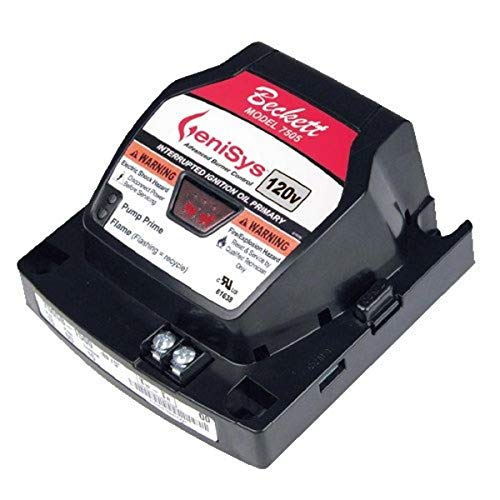
- Compatible with thermostat and boiler control
- Programmable valve on delay and motor off delay
- Indicator lights help monitor system status
The oil burner primary control reset button clears a lockout after a failed ignition attempt; it is not a normal start button. On many Beckett burners it is red and near the front of the burner. If flame is not proven, the control shuts down to prevent unsafe fuel buildup.
What you’ll need
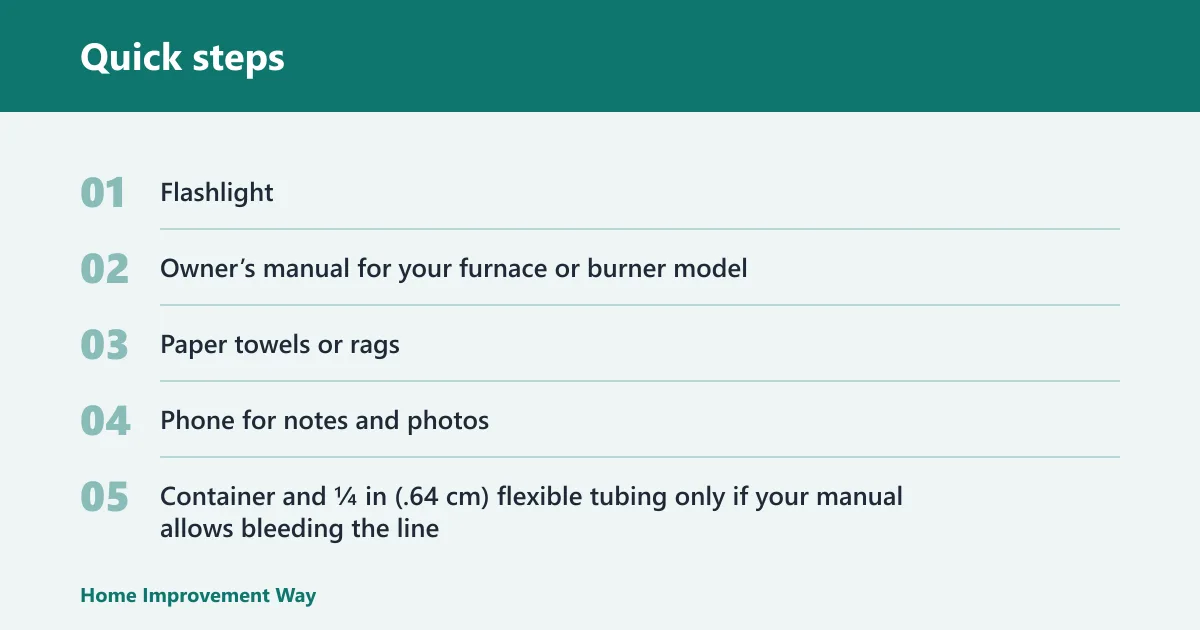
- Flashlight
- Owner’s manual for your furnace or burner model
- Paper towels or rags
- Phone for notes and photos
- Container and ¼ in (.64 cm) flexible tubing only if your manual allows bleeding the line
- A suitable wrench, generally 3/8 in., only if your manual directs you to the fuel pump bleeder valve
📊 If the furnace does not come on after pressing reset, check fuses and breaker. Source: Wikihow.
Press the button only after you have checked the electrical supply, thermostat setting, oil supply, and oil shutoff valve. If you smell oil, hear unusual burner noise, or a carbon monoxide alarm sounds, do not press it. Those signs point to a safety problem, not a simple restart issue.
| Symptom | Likely cause | Safe homeowner action | Stop/call-pro risk |
|---|---|---|---|
| Run-out of oil | Tank went empty; air entered the line | Refill the tank, check the valve, then decide whether your manual allows bleeding | High if the burner locks out again after one reset |
| No heat with power | Thermostat, breaker, fuse, or burner lockout | Check thermostat setting, breaker, and fuses first | Medium if the burner will not start after one reset |
| Odor of oil | Fuel leak, spill, or failed ignition | Stop, ventilate, and call for service | High |
| Repeated lockout | Cad cell, nozzle, electrodes, pump, or fuel delivery issue | Do not press reset again | High |
| Closed oil valve | Fuel cannot reach the burner | Open the valve fully, then try one reset only if all else is normal | Medium |
| Air in line | Line lost prime after a runout or service | Check your manual for the exact priming or bleeding procedure for your model | High if you do not know the model-specific method |
| Clogged filter | Restricted fuel flow | Check the oil filter before any repeat reset | Medium |
| Carbon monoxide alarm | Possible combustion fault or exhaust problem | Leave the building and get emergency help | Critical |
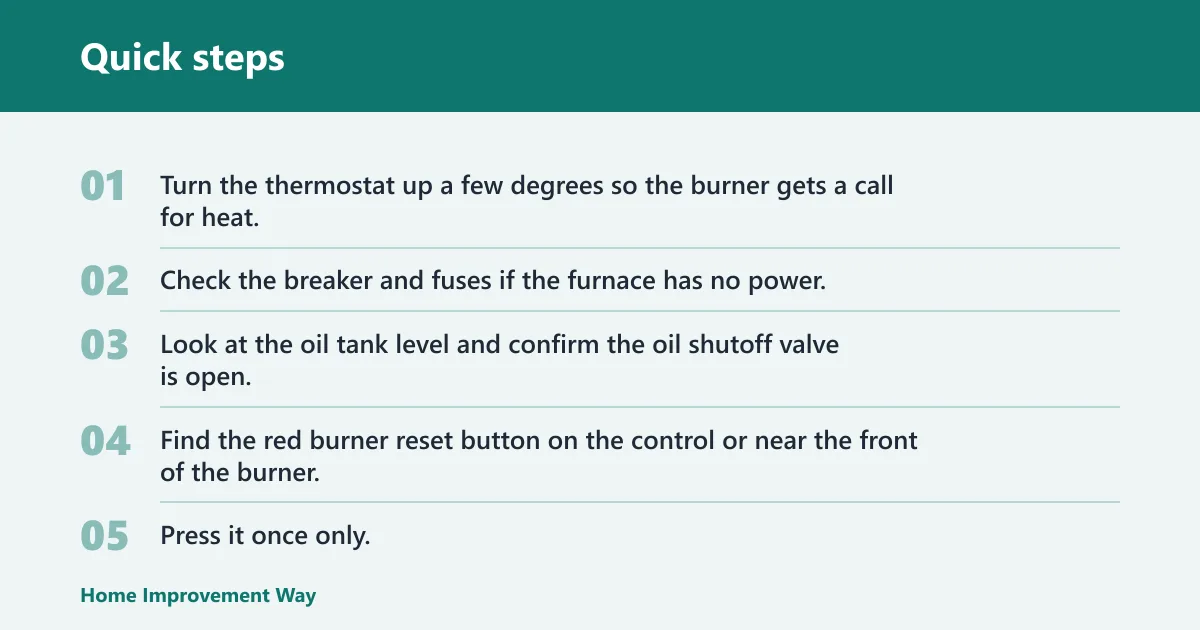
- Turn the thermostat up a few degrees so the burner gets a call for heat.
- Check the breaker and fuses if the furnace has no power; if it does not come on after pressing reset, check fuses and breaker.
- Look at the oil tank level and confirm the oil shutoff valve is open.
- Find the red burner reset button on the control or near the front of the burner.
- Press it once only.
- Watch and listen for startup: blower sound, burner ignition, and steady operation.
What should you do if the burner does not start?
If the burner stays off after one reset, do not press the button again. Repeated resetting can flood the combustion chamber with unburned oil. At that point, the problem is likely past a simple restart and may need service, priming, or parts replacement, especially if the burner is not proving flame.
Check the obvious fuel path first
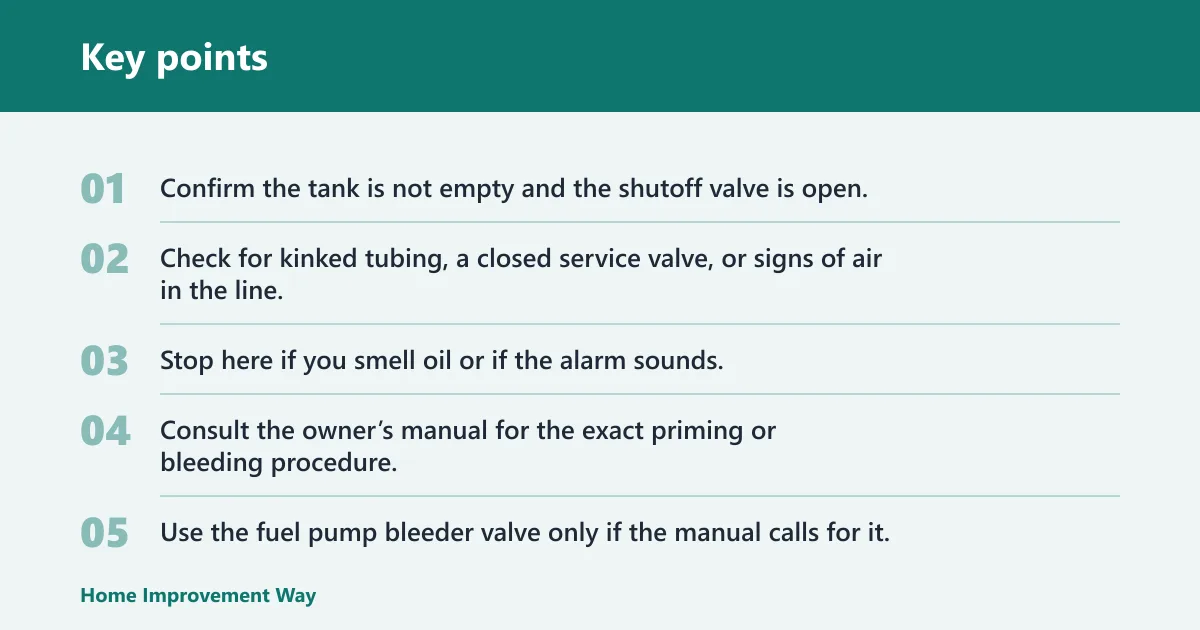
- Confirm the tank is not empty and the shutoff valve is open.
- Check for kinked tubing, a closed service valve, or signs of air in the line.
- Stop here if you smell oil or if the alarm sounds.
Say your tank ran out overnight and the burner never re-lit. A single reset after refilling may be reasonable, but a second reset is not. If the burner does not fire, the line may still have air or the control may have another fault that needs service.
If that didn’t work, try this next
- Consult the owner’s manual for the exact priming or bleeding procedure, if your model uses one.
- Use the fuel pump bleeder valve only if the manual calls for it; on many setups it is on the side of the fuel pump.
- Prepare ¼ in (.64 cm) flexible tubing and a container only if the manual requires them.
- Stop if you are not sure the system is a one-pipe setup or if the manual does not clearly describe homeowner priming.
Suppose the burner hums, clicks, and shuts off again after 20 seconds. That pattern points away from the thermostat and toward fuel, flame sensing, or ignition trouble.
How do you reset an oil burner safely?
Resetting an oil burner means clearing a lockout after a failed ignition attempt. The safe sequence is simple: create a heat call, confirm power and fuel, press the red reset once, then wait for the burner to prove flame. If it does not, stop and move to service-level troubleshooting.
Watch the startup closely
- Stand near the burner so you can hear whether it lights and stays lit.
- Note the indicator light or control behavior if your burner has one.
- Record whether the burner runs for a few seconds and shuts off, or never lights at all.
On a Beckett burner, the reset button is typically toward the front of the burner, and it will be red. The same general idea applies to other oil burner primary controls, but the location and indicator layout vary by model. Check the manual instead of guessing.
Why do oil burners lock out?
Oil burners lock out when the control does not see a safe flame. A cad cell photoelectric sensor checks for flame presence. If it does not detect light from combustion, the primary control shuts the burner down. That safety response can also happen after fuel loss, a clogged nozzle, or misadjusted electrodes.
- Run-out of oil: The burner cannot pump fuel from an empty tank.
- Air in the line: Fuel reaches the burner unevenly or not at all.
- Clogged nozzle: The oil spray pattern is distorted, so ignition fails.
- Misadjusted or bad electrodes: The spark may not light the fuel properly.
- Cad cell problem: The control does not detect flame even when ignition should have occurred.
- Fuel pump issue: The burner may not move fuel at the right pressure.
When should you stop and call for service?
Stop after one failed reset, and stop immediately for any odor of oil or a carbon monoxide alarm. A burner that locks out again is telling you the fault is still active. A technician can test the nozzle, electrodes, cad cell, fuel pump, and combustion setup without guessing.
What to report to the technician
- Whether the burner ran out of oil
- Any odor of oil
- Any unusual sound, such as repeated clicking or humming
- The indicator light pattern on the control, if present
- Oil tank level and valve position
- Whether you checked the filter and breaker
What common mistakes should you avoid?
A common error is pressing reset more than once, which can risk flooding the chamber with unburned oil. The next mistake is confusing the burner reset with the furnace limit or safety switch, which does a different job and should not be used as a normal restart control. Ignore oil odors and CO alarms only at your peril.
Another mistake is treating a second lockout as a nuisance instead of a clue. If the burner locks out again after one reset, the fault is still active and likely involves fuel delivery, ignition, or flame sensing. At that point, a service call is the safer next step.
What if you have a gas furnace instead?
This is a different system. A gas furnace does not use the same oil burner primary control, cad cell, or fuel pump priming steps. If your equipment burns gas instead of oil, follow the label and manual for that furnace, and do not use oil-burner reset guidance as a substitute.
Frequently asked questions
How do I reset an oil furnace?
Turn the thermostat up, check the breaker, fuses, oil level, and shutoff valve, then press the red burner reset button once. If the burner does not start or shuts off again, stop. A second press can flood the chamber and turn a simple lockout into a bigger repair.
How do I restart an oil furnace?
Start with the fuel and power checks, then use a single reset. Confirm the tank has oil, the valve is open, and the burner has power. If it fails again, the cause is beyond a normal homeowner restart.
How do I reset an oil burner?
Find the red reset on the primary control, often near the front on a Beckett burner, and press it one time only. If the burner still will not fire, note the smell, sound, and light pattern, then call for service.
How do I restart a Beckett oil furnace?
On many Beckett burners, the reset button is toward the front of the burner and red. Press it once after checking fuel supply, power, and filter condition. If it locks out again, stop and move to diagnosis of the cad cell, nozzle, electrodes, or fuel delivery.
How do I reset my furnace?
If you have an oil furnace, the safe reset is a single press of the burner control after basic checks. If you have a gas furnace, do not use oil-burner steps. In either case, check the manual for the exact control location and stop if you smell fuel or hear the alarm.
How do I reset a gas furnace?
Gas furnaces use different controls and safety parts than oil burners. Do not press an oil burner reset on gas equipment. Check the furnace label, turn the thermostat up, confirm power, and follow the manufacturer’s restart steps in the manual if the unit has a listed reset procedure.
Sponsored / affiliate links. As an Amazon Associate I earn from qualifying purchases. I may earn additional commission from eligible campaigns.