What Is a Furnace Rollout Switch and How Do You Reset It?
A furnace rollout switch is a safety device that shuts the burner off when flames or hot gases escape the burner box; reset it once only after checking for a blocked vent, dirty filter, or other airflow issue. Ignoring a true rollout trip can let carbon monoxide enter the house or damage the furnace. This guide explains what the switch does, how to tell airflow trouble from a dangerous combustion problem, and when to stop and call for service.
Rollout vs high-limit switches: key differences
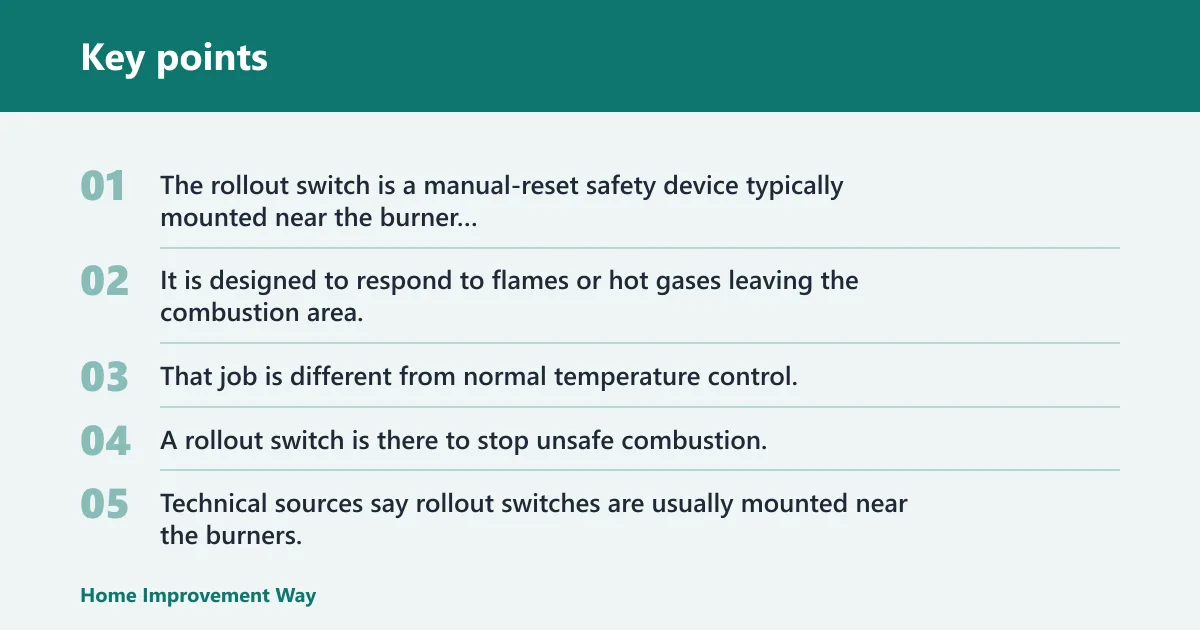

The rollout switch is a manual-reset safety device typically mounted near the burner assembly on many gas furnaces. It is designed to respond to flames or hot gases leaving the combustion area, and when it opens the circuit, it can cut gas flow by interrupting the gas valve circuit. Exact location and design vary by model.
That job is different from normal temperature control. A rollout switch is there to stop unsafe combustion, not to manage ordinary furnace cycling. Technical sources say rollout switches are usually mounted near the burners, and they note that ratings vary by model, so you should check your manual rather than assume one furnace matches another.
Why it is different from a high limit switch
A high limit switch watches for overheating inside the furnace, while a rollout switch watches for flame or hot gases leaving the burner area. Technical Hot & Cold lists high-limit switches as commonly 160-200°F devices, while rollout switches are described as usually 250-350°F devices. Those are different safety controls with different jobs.
A separate fan-limit control may also be present on some furnaces, with fan-on settings often 90-130°F and fan-off settings often 70-110°F. That is another reminder that one furnace can contain several switches that do not mean the same thing when they trip.
How do you know if a rollout switch has tripped?
A tripped rollout switch usually shows up as a furnace that stops heating, refuses to stay on, or trips again soon after a reset. You may also notice soot, a burnt odor, or visible flame irregularity through a viewing port if the model has one. Do not open the burner compartment to look for flame.
Repeated trips matter. A one-time trip after a blocked vent or dirty filter may point to airflow trouble, but a switch that trips again right away often means the furnace has a real combustion problem that needs service. Carrier furnace code 33 is a limit-circuit fault, and Carrier notes that rollout switches can be one cause of that code, but the code is broader than rollout alone.
Suppose the furnace starts, runs briefly, then shuts down and will not restart after a reset. If the filter is packed with dust and the vent path looks blocked from the outside, that points toward airflow or venting trouble that should be fixed before any further reset attempt.
What repeated trips usually mean
Repeated tripping is not a nuisance to work around. Technical guidance warns that a rollout switch trip should not simply be reset. If the furnace rolls out again, the underlying cause may be blocked venting, dirty burners, or a damaged heat exchanger.
A cracked heat exchanger is a serious safety hazard. It is not something a homeowner can confirm with a quick glance, and it requires professional repair or replacement decisions. If the rollout switch keeps opening, stop using the furnace until the cause is found.
Where is the rollout switch located on a furnace?
The rollout switch is usually mounted near the burners, often on or close to the burner assembly. Exact placement varies by furnace model, so the manual is the best guide if you need to identify the part without guessing. It may be visible only after the access panel is removed, but you do not need to open the burner area to decide whether a reset is safe.
Look for the switch only when the furnace is powered down and cool. If you are unsure which control is the rollout switch, stop there and check the model documentation. Do not mix it up with the pressure switch, which is part of the draft and venting sequence, or the high limit switch, which monitors overheating.
Rollout switch decision checklist
This checklist is for a first-pass decision from outside the furnace. It does not replace service when a trip repeats or the furnace shows signs of unsafe combustion.
| Safe homeowner observation | What it may mean | Stop and call a pro now |
|---|---|---|
| Soot around the furnace cabinet or near the burner area | Possible rollout, poor combustion, or venting trouble | Yes. Soot near the burner area can point to unsafe flame movement. |
| Burnt smell, hot-metal odor, or lingering combustion odor | Possible hot gases escaping the burner area | Yes. Shut the furnace down and do not keep resetting it. |
| Repeated trips after a reset | More than a simple airflow issue | Yes. A recurring trip may point to blocked venting or a cracked heat exchanger. |
| Exhaust vent or flue pipe looks blocked, disconnected, or damaged from the outside | Combustion gases may not be leaving the furnace safely | Yes. Do not restart until the vent path is checked and repaired. |
| Air filter is dirty, packed with dust, or overdue for replacement | Airflow restriction can contribute to overheating or rollout-related stress | Yes if the furnace also tripped again or the cabinet is hot. Replace the filter, then reassess. |
| Flame looks irregular through a factory viewing port, if your model has one | Possible burner problem or combustion issue | Yes. Do not use an open burner compartment as a viewing method. |
| The switch resets once and the furnace runs normally | Could have been a temporary airflow or draft issue | Maybe. If it happens again, stop and call for service. |
| The switch resets, then trips again immediately | Likely active rollout or another unsafe furnace fault | Yes. Do not continue troubleshooting by repeated reset. |
How do you reset a furnace rollout switch?
Reset the rollout switch only once, and only after the furnace has cooled. Turn off power to the furnace and shut off gas according to the unit instructions before touching any safety control. If the filter is dirty or the vent path is obviously blocked, fix those issues first or stop and call a technician.
After the furnace is cool and the cause of the trip does not look dangerous, restore power and gas per the manufacturer’s instructions, then press the manual-reset button if the model has one. If the switch trips again immediately, stop. Do not keep pressing the button or cycle the furnace repeatedly.
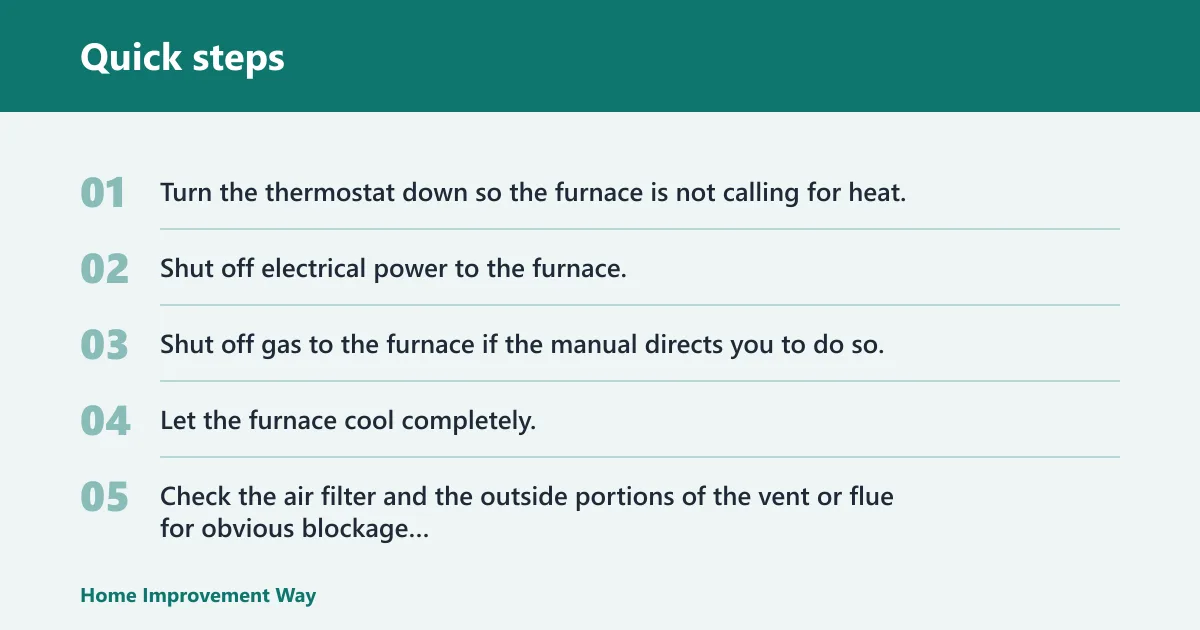
- Turn the thermostat down so the furnace is not calling for heat.
- Shut off electrical power to the furnace.
- Shut off gas to the furnace if the manual directs you to do so.
- Let the furnace cool completely.
- Check the air filter and the outside portions of the vent or flue for obvious blockage or damage.
- If conditions look normal and the model has a manual-reset rollout switch, press it once.
- Restore power and gas per the manual.
- Watch the first heating cycle from outside the furnace. If it trips again, stop using it.
A common first-timer mistake is to reset the switch and then assume the problem is gone because the furnace started. That is only acceptable if it runs normally and does not trip again. A second trip turns the situation from a simple check into a service call.
Multimeter testing can confirm continuity after the furnace has cooled, but only if you already know how to test safely and can access the switch without bypassing any safety device. A meter does not diagnose the cause of the trip. It only helps verify whether the switch is open or closed.
Why did my rollout switch trip in the first place?
Rollout trips usually happen because something has changed in combustion or venting. Common causes include blocked or dirty burner flames, clogged exhaust vents, poor draft, a dirty air filter that contributes to overheating, or a cracked heat exchanger. The switch is there to stop gas flow when flames or hot gases escape the burner area.
The furnace should not be treated as safe just because the reset button works. The switch is wired in series with the gas valve solenoid, so when it opens, the burner should stop. That interruption is a warning, not a nuisance alert.
Blocked flue or exhaust vent
An exhaust vent or flue pipe that is blocked, clogged, disconnected, or poorly pitched can keep combustion gases from leaving the furnace safely. That can force hot gases back toward the burner area and trip the rollout switch. Check the visible vent path from outside the furnace for damage or blockage before you reset anything.
Dirty burners or airflow problems
Blocked or dirty burner flames can trigger rollout. Dirty filters can also reduce airflow enough to contribute to overheating or unstable combustion. Replace the filter if it is dirty, then evaluate whether the furnace still shows signs of trouble. A dirty filter is a fixable issue; a repeated rollout trip is not something to ignore.
Cracked heat exchanger
A cracked heat exchanger is one of the most serious possible causes. It can allow combustion gases to move where they should not, and a homeowner cannot confirm or clear that condition with a quick visual check. If you suspect this, stop running the furnace and call for service.
Picture a furnace that has a clean filter but still trips again right after one reset. The vent pipe looks intact from the outside, yet the unit shuts down within seconds of relighting. That pattern points away from a simple filter issue and toward a problem that needs a technician.
How is a rollout switch different from a high limit switch or pressure switch?
The rollout switch, high limit switch, and pressure switch are related furnace safeties, but they do different jobs. The rollout switch watches for flame or hot gases leaving the burner area. The high limit switch watches for overheating in the furnace cabinet. The pressure switch confirms proper draft or venting before ignition.
Do not treat one fault as if it were another. A pressure switch problem may keep the furnace from starting, while a high limit switch may stop a cycle because the furnace is too hot. A rollout trip means combustion is behaving in a way that can be dangerous, so the response should be more cautious.
Frequently asked questions
What is a furnace rollout switch?
A furnace rollout switch is a manual-reset safety control near the burners. It opens the circuit when flame or hot gases escape the burner area, which stops gas flow to the furnace. If it trips, treat it as a warning about venting, burner problems, or a possible heat exchanger issue.
Check the air filter, the outside portions of the exhaust vent or flue, and any obvious signs of soot, odor, or damage around the furnace cabinet. Do not open the burner area to watch flame. If anything looks unsafe or the switch has tripped more than once, call for service.
Will a dirty filter or blocked vent cause a rollout switch to open?
Yes. A dirty filter can contribute to airflow problems, and a blocked or clogged exhaust vent can keep combustion gases from leaving the furnace safely. Both can lead to rollout conditions. Replace the filter and clear obvious vent blockage before any reset attempt, but stop if the switch trips again.
Sponsored / affiliate links. As an Amazon Associate I earn from qualifying purchases. I may earn additional commission from eligible campaigns.