How to Fix a Furnace Pressure Switch Error
Reviewed by: HVAC field editor and service technician mentor
This guide is part of our Furnace Troubleshooting: Fix Common Winter Heating Problems series.
Updated for model-specific troubleshooting: pressure-switch behavior, retry counts, and fault-code meanings vary by furnace brand and control board. Many service guides tell homeowners to check venting, tubing, condensate, and power before calling for service.
When a furnace starts, the inducer should come on first; if it starts and the pressure switch never closes, check the vent and hoses first, then the switch. Ignoring a pressure-switch fault can leave you with repeated lockouts, failed heat, or a costly parts swap you did not need. This guide shows what each startup pattern means and how to sort blocked venting, hose leaks, inducer failure, and a bad switch safely.
What you’ll need


Basic safety gear and simple tools
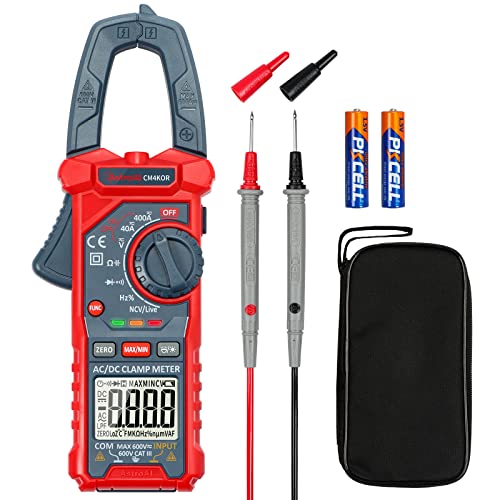
- Flashlight
- Screwdriver if the service panel uses one
- Gloves and a dry rag
- Phone camera for blink codes
What the pressure switch error means
How the safety circuit works
The pressure switch is a safety device that stays open until the furnace proves draft. It closes only after the inducer creates the required negative pressure, and the control board will not allow ignition until that signal appears. Code meanings are brand- and model-specific, so a “pressure switch fault” label, a blink code, or a numeric code can mean slightly different things depending on the furnace.
The draft inducer motor starts before ignition and creates the negative pressure the switch needs. If the furnace does not see that signal after its programmed retry sequence, the control board may stop the call for heat, retry a limited number of times, or enter lockout. That retry count varies by furnace family and control design; there is no universal 3-5 attempt rule.
That lockout is not a diagnosis by itself. It only tells you the safety chain did not complete.
What to expect from the control board
The control board reads the pressure switch signal and often flashes a fault code on the board. A red light on the control board may flash code 31 on some furnaces, while other models use different codes or blink patterns for a pressure-switch fault, a stuck-open switch, or a stuck-closed switch. Always interpret the code against the furnace’s own documentation rather than assuming one brand’s code table applies to another.
A stuck-open switch often leads to repeated start attempts and shutdown before ignition. A stuck-closed switch can prevent the normal startup sequence and point to a different fault pattern. Trane, Carrier, and Lennox documentation all treat those conditions differently in their service diagnostics.
What you’ll see in the first 60 seconds
Use the startup order to separate venting, tubing, inducer, and switch faults
Watch the startup sequence before you press reset. The order of events tells you whether the fault is in venting, tubing, the inducer, or the switch itself. If the furnace reaches lockout, wait and record the blink code first.
- Set the thermostat to call for heat and stand by the furnace.
- Watch for the draft inducer motor to start within the first few seconds.
- Watch for ignition, then stop if the furnace shuts down before flame stays on.
- Use your phone to record the blink code before any reset.
| symptom sequence | probable cause | quick inspection | recommended next step |
|---|---|---|---|
| Inducer runs, then stops with code 31 | Blocked vent, frozen PVC, clogged intake, or pressure switch tubing problem | Check the outdoor PVC vent pipe, intake, and tubing for ice, snow, kinks, or disconnection | Clear visible blockage and recheck once |
| Inducer runs nonstop, no click, no ignition | Stuck-open pressure switch, weak draft, or failed inducer | Inspect the hose for damage and listen for the inducer changing speed or sounding strained | Stop after one retry and call for diagnosis if airflow looks normal |
| Ignition starts, then drops out after a few tries | Intermittent pressure signal, condensate issue, or a switch that closes late | Check the condensate trap, drain, and tubing for water or blockage | Dry, clear, and retry once; then stop |
| No inducer, odd blink pattern, or immediate lockout | Control board issue, failed inducer circuit, or stuck-closed switch pattern | Confirm power, thermostat call, and the board code before touching anything else | Call an HVAC technician |
How to fix the fault safely
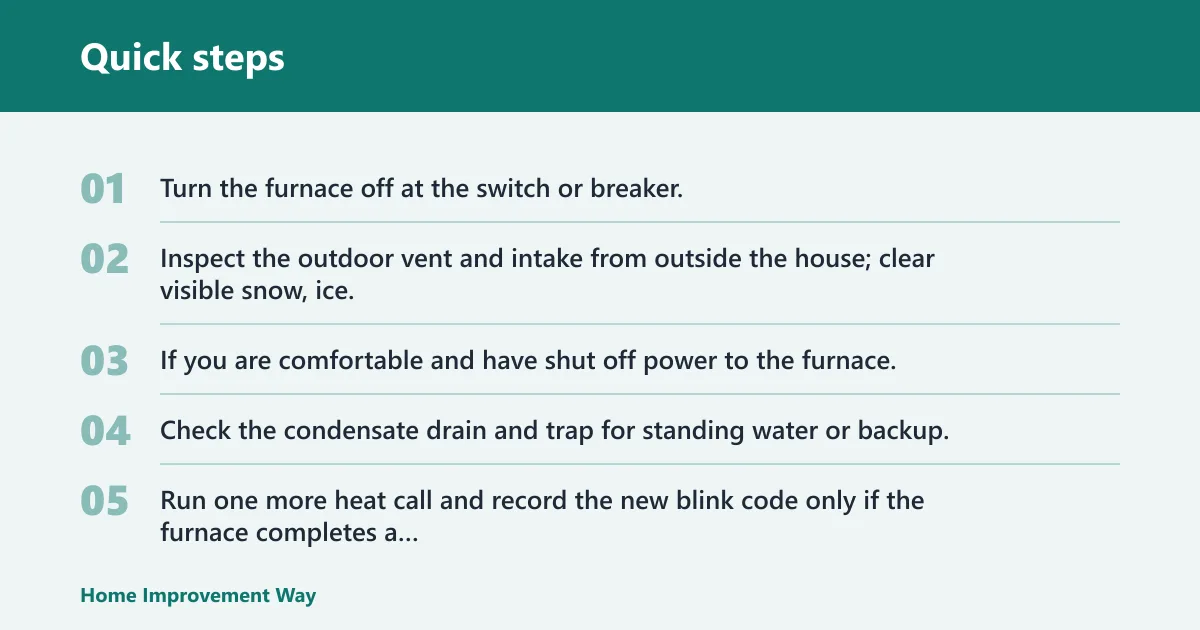
Safe homeowner checks before a service call
Start with the least invasive checks. If the furnace still fails after one clean restart and a visual inspection, stop there. Repeated resets can push the furnace deeper into lockout and hide the real cause. Carrier, Lennox, and Trane homeowner guidance all caution against bypassing safeties or repeatedly cycling a faulted furnace.
- Turn the furnace off at the switch or breaker, then wait 60 seconds and restore power once.
- Inspect the outdoor vent and intake from outside the house; clear visible snow, ice, or debris without opening the furnace.
- If you are comfortable and have shut off power to the furnace, open only the blower/burner access panel and check the pressure switch tubing for blockage, kinks, cracks, or loose ends; do not touch internal components unless power is off.
- Check the condensate drain and trap for standing water or backup, then clear the visible drain path if it is accessible.
- Run one more heat call and record the new blink code only if the furnace completes a full restart.
Pressure switch hose routing varies by furnace design. Some systems use one hose and others use more than one, and the arrangement can differ between conventional and condensing furnaces. Both can fail to close if the tubing is blocked, the vent is restricted, or the inducer cannot create enough draft. Model layouts vary, so some furnaces place the switch near the inducer, while others route tubing differently through the cabinet.
Pressure switch diagnosis table
Use this quick map after the first startup attempt. It separates the common fault paths without guessing at the part that failed.
| symptom sequence | probable cause | quick inspection | recommended next step |
|---|---|---|---|
| Inducer runs, then stops with code 31 | Pressure switch fault, blocked venting, or draft never reached the needed level | Look for a frozen or blocked PVC vent pipe and inspect the hose at the inducer housing | Clear visible blockage, then retry once |
| Inducer runs nonstop, no click, no ignition | Stuck-open switch, hose leak, or weak inducer draft | Check tubing for cracks, looseness, or water; listen for abnormal inducer sound | Stop if the vent is clear and the hose looks intact |
| Ignition starts, then drops out after a few tries | Intermittent switch signal or condensate problem | Inspect the condensate trap and drain path for blockage or standing water | Clear accessible drain issues and call a technician if the fault returns |
| No inducer, odd blink pattern, or immediate lockout | Control board fault, wiring issue, or stuck-closed switch pattern | Check the control board code and verify the furnace is getting power | Do not keep resetting; schedule service |
Picture a condensing furnace on a cold morning with a PVC exhaust pipe capped by ice. The inducer may start, but the pressure switch never sees the draft it expects, so the board stops the cycle and flashes a pressure-switch fault code. Clearing the ice may be enough if the vent is otherwise clear.
Say your furnace starts, the inducer hums, and the furnace still does not ignite. If the hose is intact and the vent is open, that pattern points away from a simple clog and toward a stuck-open switch or a weak inducer signal.
If you need a deeper flowchart for a no-ignite symptom, see this inducer-to-ignition diagnosis guide for the same startup sequence in a broader furnace-no-heat scenario.
What causes a furnace pressure switch to fail
Most common root causes and why they happen
Common causes include blocked venting, damaged pressure switch tubing, condensate backup, and inducer problems. The switch itself can also fail open or fail closed. A code tells you the board did not see the expected signal, not that the switch is automatically bad.
Season matters. In cold weather, a condensing furnace PVC vent pipe can freeze over and stop proper draft. High humidity can also lead to ice at the termination or water in the tubing. In colder climates, frozen exhaust or intake terminations are a common winter trigger.
How professionals test the switch
Technicians use a manometer, a pressure-measuring instrument, to verify the draft the furnace actually makes; some service procedures also use a dedicated pressure-switch test kit or a simple continuity check alongside a manometer reading. A manometer does not contain an internal pump as part of its definition. Used correctly, it can separate a weak inducer, a vent restriction, and a failed switch far better than swapping parts blindly.
The switch is located near the draft inducer motor and connects to the inducer housing via rubber or vinyl tubing. Some assemblies use nylon or silicone hose instead. A careful technician also checks for wiring faults and board readings while the furnace is starting. Two-port and single-port switch designs both exist, and condensing furnaces may use different routing than non-condensing models.
Common mistakes
What not to do during troubleshooting
- Jumpering the pressure switch. That defeats a safety device and can allow ignition without proven draft.
- Resetting over and over. After repeated failed attempts, the board can lock out and stop the startup sequence; the exact retry count varies by brand and model.
- Ignoring ice, snow, or condensate. Those are common root causes, especially on condensing furnaces with PVC venting.
- Replacing parts before checking airflow. A bad hose or blocked vent can look like a bad switch.
If that didn’t work, try this next: stop after the visual checks and get a technician if the furnace still fails on the next call for heat. A manometer-based draft test can confirm whether the switch, inducer, or vent path is the problem. Part replacement costs vary by furnace model and local market, so avoid any price estimate unless it comes from a sourced quote or a specific parts list.
Prevention
Keep the outdoor vent terminations clear before cold weather, and check condensate drainage at the start of the heating season. A quick look at the PVC exhaust pipe after snow or ice events can prevent another lockout.
Frequently asked questions
What causes a furnace pressure switch to fail: blocked venting, frozen PVC, cracked
Blocked venting, frozen PVC, cracked or disconnected tubing, condensate backup, and inducer problems are common causes. The switch can also fail open or fail closed. The control board only knows that it did not receive the expected signal, so the cause still has to be checked against the furnace’s own service literature.
Why does my furnace run the inducer but never ignite?
That usually means the furnace is waiting for the pressure switch to close before allowing ignition. Check the vent path first, then the hose and condensate drain. If the inducer sounds normal and the switch still does not close, the next step is professional testing with a manometer and a model-specific service check.
What does a flashing furnace error code for pressure switch mean?
A flashing code means the control board has not seen the pressure switch signal it expects. On some furnaces, code 31 points to a pressure-switch-related fault, but code interpretation varies by brand and model. Other blink patterns can point to a stuck-open or stuck-closed switch, so record the exact flashes before resetting anything.
Can a clogged vent pipe cause a pressure switch error?
Yes. A blocked or frozen vent can prevent the inducer from creating the negative pressure the switch needs. Check the outdoor PVC exhaust and intake for snow, ice, leaves, or debris. If the vent is clear and the fault remains, the tubing or switch itself becomes more likely.
When should I call an HVAC technician for a pressure switch fault?
Call for service if the furnace repeats the fault after one reset and one visual inspection, or if you see no inducer start, a stuck-closed pattern, or immediate lockout. A technician can test the switch, inducer, and control board safely without bypassing the safety circuit.
Is a pressure switch error dangerous?
Yes, it can be. The switch stops ignition until draft is proven, so a fault in that circuit should be treated as a safety issue, not a nuisance code. Do not jumper the switch or keep cycling the furnace, because repeated failed starts can drive it into lockout and mask a venting or combustion problem.
Sponsored / affiliate links. As an Amazon Associate I earn from qualifying purchases. I may earn additional commission from eligible campaigns.