What Should Indoor Humidity Be in Winter?
Aim for 30% to 40% relative humidity indoors in winter, then lower it to 20% to 30% if windows sweat or the outdoor temperature stays far below freezing. Too much moisture can fog window glass, feed mold growth, and dampen wall surfaces; too little can dry skin, shrink wood trim, and increase static shocks in rooms with carpet or synthetic fabrics. This guide shows how to pick a safe target based on condensation risk, climate, and your heating setup.
What should indoor humidity be in winter?
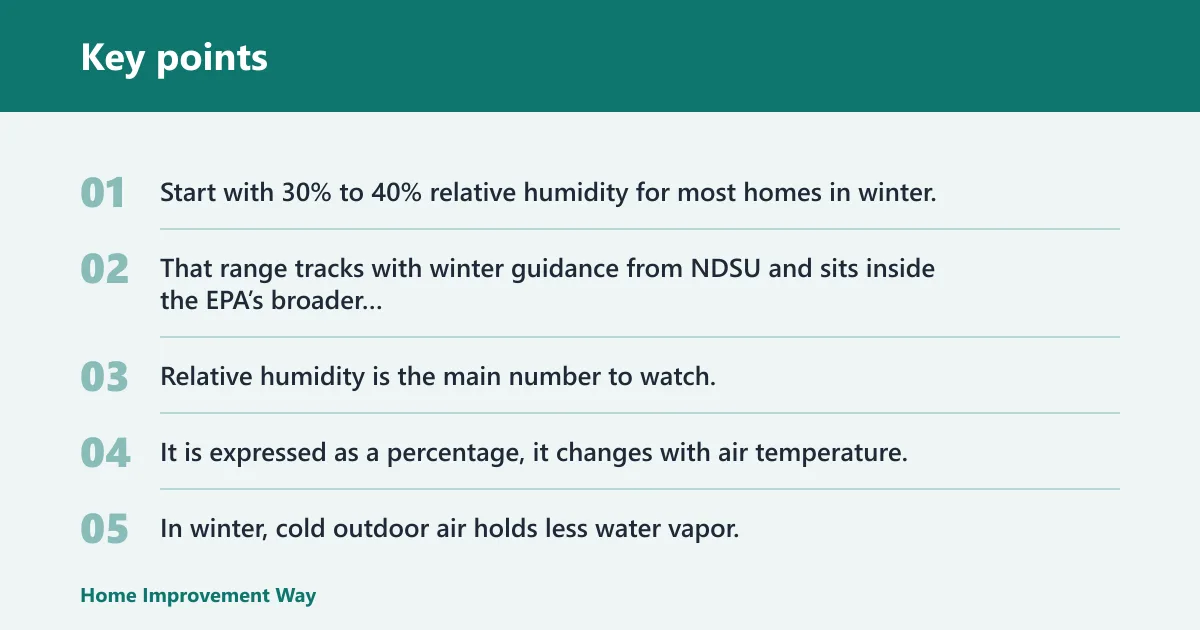


Start with 30% to 40% relative humidity for most homes in winter. That range tracks with winter guidance from NDSU and sits inside the EPA’s broader indoor range of 30% to 50% relative humidity, while staying far enough below the high end to reduce condensation risk on cold glass.
Relative humidity is the main number to watch. It is expressed as a percentage, it changes with air temperature, and you read it with a hygrometer. In winter, cold outdoor air holds less water vapor, and heating that air lowers relative humidity even more, which is why many homes feel dry soon after the furnace kicks on.
Why the winter target is narrower
Year-round comfort advice often stops at 30% to 50%, but winter is different because windows, exterior walls, and corners can be much colder than room air. NDSU says winter humidity should be 30% to 40%, and it notes that above about 40% condensation becomes more likely. The EPA also advises keeping indoor humidity below 60% and warns against humidifying above 50% when possible.
The lower end helps prevent damp glass and hidden moisture. The upper end gives relief from dry air, but it leaves less margin before condensation starts on cold surfaces. That margin matters more in cold climates, on windy nights, and in rooms with large windows.
When to favor the lower end
Use the lower end of the range when outdoor temperatures are well below freezing, when you see any window fogging, or when your home has older windows with colder inner glass. In those situations, 20% to 30% may be the safer winter setting until the condensation stops.
Picture a two-story home with a humidifier set for 40% on a night near zero Fahrenheit. If the bedroom windows bead up by dawn, the better move is not more moisture. Drop the target a few points and recheck the glass the next morning.
Why does my house feel so dry in winter?

Cold air holds less water vapor, and heating that air lowers relative humidity even further. That combination creates the classic dry-winter-home problem: skin feels tight, noses and throats feel dry, and static shocks become common. Some rooms can also feel drier than others because airflow, sun exposure, and heating patterns are uneven.
What low humidity does to people and materials
The same source says below about 30% humidity can cause dryness symptoms. Dry skin, sore throats, and irritated nasal passages are common complaints. Static shocks also show up more often in carpeted rooms and near synthetic fabrics. Wood trim and furniture can shrink a little as the air dries, which can open small gaps.
Humidity that is too low does not usually damage the house quickly, but it can make winter living less comfortable. A humidifier can help, but use it with a meter, not by guesswork.
Why one room may feel drier
Room-to-room variation is normal. A room near a supply register may warm faster and read lower relative humidity. A closed bedroom with an overnight humidifier may read higher. Bathrooms, kitchens, and laundry spaces can swing the other way after showers or a load of wet clothes.
Suppose a main-floor living room reads 28% and the upstairs bedroom reads 38% after a shower and a humidifier cycle. The two readings do not cancel each other out. Treat them as separate clues and adjust the room that is outside the target.
Winter humidity decision table
Use this table as a quick winter decision tool. The reading band tells you what the air is likely doing, how much condensation risk to expect, and whether the next move should be to add moisture or remove it.
| Relative humidity band | Likely symptoms | Condensation risk | Recommended action | Add or remove moisture? |
|---|---|---|---|---|
| Below 25% | Dry skin, sore throat, static shocks, cracking wood gaps may be more noticeable | Very low | Raise humidity slowly with a humidifier if no windows sweat | Add moisture |
| 25%–30% | Still dry, but usually more tolerable than below 25% | Low | Hold steady or add a small amount of moisture if windows stay clear | Add a little moisture or hold steady |
| 30%–40% | Usually the winter comfort zone for many homes | Moderate, rising near the top of the band | Stay in this range unless windows fog or exterior temperatures plunge | Usually hold steady |
| 40%–50% | Comfortable for some rooms, but glass may start to sweat in cold weather | Higher, especially on cold windows | Reduce humidifier output and watch windows, corners, and exterior walls | Remove moisture if condensation appears |
| Above 50% | Air may feel damp, with a higher chance of musty odor or clammy surfaces | High | Ventilate, stop adding moisture, and check for hidden dampness | Remove moisture |
How do you know if humidity is too high?
Condensation on windows is the clearest warning sign that indoor humidity is too high for the current weather and window setup. Frost on glass, water at the sill, damp corners, or a musty odor also point to excess moisture. When those signs show up, the goal shifts from comfort to moisture control.
Window condensation and frost
The same source says condensation forms when warm air hits cold window air. That is why the same humidity level can be fine on a mild day and too high during a cold snap. Double-pane windows can tolerate more humidity than old single-pane glass, but the safe ceiling still drops as outdoor temperatures fall.
The same source gives a useful example: condensation on double-pane windows can start below zero Fahrenheit at 40% relative humidity. It also notes that triple-glaze windows delay condensation to closer to minus 40 F. The point is not a single perfect number. The point is that the ceiling changes with window type and weather.
Walls, ceilings, and corners
Check the bottom of windows, the inside corners of exterior walls, and the ceiling near bathrooms and kitchens. Damp spots there can mean indoor humidity is too high or that a vent is not moving air well. If paint blisters, wallpaper lifts, or a corner feels cool and damp, reduce moisture and inspect the area more closely.
Do not try to “fix” visible condensation by pushing the humidifier harder. That usually makes the problem worse. If water is already forming, the better response is to cut moisture and move air.
What changes the safe target in your house?
The right winter target depends on windows, outdoor temperature, and how your home adds or removes moisture. A house with triple-glaze windows in a mild winter can often hold more humidity than a house with older double-pane windows in very cold weather. Fireplaces, space heaters, showers, and cooking also change the balance.
Double-pane versus triple-glaze windows
Double-pane windows usually warm the inner glass better than single-pane units, but they can still sweat in cold weather. Triple-glaze windows generally delay condensation because the interior surface stays warmer. That does not mean you can humidify freely; it only means the home may tolerate a slightly higher target before glass fogs.
If your windows are already sweating at 35% or 40%, your house is telling you the ceiling is lower than the generic range. Use the glass, not the humidifier dial, as the limit.
Outdoor temperature and climate
The colder it is outside, the lower the safe indoor humidity ceiling tends to be. In a milder winter, 35% to 40% may be fine. During a deep cold stretch, even 30% may be too high for some homes with large windows or poor insulation.
A common first-timer mistake is setting one target in October and leaving it there all season. Winter conditions change. Recheck the reading after the first hard freeze, then again during milder spells.
Fireplaces, space heaters, cooking, showers, and laundry
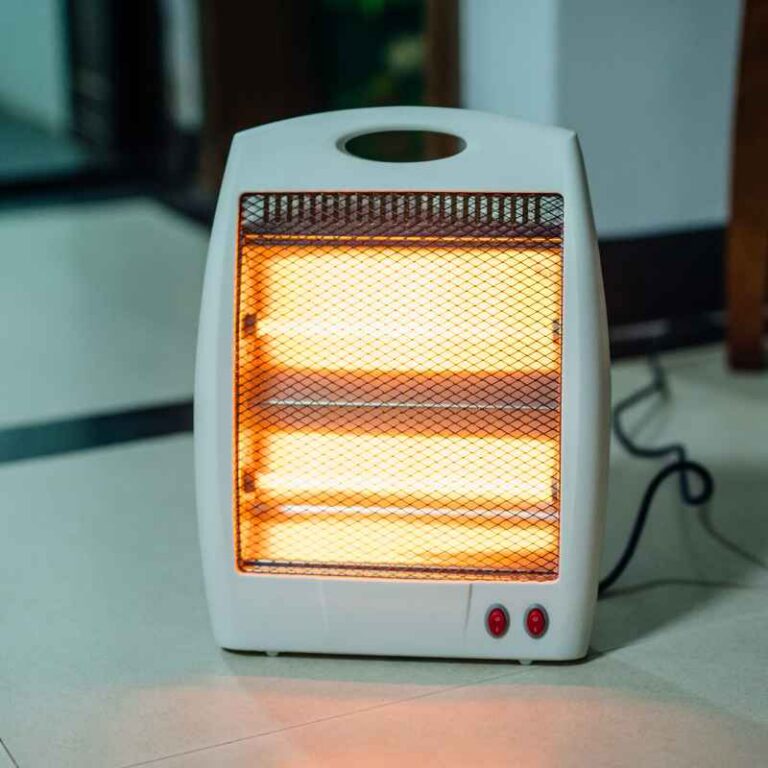
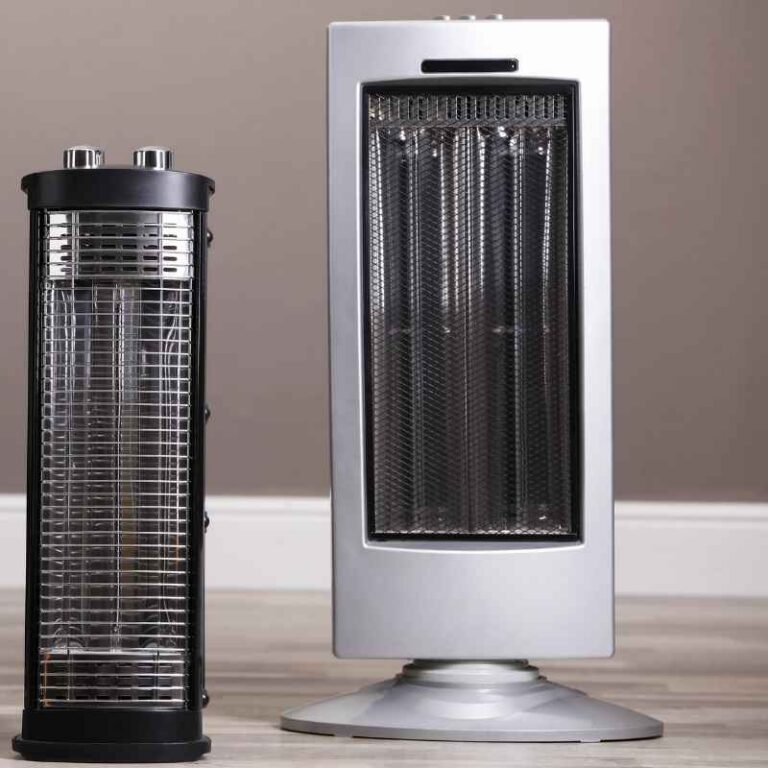
Breathing adds moisture. The same source notes each person adds 3 pints of water vapor daily. Showers, cooking, and laundry add more. EPA also says combustion appliances increase humidity unless vented, which matters for fireplaces, gas stoves, and some space heaters.
Unvented or poorly vented combustion appliances can raise indoor moisture while also affecting airflow. That can leave one room damp and another dry. If you use a fireplace or space heater, monitor the room where it runs, not just the hallway.
How do you measure winter humidity correctly?
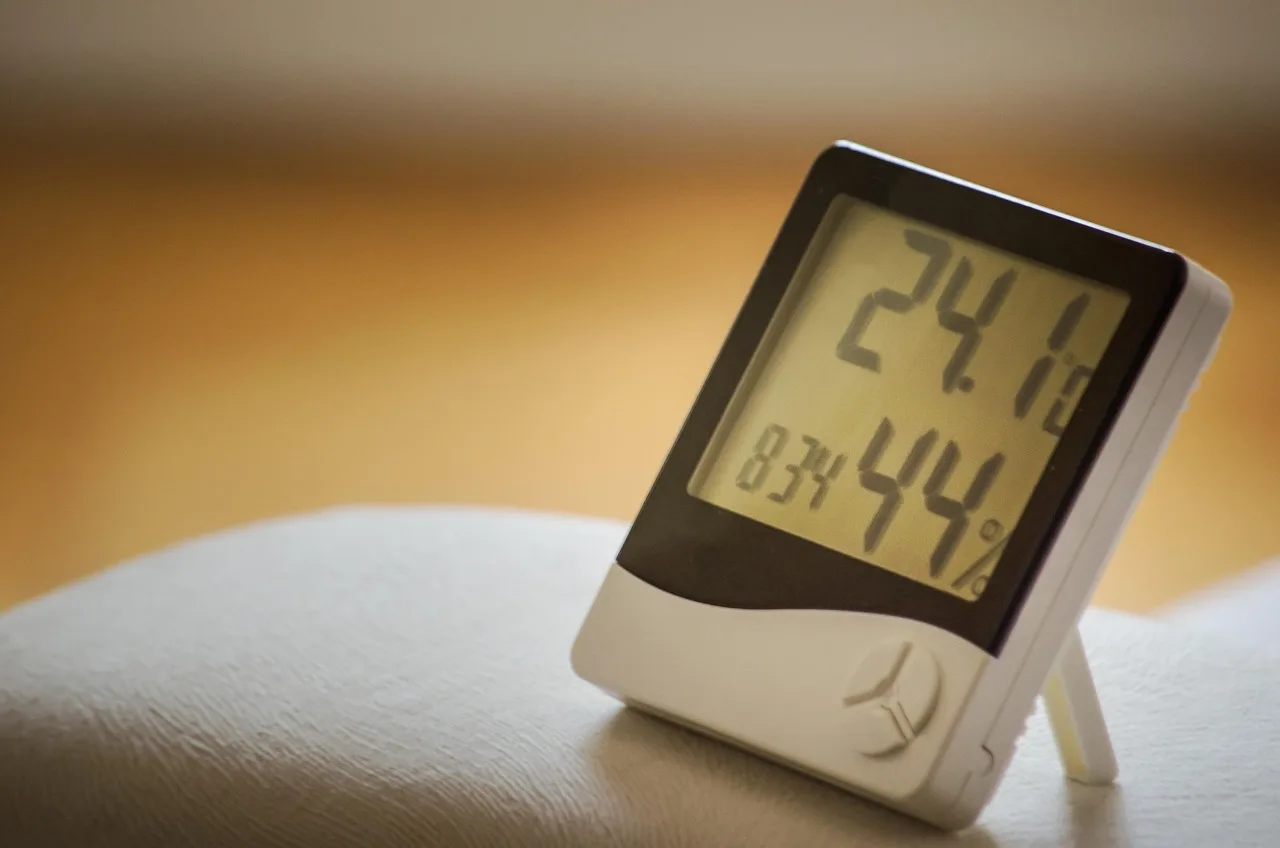
Use a hygrometer to measure humidity for a more accurate reading. One whole-house reading is useful, but it is not enough by itself because rooms can vary after heating, humidifier use, cooking, showering, or ventilation changes. Place meters where the air is actually used, not tucked beside a vent or against a cold window.
Where to place the meter
Put the hygrometer at about breathing height in a representative room, away from direct heat, supply registers, humidifiers, and exterior walls. Avoid setting it on a windowsill, where cold glass can distort the reading. For a more useful picture, compare at least two rooms: one living space and one bedroom.
If a room feels dry but the meter reads high, check for local causes. A nearby bathroom, a closed door, or a warm vent can skew the number. If one room reads low and another reads high, adjust the room with the problem instead of changing the whole house blindly.
Calibration and reading changes
Many hygrometers are close enough for home use, but they can drift. If a reading seems odd, compare it with another meter or check it in a stable room over several hours. Watch for shifts after showers, after the furnace cycles, or after opening windows for ventilation.
Give the house time to settle before making a final decision. Right after humidifier use, the number may be temporarily higher near the machine and lower in farther rooms. Measure again after the air mixes.
How should you adjust humidity in winter?
Use a humidifier when the air stays below about 30% and you do not see condensation. Use ventilation or dehumidification when the reading climbs above your safe ceiling or when windows sweat. If one room is dry and another is damp, treat them separately instead of forcing one whole-house number.
When to add moisture
Add moisture when the reading is below 25% or 25% to 30% and windows remain clear. Raise the level slowly, then recheck after the furnace runs for a while. Stop before the humidifier pushes the house into the 40% to 50% band unless your windows and climate can handle it.
When to remove moisture
Remove moisture when windows fog, frost appears, or the reading sits above 40% during cold weather. Ventilate after showers and cooking. Run exhaust fans when they are available, and let combustion appliances vent correctly. If the reading is above 50%, stop humidifying and bring it down.
A simple winter checklist
- Check a hygrometer in more than one room.
- Look for condensation on windows, sills, and exterior corners.
- If readings are below 30% and no glass is sweating, add a little moisture.
- If readings are 30% to 40%, hold steady unless windows fog.
- If readings are above 40% and the weather is cold, reduce moisture.
- If readings are above 50%, stop humidifying and ventilate.
Frequently asked questions
What is good humidity indoors in winter?
Good winter humidity is usually the range where people feel comfortable and windows stay dry. For many homes, that means about 30% to 40%. EPA guidance allows a broader 30% to 50% range, but the colder the weather, the more often the lower half of that range is the better choice.
What is best indoor humidity in winter?
The best level depends on your windows and climate, but 30% to 40% is a strong starting point. It matches common winter guidance and leaves room before condensation starts. If you see fog or frost on glass, move lower even if the air feels a little drier.
What is proper indoor humidity in winter?
Proper winter humidity means the level that avoids both dryness symptoms and moisture damage. That usually means staying below 50% and often closer to 30% to 40% in cold weather. Use a hygrometer and let the windows decide whether the ceiling needs to be lower.
How do I know if my winter humidity is too high?
Look for condensation on windows, frost on glass, water at the sill, and damp corners. Those signs mean the home is holding more moisture than the cold surfaces can manage. If that happens, lower the humidity and increase ventilation rather than adding more moisture.
Sponsored / affiliate links. As an Amazon Associate I earn from qualifying purchases. I may earn additional commission from eligible campaigns.