Why Is Cold Air Coming Down My Chimney?
Cold air usually drops down a chimney when the flue is open to outdoor pressure, the damper leaks, or the house is depressurized. If the draft disappears with a sealed damper, the problem is pressure or the damper. Left alone, that draft can waste heat, bring smoke or odors inside, and point to flue or combustion-safety problems. This guide shows how to tell normal winter downdraft from pressure problems, flue defects, and hazards, then gives the right fix for each.
This guide is part of our Space Heaters, Fireplaces and Winter Humidity Guide series.
How stack effect and depressurization reverse chimney draft

- Seals out drafts when the fireplace is idle.
- Reusable and works without a damper.
- Dense wool helps it hold its shape.
The chimney effect, also called stack effect, is air movement caused by buoyancy. Warm indoor air rises, so cold outdoor air is denser and sinks into lower openings while the warmer air leaks out higher in the house. That pressure pattern can help a chimney draft upward, or it can pull air the wrong way.
Draft is airflow created by a pressure difference. A fireplace needs that upward flow to move smoke outdoors, but the flow can reverse into downdraft or backdraft when the chimney is cold, the house is depressurized, or wind pushes on the flue opening. The same physics affects the whole home, not only the fireplace.
Chimney effect, draft, and the neutral pressure plane
The neutral pressure plane is the boundary where indoor pressure shifts from lower than outdoors below the plane to higher than outdoors above it. Airtightness changes where that boundary sits. Leaks at the basement, attic, and penetrations can move the neutral pressure plane and change whether air enters through the fireplace or exits elsewhere.
Cold outdoor temperatures often make chimney draft stronger, and taller chimneys usually draft better. Hotter fires draft better, too. But those general rules do not fix reversed flow by themselves. A tall chimney with a cold flue, a weak cap, or strong house depressurization can still spill cold air down into the firebox.
When cold air is normal and when it is not
A small puff of cold air after a long shutdown can happen, especially in winter and on windy days. That is different from steady cold air, persistent odor, smoke spillage, or repeated backdraft. If the smell or flow changes when the damper is closed, the issue often points to the damper, the flue, or pressure in the home.
Say your wood fireplace is quiet all summer, then a north wind starts a cold draft through the firebox on a January evening. That pattern points more toward wind-driven downdraft or a cap issue than a chimney that is “just cold.” If the same room also has a running range hood, house pressure becomes a likely suspect.
Signs the draft is normal or a problem
Normal winter downdraft usually shows up as brief cold air movement with no smoke spilling indoors. A problem usually brings odor, soot, visible smoke, weak flame behavior, or a draft that keeps returning. Gas fireplaces deserve extra caution because backdraft can bring combustion products, including carbon monoxide hazard, into occupied space.
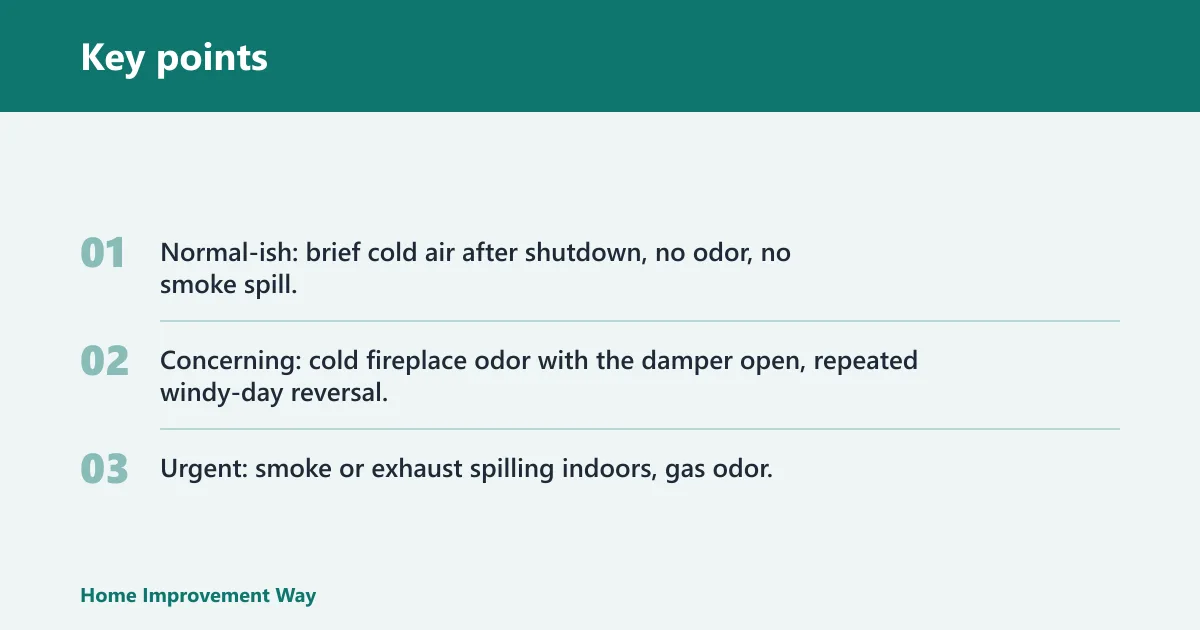
- Normal-ish: brief cold air after shutdown, no odor, no smoke spill, draft stops when conditions change.
- Concerning: cold fireplace odor with the damper open, repeated windy-day reversal, soot around the opening, or flame rollout.
- Urgent: smoke or exhaust spilling indoors, gas odor, headache or dizziness near the appliance, or a carbon monoxide alarm.
Signs the draft is normal or a problem
If the only symptom is a short-lived chill with no smoke, soot, or odor, the issue may be normal winter downdraft. If the draft reverses, lingers, or shows up with combustion odors, treat it as a problem. The next step is to separate wind effects, flue problems, and house pressure problems.
Cold fireplace odor with the damper open
An open damper removes one obvious blockage, so persistent cold odor with the damper open often means the flue is still too cold, partially blocked, or influenced by house pressure. A leaky damper can also let room air move the wrong way when the fireplace is idle. Open does not always mean clear.
Windy-day draft reversal
Wind can push across the top of the chimney and force air downward, especially if the cap is missing, damaged, or poorly shaped for the site. Screen pattern matters, too. Some caps reduce rain entry well but do little against downwash if the design does not handle the local wind pattern.
Smoke or exhaust spilling indoors
Smoke spill is more serious than a cold draft. It means the chimney is not carrying exhaust upward as intended. That can happen with a blocked flue, a cold liner, a weak fire, or strong depressurization inside the house. Stop using the appliance until the cause is known.
Gas fireplace backdraft symptoms
Gas fireplaces need careful attention because backdraft can spill combustion products without much visible smoke. Watch for flame disturbance, odor, soot, condensation, or a carbon monoxide alarm. If the draft reverses or the unit behaves oddly, do not keep relighting it until the system is checked.
Chimney causes that make cold air spill
Several chimney-side problems can create cold air intrusion even when the house is not severely depressurized. The most common are a blocked flue, a poor damper seal, a missing or weak cap, an exterior chimney wall that stays cold, and flue gases that cool too quickly before they leave the system.
Blocked flue or partial obstruction
Leaves, nests, creosote, masonry falls, or a damaged liner can narrow the passage. A partial blockage may still let some air move, which is why the fireplace can seem “mostly fine” while the draft stays weak. If smoke hesitates or spills, treat blockage as a top suspect.
Leaky or damaged fireplace damper
The fireplace damper controls airflow when the fireplace is not in use. A closed damper should block most chimney air, but a warped, rusted, or poorly seated damper can leak. An open damper can still allow cold air intrusion if the flue is cold enough or the house is under pressure.
Missing or poor chimney cap
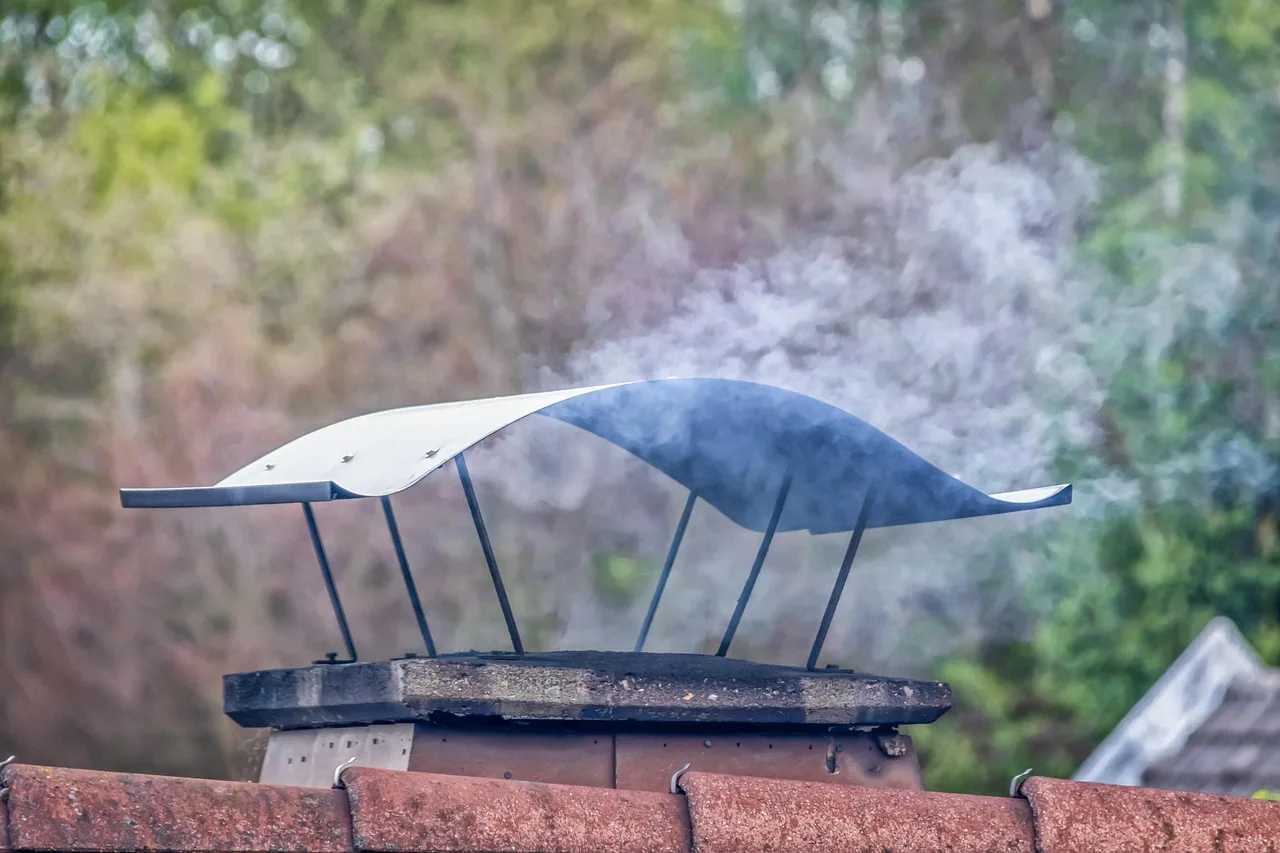
A chimney cap helps block rain, debris, and some wind-driven downdrafts. If the cap is missing, bent, or the screen is clogged, wind can push air down the flue or restrict exhaust. A cap that looks intact from the ground may still be the wrong design for the flue and roof exposure.
Masonry chimney on an exterior wall
An exterior masonry chimney loses heat quickly because it is exposed to outdoor conditions on one or more sides. That cold shell keeps flue gases cooler, and cooler gases weaken draft. An interior chimney often performs better because the flue stays warmer for longer and starts from a less severe temperature swing.
Cool flue gases in a cold flue
Cold flue gases are denser than hot gases and can stall before they fully establish upward draft. That is why a weak fire, a long idle period, or an uninsulated flue can invite cold air down the chimney. Insulated flues draft better because they keep the passage warmer.
Home pressure problems that pull air down
House pressure problems can overpower a healthy chimney. Bath fans, range hoods, clothes dryers, and other exhaust equipment can depressurize the home enough to pull air down the flue instead of up. Basement leakage, attic leakage, and other envelope gaps change the pressure balance as well.
Bath fans, range hoods, and dryers
These appliances move a lot of air out of the house. If the home is tight or the fireplace is on an outside wall, the chimney can become the easiest place for replacement air to enter. The stronger the exhaust load, the more likely the chimney is to backdraft or feel cold.
Basement, attic, and rim joist leaks
Leaks low in the house can feed the stack effect from below, while attic leaks can change how air escapes above. Rim joists, plumbing penetrations, attic hatches, and duct leaks all affect airtightness. The result can be a stronger whole-house pressure imbalance that nudges air through the chimney.
Airtightness and whole-house depressurization
A tighter building envelope can be efficient, but it also makes appliance exhaust more likely to compete with available makeup air. Below the neutral pressure plane, interior pressure is lower than outdoors. That zone can pull outdoor air in through the fireplace, especially when exhaust fans run at the same time.
Picture a sealed-up two-story house with a kitchen hood running and a gas fireplace on the first floor. If the hood pulls air out faster than the envelope can replace it, the chimney may become the easiest inlet. The fix is not “more fire.” It is finding the pressure source.
Gas fireplace versus wood-burning fireplace
Gas and wood fireplaces can both backdraft, but the warning signs differ. Wood fireplaces usually show smoke, odor, or soot first. Gas fireplaces may show weaker visual clues, so any unusual smell, condensation, or flame behavior deserves more caution because combustion products can still spill indoors.
Why gas units need extra caution
Gas fireplaces can create a carbon monoxide hazard if draft reverses or combustion is incomplete. A gas fireplace with backdraft symptoms should be treated as a safety issue, not just a comfort issue. If the unit is vented, the vent path, cap, and pressure balance all matter.
What changes with a wood-burning fire
A wood fire usually makes draft easier to see because smoke is visible. A hotter fire also drafts better, but a hotter fire cannot compensate for a blocked flue or strong home depressurization. If smoke rolls into the room, stop feeding the fire and correct the cause before another attempt.
When odor, soot, or sootless spill matters
Odor, soot, and spill without soot all matter. Wood systems may leave visible residue. Gas systems may leave little residue and still be unsafe. Any repeated spill means the problem is not simply cold weather; it is a draft failure that needs a cause-based fix.
Chimney draft troubleshooting matrix
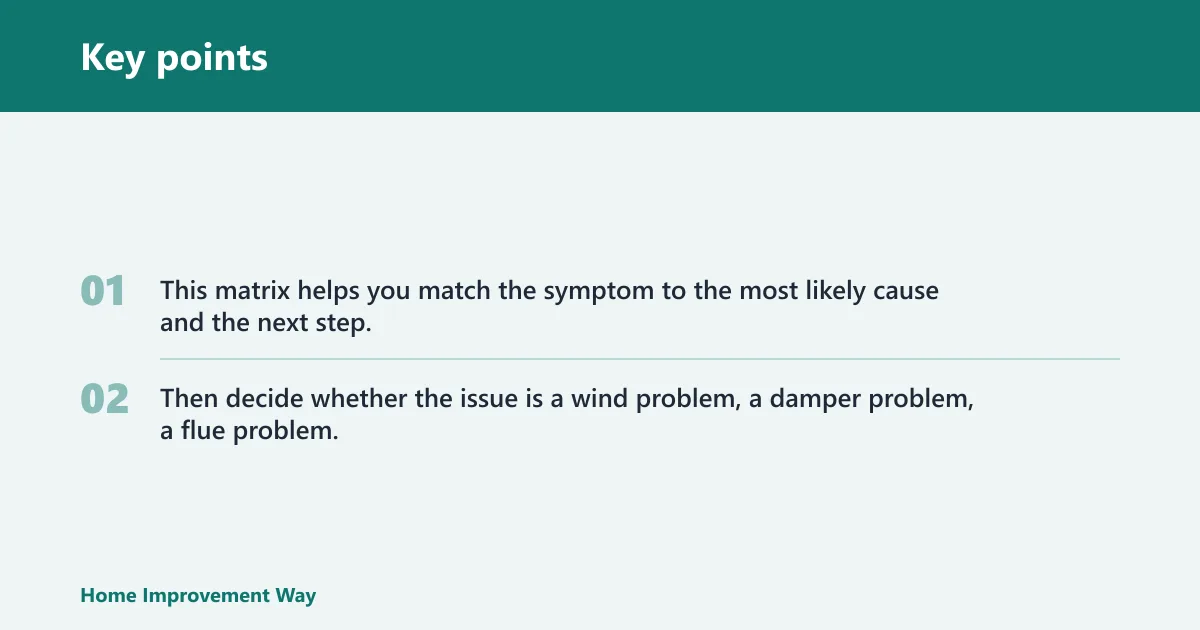
This matrix helps you match the symptom to the most likely cause and the next step. Start with the easiest checks first. Then decide whether the issue is a wind problem, a damper problem, a flue problem, or a house pressure problem.
| Symptom | Likely cause | Quick homeowner check | Next step |
|---|---|---|---|
| Cold air only on windy days | Wind-driven downdraft or cap design issue | Check whether the flow changes when the wind shifts direction | Inspect cap condition; call a chimney pro if it repeats |
| Cold fireplace odor with the damper open | Cold flue, leaky damper, or partial blockage | Look for obvious damper gaps and debris at the throat | Have the flue and damper inspected |
| Smoke spills into the room | Blocked flue or strong depressurization | Stop using the fireplace and note any fans running | Call a chimney professional right away |
| Gas fireplace backdraft symptoms | Pressure imbalance, vent problem, or blocked flue | Check for odor, flame change, or a CO alarm | Shut down the unit and call a qualified service tech |
| Draft improves when bath fans stop | House depressurization | Turn off exhaust fans one at a time | Reduce competing exhaust and check makeup air |
| Draft is weak after a long shutdown | Cold, uninsulated, or exterior-exposed flue | See whether the flue warms after a small kindling fire | Consider flue insulation or a chimney inspection |
| Persistent cold air with damper closed | Damper leakage or missing top seal | Look for visible gaps, rust, or a warped damper plate | Repair or replace the damper |
| Sudden reversal after attic or basement work | Changed airtightness or new pressure pathways | Check whether a fan, furnace, or new air leak changed the balance | Have the pressure issue evaluated |
When to call a chimney pro or HVAC tech
Call a chimney professional for blocked flues, repeated backdraft, damaged liners, or a cap problem you cannot reach safely. Call an HVAC technician when the issue follows pressure changes from fans, ducts, or makeup air problems. If smoke, gas odor, or a carbon monoxide alarm appears, treat it as urgent.
Carbon monoxide and smoke spill red flags
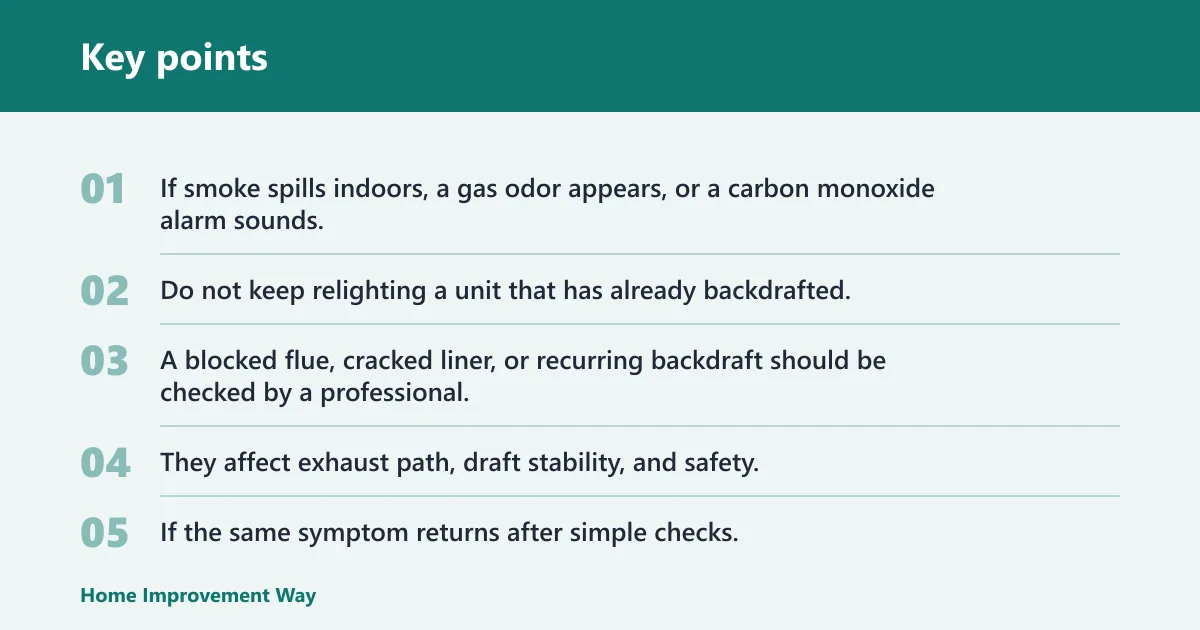
If smoke spills indoors, a gas odor appears, or a carbon monoxide alarm sounds, stop using the fireplace or appliance. Leave the area if symptoms suggest exposure. Do not keep relighting a unit that has already backdrafted; the cause has to be found first.
Blocked flue, cracked liner, or recurring backdraft
A blocked flue, cracked liner, or recurring backdraft should be checked by a professional. These are not comfort-only problems. They affect exhaust path, draft stability, and safety. If the same symptom returns after simple checks, the chimney likely needs more than a surface fix.
When pressure balancing needs professional help
If exhaust fans, a tight envelope, or a new appliance setup keep pulling air down the chimney, the house may need pressure balancing. That may involve makeup air, fan changes, duct corrections, or sealing major leaks. A technician can sort out which source is dominant.
Frequently asked questions
Why is cold air coming down my chimney?
Cold air usually comes down because the chimney is open to outdoor pressure, the damper leaks, or the house is depressurized. Wind, a cold flue, and a weak cap can add to the problem. If the draft stops when the damper is sealed, the cause is likely pressure or damper related.
Why is cold air coming through my fireplace?
Cold air through the fireplace usually means the flue is not drafting upward the way it should. A closed or leaky damper, a cold or exterior-exposed flue, or a blocked passage are common causes. If odor or smoke also appears, stop using the fireplace until it is checked.
Why is cold air coming through my gas fireplace?
Cold air through a gas fireplace can point to vent problems, pressure imbalance, or a cap issue. Because gas units can create a carbon monoxide hazard if draft reverses, treat repeated cold air or odor as a safety concern. Shut the unit down and have it inspected.
Is a cold fireplace draft normal in winter?
A brief cold draft can happen in winter, especially after the fireplace has been idle. That is more likely to be normal if it stops quickly and does not bring odor, smoke, or soot. Persistent draft, windy reversals, or spill indoors is not something to ignore.
Does a chimney cap stop cold air?
A chimney cap can reduce wind-driven downdrafts and keep debris out, but it is not a cure-all. If the cap is missing, damaged, or poorly designed, cold air may still enter. A cap helps most when the flue, damper, and house pressure are also in decent shape.
When is chimney draft a safety problem?
Draft becomes a safety problem when smoke, exhaust, or gas spills indoors, or when a carbon monoxide alarm sounds. Repeated backdraft, blocked flues, and gas fireplace odor are also red flags. If any of those show up, stop using the appliance and get it inspected before another fire.
Sponsored / affiliate links. As an Amazon Associate I earn from qualifying purchases. I may earn additional commission from eligible campaigns.