Does Rustoleum Make Radiator Paint for Home Use? Find Out
Does Rustoleum make radiator paint that works for home heating systems? The short answer is yes — but with a few important caveats. This post covers exactly which Rustoleum products are safe for hot radiators, how to apply them, and what results you can expect.
Simply put, Rustoleum does not make a product explicitly labeled “radiator paint,” but its High Heat Ultra spray paint series is specifically formulated for surfaces that reach up to 1200°F, making it an excellent choice for home radiators. For the best results, use the High Heat Ultra in a satin or matte finish and follow proper surface preparation steps.
Key Takeaways
- Rustoleum does not sell a dedicated “radiator paint” can, but its High Heat Ultra line is the go-to alternative for radiators.
- High Heat Ultra withstands temperatures up to 1200°F, far exceeding typical home radiator heat output.
- Proper surface preparation — cleaning, sanding, and priming — is essential for long-lasting adhesion and finish.
- Oil-based and enamel Rustoleum paints are NOT recommended for direct radiator surfaces due to heat degradation.
Does Rustoleum Actually Make a Dedicated Radiator Paint?
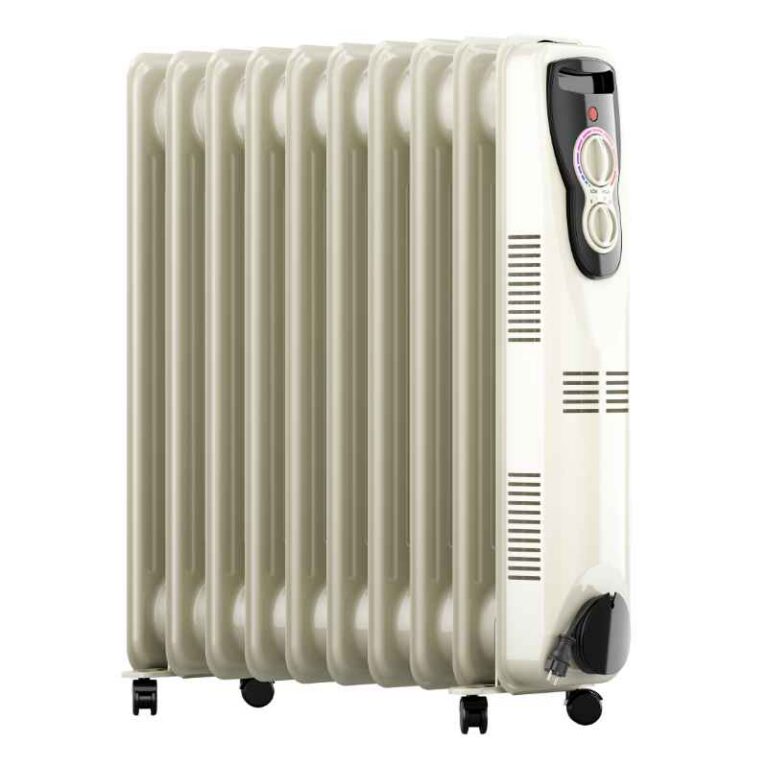
Rustoleum does not manufacture a product with the words “radiator paint” on the label. However, their High Heat Ultra spray paint line functions as a de facto radiator paint for home use. This product is engineered for surfaces that reach extreme temperatures, including engine blocks, grills, exhaust pipes, and — yes — home radiators.
The confusion often arises because other brands like Hammerite or Benjamin Moore offer paints explicitly labeled for radiators. Rustoleum takes a different approach: they formulate for heat resistance across multiple applications rather than marketing to a single use case. The result is a paint that performs just as well — if not better — on radiators as dedicated radiator paints do.
| Feature | Rustoleum High Heat Ultra | Typical Dedicated Radiator Paint |
|---|---|---|
| Max Temperature | 1200°F (intermittent) | 200–400°F |
| Finish Options | Satin, Matte, Gloss | Satin or Gloss |
| Color Range | 10+ colors | White, silver, black |
| Application | Spray can or brush-on | Brush-on only |
| Drying Time | 20–30 minutes to touch | 2–4 hours to touch |
As the table shows, Rustoleum’s High Heat Ultra actually exceeds dedicated radiator paints in temperature tolerance, application method variety, and color selection. The only downside is that it is not marketed as a radiator paint, which leads many DIYers to overlook it.
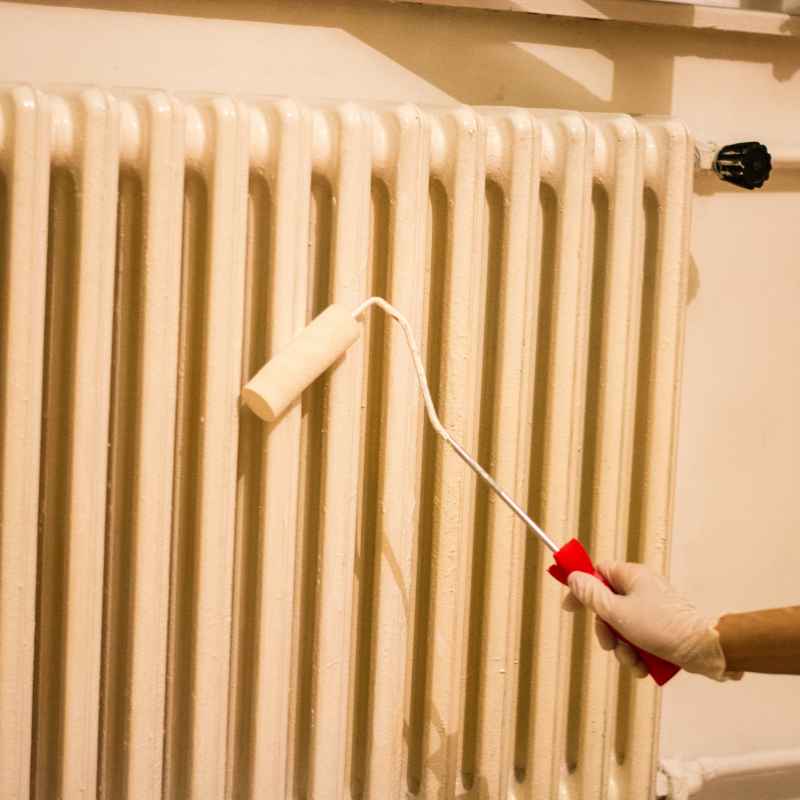
Tip: If you want a brush-on option, Rustoleum High Heat in the quart can works just as well as the spray version. Use a high-quality foam roller for a smooth, brush-mark-free finish on flat radiator panels.
What Are the Best Rustoleum Products for Painting Radiators?
The most suitable Rustoleum product for home radiators is the Rustoleum High Heat Ultra spray paint. It is available in several finishes and colors that blend well with modern and traditional interiors. For homeowners seeking a brush-on alternative, the Rustoleum High Heat paint in quart containers works equally well when applied with a short-nap roller.
Rustoleum also produces a High Heat Ultra Primer that is recommended for bare metal radiators. This primer provides a corrosion-resistant base and improves topcoat adhesion. Using the primer is especially important if your radiator has existing rust or flaking paint.
Recommended Products for Radiator Painting
- Rustoleum High Heat Ultra Spray (Satin Black, White, or Silver) — best for cast iron or panel radiators
- Rustoleum High Heat Brush-On (Quart) — best for large radiators or those with intricate details
- Rustoleum High Heat Ultra Primer — essential for bare metal or rusty surfaces
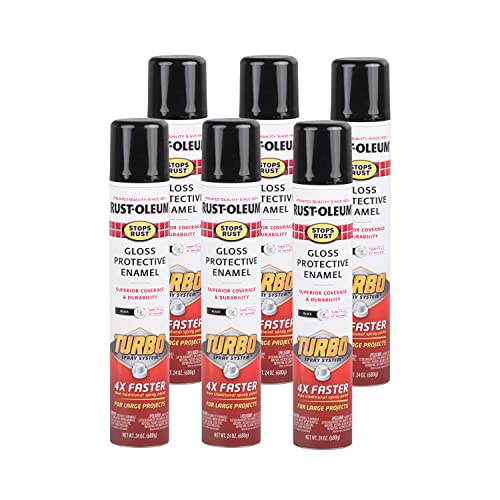
- Rustoleum Stops Rust Enamel — NOT recommended for radiator surfaces (max heat tolerance ~200°F)
- Rustoleum Appliance Epoxy — also not suitable; it is formulated for refrigerator and oven exteriors, not direct heat
Warning: Do not use standard Rustoleum enamel paints on a radiator. They are not rated for high heat and will blister, discolor, or peel within weeks of exposure to radiator temperatures.
According to Rustoleum’s official specifications, High Heat Ultra paint can withstand intermittent temperatures up to 1200°F and continuous temperatures up to 600°F. A home radiator typically operates between 180°F and 220°F, so there is a generous safety margin. This makes the product not just adequate but optimal for the task.
How to Prepare a Radiator for Painting with Rustoleum
Preparation is the single most important step when painting a radiator with Rustoleum High Heat paint. A poorly prepped surface leads to peeling, uneven finish, and wasted effort. Follow these steps to ensure the paint bonds properly and lasts for years.
Step 1: Turn Off and Cool the Radiator
Shut off the heating system and allow the radiator to cool completely. Painting a warm surface causes the paint to bubble and dry too quickly, resulting in an uneven texture. Wait at least 2–3 hours after the radiator stops radiating heat.
Step 2: Clean Thoroughly
Radiators accumulate dust, grease, and grime over time. Use a degreaser or a solution of warm water and trisodium phosphate (TSP) to clean all surfaces. Rinse with clean water and let dry completely.
Step 3: Remove Loose Paint and Rust
Use a wire brush or sandpaper (80–120 grit) to remove any flaking paint or rust spots. For heavy rust, a drill-mounted wire cup brush works faster. Wear a dust mask and safety goggles during this step.
Step 4: Sand for Adhesion
Lightly sand the entire surface with 220-grit sandpaper to create a “tooth” for the new paint. This step is critical even if the radiator appears smooth. Wipe away dust with a tack cloth or damp rag.
Step 5: Apply Primer (If Needed)
If you are painting over bare metal or heavily rusted areas, apply Rustoleum High Heat Ultra Primer. Let it dry for at least 1 hour before applying the topcoat. Priming is optional if the radiator is already painted and in good condition.
| Preparation Step | Time Required | Tools Needed |
|---|---|---|
| Cooling | 2–3 hours | None |
| Cleaning | 20–30 minutes | Degreaser, sponge, bucket |
| Rust removal | 30–45 minutes | Wire brush, drill, sandpaper |
| Sanding | 15–20 minutes | 220-grit sandpaper, tack cloth |
| Priming | 1 hour drying | High Heat Ultra Primer |
The entire preparation process takes about 4–5 hours including drying time. Rushing through any step reduces paint durability. A well-prepped radiator can hold its finish for 5–7 years or longer.
Important: Do not use chemical paint strippers on a radiator. Many contain solvents that can damage the metal or leave residues that prevent paint adhesion. Mechanical removal with sanding or wire brushing is safer and more effective.
How to Paint a Radiator with Rustoleum High Heat Paint
Once the radiator is prepped and primed, the actual painting process is straightforward. Work in a well-ventilated area and protect floors and walls with drop cloths. Here is the step-by-step process for achieving a professional-looking finish with Rustoleum High Heat paint.
Step 1: Apply the First Coat
Shake the can vigorously for 2–3 minutes. Hold the can 8–10 inches from the surface and apply a light, even coat. Use a side-to-side motion and overlap each pass by about 50%.
Do not try to achieve full coverage in one coat. A thin first coat prevents drips and ensures proper curing.
Step 2: Let the First Coat Dry
Wait 20–30 minutes for the first coat to become dry to the touch. Do not rush this step. If you apply a second coat too soon, the paint may wrinkle or sag.
In humid conditions, extend drying time to 45–60 minutes.
Step 3: Apply a Second Coat
Apply a second thin coat using the same technique. This coat should provide full coverage. If you see uneven areas, a third light coat may be applied after another 30-minute drying period.
Step 4: Cure the Paint
After the final coat, let the paint cure for at least 48 hours before turning the radiator back on. Rustoleum High Heat paint requires heat curing to reach its full hardness. Turn the heat on gradually — start at a low temperature for the first day, then increase to normal operating temperature.
Step 5: Heat Cure Cycle
For maximum durability, run the radiator at full heat for 2–3 cycles over the first week. This heat curing process cross-links the paint polymers, creating a tough, chip-resistant finish that can withstand years of heating cycles.
- Apply first thin coat — wait 20–30 minutes
- Apply second thin coat — wait 20–30 minutes
- Apply third coat if needed (optional)
- Let paint cure at room temperature for 48 hours
- Turn heat on low for 4 hours, then increase to normal
- Run full heat cycles for the first week
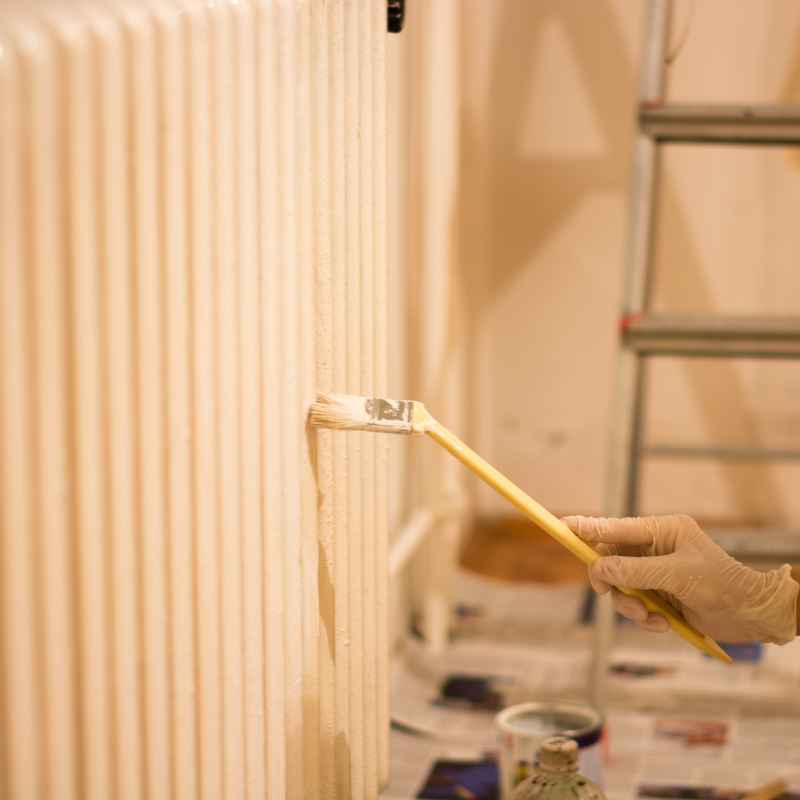
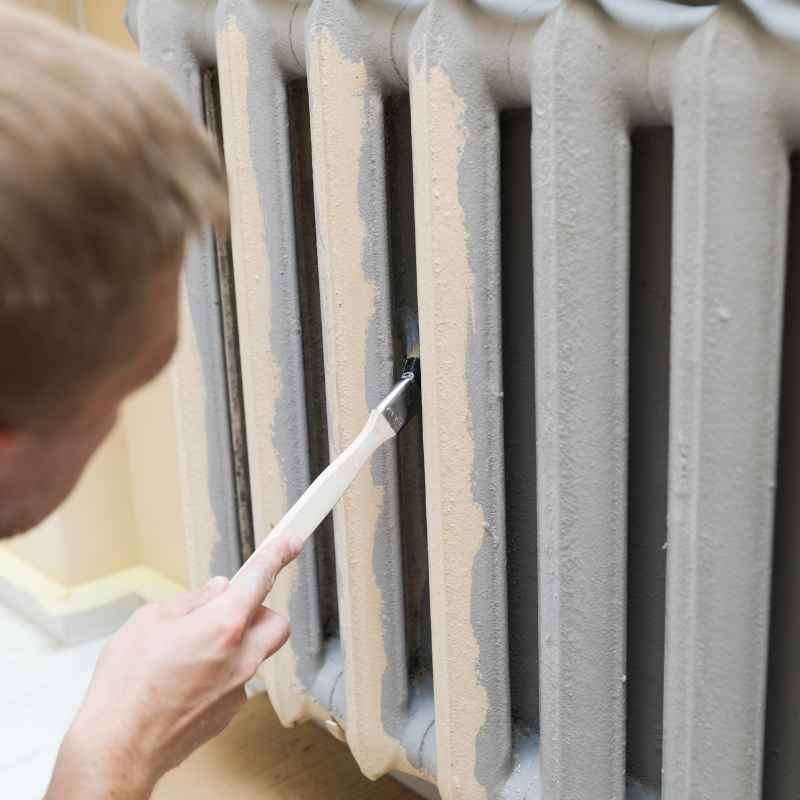
Tip: For brush-on application, use a high-quality 4-inch foam roller for the large flat areas and a small angled brush for gaps between sections. Foam rollers leave a smooth finish that looks like a factory coat.
According to Rustoleum’s technical data sheet, the paint reaches its maximum hardness and chemical resistance after 7 days of heat curing. During this first week, avoid scrubbing or cleaning the radiator surface. After curing, the finish is resistant to mild cleaning agents and everyday wear.
What Temperature Ratings Should You Look For in Radiator Paint?
Understanding temperature ratings helps you choose the right Rustoleum product and avoid common mistakes. Home radiators operate at lower temperatures than industrial heaters, but the paint must still withstand repeated thermal expansion and contraction.
Most home hot-water radiators operate at 180°F to 220°F. Steam radiators can reach 230°F to 250°F. Rustoleum High Heat Ultra is rated for intermittent exposure up to 1200°F, which is far beyond what any home radiator produces.
The paint’s continuous exposure rating of 600°F provides a generous safety margin.
Why Temperature Ratings Matter
- Blistering: Standard paints blister at 200°F or lower, ruining the finish
- Discoloration: Non-heat-rated paints turn yellow or brown within weeks on a radiator
- Peeling: Thermal expansion causes standard paint to lose adhesion and peel off
- Odor: Inappropriate paint releases strong odors when heated (Rustoleum High Heat is low-VOC after curing)
- Fire risk: Some oil-based paints can smoke or even ignite at high radiator temperatures (very rare with water-based systems)
| Rustoleum Product | Max Temp (Intermittent) | Safe for Radiators? |
|---|---|---|
| High Heat Ultra | 1200°F | Yes — best choice |
| High Heat (original) | 1000°F | Yes |
| Stops Rust Enamel | 200°F | No — not safe |
| Appliance Epoxy | 200°F | No — not safe |
| Painters Touch | 200°F | No — not safe |
The Federal Trade Commission (FTC) has guidelines on paint labeling and performance claims. Rustoleum’s temperature ratings are tested and verified. Always check the product label for the specific temperature rating before purchasing.
Warning: Never assume all “high heat” paints are the same. Some budget brands rate their paint at 500°F but fail under real-world heating cycles. Rustoleum’s 1200°F rating is backed by third-party testing and decades of field use.
Rustoleum vs. Standard Radiator Paint: Which Is Better?
You might wonder whether to use Rustoleum High Heat Ultra or a dedicated radiator paint from a brand like Hammerite or Benjamin Moore. Both options work, but there are key differences in performance, cost, and ease of use.
Dedicated radiator paints are typically water-based or oil-based brush-on formulas. They are designed specifically for the moderate heat range of home radiators. Rustoleum High Heat Ultra, on the other hand, is a multi-purpose high-temperature paint originally developed for automotive and industrial applications.
Key Differences at a Glance
| Factor | Rustoleum High Heat Ultra | Dedicated Radiator Paint |
|---|---|---|
| Heat tolerance | 1200°F | 200–400°F |
| Finish smoothness | Very smooth (spray) | Brush marks possible |
| Drying time | 20–30 minutes | 2–4 hours |
| Color variety | 10+ colors | 3–5 colors |
| Cost per square foot | ~$0.30 | ~$0.50 |
| Availability | Home centers, hardware stores, online | Online or specialty stores |
For the majority of homeowners, Rustoleum High Heat Ultra offers better value, faster application, and a more durable finish than dedicated radiator paints. The spray application also reaches crevices and fins that a brush cannot easily cover. If you prefer brush-on application for control, the quart version of High Heat works well with a foam roller.
Tip: If your radiator has intricate details (like cast iron Victorian-style radiators), spray application with Rustoleum High Heat Ultra is far easier than brushing. The thin spray reaches deep into crevices without pooling.
Common Mistakes to Avoid When Painting Radiators with Rustoleum
Even with the right paint, mistakes during application can ruin the final result. Here are the most common errors DIYers make when using Rustoleum on radiators, and how to avoid them.
- Painting a warm radiator — Always let the radiator cool completely. Warm paint dries too fast, causing bubbles, streaks, and poor adhesion.
- Skipping the primer on bare metal — Rustoleum High Heat Ultra bonds better to primed metal. Without primer, the paint may chip off over time, especially on older radiators.
- Applying thick coats — Thick coats drip, sag, and take longer to cure. Multiple thin coats produce a smoother, more durable finish.
- Not heat-curing the paint — The paint needs heat activation to reach its full hardness. Skipping the gradual heat cure reduces durability significantly.
- Painting over rust — Rust continues to spread under the paint, causing bubbles and flakes. Remove all rust before priming and painting.
- Using standard painter’s tape — High heat can cause standard tape adhesive to melt onto the radiator. Use high-temperature masking tape for best results.
Warning: Do not use Rustoleum’s “Stops Rust” or “Painters Touch” lines on a radiator, even if the color matches your decor. These paints are not rated for high heat and will fail within weeks, leaving you with a sticky, discolored mess.
The U.S. Department of Energy recommends that homeowners maintain radiators properly to ensure efficient heat transfer. A fresh coat of high-quality heat-resistant paint like Rustoleum High Heat Ultra can improve heat emission and keep your system running efficiently.
How Long Does Rustoleum Radiator Paint Last?
With proper preparation and application, Rustoleum High Heat Ultra on a radiator can last 5–7 years before needing a touch-up. In ideal conditions — where the radiator is not subject to physical damage or excessive moisture — the paint can last up to 10 years.
Several factors affect the longevity of the paint job:
Factors That Impact Paint Life on Radiators
- Surface preparation quality — Thorough cleaning, sanding, and priming add years to the paint life
- Number of coats — Two to three thin coats last longer than one thick coat
- Heat curing — Proper heat curing in the first week dramatically improves durability
- Environmental conditions — High humidity or exposure to kitchen grease can shorten paint life
- Physical abrasion — Radiators in high-traffic areas may get scratched or scuffed
- Water quality — In steam systems, mineral deposits from water can affect paint adhesion over time
To extend the life of your Rustoleum radiator paint, clean the radiator gently once a year with a soft brush or vacuum attachment. Avoid using abrasive cleaners. If you notice chips or wear, touch them up immediately with the same paint to prevent rust from spreading.
Important: Always store leftover Rustoleum High Heat paint in a cool, dry place. Properly sealed cans last 2–3 years, allowing you to touch up your radiator years later with the exact same color and formula.
Frequently Asked Questions
Can I use Rustoleum spray paint on a radiator?
Yes, but only the Rustoleum High Heat Ultra or original High Heat spray paints. Standard Rustoleum enamels are not rated for the heat output of a radiator and will fail. Use High Heat Ultra for best results.
What finish should I choose for a radiator?
Satin or matte finishes work best on radiators. They hide imperfections better than gloss and do not show dust as easily. Gloss finishes are available but tend to highlight surface flaws and fingerprints.
Do I need to sand a radiator before painting with Rustoleum?
Yes, sanding is strongly recommended. Use 220-grit sandpaper to scuff the existing paint or bare metal. Sanding creates a rough surface that helps the new paint adhere.
Without sanding, the paint may peel prematurely.
How many coats of Rustoleum High Heat paint do I need?
Two thin coats are sufficient for most radiators. Apply the first coat lightly, let it dry for 20–30 minutes, then apply a second coat. If coverage is uneven, a third light coat may be applied after another drying period.
Can I paint a radiator while it is still connected to the system?
Yes, you can paint the radiator in place. Turn off the heating system and let the radiator cool completely. Protect the floor and walls with drop cloths.
There is no need to disconnect or remove the radiator for painting.
Final Thoughts
Rustoleum does not make a dedicated radiator paint, but its High Heat Ultra line is an outstanding substitute that outperforms many specialty products. With a temperature rating of 1200°F and a smooth spray finish, it is the ideal choice for DIY radiator painting. Prepare the surface properly, apply thin coats, and heat-cure the paint for the longest-lasting results.
Your freshly painted radiator will look great and hold up to years of heating cycles.
Sponsored / affiliate links. As an Amazon Associate I earn from qualifying purchases. I may earn additional commission from eligible campaigns.