Oil-Filled Radiator Trips Breaker: Safe Checks
An oil-filled radiator that trips a breaker is almost always overloading the circuit it’s plugged into, either alone or combined with other devices, rather than suffering an internal electrical fault. These heaters draw a steady 1,200 to 1,500 watts on their highest setting, close to the ceiling of a standard 15-amp circuit, so the margin for error is thin. This guide walks through the checks that tell you whether it’s the circuit, the outlet, or the heater itself.
Do the Amperage Math First
A 1,500-watt oil-filled radiator on a 120-volt circuit draws 12.5 amps (watts divided by volts). A standard household circuit is protected by a 15-amp breaker, and code derates continuous loads to 80 percent of that, meaning about 12 amps is the practical ceiling for anything running more than 3 hours at a stretch. That leaves almost no headroom: a lamp, a phone charger, or a second space heater on the same circuit is often enough to push it over and trip the breaker. Check your home’s electrical panel or a circuit map to see what else shares the outlet’s circuit, and try running the heater alone on that circuit before assuming the heater is defective.
Extension Cords Make the Problem Worse
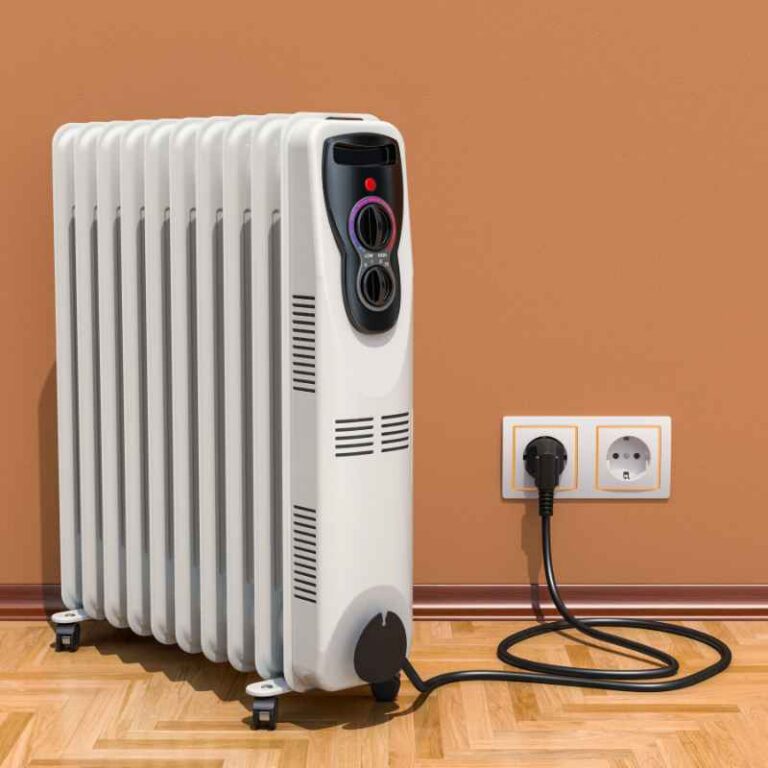
Oil-filled radiators are rated for direct connection to a wall outlet, not an extension cord, because the sustained high current causes thinner extension cord wire to heat up and drop voltage. That voltage drop makes the heater’s internal thermal protection work harder, and a cord rated below 14-gauge for this load can itself trip a GFCI outlet or contribute to nuisance breaker trips. If the heater is currently running through an extension cord or power strip, plugging it directly into a wall outlet is the first thing to try.
GFCI and AFCI Outlets Trip for Different Reasons
If the outlet itself has a GFCI (ground-fault) reset button, it’s tripping because of a small current leak to ground, which can happen if the radiator’s internal wiring has absorbed moisture or if the heating element has a minor insulation breakdown; this is a heater problem, not a circuit-capacity problem. An AFCI breaker at the panel, common in bedrooms built to modern code, trips in response to arcing, which can be caused by a worn power cord or a loose connection inside the heater’s plug. If resetting either type holds for a few minutes and then trips again specifically when the heater is running, that points to the heater’s cord or internal wiring rather than simple overload, and it’s worth having the right wattage for an oil-filled radiator confirmed against the circuit it’s meant to run on, or having an electrician check the outlet.
When to Stop Using It and Call an Electrician
Stop using the heater immediately if you notice a burning smell, scorch marks on the plug or cord, a breaker that trips within seconds of plugging in with nothing else on the circuit, or visible damage to the cord insulation. These point to an internal short rather than overload, and continuing to reset the breaker and run it risks a fire. A licensed electrician can test the outlet’s wiring and confirm whether the circuit itself has a fault separate from the heater.
Frequently Asked Questions
Should I run the heater on a lower setting to stop the tripping?
Yes, as a practical workaround: dropping from 1,500 to 900 or 700 watts (available on most models’ low or medium settings) reduces the amp draw enough to stay well under the breaker’s limit. It won’t fix an actual wiring fault, but it confirms whether overload was the cause.
Can a different heater work on the same circuit without tripping?
Possibly, since not all oil-filled radiators draw the same wattage on their highest setting, some max out around 1,200 watts rather than 1,500. Check the wattage rating on the heater’s data label rather than assuming all units in this category pull the same amperage.
Does a tripped breaker mean the heater is unsafe to keep using?
Not by itself. A breaker tripping from simple overload is the breaker doing its job correctly, and the heater is fine once moved to a dedicated circuit or run on a lower wattage setting. Repeated tripping on a confirmed dedicated circuit with nothing else drawing power is the situation that warrants inspection.
Sponsored / affiliate links. As an Amazon Associate I earn from qualifying purchases. I may earn additional commission from eligible campaigns.