How to Fix a Humidifier That Smells Musty
Empty the humidifier, scrub the tank and base with a soft brush, replace the filter or wick if it is slimy or stained, and disinfect the unit with the method that matches its type. A musty smell can spread mold, add mineral buildup, and push damp, stale air back into the room. This guide shows how to identify the cause and clean evaporative, ultrasonic, and warm-mist humidifiers safely.
Stagnant water, mineral scale, and dirty components


A musty humidifier usually points to stagnant water, mold and mildew, mineral scale, or a dirty wick or filter. The smell may come from the tank, the base, seams, output parts, or a heating chamber, so the fix depends on where the odor is starting and what kind of unit you own.
Stagnant water and biofilm
The humidifier tank is a standing water reservoir, and you need to empty and dry it regularly. Water left in the tank or base can turn stale and grow biofilm, which often smells swampy or sour even before you see visible residue.
Mineral scale and trapped residue
Mineral scale is the white buildup left by tap water. It can trap odor-causing residue and keep damp grime stuck to surfaces, especially in the tank, base, and ultrasonic plate. White vinegar or manufacturer-approved descaling can loosen it, but not every part or finish should be soaked in vinegar.
If the humidifier has a filter or wick, it can absorb stale water and deposits. Hoses, vents, seams, and the underside of caps can also hold odor. If the smell returns soon after cleaning, a hidden part is often still dirty or the wick is past its service life.
How to tell the cause by smell
Different odors point to different problems, and that helps you clean the right part first. Sour or swampy odor often means stagnant water or microbial growth, while a dusty smell usually points to a filter, wick, or residue that has dried on and started smelling again.
Sour smell
A sour odor usually comes from old water, biofilm, or mildew in the tank and base. Start by emptying the unit fully, then clean every surface that touched water, including corners and seams where residue collects.
Dusty smell
A dusty smell often points to a filter or wick that has trapped deposits and dried residue. It can also come from dust inside the air path of a cool mist unit. If the part is stained, stiff, or crusted, replacement is usually the better fix.
Swampy smell
A swampy odor usually means microbial growth in a damp component that is not drying fully between uses. That can happen in the tank, base, wick housing, or output path. Full cleaning matters, but full drying matters just as much.
Smell only when running
If the odor appears only while the unit is running, the problem is often in the mist path, fan path, or plate. The machine may be pulling air across a dirty wick, slimy base, or scale-coated ultrasonic plate and pushing that odor into the room.
Smell after cleaning
If the smell returns right after cleaning, a hidden reservoir of residue is likely still there. Check the wick, filter, hose, underside of the lid, seams, corners, and any removable output parts. If a part stays stained or slimy, cleaning may no longer be enough.
Warm mist vs cool mist odor clues
Warm mist units often smell from scale in the heating chamber or mineral residue left behind after boiling. Cool mist and ultrasonic units more often smell from the tank, base, wick, fan path, or ultrasonic plate. The fix should match the type, or the odor will keep returning.
Humidifier odor troubleshooting matrix
Use this table to match the smell pattern to the most likely cause and the next fix. If the same odor returns after a full cleaning, move to the hidden parts in the last row instead of repeating the same routine.
| Symptom pattern | Likely cause | Exact fix |
|---|---|---|
| Sour smell | Stale water, biofilm, or mildew in the tank or base | Empty the unit, scrub the tank and base, then disinfect with a manufacturer-approved method and dry all parts fully |
| Dusty smell | Dirty wick, filter, or dry residue in the air path | Replace a worn wick or filter, clean vents and removable parts, and use distilled water going forward |
| Swampy smell | Microbial growth in a damp component | Deep-clean all wet surfaces, check seams and hidden channels, then let every part dry completely before reassembly |
| Smell only when running | Odor from the wick, fan path, ultrasonic plate, or heating chamber | Clean the type-specific parts, replace a soaked wick or filter, and inspect for scale or slimy residue in the mist path |
| Smell after cleaning | Hidden biofilm, trapped scale, or a part that cannot be cleaned well | Inspect hidden parts, replace stained or warped pieces, and stop if odor returns immediately after a proper clean |
| Smell from warm mist vs cool mist unit | Warm mist: scale in the heating chamber. Cool mist: wick, tank, base, or plate residue | Descale the heating chamber on warm mist units. Clean the tank, base, and plate on cool mist or ultrasonic units |
| Replace vs repair | Cracks, warped plastic, permanent staining, or odor that keeps returning | Replace the damaged part or the full unit if cleaning no longer removes the smell or the housing is no longer sanitary |
How to clean a humidifier safely
Unplug the humidifier before cleaning, then empty the tank and base completely. That keeps you safe, prevents accidental activation, and lets you reach the surfaces where odor usually starts. Clean the right parts for the model you own, rinse well, and dry everything before reassembly.
-
Unplug and cool down.
Turn the unit off, unplug it, and let warm mist models cool fully before touching the chamber or base. Cleaning while hot can cause burns and can also drive residue deeper into seams.
-
Drain every water chamber.
Empty the tank, base, tray, and any removable reservoir as part of cleaning. Tip out standing water and open caps or covers so trapped liquid can leave the housing.
-
Wash removable parts.
Clean the tank, lid, cap, tray, and other removable parts with warm water and a mild cleaner approved by the manufacturer. Use a soft brush or cloth to reach corners and seams where residue can stay hidden.
-
Descale mineral buildup.
Use white vinegar diluted only if the manual allows it, or use a manufacturer-approved descaling product. This step matters when white mineral film is present, because scale can hold odor-causing residue and keep surfaces damp.
-
Disinfect only when allowed.
Hydrogen peroxide can help disinfect some humidifier parts, but only if the manufacturer allows it. Rinse thoroughly afterward, because any leftover cleaner can smell strong and may irritate the room air.
-
Dry every part fully.
Set the tank, base, cap, and accessories on a clean towel or rack and leave them until all surfaces feel dry, including seams and screw channels. A part that still feels damp can restart odor fast, especially in a closed room or during daily winter use.
Say your cool mist unit smells sour after two nights of use and the tank still has a little water each morning. That pattern points to standing water and residue, not a bad room smell. Emptying and drying the tank between uses usually matters more than another quick rinse.
How to clean a cool mist humidifier
Cool mist units often collect residue in the tank, base, fan path, wick housing, and output parts. Clean those areas together, because a spotless tank will not fix a slimy base or a dirty wick that keeps sending odor into the mist.
Tank, base, and crevices
Scrub the tank and base with a soft brush, especially around seams, corners, and the fill cap. Cool mist units can build up slippery residue if neglected, and that buildup can smell before it looks obvious.
Ultrasonic plate and output path
Ultrasonic models need careful cleaning of the vibrating mist-making plate. Wipe the plate gently so you do not scratch it, then clean the output path and nearby surfaces where mineral film and residue collect. Harsh scrubbing can damage the plate.
Wick or filter replacement
If the unit uses a wick or filter, replace it on schedule or sooner if it becomes slimy, stained, or stiff. A wick can hold stale water and odor even after cleaning, so replacement is often the cleanest fix for recurring smell.
How to clean a warm mist humidifier
Warm mist units need the heating chamber and scale removal addressed first. Because they heat water before releasing vapor, mineral buildup can form inside the chamber and around metal or plastic parts, so the cleaning process is different from a cool mist model.
Heating chamber and scale removal
Descale the heating chamber with white vinegar only if the manufacturer allows it, or use the listed cleaner for that model. Scale in a warm mist chamber can trap residue and produce a stale or metallic smell even when the tank looks clean.
Burn-safety and unplugged cleaning
Unplug the unit and wait until the chamber is cool enough to touch safely. Never pour cleaner into a hot reservoir. That can create splatter, strong fumes, or damage to the heating assembly.
When to replace a worn part
If the chamber is pitted, heavily stained, or warped, cleaning may stop working. Replace worn parts that no longer hold a clean surface, and consider replacing the whole unit if the smell returns after proper descaling and drying.
How to keep the smell from coming back
Use distilled water to reduce mineral deposits and cut the chance of recurring odor. Keep the tank empty when the humidifier is not in use, replace filters or wicks on schedule, and match run time to the room’s humidity so the unit does not stay wet longer than necessary.
Empty and dry the tank
After each use, pour out leftover water and leave the tank open so air can move through it. Standing water is the fastest path to stale odor, especially in a humid room or a tank with narrow corners.
Replace filters or wicks on schedule
Do not try to save a wick or filter that is slimy, heavily stained, or still smells after cleaning. Those parts are designed to be replaceable, and keeping them too long often brings the odor back into the room.
Match run-time to room humidity
Use the humidifier only as long as the room needs it. If the room already holds enough moisture, long run times can leave the tank, wick, and base damp for too long, which increases odor risk and can make the room feel sticky.
Suppose a bedroom humidifier runs overnight at a high setting, but the room stays comfortable with less output. Cutting the run time and using distilled water can reduce scale and keep the tank from sitting wet until morning, which helps the smell stay away.
When to replace the humidifier
Replace the humidifier if the odor keeps returning after a full cleaning, if parts are cracked or warped, or if staining and residue no longer come off. Repair stops making sense when the hidden surfaces cannot be cleaned well enough to stay sanitary or when replacement parts cost close to a new unit.
Persistent odor after full cleaning
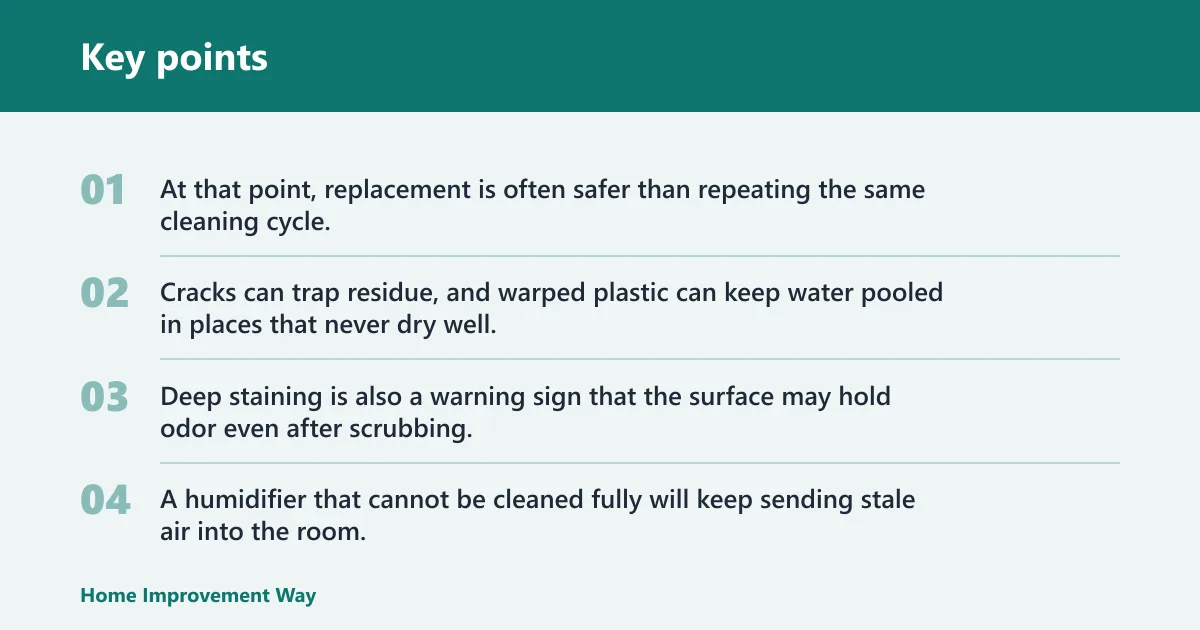
If the smell returns quickly after cleaning the tank, base, wick, plate, and chamber, a hidden source is likely still present. At that point, replacement is often safer than repeating the same cleaning cycle.
Cracks, staining, or warped parts
Cracks can trap residue, and warped plastic can keep water pooled in places that never dry well. Deep staining is also a warning sign that the surface may hold odor even after scrubbing.
Repair no longer makes sense
If the unit needs a new wick, filter, tank, base part, and chamber piece all at once, replacement is often the simpler choice. A humidifier that cannot be cleaned fully will keep sending stale air into the room.
Frequently asked questions
Why does my humidifier smell musty?
A musty smell usually means stagnant water, mildew, mineral scale, or a dirty wick or filter. Check the tank, base, and hidden parts first, because odor often starts where water sits the longest. A smell that returns after cleaning usually points to a missed component.
How to clean a moldy humidifier
Empty the humidifier, scrub the tank and base thoroughly, and disinfect only with a method the manufacturer allows. Then rinse well and let all parts dry completely. If mold stains remain in plastic, or the smell returns right away, replacement may be the safer option.
How to clean a cool mist humidifier: clean the tank, base, crevices
Clean the tank, base, crevices, output path, and ultrasonic plate or wick housing. Cool mist units often hide residue in the fan path and in slim channels around the mist outlet. Replace a wick or filter that is slimy, stained, or still smells after cleaning.
How to clean a warm mist humidifier: unplug the unit, let
Unplug the unit, let it cool, and descale the heating chamber and any removable parts. Warm mist models often collect mineral scale where water is heated, and that scale can hold odor. Use only cleaners listed by the manufacturer for the chamber and finish.
Will a dehumidifier remove musty smell?
A dehumidifier can help if the room itself is too damp, but it will not fix a dirty humidifier. If the odor comes from the unit, you still need to clean the tank, base, wick, plate, or chamber. Lower room humidity can help prevent the smell from returning.
Sponsored / affiliate links. As an Amazon Associate I earn from qualifying purchases. I may earn additional commission from eligible campaigns.