How to Warm a Basement Room with a Space Heater
Warm a basement room with a ceramic or oil-filled space heater rated at about 1,500 watts, a common rule of thumb is about 10 watts per square foot, and place it on a flat floor with about 3 feet of clearance. Poor sizing or bad placement can leave the room cold, raise electric costs, or create a fire hazard. This guide shows how to choose the right heater, set it up safely, and cut draft and moisture problems that make basements hard to heat.
Why basement rooms feel colder
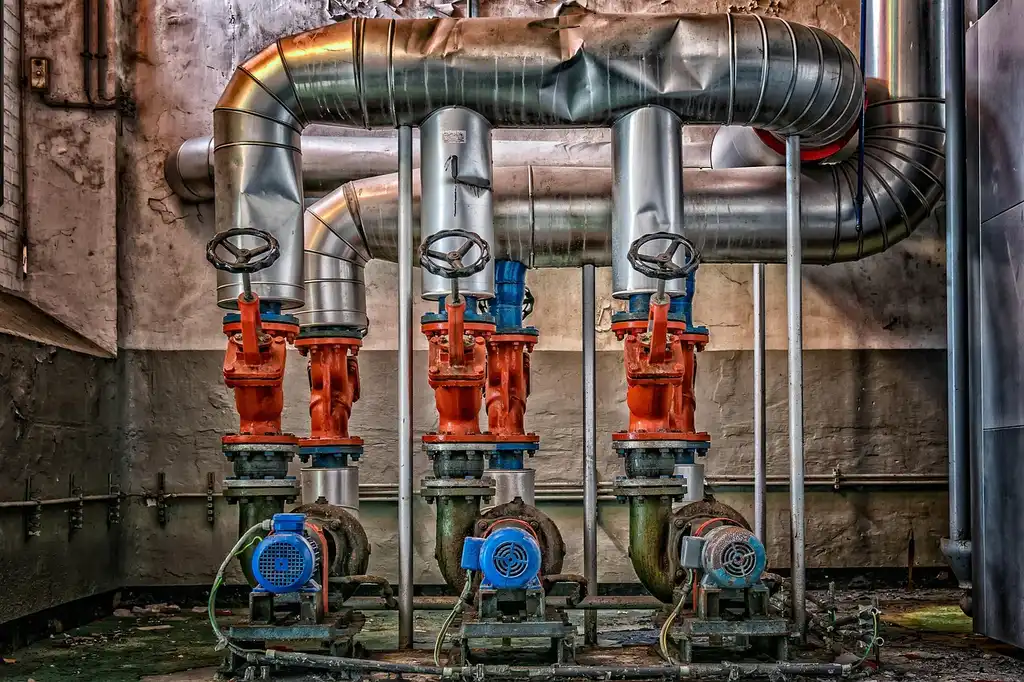


Basements often feel colder because they sit against concrete, lose heat to the ground, and pick up drafts from rim joists, windows, stairs, and utility openings. F1 says basements can be “cold and damp during winter season,” and that mix changes both comfort and heater performance.
Concrete slabs and cold floors
Concrete stays cool longer than finished flooring above grade. That means the air can reach your thermostat setting while your feet still feel cold, which is why a basement heater often feels weak even when the room is partly warm.
Drafts, leakage, and below-ground temperature swings
Below-ground rooms often change temperature more slowly than the rest of the house, then lose heat through gaps around sill plates, windows, and service penetrations. If the basement leaks air, a small heater may cycle constantly without bringing the room to a stable temperature.
Why damp air changes comfort and heater performance
Moist air feels cooler on skin and can make a room seem colder than the thermostat says. A space heater can raise air temperature, but it does not remove moisture. If the basement is damp, start with drying the space and checking whether the heater is allowed for that location.
How much space heater wattage do you need?
A useful starting point is about 10 watts per square foot for a finished basement room with average insulation. So a 150-square-foot room often needs about 1,500 watts, while a larger, leakier, or unfinished room may need more than one heater or a different heating solution.
Small finished rooms versus larger or unfinished spaces
A finished bedroom or office in the 100- to 150-square-foot range often works with one 1,500-watt plug-in heater. Larger rooms, open layouts, or unfinished basements with bare concrete and more air leakage usually need either a stronger permanent system or more insulation before a portable heater can keep up.
What the 1500-watt, 120-volt limit means
Many plug-in space heaters are commonly rated at up to about 1,500 watts on a standard 120-volt household outlet. Higher wattage generally heats faster, but it also uses more electricity and often requires a different setup. For a typical plug-in model, 1,500 watts is the common ceiling to plan around.
| Basement room condition | Approximate size | Suggested heater type | Wattage range | Placement | Safety checks |
|---|---|---|---|---|---|
| Small finished room | Up to 150 sq. ft. | Ceramic or oil-filled radiator | 750 to 1,500 watts | Flat floor, 3 feet clear on all sides | Tip-over shutoff, overheat protection, manual allows basement use |
| Medium finished room | 150 to 250 sq. ft. | High-output ceramic or infrared | 1,500 watts, or two zones if allowed | Near the occupied zone, not by curtains or storage | Check outlet load, avoid wet areas, use a thermostat |
| Large finished room | 250 to 400 sq. ft. | Wall-mounted heater or portable baseboard | Varies by model; confirm in the manual | Wall space or a clear perimeter area | Installation instructions, circuit capacity, clearance from clutter |
| Unfinished or damp room | Any size with poor insulation | Permanent heat or moisture control first | Portable heater often underperforms | Avoid using a portable unit as the only fix | Manual restrictions, damp-location limits, outlet and water exposure |
Which heater type fits your basement?
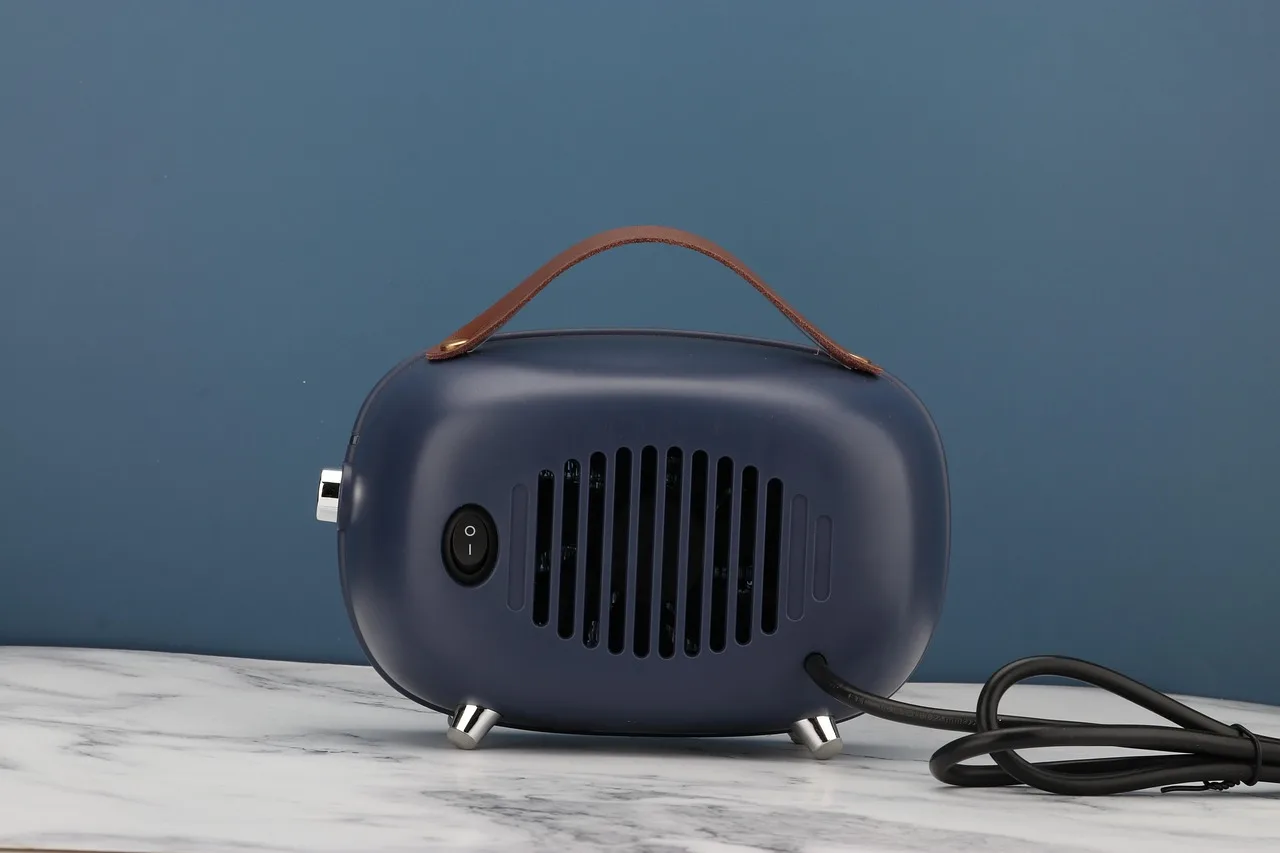
The right heater depends on how fast you need heat, how quiet the room should be, and whether you need floor space back. F2 lists electric baseboard heaters, space heaters, infrared heaters, and oil-filled radiators as basement examples. F3 also calls a mini-split heat pump a “superb alternative” for basement warming.
Oil-filled radiator for quiet, steady heat
An oil-filled radiator gives off gentle radiant heat and usually runs quietly. It suits finished living rooms, offices, and bedrooms where fan noise would be distracting. It warms more slowly than a ceramic heater, but it can hold comfort well in a closed room.
Ceramic space heater for quick warm-up
Ceramic heaters use a fan to move warm air quickly, so they can take the edge off a cold basement room fast. They are a good fit for short, targeted use in a small finished space. The fan makes them louder than radiant heaters.
Infrared heater for directed warmth
Infrared heat feels immediate because it warms surfaces and people in its path. That makes it useful for a desk area, reading corner, or workshop bench. It works best when the heater can face the occupied spot directly instead of trying to warm a whole open basement.
Wall-mounted and portable baseboard options
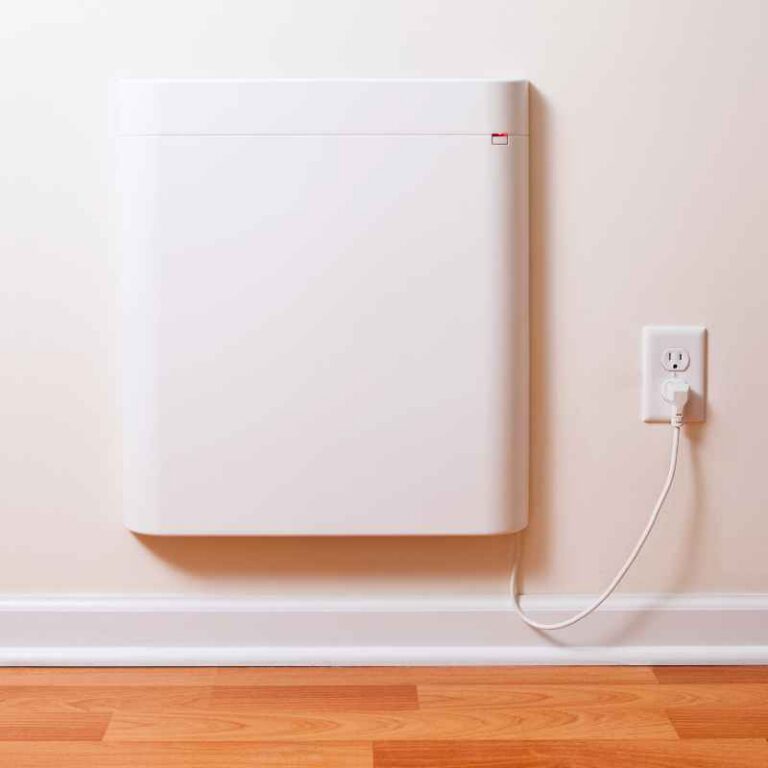
A wall-mounted heater saves floor space, but you need to know whether the unit is hardwired or a plug-in wall panel and follow the installation instructions for that model. Portable baseboard heaters are another option for small basements, but they still need clear space and a suitable outlet. F5 notes electric baseboard heaters can be a lower-cost option for small basements, yet they may cost more to operate than a short-duty portable heater and need proper circuit planning.
Suppose a 140-square-foot finished basement office feels cold at the desk and along the floor. A 1,500-watt ceramic heater on low or medium, set across from the sitting area, can warm that zone faster than an oil-filled unit. If the same room is next to a damp laundry area, the heater choice should change only after the moisture issue is addressed.
What safety features should you look for?
Look for tip-over shutoff, overheat protection, flame-retardant materials, and auto shutoff. Those features do not make a heater risk-free, but they lower the chance that a knocked-over unit, blocked airflow, or internal fault turns into a hazard. F12 says the Dreo 1500W PTC ceramic space heater includes ETL safety, tip-over protection, overheat prevention, and a 12-hour timer.
Tip-over shutoff and overheat protection
Tip-over shutoff turns the heater off if it is knocked over. Overheat protection stops the unit if internal temperature climbs too far. Both matter in basements because clutter, storage bins, pets, and narrow walkways raise the chance of contact with the heater.
Flame-retardant materials and auto shutoff
Flame-retardant housing adds another layer of protection if the heater runs hot for a long time. Auto shutoff is useful when the heater reaches its set temperature or if the unit is left on by mistake. It is not a substitute for supervision or clearance.
What to check in the manual before basement use
Check the manufacturer’s listing and manual for basement, damp-location, laundry-area, or bathroom-area restrictions before you plug the heater in. Do not use a space heater in wet areas or where spill water could reach it. If the basement has frequent moisture or standing water, the heater is the wrong fix until the area is dry and suitable for the unit.
-
Read the manual first.
Confirm that your exact model is approved for basement use, and check whether the manual restricts damp locations, laundry areas, or areas near water. If the manual does not allow the location, stop there and choose a different heating method.
-
Clear the heater zone.
Keep the unit away from boxes, fabric, paper, and low shelving. A simple 3-foot clearance on all sides is a practical baseline for most portable heaters, and extra space helps prevent blocked airflow.
-
Use a dedicated outlet.
Plug the heater directly into a standard wall outlet and avoid extension cords or power strips unless the manufacturer specifically allows them. A 1,500-watt heater can heavily load a shared circuit if other appliances are already running.
-
Keep it dry and visible.
Do not place the heater where water can splash, puddle, or leak into the unit. Keep it where you can see it while it runs, and never leave it operating while the room is empty.
Where should you place the heater?
Place the heater on a flat, stable surface with open airflow and easy access to the outlet. The right spot matters as much as wattage. A heater tucked behind furniture or next to storage may run harder without warming the room well.
Floor footprint and clearance from clutter
Portable units need enough open floor space that they will not be bumped, covered, or boxed in. Keep the cord short enough that it does not become a trip hazard, and do not drape anything over the heater or its cord.
Portable placement versus wall-mounted installation
Portable heaters are flexible and easy to move between basement zones. Wall-mounted heaters save floor space and can suit narrow rooms or finished areas with limited storage room, but the installation type matters. Hardwired units need the right electrical setup, and plug-in wall panels still need clear surroundings and the same manual restrictions.
Why outlet access, airflow, and water exposure matter
Basements often have fewer outlets than upstairs rooms, so placement may be limited by circuit access. Put the heater where air can move freely around it. Keep it far from water heaters, sump pits, laundry sinks, and any place where a spill could reach the unit.
Picture a cluttered unfinished basement with stacked holiday bins and a dehumidifier in the corner. A heater placed beside the boxes may cycle constantly and still feel weak because the room leaks air and the airflow is blocked. In that case, clearing the room, improving insulation, or choosing a different heating system matters more than moving the heater a few feet.
How do thermostat and noise features affect comfort?
A built-in thermostat helps the heater hold a set temperature instead of running flat out, and digital temperature settings make it easier to match the room to the task. Timers and remotes add convenience, while fan noise matters in finished basements used for sleeping, office work, or TV time.
Adjustable thermostats and digital temperature settings
A built-in thermostat reduces overshooting and helps the heater cycle instead of running continuously. Digital controls are easier to repeat day to day than a basic dial, especially when the basement is used only at certain times.
Timers and remote controls for day-to-day use
A programmable timer can preheat a room before use and shut the heater off after a set period. A remote control is handy when the heater sits across the room, but neither feature changes the need for safe placement or proper sizing.
Fan noise versus silent radiant heat
Fan-forced ceramic heaters usually sound louder than oil-filled radiators or infrared units. F13 says a Dreo 25-inch heater for large rooms can run as quietly as 32dB, which shows how much quiet matters in a finished basement. If the room is used for sleep or concentration, quieter radiant heat is often the better fit.
How do I add heat to a basement room?
Start by closing air leaks, checking moisture, and choosing a heater that matches the room size. For a dry finished room, a 1,500-watt ceramic or oil-filled heater is often enough for about 150 square feet. If the basement is damp, unfinished, or much larger, fix the conditions first or choose a more permanent system.
How do I heat a basement efficiently?
Heat the smallest occupied zone, not the whole basement at once. Use insulation, draft control, and a heater with an adjustable thermostat so it cycles instead of running nonstop. A properly sized unit on a clear floor near the occupied area is more efficient than an oversized heater fighting room-wide leakage.
How can I make a basement warmer in winter?
Seal drafts, insulate the rim joists if needed, add area rugs or floor insulation over a slab, and use a heater matched to the room size. If the basement is cold because of moisture or major air leakage, a space heater alone will not solve the problem. Drying and sealing come first.
What size space heater do I need for a basement?
Use about 10 watts per square foot as a starting point, then adjust for insulation quality and room shape. A 100-square-foot finished room may need about 1,000 watts, while a 150-square-foot room may call for about 1,500 watts. Poor insulation or an unfinished layout usually pushes you toward a different heating plan.
Is a space heater safe to use in a basement?
Yes, if the basement is dry, the heater manual allows the location, and you keep clear space around the unit. Do not use it near water exposure, in a wet area, or where clutter can block airflow. Use tip-over shutoff and overheat protection, and never leave the heater running in an empty room.
What is the best space heater for a basement?
There is no single best model for every basement. For quiet, steady heat in a finished room, an oil-filled radiator often fits well. For fast warm-up, a ceramic heater is usually better. For targeted warmth, infrared works well. Large or unfinished basements may need baseboard heat, a wall-mounted unit, or a mini-split instead.
Should I use an oil-filled, ceramic, or infrared heater in a basement?
Choose oil-filled for quiet background heat, ceramic for fast air warming, and infrared for direct warmth in a specific spot. If the basement is noisy, quiet radiant heat helps. If the room is drafty, a fan-forced ceramic heater may feel stronger at first, but it can also be louder.
How do I keep a basement heater from overheating?
Keep the heater on a flat surface with clear airflow, do not cover it, and do not push it near storage or walls. Use the thermostat instead of running it on high all the time. Pick a model with overheat protection and auto shutoff, and check the cord and outlet for strain before each use.
Sponsored / affiliate links. As an Amazon Associate I earn from qualifying purchases. I may earn additional commission from eligible campaigns.
 ROVSUN 18000 BTU Mini Split AC/Heating System with Inverter, 20 SEER2 Energy Saving 230V Ductless Split-System Air Conditioner with Pre-Charged Condenser, Heat Pump, Remote Control & Installation Kit
 GAOMON Portable Air Conditioners with Built-in Dehumidifier Function, Fan Mode, Remote Control, for Room, Dorm, Office Quiet AC Unit, 24H Timer, Window Kit, 8000Btu Portable AC White