Heaters: Types, Safety, and Installation for Homes
Heater safety comes down to matching type to the space and fuel: vented combustion or electric heaters are generally acceptable indoors, while unvented fuel-burning units, extension-cord setups, and undersized wiring should be avoided. Get it wrong and you risk fire, carbon monoxide, mold, nuisance tripping, and rooms that still feel cold. This guide compares heater types, indoor-safe uses, and the installation details and red flags for bedrooms, bathrooms, basements, garages, additions, and backup heat.
This article is a practical safety guide, not a permit substitute or model-specific installation manual. For listed clearances, wiring, venting, and location limits, the heater’s own instructions control if they are stricter than any rule of thumb here. Safety guidance below is grounded in general recommendations from the U.S. Consumer Product Safety Commission, UL Solutions, NFPA, EPA, and the National Carbon Monoxide Awareness Association.
Start here: match the heater to the space and the installation



Temporary heaters versus permanent heating systems
The first split is simple. A portable heater is temporary, movable, and usually aimed at spot heat. A permanent heater is mounted, wired, piped, or vented into the house and should be treated like building equipment, not an appliance that can be shifted when the room layout changes.
That distinction matters more than brand or feature count. A wall-mounted electric heater fits rooms that need repeated heat in the same location. Gas, kerosene, catalytic, propane, vent-free, and wood systems belong in a different decision bucket because the installation itself can create the hazard.
What changes the answer: room use, power or fuel, climate, and insulation
A heater that works well in a dry living room can be a poor choice in a bathroom, garage, or nursery. Damp air, splash risk, fuel storage, sleeping use, and ignition sources all change the answer before size is even discussed.
Power source matters too. Electric heaters need the right circuit and free airflow. Fuel-burning heaters are non-electric heaters, and that category includes propane, kerosene, catalytic, wood, and vent-free gas variants. Those units also bring detector, ventilation, and storage questions that electric heat does not.
Sizing is more than square footage. Ceiling height, window area, insulation, air leakage, and climate swing the result. I have seen a drafty addition with high ceilings overwhelm a heater that felt perfectly adequate in a smaller interior bedroom.
The fast reject test: when a heater is wrong before sizing begins
Reject the setup early if any of these are true:
- The heater would need an extension cord, power strip, adapter plug, or shared high-draw outlet.
- The room has no safe clearance zone away from bedding, curtains, paper, or furniture.
- The only place for the heater is on carpet with long pile, a shelf, a countertop edge, or a combustible wall surface that the manual does not allow.
- A combustion heater is being considered without indoor-use labeling, detector coverage, fuel storage planning, or a vent path where required.
- The room is a bathroom or garage and the heater type is being chosen as if those spaces were ordinary living rooms.
📊 Retail listings can help identify common wattages, but they are not safety evidence and should not override the heater’s listing label or manual. Example category page: Portable and Electric Space Heaters.
What are the main types of heaters for a home?
Home heaters split into two broad groups: electric heaters, which use household power and avoid combustion, and fuel-burning heaters, which burn gas, propane, kerosene, or wood. For indoor use, the useful comparison is portable versus fixed, then vented versus unvented, then whether the room can safely support the installation.
Portable electric space heaters for spot heating
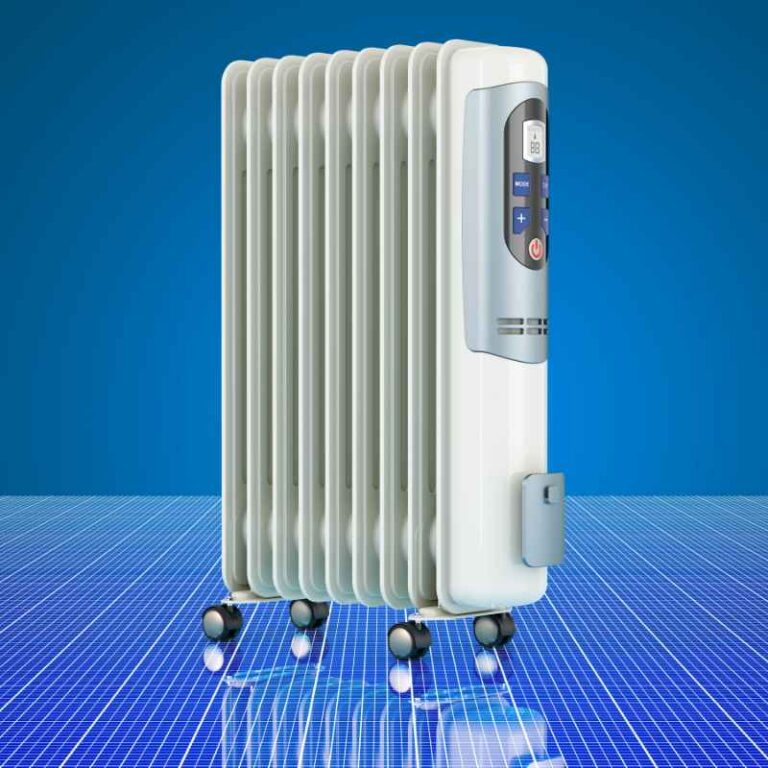
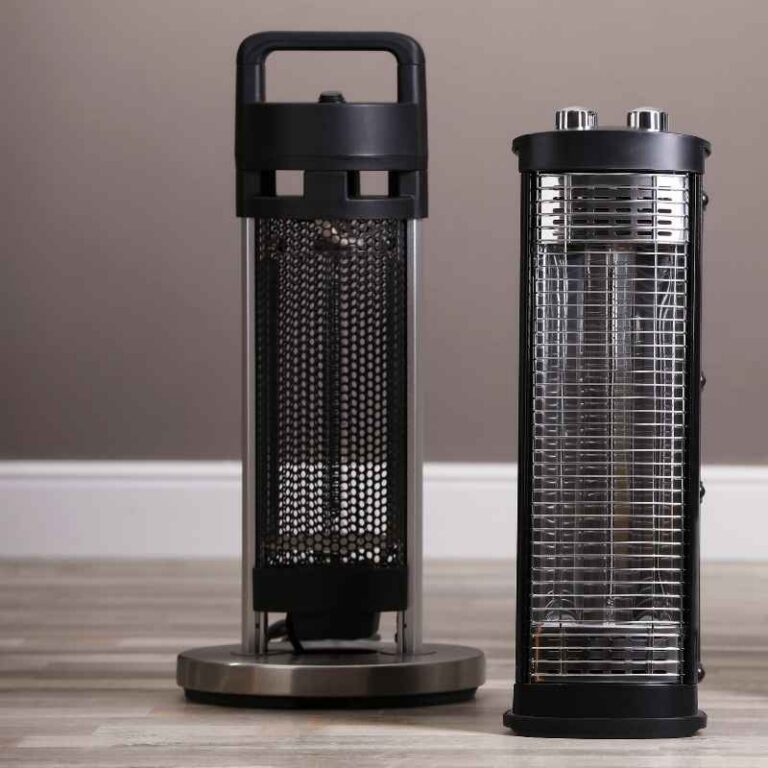
Portable electric space heaters are usually the easiest way to add heat to one occupied area. A common maximum is 1500W, and smaller personal units also exist.
Portable electric heat works best for a single occupied zone, like a desk, bedside sitting area, or couch corner, and it usually cannot carry a leaky bedroom, basement, or whole floor by itself. I look for a thermostat that cycles the unit, tip-over protection, overheat protection, a timer for short heating windows, oscillation for wider throw, and a base wide enough that a bump from a pet or child will not rock it. Those features help, but they do not fix bad placement or overloaded circuits.
Wall-mounted electric heaters for fixed room heat
Wall-mounted electric heaters suit rooms that need regular heat in the same spot. They remove the trip hazard of cords on the floor and can keep airflow paths more predictable than portable units.
They still need correct circuit capacity, proper mounting, and room-specific placement. Bathrooms, laundry areas, and finished basements often push this category higher on my list because a fixed heater can be placed away from splash zones and traffic paths.
Gas and other combustion heaters: vented, vent-free, kerosene, propane, catalytic, and wood
Non-electric heaters are fuel-burning appliances. That group includes propane units, kerosene heaters, catalytic heaters, vent-free natural gas heaters, other fixed gas heaters, and wood-burning stoves.
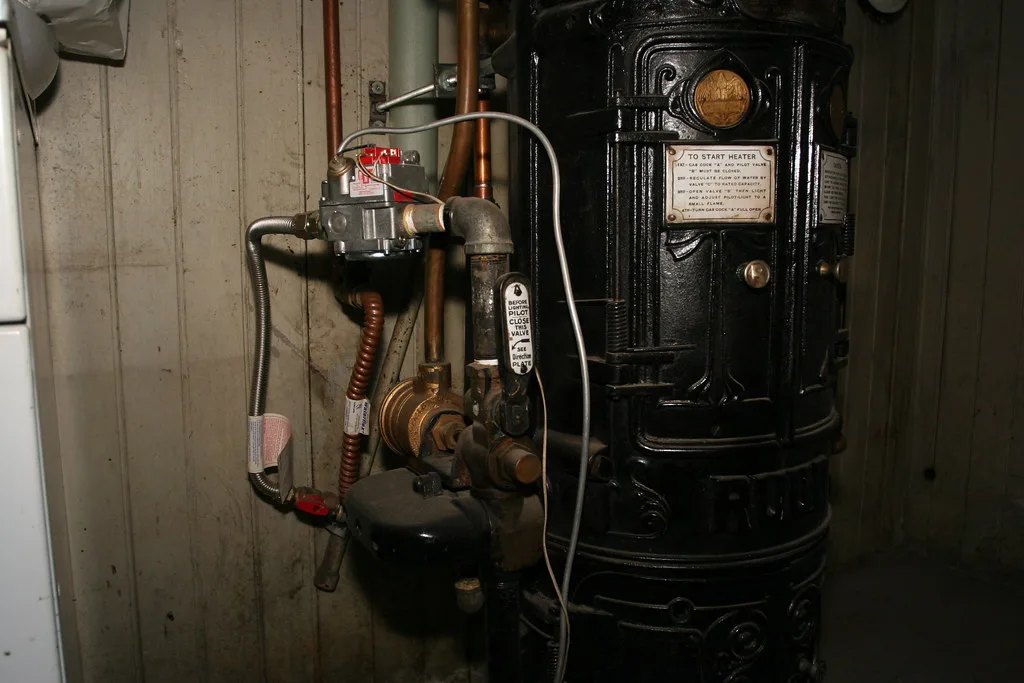
Each type has different risks. Portable propane heaters may use disposable cylinders or larger remote tanks depending on design and listing. Catalytic heaters use a catalyst-driven reaction rather than the same visible-flame pattern as many other heaters. Vent-free natural gas heaters are attached to interior walls and do not use an exterior chimney flue. Wood stoves are permanent installations requiring flues. Kerosene heaters are liquid fuel appliances sold in radiant or convection styles, and they bring fuel storage, odor, and emissions concerns.

Which heaters are safest to use indoors?
For many homes, electric heaters can be among the lower-risk indoor options because they do not produce combustion gases, do not need fuel storage inside the house, and do not rely on venting details to keep indoor air safe. Indoor-rated combustion heaters can be acceptable only when the room, fuel, detectors, venting plan, and product certification all line up. Outdoor-rated or unlisted heaters should be ruled out before any price comparison starts.
Why electric heaters usually have the lowest installation risk indoors
Electric heat avoids carbon monoxide production, fuel storage, open-flame concerns, and flue routing. That narrows the risk list to electrical load, surface temperature, blocked airflow, tipping, and placement near combustibles.
For portable units, look for a UL or other nationally recognized listing mark to validate heater electrical safety. I trust that more than a long feature list. A quiet heater may be nice in a bedroom, but noise claims and fast-heat claims do not change the placement or circuit rules.
When indoor-rated combustion heaters can be acceptable
Any combustion heater used indoors should be indoor-rated and certified by a recognized testing organization such as UL Solutions or CSA Group. Certification is the first gate, not the last one. The room still has to support the heater’s air, clearance, detector, and fuel rules.
Carbon monoxide is colorless, odorless, and tasteless, as public safety guidance from the U.S. Consumer Product Safety Commission and the National Carbon Monoxide Awareness Association emphasizes. That is why detector coverage is part of the installation, not an optional add-on. Battery backup is a smart requirement in any home using combustion heat, especially near sleeping areas and fuel-burning appliances.
Why outdoor-rated and unlisted heaters do not belong inside
Marketing language is weak protection. “Patio,” “garage,” “camp,” or “emergency” labels often mean the unit was never meant for finished indoor rooms. If the product lacks indoor-use labeling and recognized certification, it should not enter the house.
This is where many unsafe setups begin: a user sees heat output and ignores the fuel category, ventilation language, or missing listing mark. That is a reject, even before sizing.
How do I choose between electric and gas heat?
Choose electric heat for occasional room heating, simpler installation, and lower indoor combustion risk. Choose fixed gas heat only when the room needs repeat or primary heat, gas piping is practical, and the home can support venting, detectors, permits, and ongoing maintenance. The better comfort result often follows the safer installation path.
Operating pattern: occasional room heat versus daily primary heat
Electric heaters make sense for rooms used part time: a home office in the morning, a guest bedroom for a weekend, or a chilly corner in a living room. They are easy to stop using when the season changes.
Gas heat makes more sense when the room needs regular heat and the operating pattern is steady. A fixed system is easier to live with than dragging a portable heater out every day and trying to keep a clearance zone open.
Installation reality: outlet load, dedicated circuits, gas piping, vent path, and mounting constraints
Portable electric heaters need a sound outlet, an intact plug, and a circuit that is not already carrying other heavy loads. Wall-mounted electric units may need a dedicated circuit depending on size and the branch-circuit load already in the room.
Gas adds more moving parts: gas piping, shutoff access, appliance location, clearances, combustion air, and venting where required. A vent-free natural gas heater is a fixed indoor unit attached to an interior wall and plumbed to gas supply, but the lack of an exterior flue does not remove indoor combustion concerns.
Outage planning, fuel storage, and ongoing safety checks
Outage planning changes the answer for some homes. Portable electric heat stops when power stops. Fuel-burning systems can keep running, but they add fuel storage, air-quality, and detector work.
Wood-burning stoves stand apart here. They are permanent installations with dedicated flues and higher install cost, but they can fill an off-grid or outage role well when the house and budget can support proper chimney work and floor protection.
Do space heaters need ventilation?
Electric space heaters do not need ventilation because they do not burn fuel, but they still need free airflow and a properly loaded outlet. Combustion heaters may need ventilation or fresh-air provisions, and all indoor combustion heating needs carbon monoxide detector coverage near sleeping areas and fuel-burning appliances.
Electric heaters: no combustion, but airflow and outlet rules still matter
Electric heaters still fail when they cannot move air. Intake grilles get blocked by blankets, pet hair, laundry, or drapes. Fan heaters also need enough open space at the front to avoid trapping heat.
Never solve distance problems with extension cords. If the heater cord does not reach a proper outlet, the location is wrong. That single rule prevents a large share of scorch marks, nuisance tripping, and melted plug failures. The U.S. Consumer Product Safety Commission and NFPA both warn against extension-cord use with portable heaters.
Combustion heaters: ventilation, make-up air, and carbon monoxide risk
Combustion heaters produce byproducts, so indoor use depends on the specific appliance design, indoor rating, and room conditions. Some fixed gas units vent outdoors. Some vent-free units do not. Kerosene, propane, catalytic, and wood all need their own safety reading.
Fresh-air needs are often skipped during shopping. Tight homes, finished basements, and small bedrooms are poor places to improvise with combustion appliances. If the room cannot support the unit’s combustion-air and detector requirements, the heater is the wrong type for that space. EPA and NFPA guidance both support keeping combustion appliances installed and vented exactly as listed and specified.
Detector placement, battery backup, and when CO alarms are mandatory
Any home using combustion heat should have carbon monoxide detectors with battery backup. Put them near sleeping areas and near fuel-burning appliances, following the detector maker’s location rules so nuisance alarms do not push them into a drawer.
For bedrooms and hallways outside bedrooms, detector coverage should be treated as required before a combustion heater is considered. No detector, no installation. Use listed CO alarms installed and maintained per the manufacturer and local code; NFPA 720 legacy guidance and current manufacturer instructions are the practical baseline homeowners usually encounter.
How do I install a heater safely?
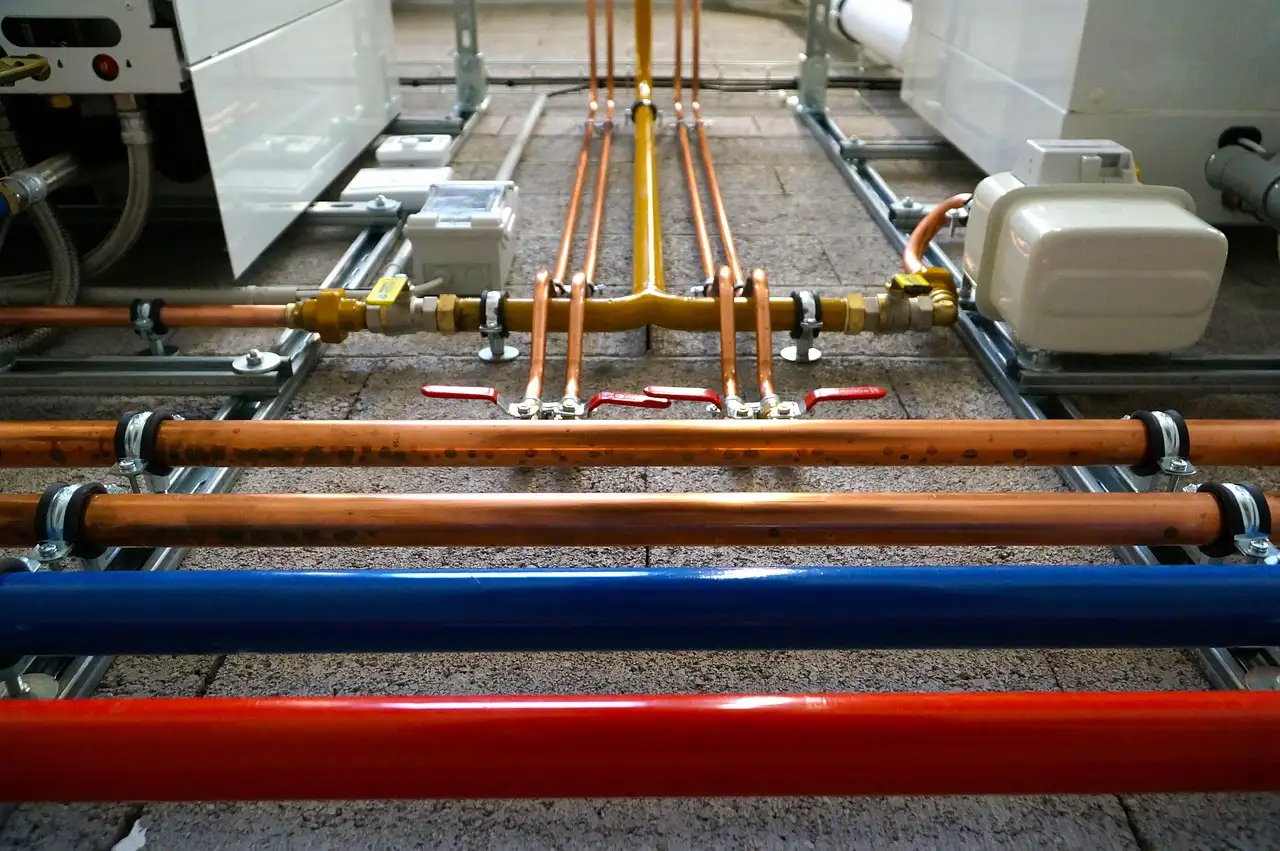
Safe heater installation starts with the manual, then checks the room for power, mounting surface, moisture, clearances, and detector coverage. Portable electric heaters need floor placement and a proper outlet. Fixed electric heaters need correct wiring and wall placement. Gas, kerosene, and wood heaters cross into fuel, vent, and permit-level work.
Portable electric heater setup: floor placement, outlet load, cords, and clearances
- Place the heater on a hard, level floor, never on bedding, a chair, or a shelf.
- Plug it directly into a wall outlet. No extension cords, power strips, splitters, or cube taps.
- Keep a conservative open zone: 3 ft in front, 1 ft at the sides, and 3 ft from bedding, curtains, and paper.
- Do not share the outlet with another heavy-load appliance.
- Keep intake and discharge grilles fully open.
For bedrooms, avoid placing a portable heater where blankets can slide into it overnight. For living rooms, keep it out of traffic lanes and away from pet beds and kids’ play areas. The 3-foot combustible-clearance rule reflects common safety guidance from CPSC and NFPA; if the product manual demands more, use the larger number.
Wall-mounted electric heater setup: mounting height, wall construction, circuit sizing, and bathroom limits
Wall-mounted heaters need a solid mounting surface and wiring sized for the heater load. The wall cavity matters, especially in remodeled rooms where insulation, plumbing, or old wiring may sit exactly where the heater body needs to go.
Use the heater maker’s wall and top clearance rules if they are stricter than field checks. As a conservative site check, keep at least 12 in above, 6 in at sides, and 36 in in front unless the listed installation instructions allow less. In damp rooms, placement relative to sinks, tubs, and laundry splash zones matters as much as the wiring. If a bathroom heater cannot meet the room’s electrical and location rules, move to a listed fixed bathroom unit or choose another heat source. Local electrical code adoption varies, so bathroom wiring and location rules should be treated as electrician territory, not guesswork.
Gas, kerosene, and wood heater setup: fuel line, flue, combustion air, and permit-level work
Fixed gas and wood heaters are building-system installations. They need fuel supply planning, shutoff access, floor and wall protection where required, vent or flue routing where required, and detector coverage before use.
Kerosene heaters also need a fuel handling plan. Store fuel in a dedicated container, away from living areas and ignition sources, and never refuel a hot appliance. Wood stoves need a dedicated flue and usually cost more to install than buyers expect because the chimney path drives both labor and materials. EPA-certified wood stoves and listed chimney systems should be installed exactly to their manuals and local code.
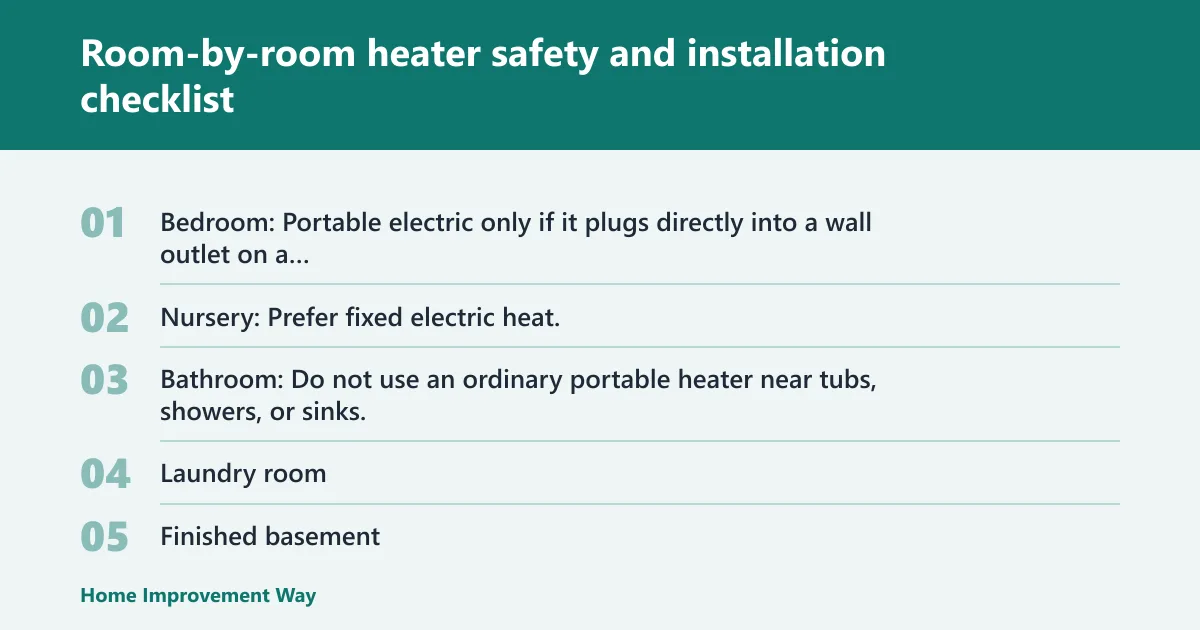
Room-by-room heater safety and installation checklist
Bedrooms and nurseries: quiet heat, surface temperature, detector coverage, and overnight use rules
Bedrooms reward stable, low-drama heat. A fixed wall heater or a well-placed electric unit with thermostat control is usually easier to manage than a fuel-burning appliance in a sleeping area.
| Room | Portable electric | Wall-mounted electric | Gas or combustion heater | Key checks |
|---|---|---|---|---|
| Bedroom | Usually suitable | Suitable | Generally avoid portable combustion; fixed listed units only with detector coverage | 3 ft from bedding and curtains; direct wall outlet; no extension cord; CO detector near sleeping area with battery backup |
| Nursery | Use with caution | Often better choice | Generally rule out | Stable base; cool-touch preference; no cord in reach; no fuel storage nearby |
| Bathroom | Often poor fit | Best fixed option if room allows | Usually poor fit indoors | Keep portable units out of splash zones; GFCI and damp-location rules matter; fixed listed unit preferred |
| Laundry | Possible with caution | Good option | Usually avoid portable combustion | Lint control; clear airflow; keep away from laundry piles and chemical storage |
| Finished basement | Suitable for spot heat | Good option | Fixed listed gas may fit; check air and detector plan | Watch moisture; avoid placing on damp carpet; detector coverage near appliance and sleeping zones |
| Garage | Limited use | Possible if listed for space | Special caution required | Ignition-source concerns; fuel, solvent, and dust exposure; many portable options should be ruled out |
| Addition | Good temporary answer | Good long-term answer | Depends on gas access and vent path | Check insulation, window loss, and circuit capacity before upsizing heater type |
| Living room | Good spot heat use | Good fixed use | Fixed listed gas or wood possible where installation supports it | 3 ft front zone; no blocked grille; detector coverage for any combustion appliance |
Use this stricter room-by-room checklist before installation or seasonal startup:
- Bedroom: Portable electric only if it plugs directly into a wall outlet on a non-overloaded branch circuit, sits on a hard level floor, and stays at least 3 ft from bedding, curtains, rugs with curling edges, and upholstered furniture. For any combustion appliance anywhere in the home, install a listed CO alarm outside sleeping areas and maintain battery backup.
- Nursery: Prefer fixed electric heat. If portable electric is used, keep the cord and unit fully out of a child’s reach, preserve the same 3 ft combustible clearance, and avoid units that create a tempting hot grille at floor level.
- Bathroom: Do not use an ordinary portable heater near tubs, showers, or sinks. Use only a fixed unit listed for the location and installed to the room’s electrical rules, including required protection and spacing from water sources.
- Laundry room: Keep heaters out of lint paths and at least 3 ft from laundry piles, cardboard, detergents, and solvents. Check intake grilles often; lint blockage is a real failure mode.
- Finished basement: Verify the floor is dry, the receptacle is sound, and the room has smoke alarm and CO alarm coverage as needed. Avoid makeshift combustion heat in tight or damp basement rooms.
- Garage: Treat this as a special-hazard area. Do not assume a standard indoor portable heater belongs here. Vehicle vapors, gasoline, finishes, and sawdust change the rules. Use only heaters listed for garage use and installed to the manufacturer’s ignition-source and clearance requirements.
- Addition: Confirm the heater can be supplied by the available circuit without voltage drop from a long run and without sharing with another heavy load. If the room loses heat fast, fix air sealing and insulation before jumping to a larger heater.
- Living room: Keep a full 3 ft no-storage zone in front of the heater, maintain open airflow at all grilles, and keep the unit out of major walkways so furniture drift does not slowly erase clearances.
Bathrooms and laundry areas: splash risk, GFCI issues, and fixed-heater options
Bathrooms are not plug-in-heater territory unless the room and unit clearly allow it. Water, bare feet, and limited floor space make portable units easy to place badly. Fixed heaters listed for the location are usually the better path.
Laundry rooms add lint. That raises the risk of blocked grilles and hot surfaces near piles of fabric. A wall-mounted electric heater keeps the heat source off the floor and away from moving baskets and cords. In both rooms, I treat exact listing language and local electrical requirements as non-negotiable.
Basements, garages, additions, and living rooms: moisture, ignition sources, insulation, and air movement
Finished basements often feel colder than upstairs rooms because of slab loss, damp air, and low air movement. Spot-heating with portable electric heat can work, but a fixed solution is cleaner if the room is occupied often.
Garages deserve extra caution. Vehicles, fuel vapors, solvent storage, sawdust, and open doors make heater choice more restrictive. Additions often have the opposite problem: they are habitable, but poor insulation and air leakage push owners toward bigger heaters when the real fix is the room shell. In living rooms, I care most about maintaining the 3-foot front clearance all season, because furniture and blankets tend to migrate.
What safety features and certifications should I look for in a heater?
Look for a listed heater first, then for safety controls that match the heater type. Portable electric units should have tip-over and overheat shutoff, a thermostat, and a stable base. Combustion heaters need indoor-use labeling, recognized certification, detector planning, and shutoff controls tied to combustion safety.
Portable electric must-haves: tip-over, overheat shutoff, thermostat, timer, and stable base
Tip-over protection and overheat protection are baseline features. A thermostat matters because it cycles the heater instead of running flat out. A timer helps when a room only needs heat for a set period, and oscillation can spread spot heat more evenly.
None of those features excuse bad setup. A listed heater on the wrong outlet is still wrong.
UL and CSA marks: what they check and how to verify them
UL certification is the key check for indoor electric heaters. CSA certification is an important check for indoor-rated combustion heaters. Indoor-rated heaters should be certified by a nationally recognized testing laboratory such as UL Solutions or CSA Group, and that mark should be on the unit itself, not just on a web listing photo.
Verify the exact model. Listings and boxes get reused. The heater body, rating label, and manual should agree on model number, fuel type, voltage, wattage, and indoor-use language. If the mark, label, or manual is missing, I stop there.
Combustion-specific checks: oxygen depletion shutoff, ignition controls, and indoor-use labeling
Combustion heaters need more than a badge. Check for indoor-use labeling, ignition controls that match the fuel, and safety shutoff functions the maker specifies for that type. If the product copy is vague about indoor use, treat that as a warning sign.
For vent-free natural gas heaters, the indoor combustion question never goes away simply because there is no chimney. For kerosene heaters, odor and emissions concerns should be part of the buying decision, not an afterthought after the first fill. For wood heaters, EPA certification and listed chimney compatibility matter just as much as heat output.
Sizing, maintenance, and the failure cases that make a heater unsafe
How square footage, ceiling height, insulation, and climate change heater size
Square footage starts the conversation, but it should not finish it. A small, tight room with low ceilings may heat well with a compact electric unit. A larger room with poor insulation, old windows, and steady drafts may stay cold even with a bigger heater.
That is why heater type should match room use first. If a room needs daily heat because the envelope is weak, the long-term answer may be air sealing, insulation, or a fixed heating upgrade rather than a larger portable appliance.
Routine checks for grilles, filters, vents, flues, burners, detectors, and fuel storage
- Vacuum electric heater grilles and check for dust mats that choke airflow.
- Inspect cords and plugs for heat damage, looseness, or discoloration.
- Clean wall-heater intakes and fan paths as the maker directs.
- Check gas burners for dirt, corrosion, and ignition issues.
- Inspect vents and flues for blockage, loose joints, and signs of backdrafting.
- Test carbon monoxide detectors and smoke alarms; replace batteries on schedule.
- Review kerosene, propane, and wood storage so fuel is dry, contained, and away from living-space hazards.
Unsafe setups to catch fast: extension cords, blocked airflow, hot refueling, and combustibles in the clearance zone
These are the failure cases that should stop use immediately: a space heater on an extension cord, a heater hidden behind a chair, laundry draped over a grille, a unit pushed against curtains, refueling a hot kerosene heater, or storing fuel where a leak or spill can enter living space.
Outdoor-only units used indoors belong on the same list. So do heaters placed where they can scorch laminate furniture, soft wall coverings, or deep carpet. If the safe zone cannot be kept clear every day, the heater does not fit the room.
Frequently asked questions
What heater type is best for a bedroom?
For most bedrooms, a listed electric heater is the safer choice because it avoids indoor combustion byproducts. A wall-mounted electric unit is often the cleanest long-term answer, while a portable electric heater can work if it has tip-over and overheat protection and stays at least 3 ft from bedding.
For my own bedroom standard, I want a direct wall-outlet connection, a hard floor placement if the heater is portable, and no path for blankets or drapes to slip into the airflow. I generally avoid portable combustion heaters in sleeping rooms.
Can I use a non-electric heater indoors?
Only if the heater is clearly rated for indoor use and the room can meet its fuel, ventilation, clearance, and detector requirements. Non-electric heaters include propane, kerosene, catalytic, wood, and vent-free gas models, and they should never be treated as interchangeable or assumed safe because they produce heat.
That means reading the rating plate and manual, not relying on a seller description. If the indoor-use statement, certification mark, or detector plan is unclear, I treat the answer as no.
Which heaters are safest to use indoors?
Listed electric heaters are usually the safest indoor option because they avoid carbon monoxide risk and fuel storage. Fixed, indoor-rated combustion heaters can be acceptable in the right room with detector coverage and proper installation, but unlisted units, outdoor-rated heaters, and portable combustion heaters in sleeping rooms should be ruled out.
In practice, the safest heater is the one whose listing, outlet load, clearance zone, and room conditions all stay correct every day. A safer heater on paper becomes unsafe quickly if it is run on the wrong outlet or shoved into a cluttered corner.
Do space heaters need ventilation?
Electric space heaters do not need ventilation, but they still need open airflow and a proper wall outlet. Fuel-burning heaters are different. They may need ventilation, fresh-air provisions, or both, and any indoor combustion use should trigger carbon monoxide detector checks near sleeping areas and the appliance location.
I use a simple split: electric needs airflow, combustion needs air-safety planning. If the room is small, tight, damp, or used for sleeping, I become much more skeptical of any combustion option.
How do I install a heater safely?
Start with the heater manual, then verify the room can support the outlet load, clearances, mounting surface, and detector coverage. Portable electric heaters go on a hard floor and plug straight into a wall outlet. Gas, kerosene, and wood systems need fuel planning, vent or flue work where required, and permit-level care.
The fastest safe-install check is this: right room, right outlet or fuel connection, right clearance, right detector coverage, and no improvising with cords, adapters, or makeshift venting.
What safety features should I look for in a heater?
For portable electric heaters, look for tip-over protection, overheat shutoff, a thermostat, a timer, and a stable base, plus a UL mark. For combustion heaters, look for indoor-use labeling, recognized CSA or UL certification, proper ignition and shutoff controls, and a clear carbon monoxide detector plan before installation.
I treat listing and indoor-use labeling as the first filters, then features second. A heater with ten convenience features but no trustworthy certification is still the wrong buy.
Can I plug a space heater into a power strip or extension cord?
No. Portable heaters should plug directly into a wall outlet.
This is one of the clearest safety rules in the article. If the cord does not reach, change the heater location or choose another heater. Do not solve it with an extension cord, power strip, cube tap, or adapter.
How far should a heater be from curtains, bedding, and furniture?
Use at least 3 ft of clearance from combustibles unless the heater manual requires more. For portable electric heaters, keep the full front zone open and preserve side clearances too.
I treat 3 ft as the minimum practical household rule because furniture, blankets, and baskets drift over time. If the room cannot keep that zone clear every day, the heater does not belong there.
Do I need a carbon monoxide detector if I use a gas, propane, kerosene, or wood heater?
Yes. Any indoor combustion heating plan should include listed CO alarms near sleeping areas and in locations recommended by the alarm manufacturer and local code.
I do not treat detectors as optional accessories. If a home has combustion appliances, detector coverage with working batteries or battery backup should already be in place before the heater is used.
Is a bathroom safe for a portable heater?
Usually not. Bathrooms are one of the worst places to improvise with a standard portable heater because water and tight floor space make bad placement easy.
A fixed heater listed for bathroom or damp-location use is usually the safer answer. If the room cannot meet those rules, I would choose another way to heat it.
Are portable combustion heaters okay for overnight use?
Generally, I avoid them for sleeping spaces. Overnight use raises the stakes because people may not notice odor, airflow blockage, or developing problems quickly.
For sleeping rooms, a listed fixed heater or a properly placed electric heater is the safer lane. Portable combustion heat is where I draw a hard line most often.
When should I stop using a heater immediately?
Stop immediately if you smell overheating plastic or fuel, see a damaged plug or scorched cord, notice blocked grilles, get repeated breaker trips, see soot, or get a CO alarm.
I also stop use if the heater has been bumped into a bad position, covered by fabric, refueled while hot, or used anywhere the required clearance cannot be maintained.
Sources
- U.S. Consumer Product Safety Commission, space heater and carbon monoxide safety guidance.
- UL Solutions, product certification and electrical safety information for portable heaters and appliances.
- NFPA, home heating equipment and space heater fire-safety recommendations.
- EPA, wood stove certification and indoor air guidance.
- National Carbon Monoxide Awareness Association, consumer CO alarm education.
- Manufacturer installation manuals and local code requirements for exact clearances, wiring, and venting.
Sponsored / affiliate links. As an Amazon Associate I earn from qualifying purchases. I may earn additional commission from eligible campaigns.