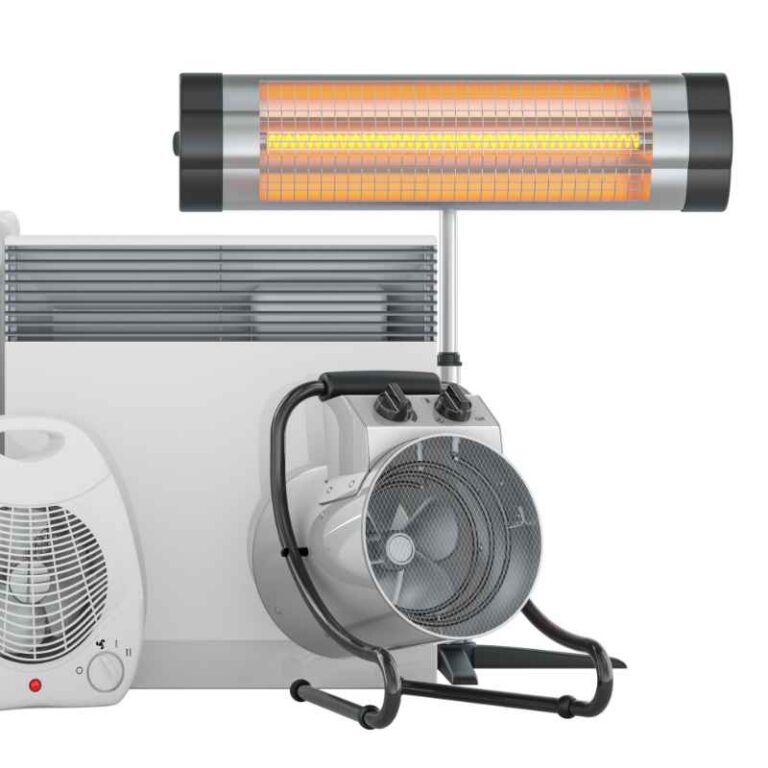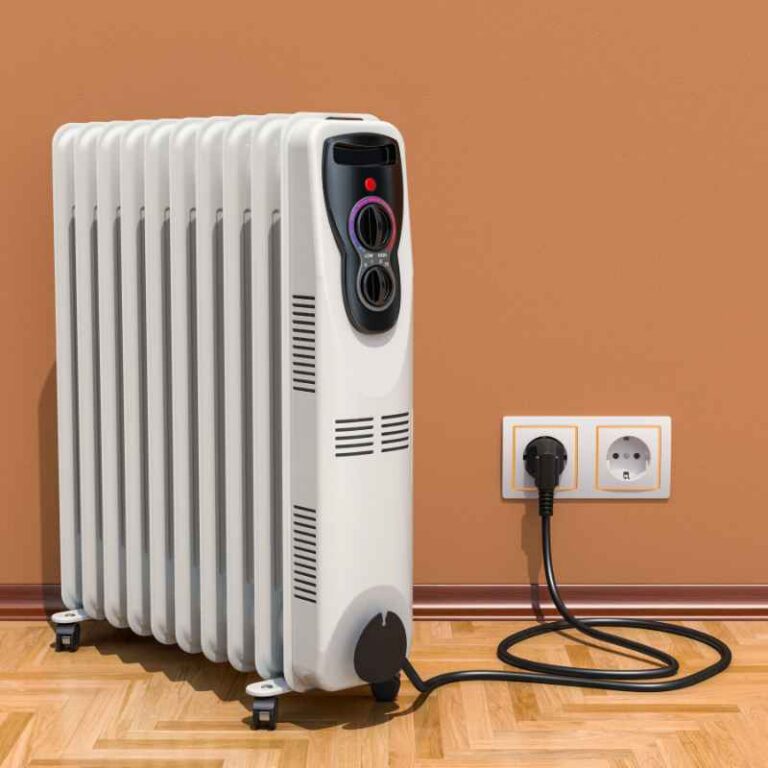
Best Garage Workshop Heaters (2026): Based on Specs and Reviews
Choose the best heater for a garage workshop by use pattern: infrared for quick spot warming, electric unit heaters for steady all-day comfort, and vented gas or hardwired ceiling units for permanent whole-space heat; after that, check size and mounting. Pick the wrong type, and you waste energy, leave cold zones, or create safety and code problems. This guide matches heat type, mounting style, and safety to your workshop use so you can choose the right option.
Quick comparison
| Product | Badge | Best for | Price | ||
|---|---|---|---|---|---|
 |
Mr. Heater Portable Big Buddy Propane Heater | BundleMr. Heater | Our pick | Big Buddy · 18,000 BTU · 10-ft assembly | $269.99
Price as of 23 Oct 2026
|
View |
 |
DR. INFRARED HEATER DR218-1500W Greenhouse Garage WorkshopDR. INFRARED HEATER | Budget pick | 1500W · 150 sq ft · Infrared | $100.74
Price as of 23 Oct 2026
|
View |
 |
DR. INFRARED HEATER DR-988 240V Electric Industrial Garage,DR. INFRARED HEATER | Upgrade pick | 5600W · 240V · Wall/Floor Mount | $120.99
Price as of 23 Oct 2026
|
View |
The fast split is simple: spot heat favors infrared or portable propane, while regular bench work usually fits a hardwired electric unit heater. Permanent, fully heated garages often push you toward vented natural gas or a high-output 240V electric unit, especially when the space is insulated and the wiring can support it.
How we chose
The comparison centers on four things: workshop task, runtime, installation effort, and garage-specific safety. It also weighs ceiling height, insulation, and whether the heater can be mounted or must stay portable.
That matters because square footage alone can mislead you. An open, drafty garage with a 10-foot ceiling behaves very differently from a sealed two-car shop with insulated doors.
Match the heater to the job
Quick warmups, occasional weekend work, and all-day fabrication call for different heat delivery. Object-first infrared heat works differently from fan-driven forced air, and neither behaves like a vented gas unit designed to heat the full room.
Check power, fuel, and mounting before price
A 120V plug-in heater can be convenient, but it usually stays in the small spot-heat range. A 240V electric unit, especially a hardwired one, opens the door to higher wattage and steadier room heat, while propane and natural gas trade convenience for fuel handling and venting needs.
Do not ignore garage hazards
Garages often contain solvent cans, fuel containers, dust, and vehicle exhaust. That changes the safety conversation. Overheat protection, cool-touch surfaces, tip-over shutoff, ETL or UL listing, and an oxygen depletion sensor matter more here than in a living room.
Electric garage heater: best for most DIY workshops?
An electric garage heater is the best fit for many DIY workshops because it is easier to install than gas heat, needs no combustion venting, and can be mounted off the floor. It is a strong choice for insulated garages, regular bench work, and owners who want controlled heat without fuel storage.
120V vs 240V
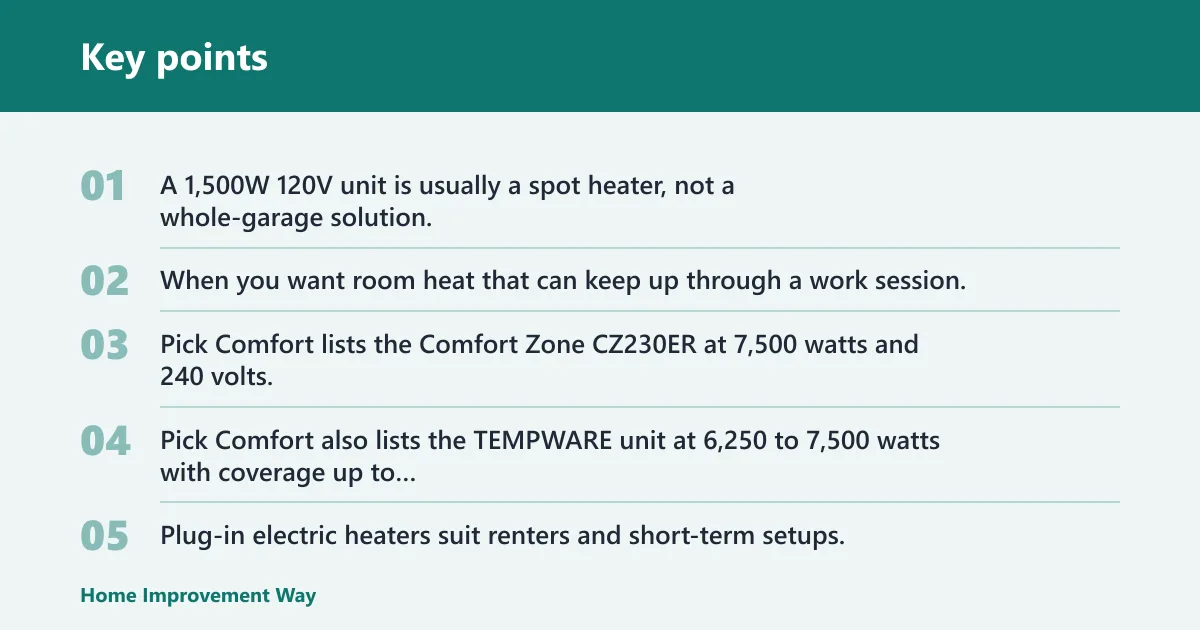
Use 120V only for small, targeted heating. A 1,500W 120V unit is usually a spot heater, not a whole-garage solution. When you want room heat that can keep up through a work session, 240V is the practical path because it supports higher wattage and faster recovery.
Published examples show the gap clearly. Pick Comfort lists the Comfort Zone CZ230ER at 7,500 watts and 240 volts, and says it can heat up to 1,250 square feet. Pick Comfort also lists the TEMPWARE unit at 6,250 to 7,500 watts with coverage up to about 1,250 square feet.
Hardwired vs plug-in
Plug-in electric heaters suit renters and short-term setups, but they are usually limited by outlet capacity and cord management. Hardwired units make more sense for permanent workshops because they can support a dedicated 240V circuit, reduce floor clutter, and handle larger electrical loads more cleanly.
Bob Vila’s notes also show that some heaters need wiring, brackets, or setup before use. That is not a flaw; it is part of the installation reality for higher-output workshop heat.
Wattage range and coverage
Electric garage heaters commonly run from 1,500W on the low end to 10,000W on the higher end. That range matters because coverage claims depend on insulation, ceiling height, and leakage around doors and windows. A rated square-foot figure is only a starting point.
The same source says the CTSC heater offers 10,000W, 7,500W, and fan-only modes. That kind of range is useful when you want faster warm-up on cold days and lower output once the room holds temperature.
Thermostat, timer, and mounting options
Thermostats and timers cut waste by stopping the heater from running harder than needed. Wall or ceiling mounting saves floor space and keeps the unit out of the way of sawdust, carts, and parked vehicles. Marley notes that electric garage heaters can be wall- or ceiling-mounted and do not require venting like gas heaters.
Bob Vila lists the Comfort Zone as a ceiling- or wall-mount semipermanent heater. That mounting style fits a workshop that stays organized and needs heat that is aimed where people work, not where the floor happens to be.
Infrared heater: best for quick spot heat?
Infrared is the best fit when you want heat on people and objects near the work area, not a full-room warmup. It is useful for quick bench sessions, a single bay, or a drafty garage where you want to feel heat immediately without waiting for all the air to warm.
Object-first heating
Infrared heat acts on surfaces, tools, and bodies first. That makes it effective in drafty spaces where warm air would otherwise leak away quickly. It does less for the far corners of a garage, so it works best when you can stay near the heater’s line of sight.
Ceiling or wall mount variants
Mounted infrared units keep the floor open and can aim heat downward onto the work zone. That matters in garages with tool chests, bikes, and vehicle clearance issues. Some models are portable, but the mounted version usually gives you a cleaner setup for fixed bench work.
Best use cases in drafty spaces
Infrared does well when you need a warm zone at a bench, under a lift, or near a project table. It is less useful if you need uniform heat across the whole room, especially in a high-ceiling garage with open gaps around the door.
A common first-timer mistake is choosing infrared for a garage that has open bays or major air leaks, then expecting the far side of the room to feel warm. Infrared can help, but it will not turn a leaky shell into a sealed shop.
When infrared falls short
Infrared falls short when you need air temperature rise across the entire garage or want multiple work areas to stay comfortable at once. It also struggles when the line of sight is blocked by vehicles, shelving, or hanging storage.
Propane garage heater: best for temporary heat?
Propane is the better temporary option when you need portability, high output, and no electrical upgrade. It is useful for seasonal use, jobsite-style work, or garages without a strong enough electrical circuit, but it brings ventilation and fuel storage responsibilities that electric heat does not.
Portable or forced-air
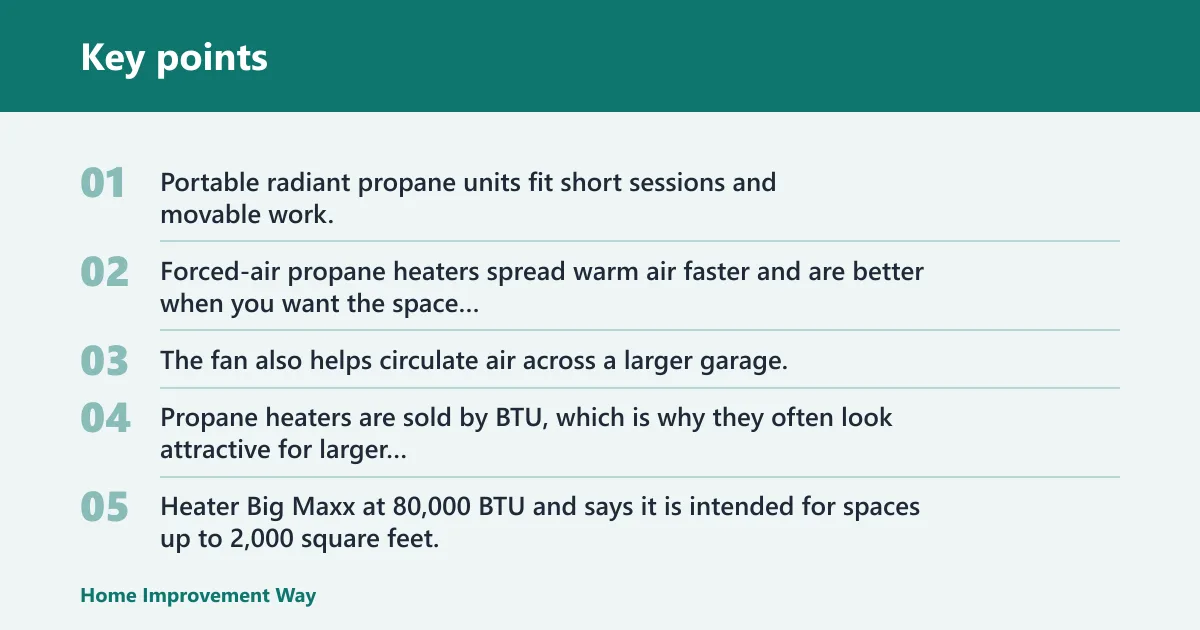
Portable radiant propane units fit short sessions and movable work. Forced-air propane heaters spread warm air faster and are better when you want the space to heat up quickly. The fan also helps circulate air across a larger garage, though that air still needs safe ventilation.
BTU output and warm-up speed
Propane heaters are sold by BTU, which is why they often look attractive for larger spaces. The same source lists the Mr. Heater Big Maxx at 80,000 BTU and says it is intended for spaces up to 2,000 square feet. That kind of output suits a permanent workshop more than a tiny bay.
Ventilation and oxygen depletion sensor
Fuel-burning heaters need ventilation, full stop. The same source notes that electric heaters do not require venting like gas heaters, which is exactly why propane and natural gas units need more installation care. A low-oxygen cutoff or oxygen depletion sensor is a key safety feature, not a bonus.
Do not treat a propane garage heater like a bedroom appliance. If the space has flammables, solvent vapors, or combustible dust, you need a code-aware setup and the right rated equipment for that hazard, not a standard consumer heater by default.
Fuel storage and refill convenience
Propane is only convenient if you have a practical place to store cylinders and an easy refill plan. That works well for seasonal users and renters who cannot install hardwired heat, but it becomes a hassle if the garage is used frequently or the cylinder swap interrupts work.
Natural gas unit heater: best for permanent heat?
Natural gas unit heaters are best when the garage is becoming a true workshop and you want permanent whole-space heat. They usually make sense for owners, not renters, because they need venting, clearance, and professional installation, but they can heat larger spaces efficiently once installed correctly.
BTU rating and sizing
Natural gas heaters are commonly sized by BTU output, and the right number depends on insulation, ceiling height, and how leaky the garage is. The same source says the Mr. Heater Big Maxx delivers 80,000 BTU and is intended for spaces up to 2,000 square feet, which shows how much more output these units can bring.
Venting requirements
Natural gas heat must be vented. That is non-negotiable. The same source describes the Big Maxx as requiring natural gas and venting, and that distinction separates it from electric heaters, which Marley notes do not require venting like gas heaters.
Clearance and hardwired controls
Clearance around the heater matters because cabinets, stored materials, and overhead obstructions can become hazards. Gas unit heaters also often use hardwired controls, which ties them into the building’s electrical and gas setup rather than a simple outlet.
Why professional installation matters
Professional installation matters because natural gas heaters combine fuel supply, combustion safety, venting, and clearance rules. A qualified installer can check gas line sizing, vent route, and electrical compatibility, which lowers the odds of poor performance or a code problem later.
Garage heater decision table
This table maps six real workshop situations to the heater type that fits the use pattern. The goal is not to chase the biggest number; it is to match runtime, mounting, and hazard level to the job.
| Workshop scenario | Best heater type | Required power or fuel | Installation complexity | Ventilation needs | Red flags to avoid |
|---|---|---|---|---|---|
| Renter doing weekend repairs in a single-bay garage | Portable infrared or small 120V electric spot heater | 120V electricity; about 1,500W for spot heat | Low | None for electric if the space is otherwise safe | Do not use a fuel-burning heater where storage includes solvent vapors or fuel cans |
| Owner with insulated two-car garage and daily bench work | 240V electric unit heater | 240V circuit; 5,600W to 10,000W class output | Moderate to high | None for electric | A plug-in 120V heater will usually be underpowered for all-day comfort |
| Drafty detached garage with high ceiling and quick warmup needs | Forced-air propane heater | Propane cylinder; high BTU output | Moderate | Required | Avoid using it in a sealed space without ventilation or oxygen depletion protection |
| Permanent workshop conversion with gas already at the building | Natural gas unit heater | Natural gas; vented combustion heat | High | Required | Do not skip professional installation or clearance checks |
| Single work zone near a bench in an otherwise cold garage | Infrared heater | Electricity; usually lower wattage spot heat | Low to moderate | None for electric | Do not expect the far side of the room to heat evenly |
| Large garage with regular full-room use and known dust or fume exposure | Special-rated solution after code review | Depends on hazard classification | High | Depends on equipment rating and code requirements | Do not default to a standard consumer heater in a hazardous atmosphere |
Which heater fits your workshop?
Choose by ownership, runtime, and envelope quality. Renters usually do best with portable electric or propane heat, while owners with a long-term workshop usually gain more from hardwired electric or vented natural gas. Poor insulation and tall ceilings push the choice toward stronger output or better air sealing first.
Renter versus owner
If you rent, avoid big installation commitments unless the landlord approves them. A plug-in electric unit or portable propane heater may be the practical choice for seasonal use. If you own the garage, a mounted 240V electric unit or a vented gas heater becomes more realistic because the wiring and clearances can be planned properly.
Seasonal use versus full-time workshop conversion
For seasonal use, fast setup and portability matter more than efficiency alone. For a full-time workshop, mounted heat usually wins because it clears the floor, supports zoning, and is easier to control with a thermostat and timer. The more you work there, the more permanent heat makes sense.
Poor insulation and high ceilings
Poor insulation changes the math. A garage with an uninsulated door, air leaks, or a tall ceiling can make nominal coverage claims look optimistic. If the building shell leaks badly, fix the envelope first or choose a heater with enough output to overcome the losses.
Suppose a 24-by-24 garage with an open stairwell and a 10-foot ceiling feels cold even after a heater runs for 20 minutes. The problem may not be heater type alone. Air leakage and high volume can overwhelm a unit that would be adequate in a tighter space.
When to leave a space unheated until the envelope improves
If the garage has major air leaks, exposed combustibles, or questionable electrical capacity, do not force a heater choice. Seal doors, improve insulation, and confirm circuit load first. That often makes a smaller heater work better and reduces the chance of unsafe improvisation.
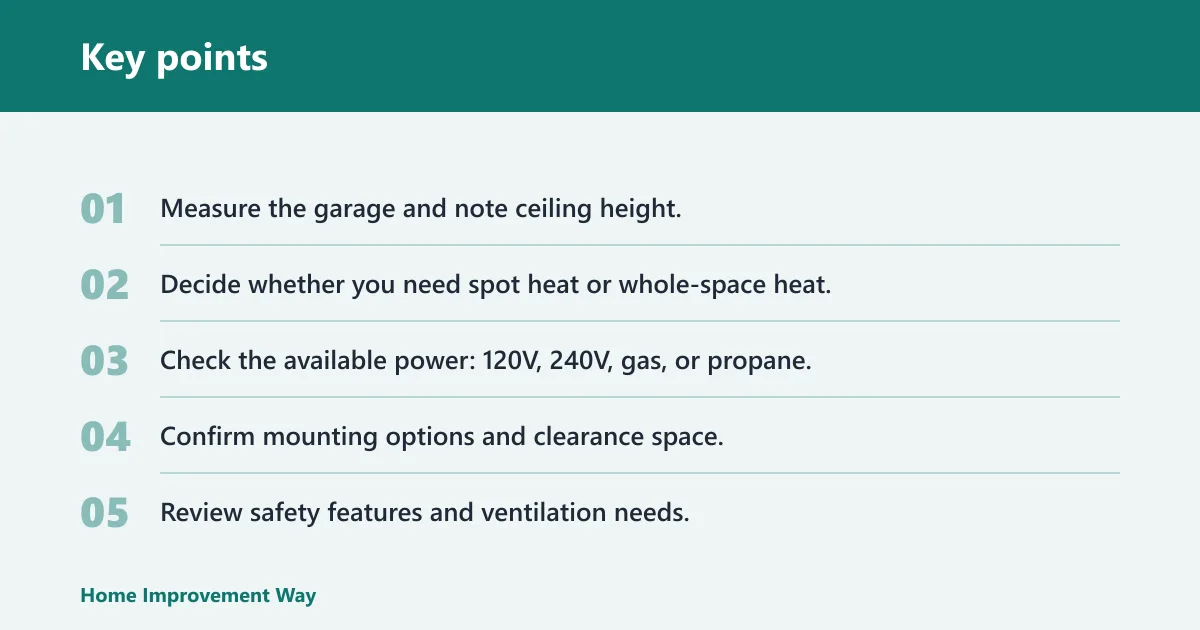
- Measure the garage and note ceiling height.
- Decide whether you need spot heat or whole-space heat.
- Check the available power: 120V, 240V, gas, or propane.
- Confirm mounting options and clearance space.
- Review safety features and ventilation needs.
- Match the heater to the garage’s insulation and air leakage.
- When in doubt, have an electrician or installer review the setup.
Mr. Heater Portable Big Buddy Propane Heater: best for temporary heat
This is the better fit for a garage that needs temporary, movable heat rather than a fixed installation. Based on the manufacturer’s specs and published product details, the adjustable 4,000-18,000 BTU range gives you flexibility for smaller work zones and short sessions, and the included 10-feet hose assembly improves placement options.
The built-in oxygen depletion sensor and tip-over detection are useful garage safety features. The drawback is obvious: propane means fuel handling and ventilation discipline, so it is not the right answer for a sealed shop or a space with solvent vapors or other hazards.
DR. INFRARED HEATER DR218-1500W: best for small spot heat
This model fits a small garage corner, a bench area, or another spot where you want localized warmth without heating the entire room. The manufacturer lists it as a 1500W infrared heater for about 150 sq ft, and the lightweight, portable design makes it easier to move where the work is.
The IPX4 rating adds splash protection, which is helpful in a garage environment. The drawback is capacity: 1500W is not a whole-garage answer, and infrared heat will leave cold zones if you expect it to replace a room heater.
DR. INFRARED HEATER DR-988: best for all-day electric heat
This is the stronger choice for a DIY workshop that needs steady electric heat and a mounted or portable setup. The published product details list 5600W, 240V, thermostat control from 37-113 °F, and wall or ceiling mounting, which puts it in the more serious workshop-heater category.
The UL/C-UL safety certification is a useful checkpoint, and the fan control helps with distribution. The drawback is installation: a 240V unit is not a casual plug-in fix, so electrical load, circuit capacity, and mounting location all need to be sorted before purchase.
Which one should you buy?
Start with the use pattern, then narrow the field by installation. If you need quick, occasional heat and cannot modify the garage, choose the Mr. Heater propane unit or the 1500W infrared model. If you want dependable, all-day heat for bench work, the 240V DR. INFRARED HEATER DR-988 is the better match.
Pick propane when portability matters more than fuel convenience. Pick infrared when you only need a warm zone. Pick a hardwired electric heater when you want a cleaner long-term setup and the panel can support it. If you are converting the garage into a permanent workshop and already have gas service, a vented natural gas unit can make sense, but only with proper installation and clearance checks.
A common first-timer mistake is buying by square footage alone and ignoring ceiling height or air leakage. Another is choosing a heater with enough wattage on paper but no realistic way to power it safely. If the circuit or venting is not in place, the best-spec heater is still the wrong purchase.
Frequently asked questions
What garage heater to use
Use an infrared heater for quick spot warmth, a 240V electric unit heater for regular workshop comfort, and a vented gas heater for permanent whole-space heating. The right answer depends on how long you stay in the garage, how insulated it is, and whether you can mount or vent equipment safely.
What is a good garage heater?
A good garage heater matches the space and the job. For many DIY workshops, that means a hardwired electric unit with thermostat control, overheat protection, and wall or ceiling mounting. For temporary use, a portable propane unit can work, but only if ventilation and fuel handling are acceptable.
What type of heater is best for a garage workshop?
The best type depends on the workshop pattern. Infrared is best for quick spot heat, electric unit heaters are best for steady daily use, and natural gas or high-output propane is better for larger or permanent spaces. Poor insulation and high ceilings push you toward higher output or a better building shell.
Should I use electric, propane, or natural gas in my garage workshop?
Use electric if you want the simplest installation and no venting. Use propane if you need portability or do not have a suitable circuit. Use natural gas if the garage is becoming a permanent workshop and you can support venting, clearance, and professional installation. Each fuel has different safety and runtime tradeoffs.
How many watts or BTUs do I need for my garage workshop?
There is no single number that works for every garage. Gas heaters are sized in BTUs, and higher ceilings, poor insulation, and air leaks raise the needed output.
What safety features should a garage heater have?
Look for overheat protection, a cool-touch exterior when available, tip-over shutoff for portable units, and ETL or UL certification. For fuel-burning heaters, oxygen depletion sensing matters too. In a garage, safety also means respecting flammables, dust, vehicle exhaust, clearances, and electrical load limits.
Sponsored / affiliate links. As an Amazon Associate I earn from qualifying purchases. I may earn additional commission from eligible campaigns.
 Garvee 14,000 BTU Portable Air Conditioner for Room Up to 750 Sq.Ft, 4 in-1 AC Unit with Cooling, Fan, Dehumidifier & Sleep Mode, Remote Control & Window Kit Included for Home, Office, Apartment,White
 ROVSUN 18000 BTU Mini Split AC/Heating System with Inverter, 20 SEER2 Energy Saving 230V Ductless Split-System Air Conditioner with Pre-Charged Condenser, Heat Pump, Remote Control & Installation Kit