Heat pump vs furnace: choose the best climate fit for you
Choose a heat pump in mild to moderate climates with decent insulation, and in cold climates only if you install a cold-climate model and accept backup heat. Consider a furnace when winter lows are often well below freezing or gas is noticeably cheaper than electricity. Pick wrong, and you can lock in high bills, weak comfort, and oversized equipment for years. This guide compares climate, utility rates, home type, and existing equipment so you can choose the lower-cost fit.
This guide is part of our Heaters: types, safety, and installation series.
Heat pump vs furnace: the climate trade-off
The difference is direct: a heat pump moves heat with electricity, while a furnace makes heat by burning fuel or using electric resistance. Heat pumps can heat and cool in one system. Furnaces only heat. Climate changes which one runs cheaper, how the air feels, and how often backup heat matters.
| Factor | Heat pump | furnace: which is better for your climate | Winner |
|---|---|---|---|
| Heating method | Moves heat with electricity instead of generating it. | Generates heat by burning gas, oil, propane, or using electric resistance. | Tie |
| Cooling ability | Provides both heating and cooling in one system. | Only heats. | Heat pump |
| Cold-weather performance | Best in mild to moderate climates; cold-climate models hold performance better in low temperatures, but backup heat may be needed in deep cold. | Continues to produce heat regardless of outdoor temperature and remains a safer choice when winter lows are brutally cold. | furnace: which is better for your climate |
| Upfront cost | Usually higher. | Usually lower. | furnace: which is better for your climate |
| Operating cost | Can be lower in the right climate and rate structure; can save more when it replaces both heating and cooling equipment. | Can be lower when gas is cheap relative to electricity. | Tie |
| Lifespan | About 15 years. | About 15 to 20 years. | furnace: which is better for your climate |
| Best-fit climates | Fits mixed, hot, and very hot climates best; can work in cold climates with the right model and insulation. | Strongest in very cold climates. | Tie |
| Best-fit home setup | Works well when the home is well insulated, has usable ducts or suits ductless mini-splits, and may already need cooling replacement. | Better when gas service is available and winter heating needs are severe. | Tie |
| Need for backup heat | In cold climates, a standard heat pump may lean on backup heat often. | Provides steady heat without backup heat dependence mentioned. | furnace: which is better for your climate |
What a heat pump does differently
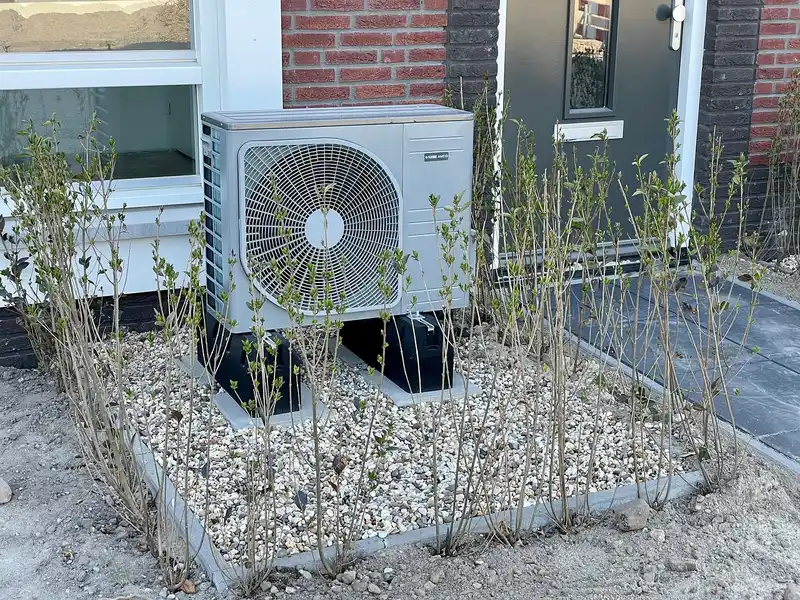
A heat pump uses electricity to move heat from outdoors to indoors in winter, then reverses that process for cooling in summer. Because it transfers heat rather than creating it, it can use far less electricity than electric resistance heat; one common benchmark is about 75% less electricity than resistance systems.
What a furnace does differently
A furnace heats air by burning gas, oil, or propane, or by using electric resistance elements. It needs ductwork to move warm air, and it keeps making heat even when outdoor temperatures fall sharply. That steady output is why many very cold-climate homes still rely on furnaces.
Why climate changes the answer
Heating accounts for about 45% of the average home’s total energy cost, so the system that fits your climate can move your bills a lot. In mild weather, a heat pump usually has the edge. In severe cold, the furnace’s fixed output and predictable performance can matter more than the heat pump’s efficiency. (thisoldhouse.com)
Say your 2,000-square-foot home is in a place with long, subzero stretches and older windows. A standard heat pump may lean on backup heat often, which pushes operating cost up. If that same house is in a mixed climate with solid attic insulation, the heat pump is much more likely to carry the load without expensive backup.
📊 Heating accounts for about 45% of the average home’s total energy cost. Source: Heat Pump vs. Furnace: Understanding the Differences.
How each system performs by climate zone
The default comparison page uses five climate zones: very cold, cold, mixed, hot, and very hot. In broad terms, heat pumps fit mixed and warmer zones best, while furnaces stay strongest in very cold zones. Borderline homes depend on insulation, duct quality, and utility rates.
Very cold and cold climates
In these zones, outdoor temperature matters a lot. HVAC Base assumes lower seasonal heat pump efficiency in very cold and cold zones, which is why a heat pump can lose its operating-cost edge unless you choose a cold-climate model and the home is well insulated. A furnace remains a safer choice when winter lows are routinely brutal.
Mixed climates
Mixed climates are where many heat pumps make the most sense. Heating demand matters, but it is not extreme, and the same system can cover summer cooling. If gas is inexpensive and the home leaks heat badly, a furnace or dual-fuel system may still win.
Hot and very hot climates
Hot climates tilt toward heat pumps because cooling matters as much as heating. The same equipment can handle both jobs, and HVAC Base says a heat pump costs less to run only in the hottest climate zone in its default model. That makes the cooling side a major part of the equation.
Which is cheaper to run?
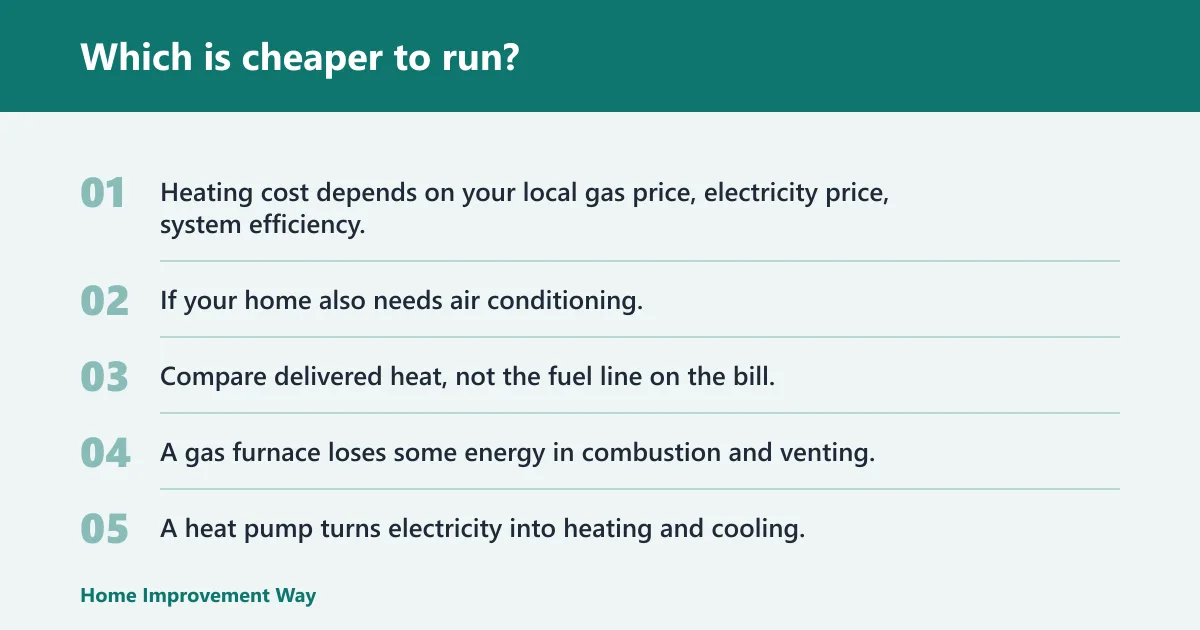
Neither system is always cheaper to operate. Heating cost depends on your local gas price, electricity price, system efficiency, climate, home size, and insulation level. If your home also needs air conditioning, a heat pump can save more because it replaces two pieces of equipment with one.
How gas price and electricity price change the math
Compare delivered heat, not the fuel line on the bill. A gas furnace loses some energy in combustion and venting, so cheap gas does not always mean cheap heat. A heat pump turns electricity into heating and cooling, so the outcome depends on your electric rate and how well the unit performs in your climate.
Why insulation and house size matter
A poorly insulated home needs more heat hours, which makes any system cost more to run. A larger home also raises the stakes because more square footage means more runtime and more airflow to manage. If insulation is weak, even an efficient heat pump can lose to a cheap-fuel furnace.
How cooling savings can affect a heat pump choice
If your existing setup is old enough to need both a furnace and an air conditioner replacement, a heat pump may change the math because it does both jobs. That can offset higher upfront cost over time. In hot climates, the cooling savings matter enough that the heat pump often looks better on total operating cost.
A common first-timer mistake is comparing only winter fuel bills. That misses the cooling side completely. In a warm climate with a small, well-sealed house, the annual cost picture can favor a heat pump even if the winter bill is not the lowest.
What do HSPF2 and SEER2 tell you?
HSPF2 tells you how efficiently a heat pump heats over a season in a moderate climate, and SEER2 tells you how efficiently it cools. Use HSPF2 to compare heating performance between heat pumps, especially if you live in a colder zone. Use SEER2 when the system also replaces air conditioning.
How to read HSPF2 for heating performance
Higher HSPF2 generally means better heating efficiency, but seasonal performance still drops in colder weather. That is why cold-climate models matter in low-temperature zones: they are built to keep heating performance steadier when outdoor temperatures fall. A high rating alone does not erase a harsh climate.
How SEER2 matters when one system also replaces air conditioning
SEER2 matters when the heat pump is carrying summer cooling too. A system with stronger cooling efficiency can lower electric use in hot weather, which changes the total cost comparison. That is one reason heat pumps often fit hot and very hot climates better than furnaces.
Climate decision matrix for five U.S. zones
Use this matrix as a starting point, then check insulation, ductwork, and local utility rates. The right answer can shift for a borderline house. A very cold climate with excellent insulation may support a heat pump, while a leaky mixed-climate home may still lean furnace or dual-fuel.
| Climate bucket | Best default choice | Why | Watch-outs |
|---|---|---|---|
| Very cold | Furnace or dual-fuel | Heat pumps lose seasonal efficiency faster; furnace heat is steady in deep cold | Cold-climate heat pump can work if insulation is strong and backup heat is acceptable |
| Cold | Dual-fuel or cold-climate heat pump | Heating load is significant, but not always enough to rule out a heat pump | Check duct design and local gas-to-electric rates |
| Mixed | Heat pump | Heating and cooling both matter, and climate is moderate enough for strong performance | Older, drafty homes may still favor dual-fuel |
| Hot | Heat pump | Cooling is important, and a single system can do both jobs | Make sure the duct system can move enough air |
| Very hot | Heat pump | Cooling dominates; HVAC Base’s default model puts cost advantage here | Choose a properly sized system to avoid short cycling |
Which system fits your home setup?
Your equipment layout matters as much as your climate. Ducted homes, ductless homes, homes with gas service, homes without gas, and hydronic or radiant systems all point in different directions. The wrong choice can create airflow problems, backup heat dependence, or expensive retrofits.
- Check whether you already have usable ductwork.
- Confirm whether gas service is available and affordable.
- Look at insulation, window quality, and air sealing.
- Compare local gas and electricity rates.
- Decide whether you also need new cooling equipment.
Ducted homes
If you already have good ducts, both systems are on the table. A ducted heat pump can replace a furnace and air conditioner together, but only if the ducts can deliver the right airflow. Poor duct design can drag down comfort and efficiency fast.
Ductless homes
Ductless homes are often strong candidates for mini-split heat pumps, especially when adding ducts would be disruptive or expensive. That is one reason ductless air-source heat pumps cost around $26,000 on average: the installation is more complex. If you have no ducts, a furnace is usually a poor fit.
Homes with gas service
Gas service makes a furnace or dual-fuel setup easier to justify, especially in cold or very cold climates. Gas furnaces are estimated between $4,000 and $10,000, which is usually lower upfront than a heat pump. If gas is cheap and winters are hard, that lower buy-in can matter.
Homes without gas
If there is no gas service, the comparison shifts sharply. Electric furnaces are estimated between $2,000 and $7,000, but they can be expensive to run because they make heat directly. In many homes without gas, a heat pump is the better long-term fit unless the climate is extremely cold and backup heat would be used a lot.
Hydronic or radiant homes
Homes with boilers, baseboard radiators, or in-floor radiant heat need extra care. A furnace does not naturally fit a hydronic system, and a heat pump may require ductwork, fan coils, or a different distribution plan. In these homes, the replacement decision often starts with distribution, not just the heat source.
What are the upfront costs of a heat pump vs a furnace?
Furnaces are usually cheaper upfront than heat pumps. Central ducted air-source heat pumps cost around $14,500 on average, ductless air-source heat pumps cost around $26,000 on average, gas furnaces are estimated between $4,000 and $10,000, and electric furnaces are estimated between $2,000 and $7,000. That cost gap can be hard to ignore.
How replacement scope changes the bill
If you need cooling too, the heat pump’s higher price may replace both a furnace and an air conditioner. If you already have a good AC and only need heat, furnace replacement can be the cheaper project. Existing ducts, panel capacity, and gas availability all affect the final number.
Is a dual-fuel system worth it?
A dual-fuel setup pairs a heat pump with a gas furnace. It can be a smart middle path in cold climates where a heat pump works well much of the season but furnace heat is still needed in deep cold. The tradeoff is higher equipment complexity and more pieces that need maintenance.
When dual-fuel makes sense
Dual-fuel is often worth a look if you have gas service, a cold or mixed climate, and a well-insulated home that still sees a few hard cold snaps. The heat pump handles milder weather, and the furnace takes over when outdoor temperatures drop far enough that heat pump performance and comfort would slip.
Choose heat pump if… / Choose furnace if…
Choose a heat pump if your climate is mild to moderate, your home is reasonably insulated, you want one system for heating and cooling, or your house has no gas service. Choose a furnace if winters are very cold, gas is much cheaper than electricity, or you already have a good ducted setup and only need heat. Dual-fuel fits the middle ground.
Choose heat pump if…
- You live in mixed, hot, or very hot climates.
- Your home is well insulated and air sealed.
- You need both heating and cooling from one system.
- You have no gas service and want to avoid electric resistance heat.
Choose furnace if…
- Winter lows regularly stay below 0°F.
- Gas is much cheaper than electricity in your area.
- You already have a ducted home and only need heating equipment.
- You want lower upfront cost and can accept a separate cooling system.
Choose dual-fuel if…
- You live in a cold or borderline cold climate.
- You have gas service but still want heat-pump savings in milder weather.
- You want the heat pump for most of the season and furnace backup for deep cold.
Maintenance and lifespan
Heat pumps typically last about 15 years, and furnaces tend to last about 15 to 20 years. Both need annual service, filter replacement, and a check of vents or clearances. Furnaces also need flue and combustion safety checks, which matter because exhaust has to leave the home safely.
Common failure points to watch
Poor duct design can make either system underperform, but it is especially painful for a heat pump because airflow has to match the equipment. Backup heat reliance can also hide a sizing or insulation problem. If the system runs nonstop and still feels uneven, the issue may be in the house, not just the unit.
How do rebates change the heat pump vs furnace decision?
Rebates and incentives can move a heat pump from “too expensive upfront” to “reasonable,” especially if you are replacing both heating and cooling equipment. That matters most in mixed and hot climates, where the heat pump already has a strong operating-cost case. Always compare the post-rebate price, not the sticker price.
What to check before you decide
- Whether the rebate applies to the full system or only part of the project.
- Whether a cold-climate model is required.
- Whether duct sealing or panel upgrades are included in the budget.
- Whether the incentive changes if you replace AC at the same time.
Frequently asked questions
Is a heat pump or furnace better for my climate?
Heat pumps usually fit mild to moderate climates best, especially when the home is insulated and the same system can cover cooling. Furnaces fit very cold climates better because they keep producing heat regardless of outdoor temperature. Borderline homes should also weigh utility rates and existing equipment.
Are heat pumps cheaper to run than furnaces in cold weather?
Not always. In cold weather, a heat pump can lose efficiency and rely on backup heat, which raises operating cost. A furnace may be cheaper when gas is inexpensive and outdoor temperatures stay low for long stretches. The local rate comparison matters as much as the climate.
Which lasts longer, a heat pump or a furnace?
Furnaces tend to last about 15 to 20 years, while heat pumps typically last about 15 years. Actual life depends on maintenance, runtime, and installation quality. A badly matched system can age faster than its label would suggest.
Should I replace my furnace with a heat pump?
Replacing a furnace with a heat pump makes sense if you want one system for heating and cooling, your climate is not extremely cold, and your home can support the airflow needs. It is less attractive if you have very cheap gas, poor insulation, or deep-winter temperatures.
Do heat pumps work in very cold climates?
Yes, but with caveats. Cold-climate heat pump models maintain performance better in low temperatures, yet very cold weather still reduces efficiency and may require backup heat. In climates with long subzero periods, a furnace or dual-fuel system is often safer.
Can a heat pump also cool my home?
Yes. Heat pumps can provide heating and cooling in one system, while furnaces only heat. That dual function is a major reason heat pumps often make sense when an old furnace and air conditioner both need replacement.
Sponsored / affiliate links. As an Amazon Associate I earn from qualifying purchases. I may earn additional commission from eligible campaigns.