Why Does Mold Grow on Exterior Walls in Winter?
Winter mold on exterior walls usually comes from condensation on a cold surface, especially when spots appear near corners, windows, or outer-wall furniture; a leak is more likely if the area stays wet or spreads after weather changes. Ignoring it can damage drywall, insulation, and indoor air quality. This guide explains why it happens, how to tell condensation from a leak, and what to do first.
Why winter walls get moldy
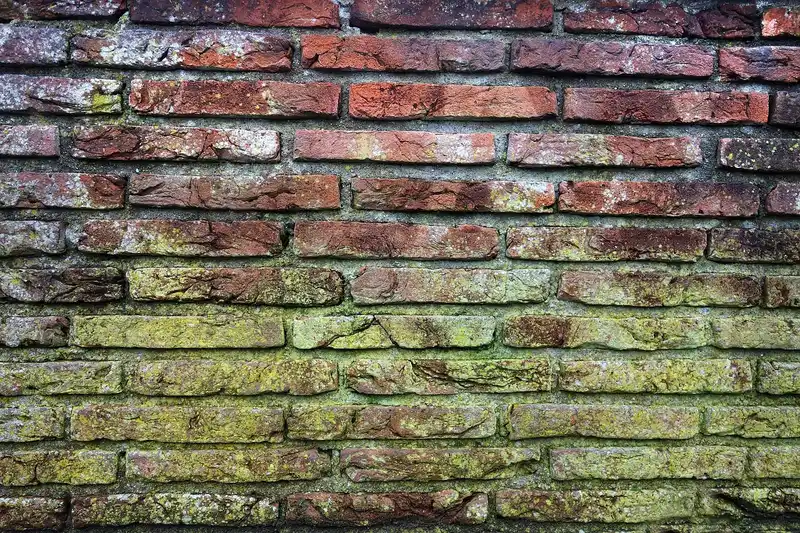


Mold spores are invisible to the naked eye, and they move through indoor and outdoor air all the time. They only become a problem when they land on a wet surface. Heat is not the main issue. Moisture is.
On a winter exterior wall, the wall surface can get cold enough to pull water out of humid indoor air. That surface condensation is the winter-specific mechanism behind many wall problems. If the air near the wall is moist and the wall is colder than the room, water can form where you cannot always see it at first.
Why cold exterior wall surfaces collect condensation
Exterior wall thermal bridging is part of the reason. Framing members, fasteners, corners, and areas with thin or missing insulation can stay colder than the rest of the room. Those colder spots lower the surface temperature and increase condensation risk, especially in winter.
Mold behind furniture can form when moist indoor air condenses on cooler walls. Poor airflow can create a pocket of trapped humidity that encourages mold growth. A sofa pushed tight to an outside wall can hold damp air right where the wall surface is coldest.
How thermal bridging changes wall temperature
Thermal bridging does not create mold by itself. It creates cold spots that make condensation more likely. Once that surface stays damp often enough, mold can grow on the dust and organic material already present on paint, drywall paper, trim, or wallpaper.
The key to mold control is controlling moisture. Mold grows when spores land on wet surfaces, and the EPA says mold will not grow without water or moisture. (EPA)
Is it condensation or a leak?
Start with the moisture source, not the discoloration. Condensation usually shows up on the coldest parts of an exterior wall, while a leak often leaves a wetter, more persistent pattern that can spread beyond the original spot. If the wall stays damp after the weather changes, water intrusion rises to the top of the list.
Condensation clues on cold walls
Condensation is more likely when the stain appears in winter, near corners, behind furniture, around window trim, or along an outside wall that feels colder than the rest of the room. It often returns after overnight cold or after a room fills with moisture from cooking, showers, or laundry.
A common first-timer mistake is to wipe the stain and stop there. If the wall is still cold and the room air is humid, the spot often comes back. Low indoor humidity does not rule out mold on a cold wall if a hidden air leak or a very cold wall surface keeps that section chilled.
Water intrusion clues inside the wall
Water intrusion points to a source outside normal room air. Roof leaks, rising damp, or plumbing issues inside wall cavities can wet the wall from behind, and that must be fixed before cleanup. Look for staining that grows after rain, a soft or swollen wall surface, or damage that moves beyond one cold patch.
If the baseboard is swelling, the paint is bubbling, or the drywall feels soft, treat it as more than surface condensation. Wet wall areas should dry within 24–48 hours to reduce mold growth after a spill or leak.
Hidden air leakage and blocked airflow clues
Hidden air leakage can be easy to miss because the wall may look only slightly damp. Gaps around outlets, trim, attic connections, or window framing can let cold air wash over the wall and lower the surface temperature. That can create a colder strip where mold returns in the same place.
Blocked airflow makes the problem worse. Furniture set flush to the wall, blocked baseboards, and packed storage can trap moisture near the surface, even when the rest of the room feels dry.
Exterior wall mold diagnostic table
Use this quick comparison to separate the three most common winter causes before you clean anything. It is a starting point, not a final diagnosis. If the wall stays damp, rule out water intrusion first.
| Cause | Typical clue | Likely location on the wall | No-tool test | First fix to try |
|---|---|---|---|---|
| Condensation | Returns during cold spells or after showers, cooking, or laundry | Corners, behind furniture, around windows, along cold outer-wall sections | Feel whether the spot is cold to the touch and check if it appears after humidity rises in the room | Lower indoor moisture, move furniture away, and improve airflow along the wall |
| Water intrusion | Stays wet, spreads after rain or snowmelt, or shows soft drywall and swelling | Near roof lines, around windows, at the bottom of walls, or where plumbing runs inside the cavity | Watch whether the area worsens after weather changes or after water use in nearby fixtures | Find and repair the source before any cleanup |
| Hidden air leakage | Same strip or corner keeps getting cold and damp even when the room seems dry | Outlets, trim gaps, window edges, top plates, and other weak points in the envelope | Run your hand for cold drafts near edges and note whether the spot lines up with a drafty area | Seal obvious gaps and check insulation coverage in the cold section |
Why does mold grow on walls in winter?
Winter wall mold usually starts where cold exterior wall surfaces meet indoor moisture. The wall does not need to be soaked. It only needs to stay damp long enough for spores to grow on the surface or in the wall materials. That is why the same room can look fine most of the day and still mold near one wall.
Furniture placement and blocked baseboards
Furniture tight to an outside wall is a common setup for condensation. Leave furniture 2–4 inches from exterior walls if possible. That small gap helps air move behind the piece and reduces the trapped pocket of humid air that can form mold.
Blocked baseboards can do the same thing. If a bed skirt, storage bin, or cabinet blocks the baseboard or lower wall, moisture can linger there after normal daily activity. The result is often a musty smell before the stain looks serious.
Insulation gaps and cold spots
Insulation gaps make some wall sections colder than others. The colder section becomes the place where indoor moisture condenses first. That is why one stud bay or one corner can stain while the rest of the wall stays clean.
Picture a bedroom where one outside corner keeps darkening each January. If the corner feels colder than the adjacent wall, the problem may be heat loss or air leakage rather than a single large leak. The solution starts with moisture control and gap sealing, not paint.
Rooms that add moisture fast
Bathrooms, kitchens, laundry rooms, basements, and bedrooms with shut doors can add moisture quickly. Steam from showers, cooking, drying clothes indoors, and even breathing can push relative humidity up. Mold risk rises above about 60% RH, and the recommended indoor humidity range is 30–50% for general comfort and mold prevention.
That does not mean every room must read the same. It means damp rooms need more attention than dry ones, especially when they share a wall with the outdoors.
What indoor humidity helps prevent wall mold?
Use RH as the main indoor target. Mold thrives when relative humidity is above about 60%, and a target of 30–50% indoors is a better range for mold prevention. If a room stays damp even below that range, look harder at cold wall surfaces and air leaks.
When a dehumidifier makes sense
A dehumidifier is recommended in damp rooms and basements, and it should keep RH below 50%. That is especially useful where winter air feels dry overall but a basement, laundry room, or closed bedroom still shows condensation on an exterior wall.
Low indoor humidity does not always solve a cold-wall problem. A room can read low on average and still have a colder strip by the wall that keeps collecting condensation. That is why wall surface temperature and airflow matter alongside RH.
How exhaust fans fit into moisture control
Exhaust fans in kitchens and bathrooms should be part of the moisture-control plan. Run them during showers, cooking, and other moisture-heavy tasks, then let them clear the room afterward. They remove humid air before it can drift to a cold exterior wall and condense there.
If the room has no good exhaust path, moisture lingers longer and raises the chance of surface condensation. Fans do not replace drying or repairs, but they reduce the load on the wall.
Prevention starts with moving moisture away from cold walls. Keep air moving, reduce indoor humidity in damp spaces, and avoid trapping humid air behind furniture or storage. The goal is to keep the wall surface from staying cold and wet at the same time.
Keep air moving along the wall
Do not block baseboards with furniture or heavy storage. Leave a gap so room air can reach the wall and carry moisture away. In winter, that small space can matter more than many people expect, because the coldest wall section is often where mold returns first.
Also pay attention to window coverings and wall-mounted storage. Anything that seals off a cold exterior wall can create a damp pocket behind it.
Set furniture and storage away from the wall
Use a common 2 to 4 inch clearance guideline for beds, sofas, dressers, and shelving near exterior walls. If a room is small and you cannot keep that spacing everywhere, prioritize the coldest wall, the darkest corner, and the section with the most history of staining.
Suppose a 10-by-12 bedroom has a bed against an outside wall and a musty strip appears behind the headboard each February. Moving the bed out 3 inches and keeping RH in the 30–50% range may stop the repeat pattern, but only if no leak is feeding the wall from behind.
Control moisture room by room
Bathrooms need fan use. Kitchens need fan use. Basements usually need a dehumidifier. Bedrooms may need both better airflow and lower moisture from daily habits, especially if doors stay closed at night.
Check the room that creates the most moisture, then work outward from there. A dry living room will not protect an exterior wall if the bathroom next door is feeding humid air into the same corner.
How to dry a damp wall fast
Drying matters fast because mold can start growing after a wall gets wet if the material stays damp too long. Dry wet areas within 24–48 hours after a spill or leak. If the wall is still wet after that, look for a source problem rather than treating the surface alone. (EPA)
-
Stop the moisture source. Turn off the leak, reduce steam, or correct the room condition that is feeding the dampness. If the source is inside the wall, stop here and move to repair.
-
Pull items away. Move furniture, boxes, and rugs away from the wall so air can reach the surface. Leave at least 2–4 inches of space where possible.
-
Run ventilation. Use exhaust fans in nearby kitchens or bathrooms and keep interior doors open if that helps air move. Airflow shortens the wet period that mold needs.
-
Set a dehumidifier. Use it in damp rooms or basements and aim to keep RH below 50%. That helps dry persistent moisture on walls and in nearby air.
-
Check the wall daily. Make sure the spot is getting drier, not spreading. If the area remains damp beyond 24–48 hours, assume there may be hidden water intrusion.
When to call a pro
Stop DIY cleanup and call a pro if the wall stays damp after drying, if the source seems to be inside the wall, or if the same section keeps coming back. Persistent dampness usually means the problem is larger than surface mold alone.
Persistent dampness after drying
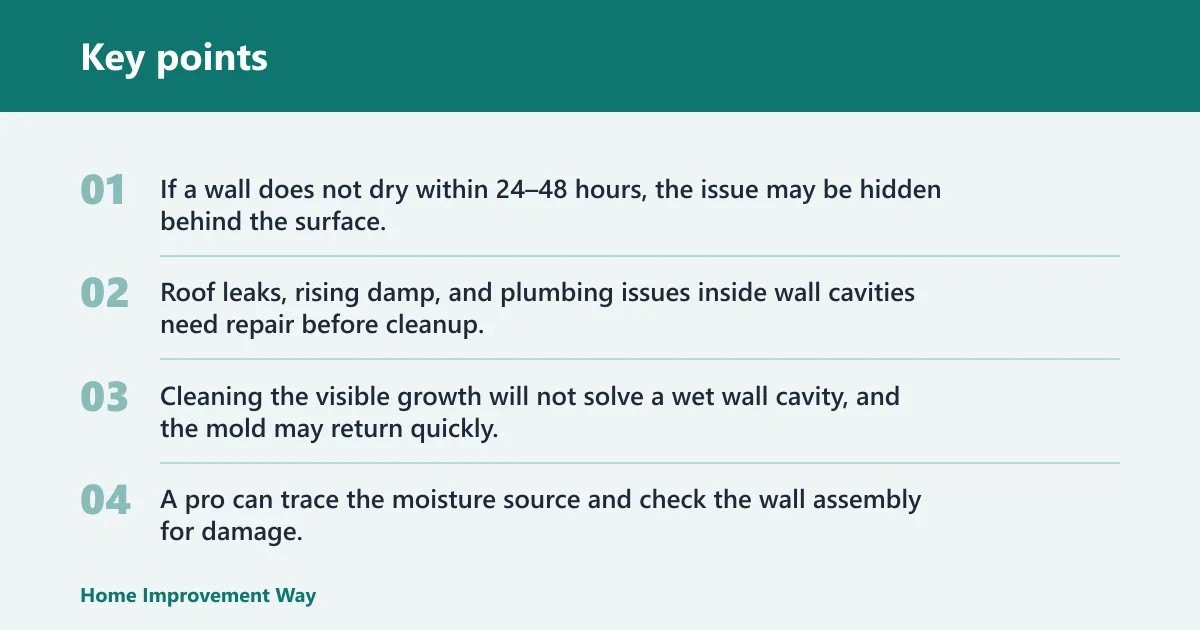
If a wall does not dry within 24–48 hours, the issue may be hidden behind the surface. That can mean saturated insulation, a small plumbing leak, or air leakage that keeps feeding condensation in the same place.
Suspected roof, plumbing, or rising damp
Roof leaks, rising damp, and plumbing issues inside wall cavities need repair before cleanup. Cleaning the visible growth will not solve a wet wall cavity, and the mold may return quickly.
Repeated mold on the same wall section
If the same patch returns each winter, the wall likely has a repeat condition such as thermal bridging, insulation gaps, or a hidden leak path. A pro can trace the moisture source and check the wall assembly for damage.
Frequently asked questions
Does mold grow in the winter?
Yes, if moisture is present. Winter often makes exterior walls colder, which raises condensation risk on the wall surface. Mold spores are already in indoor and outdoor air, but they only grow when they land on a wet surface.
What indoor humidity helps prevent mold on walls?
A target of 30–50% indoor relative humidity is a useful range for mold prevention. Mold risk rises above about 60% RH, especially on cold exterior walls. In damp rooms or basements, a dehumidifier may be needed to stay below 50%.
How fast can mold grow after a wall gets damp?
If a wall stays wet, mold can begin growing quickly enough that drying within 24–48 hours matters. That is why spills, leaks, and soaked wall sections should be dried fast, and why a wall that stays damp needs a source check before cleanup. (EPA)
Is mold on an exterior wall from condensation or a leak?
Condensation is more likely when the spot appears on a cold wall, behind furniture, or after humid indoor activities. A leak is more likely when the area stays wet, spreads after rain or snowmelt, or shows soft drywall and swelling. If in doubt, treat water intrusion as the first thing to rule out.
Can cold exterior walls cause mold inside the house?
Yes. Cold exterior walls can lower the surface temperature enough for indoor moisture to condense, especially where thermal bridging, insulation gaps, or blocked airflow are present. That damp surface can support mold growth even when the rest of the room seems dry.
Why does mould grow on walls in winter?
It is the same moisture problem. Winter makes some wall sections colder, and cold walls collect condensation more easily when indoor air is humid. If furniture blocks airflow or a wall has hidden leakage, the damp spot can stay wet long enough for mold to grow.
Sponsored / affiliate links. As an Amazon Associate I earn from qualifying purchases. I may earn additional commission from eligible campaigns.