Should You Close Vents in Unused Rooms in Winter?
Closing one or two supply vents in unused rooms is often harmless in a properly sized forced-air system, but closing many vents can raise static pressure and may strain the blower. Done poorly, it can cut airflow, worsen comfort, and shorten furnace or duct life. This guide explains when vent closure is safe, when it is risky, and what to do instead to cut winter heating costs.
This guide is part of our Furnace Troubleshooting: Fix Common Winter Heating Problems series.
Why closing vents can upset airflow
For most forced-air systems, leave supply vents open. Closing a single vent in a truly unused room may do little, but closing several vents can change the duct pressure your furnace expects, reduce airflow, and create room-to-room temperature imbalance.
The short answer for most forced-air systems
A forced-air HVAC system depends on a matched path: supply ducts deliver heated air, and returns pull air back to the furnace. When you close supply vents, the system may still push the same air volume into fewer openings, which raises static pressure in the ductwork.
That added pressure can stress the blower motor and may push air toward weak spots at duct seams. It can also make some rooms hotter while others get less heat, which is the opposite of the comfort fix most people want.
When a closed vent is more likely to be harmless
Closing one vent is more likely to be low risk when the home has a properly sized system, the room has another return path, and the rest of the house still gets steady airflow. A brief experiment with one vent is different from leaving several vents shut all winter.
Say your spare bedroom has one supply register and the door stays open most of the day. Closing that one vent may have little effect if the system is already balanced and the rest of the house still heats normally. The risk rises when the same habit spreads across multiple rooms.
How closed vents change airflow
Closing supply vents changes the resistance in the duct system. The furnace fan then works against fewer openings, which can raise static pressure, disturb designed airflow, and send heated air into paths you do not want, including leaks in attics or crawl spaces.
Supply vents, returns, and the pressure balance your furnace expects
Forced-air heating is meant to move air in a loop. Supply vents deliver heated air into occupied and unoccupied rooms, and returns bring air back so the blower can keep circulation steady. If the returns cannot pull enough air back, the supply side gets out of balance.
That balance matters because the furnace and ducts are built to operate within a set static pressure range. Block enough supply outlets, and the fan faces more resistance than the system was built to handle.
What happens to static pressure when several vents are shut
Closing vents can create more static pressure in ductwork. That pressure can push at duct seams and cause leaks. It can also reduce overall airflow, especially if several rooms are closed off at once.
When airflow drops, the blower has to work harder against higher resistance. That can use more energy and can wear the motor faster under increased strain. The comfort penalty is just as clear: some rooms get too much heat, others too little.
When can closing a vent cause furnace problems?
Closing a vent becomes a problem when the change is large enough to restrict airflow across the whole system. The biggest risks are higher blower strain, hotter furnace components, and more leakage at weak duct joints. Those risks matter more in older or partly balanced ductwork.
How higher pressure can strain the blower motor
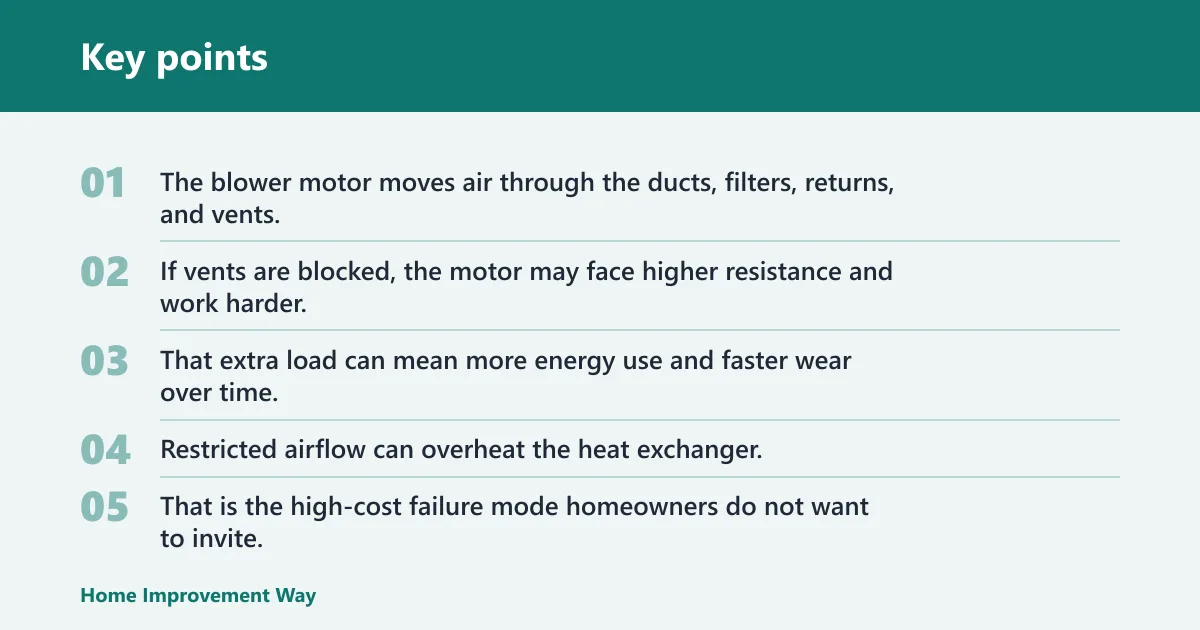
The blower motor moves air through the ducts, filters, returns, and vents. If vents are blocked, the motor may face higher resistance and work harder. That extra load can mean more energy use and faster wear over time.
How restricted airflow can raise heat exchanger temperature
Restricted airflow can overheat the heat exchanger. That is the high-cost failure mode homeowners do not want to invite. Hunker warns of a possible carbon monoxide risk, and cracked heat exchangers are a carbon monoxide hazard.
That does not mean a brief, single-vent experiment instantly creates danger. It does mean prolonged seasonal closure of multiple vents can move the furnace away from its intended operating conditions.
How duct seams and leaks can lose more air under pressure
Duct leakage often already exists at seams and joints. When pressure rises, those weak points can leak more, sending heated air into attics, crawl spaces, or other hidden spaces instead of the rooms you pay to heat.
That is one reason closing vents can raise heating bills rather than reduce them. The system can end up moving heat less efficiently while still burning fuel or using electricity to make the same amount of warm air.
Vent closure decision table
| Room type | System type | What happens if you close the vent | Safer alternative |
|---|---|---|---|
| One unused bedroom | Non-zoned forced-air | Usually low impact if it is the only vent, but closing it for the whole season can still raise pressure a bit and slightly shift airflow | Keep the vent open and lower the thermostat by a few degrees when the house is empty or asleep |
| Basement storage room | Non-zoned forced-air | May reduce local heat in the room, but can increase imbalance elsewhere if the system already has weak returns or short duct runs | Leave the vent open if the room shares supply air with nearby occupied spaces; seal drafts around basement windows and rim areas |
| Upstairs bonus room | Non-zoned forced-air | Can make upper-floor imbalance worse, because upstairs ducts often need all available airflow in winter | Keep the vent open and check attic air leaks, insulation, and thermostat setbacks first |
| Any area in a zoned house | Zoned HVAC system | Usually the main exception. Motorized dampers are built for room-by-room control, so closing an assigned zone can be part of normal operation | Use the zone controls as designed, and do not treat manual vent closure like a substitute for the dampers |
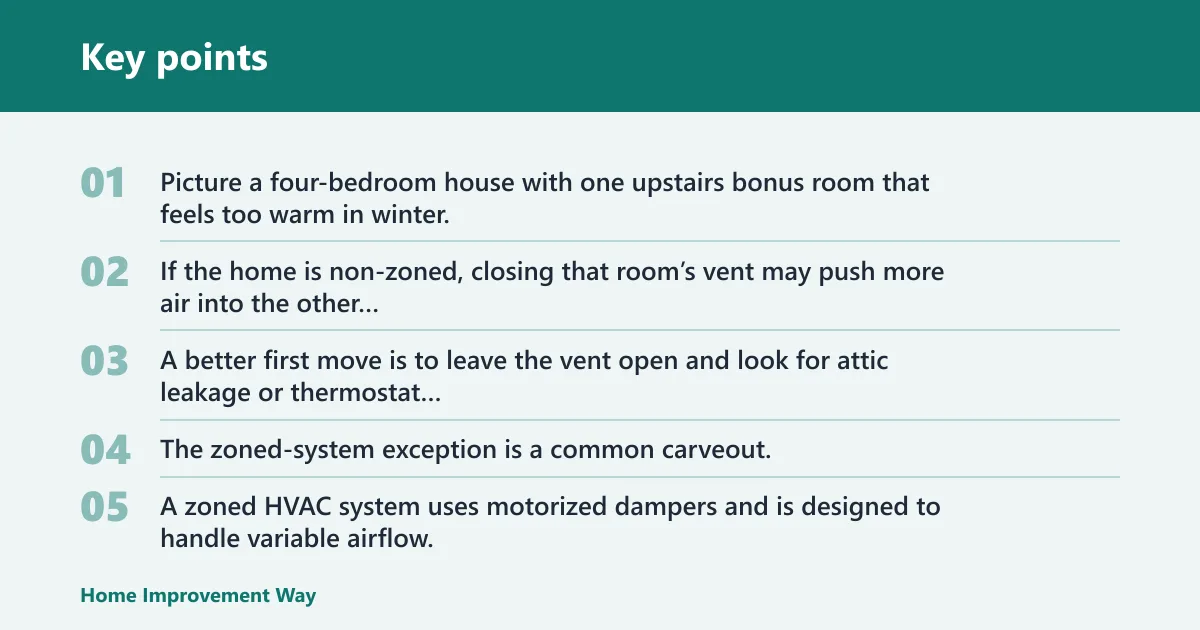
Picture a four-bedroom house with one upstairs bonus room that feels too warm in winter. If the home is non-zoned, closing that room’s vent may push more air into the other upstairs rooms and increase pressure. A better first move is to leave the vent open and look for attic leakage or thermostat placement issues.
Zoned HVAC versus non-zoned HVAC
The zoned-system exception is a common carveout. A zoned HVAC system uses motorized dampers and is designed to handle variable airflow, so area control is built into the equipment. In that setup, closing a zone can make sense when the system is set up for it.
That is different from a standard forced-air system, where manual vent closure is a workaround. If you are not sure which type you have, look for zone controls, dampers, or multiple thermostats before changing vents.
What should you do instead of closing vents?
For most homes, a programmable thermostat, better air sealing, and routine maintenance do more for winter bills than vent closure. Those steps reduce heat loss or lower demand without disturbing the airflow balance the furnace needs.
Use a programmable thermostat for away and sleep setbacks
J Martin recommends lowering the thermostat by a few degrees. The cited savings is 3% per degree, with a common home setting suggestion of 68°F and 62°F when sleeping or away. That approach cuts runtime without forcing the duct system out of balance.
A thermostat setback is usually more effective than closing a vent because it reduces heating demand across the whole house. It also avoids the uneven pressure changes that can stress ducts and the blower.
Seal window and door air leaks
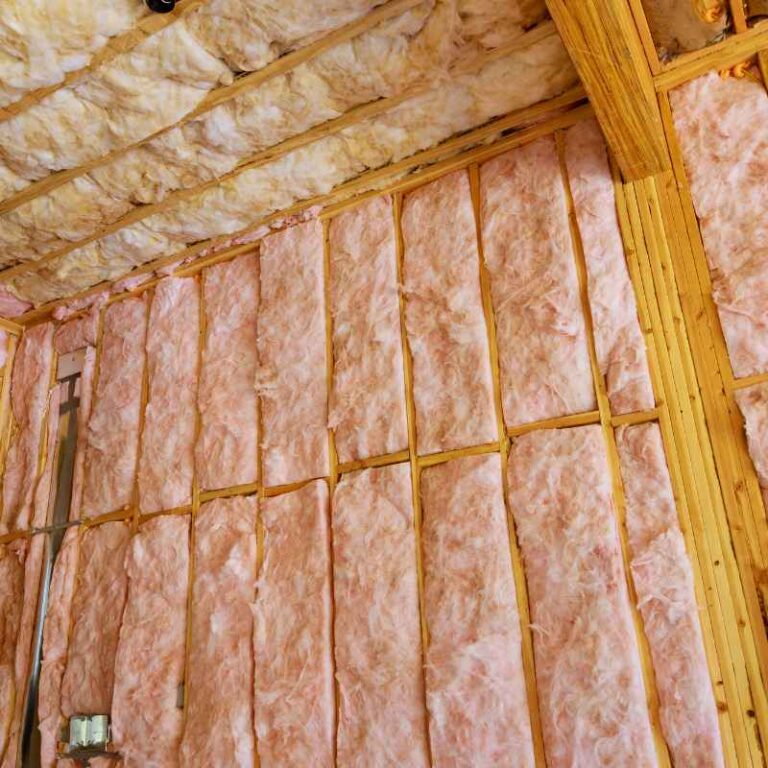
Weatherization usually offers a cleaner savings path. HVACR Global recommends sealing air leaks, and that advice fits the physics: reducing drafts lowers heat loss, so the system does less work to keep rooms comfortable.
Start with obvious leak points around windows, exterior doors, attic hatches, and utility penetrations. Small gaps can add up, especially in rooms that already feel cold.
Keep return paths open and maintain filters and ducts
Keep interior doors open when practical so return air can move back to the furnace. Check filters on schedule, because a dirty filter can restrict airflow just like a closed vent can.
If the home has known duct leaks, seal those first. That usually saves more energy than closing a vent because it keeps heated air in the supply path instead of sending it into hidden spaces.
Signs you should reopen vents
If a closed vent causes whistling, weak airflow, or a new hot-cold split between rooms, reopen it. Those are signs the system is losing balance, and the furnace may be working against too much resistance.
Whistling or noisy vents
Whistling often means air is being forced through too small an opening. That is a direct clue that pressure has risen in the ductwork. Reopen the vent and see whether the noise stops.
Weak airflow or uneven room temperatures
If one room gets little heat while another overheats, the system may be out of balance. Closing vents can create room-by-room temperature imbalance, especially in homes with partly balanced ductwork or leaky runs.
Overheating symptoms or frequent furnace cycling
If the furnace seems to cycle more often, shuts down, or throws off unusually hot air, treat that as a warning. Restricted airflow can overheat the heat exchanger, and repeated stress is not worth the small comfort gain from a closed vent.
- Reopen all recently closed vents.
- Check whether airflow improves within the next heating cycle.
- Inspect filters, returns, and visible duct joints.
- Lower the thermostat a few degrees instead of re-closing vents.
- Schedule service if the problem remains after the vents are open.
When to call an HVAC pro
Call an HVAC pro if a non-zoned system still has uneven temperatures after the vents are reopened, if you suspect duct leakage, or if closing vents caused noise, overheating, or shutdowns. Those patterns point to a system issue, not a room-by-room comfort fix.
Persistent imbalance in a non-zoned system
If one room stays cold and another stays hot even with vents open, the duct layout may be poorly balanced or undersized. That is a design or setup problem, and it usually needs measured airflow checks rather than more vent tinkering.
Suspected duct leakage or oversized pressure differences
Visible dust streaks, loose tape, or air movement at duct seams are signs to have the ducts inspected. Pressure can worsen leakage, so a system that already leaks may lose more heated air when vents are shut.
Any repeated overheating or shutdown issue
Repeated furnace overheating is not a vent problem to ignore. It can point to restricted airflow, a filter issue, a blower issue, or a heat exchanger problem. A cracked heat exchanger is a carbon monoxide hazard, so this is a job for service, not guesswork.
Frequently asked questions
Should you close vents in unused rooms in winter?
No, for most homes. A zoned HVAC system is the exception, or a very brief one-vent experiment in a properly sized system. In a standard forced-air system, closing several vents can raise static pressure, strain the blower, and create uneven heating. Lowering the thermostat is usually the safer savings move.
Should you close vents in unused rooms in winter reddit?
Reddit advice is mixed because the right answer depends on the duct layout, returns, and whether the home is zoned. For most non-zoned homes, opening the vents and using thermostat setbacks is the safer choice. A vent that stays shut all season can create more risk than value.
Is it ok to close vents in unused rooms?
It can be okay to close one vent if the system is properly balanced and the change is minor. It is not a good general strategy for whole-home savings. If you notice whistling, weak airflow, or hotter furnace operation, reopen the vent.
Is it bad to close vents in unused rooms?
It can be bad when the closure raises pressure enough to disturb airflow through the entire system. That may increase blower strain, worsen leaks at duct seams, and raise the chance of overheating. The risk is highest when several vents are closed at once for a long period.
Can closing vents damage my furnace?
Yes, it can. Restricted airflow can make the furnace work harder, overheat the heat exchanger, and stress the blower motor. A single closed vent is less concerning than a pattern of seasonal closure across many rooms, but the safer path is still to leave vents open and cut heat loss another way.
What should I do instead of closing vents to save on heating costs?
Use a programmable thermostat, seal air leaks around windows and doors, and keep filters and ducts in good condition. The same source recommends lowering the thermostat by a few degrees, with 68°F as a common home setting and 62°F when sleeping or away. Those steps save energy without upsetting airflow balance.
Sponsored / affiliate links. As an Amazon Associate I earn from qualifying purchases. I may earn additional commission from eligible campaigns.