Why Is My Furnace Running but Not Heating the House?
Byline: Reviewed by an HVAC technician and edited for furnace safety, airflow, and combustion diagnostics.
Technical review note: Furnace airflow complaints can overlap with combustion or safety shutdowns, so the safest path is to separate “air moving” from “heat being made” first, then check for filter restriction, ignition/flame-proving faults, condensate issues, and gas-safety red flags before resetting the system. Energy Saver and EPA guidance both stress that restricted airflow from dirty filters can reduce performance and contribute to overheating, while gas odor and carbon-monoxide concerns require immediate stop-use behavior (DOE Energy Saver; EPA indoor air guidance). Manufacturer service literature also treats flame-sensing, condensate, and limit-switch behavior as safety-related lockout causes rather than routine homeowner adjustments.
If your furnace runs but the house stays cold, sort airflow from heat production first: check the filter, blower, vents, and flame or igniter before calling for service. Skipping that split wastes energy, can trigger repeated lockouts, and may leave a gas or carbon-monoxide problem untouched. This guide shows how to tell whether the furnace is moving air, making heat, or losing heat before it reaches your rooms.
Quick diagnosis by symptom

- Works with almost any brand
- Captures dust, mold, pet dander, and pollen
- Up to 3 months of filtration
The symptom points you to the next check. Cool air at the registers usually means ignition, combustion, or a safety shutdown. Warm air that never reaches the rooms points more toward airflow, duct leakage, or blocked returns. A blower that keeps running with no heat often means the furnace has stopped heating but the fan is still in post-run mode or limit protection.
Cool air from registers
If the blower is moving air but the supply air feels cool, the furnace may not be lighting, may be shutting down after ignition, or may be overheating and stopping the burners. That differs from a duct issue, which usually still sends warm air somewhere in the system.
Burners ignite briefly, then stop
That pattern often points to a flame sensor issue, a flame-recognition problem, or a high-limit safety trip after the furnace overheats. The blower can keep running while the burners cut out, which makes the house feel like the furnace is on but not heating.
Some rooms stay cold while others warm up
When only certain rooms stay cold, the furnace may be making heat, but the duct system is losing it or not delivering enough air to those rooms. Blocked returns, closed registers, loose ducts, or leaks can create that split result.
Blower runs with no heat output
This is often a heat-production problem or a safety shutdown, not a simple fan issue. The blower may keep running even when no heat is produced, especially after the high-limit switch opens or the furnace locks out ignition.
Thermostat and power checks
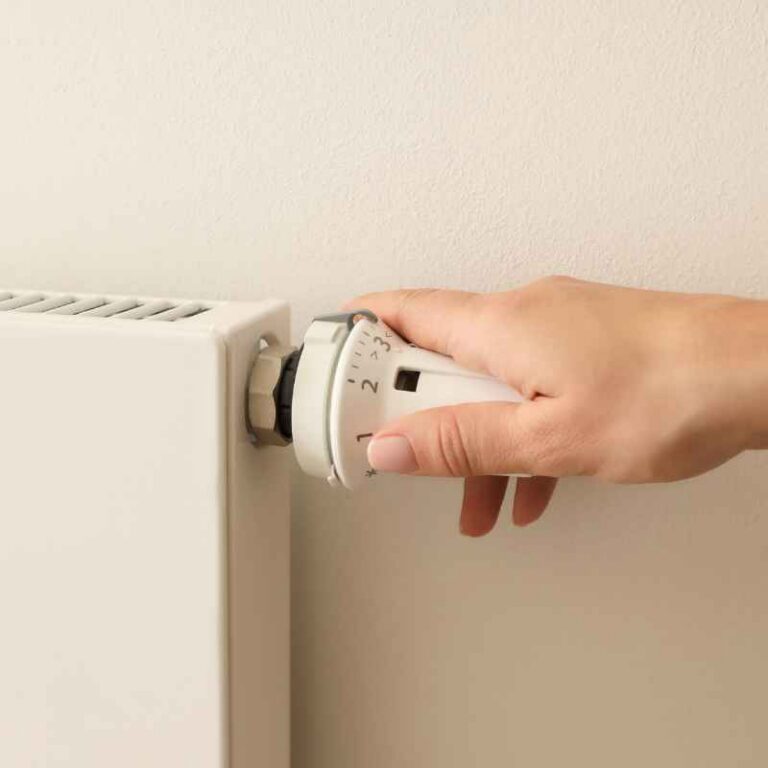
Start with the controls and power because they are the easiest checks and the least risky. The thermostat should be set to HEAT, and the fan should be set to AUTO, not ON. If the display is blank, wrong, or unstable, weak batteries or a failed thermostat can cause bad operation.
Set the thermostat to heat
Confirm the mode is set to HEAT, not COOL or OFF. Set the temperature above the current room temperature so the furnace has a real call for heat. A cold thermostat can be a symptom even when the furnace is running, so the room reading matters too.
Set the fan to auto, not
If the fan is set to ON, the blower can run continuously and move unheated air through the house. That setting can make a normal delay feel like a failure. Switch it to AUTO so the fan runs only when the furnace is actually heating.
Check batteries and display accuracy
Dead or weak batteries can cause bad thermostat behavior, wrong readings, or blank screens. If the display is blank, the furnace may never get the call for heat. If the reading is clearly wrong, replacement is often smarter than chasing a phantom furnace problem.
Verify the breaker and furnace power switch
Check the breaker and the furnace power switch before opening panels or assuming the furnace has failed. A tripped breaker can stop proper operation. If the switch was turned off or the breaker tripped again immediately, stop and look for a deeper electrical fault.
- Set the thermostat to HEAT.
- Set the fan to AUTO.
- Raise the temperature setting a few degrees.
- Check the batteries or screen.
- Verify the furnace switch and breaker.
Why is my furnace blowing cold air?
Cold air from the registers usually means the blower is working, but the furnace is not making usable heat or has stopped heating after a safety event. Common causes include ignition failure, a closed gas valve, the thermostat fan set to ON, or a high-limit shutdown after overheating.
Ignition failure or delayed flame
Older furnaces may use a pilot light, while newer ones may use an igniter. If the igniter fails or the pilot is out, the blower may still start, but no flame will heat the air. That leaves you with airflow and no combustion.
Gas valve closed or gas supply interrupted
A closed gas valve can stop furnace heat entirely. If the valve handle is not aligned with the gas pipe or the supply has been interrupted, the burners cannot light. Do not force gas controls; if you are not sure, leave it to a technician.
Thermostat fan set
Fan set to ON can make the system blow room-temperature air between heating cycles. That is normal fan behavior, but it feels like a heating failure. This is one of the easiest fixes and should be checked before assuming a part has failed.
High-limit shutdown after overheating
Low airflow can trip the high-limit switch and stop heat. In that case, the burners shut off while the blower keeps running to cool the furnace. If that keeps happening, the root cause is often airflow restriction rather than the limit switch itself. The DOE Energy Saver notes that restricted airflow from a dirty filter can reduce furnace performance and can contribute to overheating, while EPA guidance also emphasizes keeping return and supply paths unobstructed for healthy airflow.
Say your furnace lights for 20 seconds, then the burners shut off while the blower keeps moving air through 14 registers. That pattern points more toward a safety shutdown than a total loss of power. A dirty filter or blocked return path is more likely than a failed thermostat.
Airflow problems that stop heat
Airflow problems can make a furnace seem weak even when combustion is working. Dirty filters, blocked vents, damaged ducts, and loose connections can all reduce delivered heat. They can also cause repeated overheating and limit trips, which makes the furnace shut itself down.
Dirty or clogged air filter
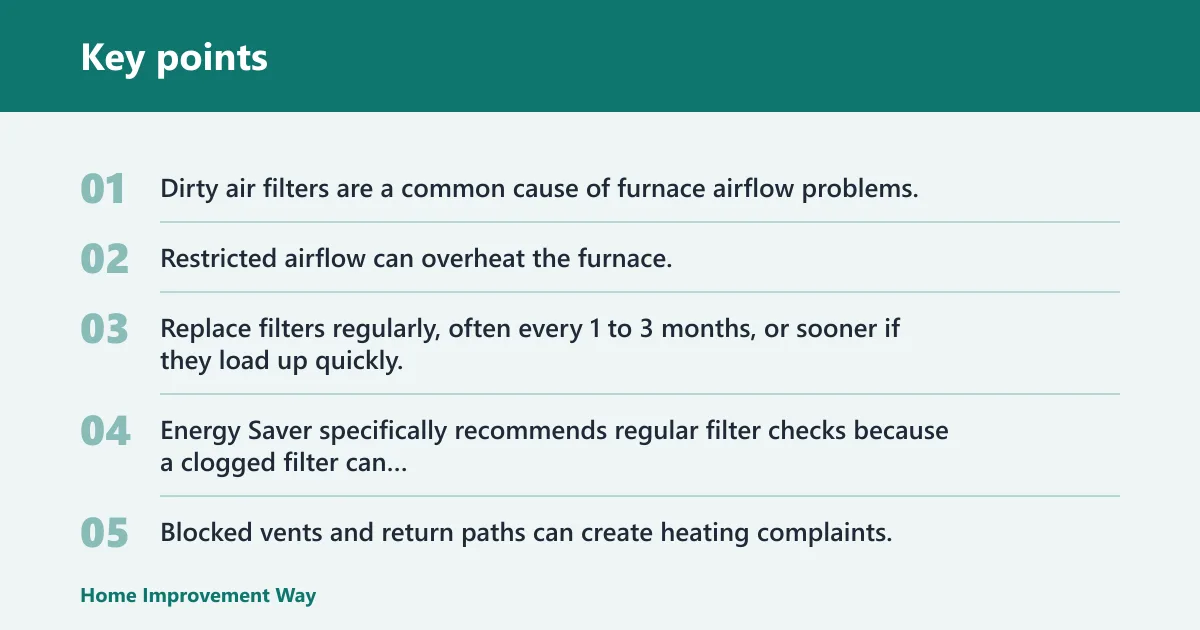
Dirty air filters are a common cause of furnace airflow problems. Restricted airflow can overheat the furnace, which may trip the high-limit switch and stop heat. Replace filters regularly, often every 1 to 3 months, or sooner if they load up quickly. Energy Saver specifically recommends regular filter checks because a clogged filter can restrict airflow and reduce system efficiency.
Closed vents or blocked returns
Blocked vents and return paths can create heating complaints. If too many registers are closed or furniture blocks the return air grille, the furnace may not move enough air across the heat exchanger. That can reduce comfort and trigger overheating protection. EPA guidance on airflow and indoor air quality also stresses keeping vents and returns clear so the system can circulate air properly.
Duct leaks or loose connections
Leaking or damaged ductwork can make heated air feel cold by the time it reaches the rooms. Loose runs, disconnected joints, and gaps at seams can dump warm air into attic, crawlspace, or basement areas. The furnace may be making heat, but the rooms never get enough of it.
Overheating and repeated limit trips
Repeated overheating usually means the furnace is not getting enough airflow, not that the limit switch is the main problem. A furnace that keeps shutting down after a reset often has a filter, duct, or return-air issue that needs correction before the burners will stay on normally. Manufacturer service guidance treats limit-switch openings as a safety response to an underlying airflow or heat-transfer condition, not as a part to keep bypassing.
Suppose a 2,000-square-foot house has one bedroom that stays cold while the living room warms up. If the thermostat is satisfied but the bedroom supply register barely pushes air, the furnace may be fine and the duct branch may be leaking or blocked instead.
Furnace heat diagnosis matrix
This table separates the symptom from the likely subsystem and the safest next move. Start with the column that best matches what you see, then stop once the cause category becomes clear. The goal is not to guess every failed part. It is to tell whether the furnace is moving air, making heat, or losing heat before it reaches the rooms.
| Symptom | Likely subsystem failure | Homeowner-safe next step | Estimated difficulty | Safe to keep using / stop and call |
|---|---|---|---|---|
| Cool air at registers, blower runs | Heat-production issue or limit shutdown | Check thermostat mode, fan setting, filter, and gas valve; call a technician if burners will not stay lit | Easy | Safe only if the air is merely cool and no gas odor or repeated lockout is present; stop and call if the burners will not stay lit |
| Burners ignite briefly, then stop | Flame sensor, ignition, or overheating protection | Replace a dirty filter and note whether the blower keeps running; stop if shutdowns repeat | Easy to Moderate | Stop and call if the unit repeatedly shuts down after ignition |
| Some rooms cold, others warm | Duct leakage or blocked supply/return paths | Open registers, clear return grilles, and inspect visible duct joints for obvious gaps | Easy | Usually safe to keep using while you correct obvious airflow restrictions; call if the furnace overheats or short-cycles |
| Blower runs with no heat output | High-limit switch open or ignition failure | Check filter and airflow first; call for service if the condition repeats after a reset | Easy | Safe only for a short observation period; stop and call if heat does not return |
| Repeated shutdowns after reset | Overheating, flame sensing, or gas-control fault | Stop using the furnace and contact a technician | Moderate to Difficult | Stop and call |
| High-efficiency furnace with standing water or drain alarm | Condensate line clog | Do not keep resetting; call for service | Moderate | Stop and call |
What causes a furnace to run but not heat?
The main causes are ignition failure, flame-sensing failure, gas-supply problems, and safety shutdowns. On high-efficiency furnaces, a clogged condensate line can also stop normal operation. If the blower runs but the burners do not stay lit, the problem is usually inside the heat-making side of the furnace.
Igniter or pilot light failure
Older furnaces may use a pilot light, while newer ones use an igniter. If either one fails, the furnace can power on but never produce usable heat. That is a combustion problem, not an airflow problem, and it usually needs service.
Dirty flame sensor
A dirty flame sensor can shut the furnace down for safety. The burners may light and then go out because the control board cannot confirm flame. That creates a short burst of heat, followed by cold air from the blower. Manufacturer troubleshooting guides commonly describe flame-proving faults as a lockout condition that needs diagnosis, not repeated reset attempts.
Gas valve problems
A closed gas valve stops gas heat from working at all. If the furnace has power but no flame and no gas flow, the control system cannot complete the heating cycle. A homeowner can confirm the valve position, but internal gas repairs should stay with a technician.
Clogged condensate line on high-efficiency units
High-efficiency furnaces can fail from a clogged condensate line. When the drain backs up, a safety switch may shut the furnace down. That fault can look like a random no-heat problem, but it is really a venting or drainage issue. Manufacturer manuals commonly treat condensate switch trips as a protection event that should not be bypassed.
A common first-timer mistake is to keep resetting the furnace because the blower still runs. If the burners shut down twice in a row after a reset, stop there. Repeated lockouts point to a fault that needs diagnosis, not another cycle of trial and error.
When should you call an HVAC technician?
Call a technician when the furnace shows signs of gas trouble, repeated shutdowns, electrical faults, or overheating that returns after basic checks. Stop using the furnace if you smell gas, see a yellow flickering flame, or have a breaker that keeps tripping, and have it checked. Those are not safe homeowner fixes. Utility and CPSC guidance treat gas odor and carbon-monoxide concerns as immediate stop-use situations, not routine maintenance tasks.
Gas smell or suspected leak
Any gas smell is a stop-using threshold. Shut the system down if you can do so safely, leave the area if the odor is strong, and contact the gas utility or emergency services as instructed locally. Do not reset the furnace or flip switches repeatedly. If you suspect carbon monoxide, leave immediately and follow local emergency guidance; CPSC warns that CO can be deadly and is not something to troubleshoot casually.
Repeated shutdowns after a reset
If the furnace starts, runs briefly, then shuts down again, the issue may be the flame sensor, igniter, limit switch, condensate drain, or a venting fault. Repeated shutdowns are a technician job because the control system is protecting itself for a reason.
Electrical fault or tripped breaker that returns
A tripped breaker that comes back after reset usually means more than a simple power interruption. It can point to a failing motor, control board issue, or wiring fault. Do not keep resetting it if the breaker trips again right away.
No heat after basic checks
If the thermostat is in HEAT, the fan is on AUTO, the filter is clean, vents are open, and the gas valve is open, yet the furnace still does not heat, service is the next step. That is especially true if you see a yellow flickering flame, poor venting, or a cold house with a running blower.
Frequently asked questions
Why is my furnace running but not heating the house?
Usually the furnace is either not making heat or is losing heat before it reaches the rooms. Check thermostat mode, fan setting, filter condition, gas valve position, and whether the burners stay lit. If the blower runs but the burners drop out, the fault is on the heat-making side.
Can a dirty filter stop my furnace from heating?
Yes. Dirty air filters are a common cause of furnace airflow problems, and low airflow can trip the high-limit switch and stop heat. That can leave the blower running while the burners shut off. Replace filters regularly, often every 1 to 3 months.
What should I check when the furnace turns on but no heat comes out?
Check the thermostat mode, fan setting, batteries, breaker, furnace power switch, filter, and gas valve first. Then watch for ignition failure or burners that light and shut off quickly. If the furnace keeps cycling off, stop using it and call a technician.
Why does my furnace keep running but the house stays cold?
That pattern often means the furnace is moving air, but the air is not getting heated well or not reaching the rooms. Look for blocked returns, closed vents, dirty filters, duct leaks, ignition trouble, or a high-limit shutdown. The symptom helps separate airflow from combustion.
When should I call an HVAC technician for a furnace not heating?
Call right away for gas smell, repeated shutdowns, a breaker that trips again, a yellow flickering flame, or a high-efficiency furnace with a condensate drain issue. Also call if the basic thermostat, filter, power, and gas checks do not restore heat. Some faults should not be handled by a homeowner.
Sponsored / affiliate links. As an Amazon Associate I earn from qualifying purchases. I may earn additional commission from eligible campaigns.
 ROVSUN 18000 BTU Mini Split AC/Heating System with Inverter, 20 SEER2 Energy Saving 230V Ductless Split-System Air Conditioner with Pre-Charged Condenser, Heat Pump, Remote Control & Installation Kit
 Faryuan Bladeless Fan, 25inch Heating & Cooling & Filter Combo Tower Fan 80° Oscillating with Remote, 9H Timer, 8 Speeds, Portable Quiet for Indoor, Bedroom, Home Office Room(Grey & Red)