Why Does My Thermostat Say Heat on but No Heat Comes Out?
If your thermostat says Heat On but the registers stay cold, the furnace is likely failing at ignition, airflow, a safety limit, or a low-voltage control issue; if the blower runs and no warm air appears after 10 to 15 minutes, stop and troubleshoot in that order. Ignoring the wrong fault can waste fuel, trip the furnace repeatedly, or let a minor issue turn into a no-heat call. This guide walks you through the checks that separate thermostat, ignition, airflow, and safety-lockout problems.
Thermostat heat call and wiring
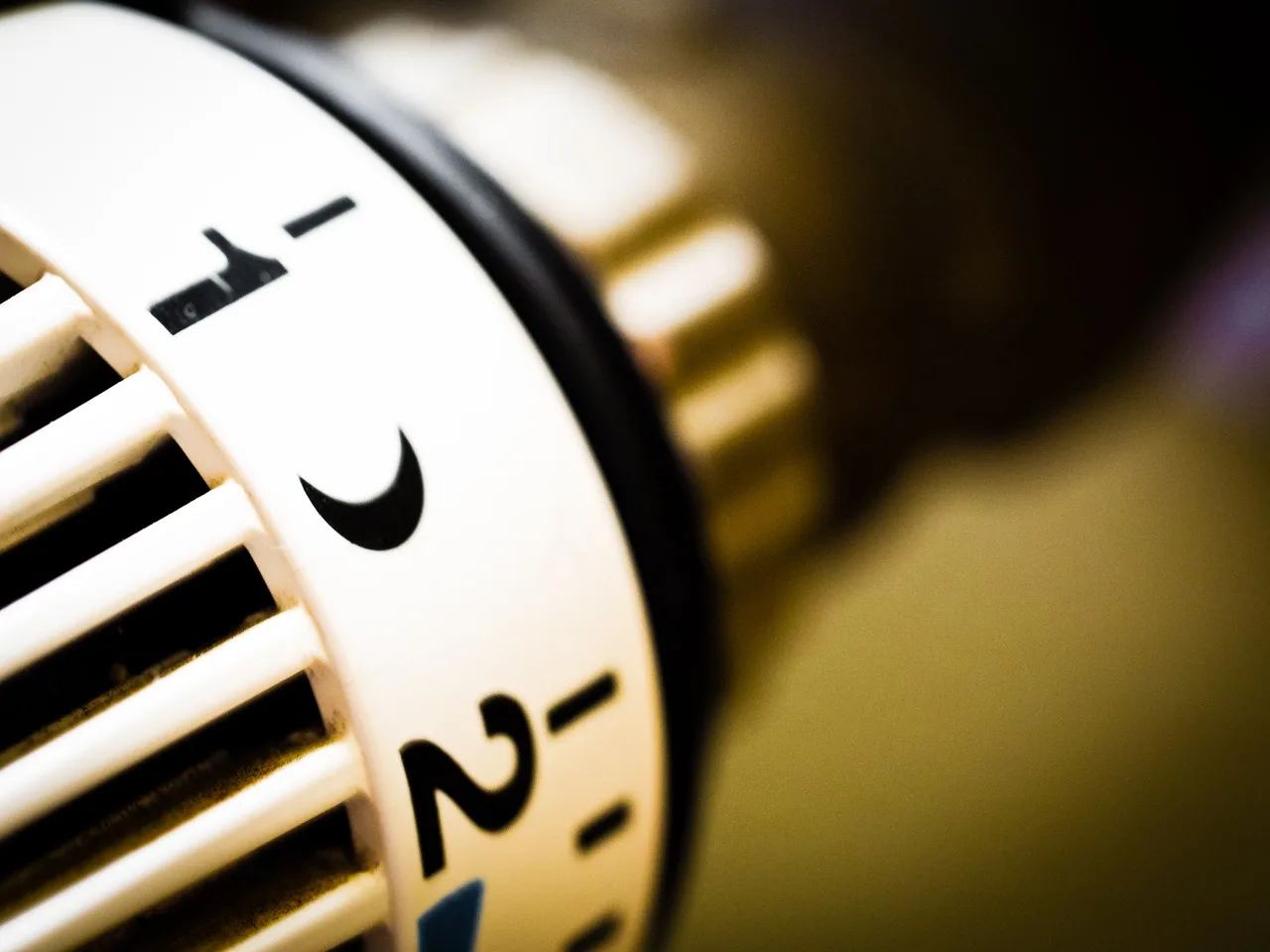

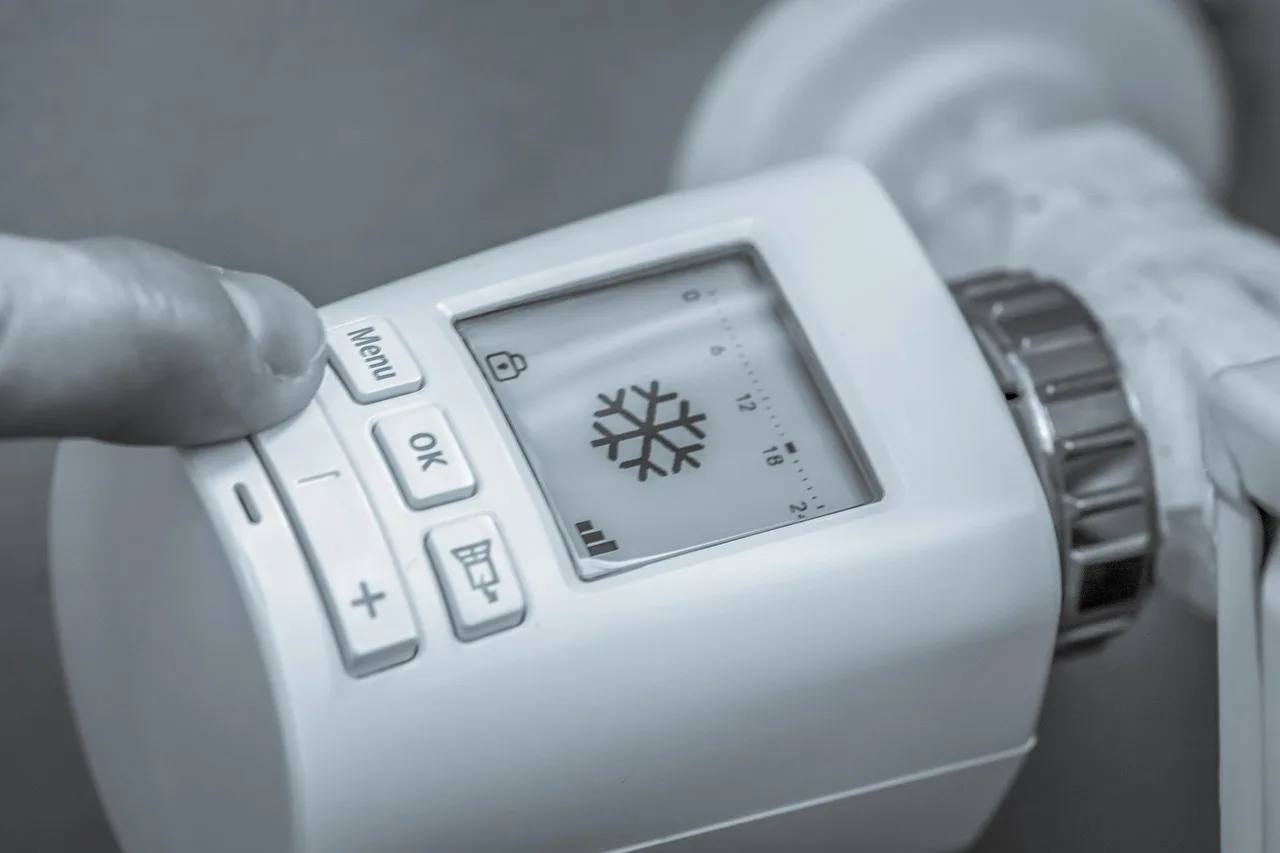
When the thermostat shows Heat On, it is sending a call for heat to the furnace control board. That does not mean the burners are lighting, the gas valve is open, or warm air is reaching the ducts. A thermostat can call correctly while the problem sits in the furnace or the R and W control circuit.
What the heat call means
The thermostat is a setpoint device. When the room temperature falls below the setting, it closes the heat call circuit and tells the furnace to start its sequence. If the display says Heat On but nothing changes at the furnace, the signal may be missing, weak, or interrupted before it reaches the burner assembly.
Common first checks are simple: set the thermostat to Heat, raise the target temperature above room temperature, and confirm the furnace has power. Then look for a tripped breaker, a blown fuse, or a thermostat that lost its settings after a power interruption. A thermostat reset is a reasonable first step, but it should not replace furnace-side checks.
R and W circuit checks
The low-voltage heat call usually travels through the R and W wires. If that circuit opens at a loose terminal, damaged cable, or failed thermostat contact, the furnace may not receive a valid call for heat. That can leave the display saying Heat On while the furnace stays idle or starts and stops unpredictably.
- Confirm the thermostat call. Set the thermostat to Heat and raise the setpoint several degrees above room temperature. Give the system a few minutes to respond so you can see whether the furnace starts a normal sequence or stays silent.
- Check the furnace power. Look for a switch near the furnace, a tripped breaker, or a blown low-voltage fuse on the control board if the panel is accessible without removing sealed covers. Power loss can stop the control circuit even when the thermostat display is active.
- Inspect visible wiring. If the thermostat base or furnace control compartment is already open for a simple visual check, look for loose low-voltage conductors at the terminals. Do not test energized terminals or open sealed gas components.
Suppose the thermostat is set to 72 and the room is 67, but the furnace never makes a startup sound. That points more toward a missing control signal, a board problem, or a safety interlock than a bad thermostat display.
Why does the blower run cold?
Cold airflow usually means the blower motor is moving air before the burners have produced heat, or the burners shut off after the blower started. The furnace blower motor can run even when ignition fails, the flame drops out, or a limit switch forces the burners off. That is why the supply vents can feel like room-temperature or cooler air.
Blower-only operation
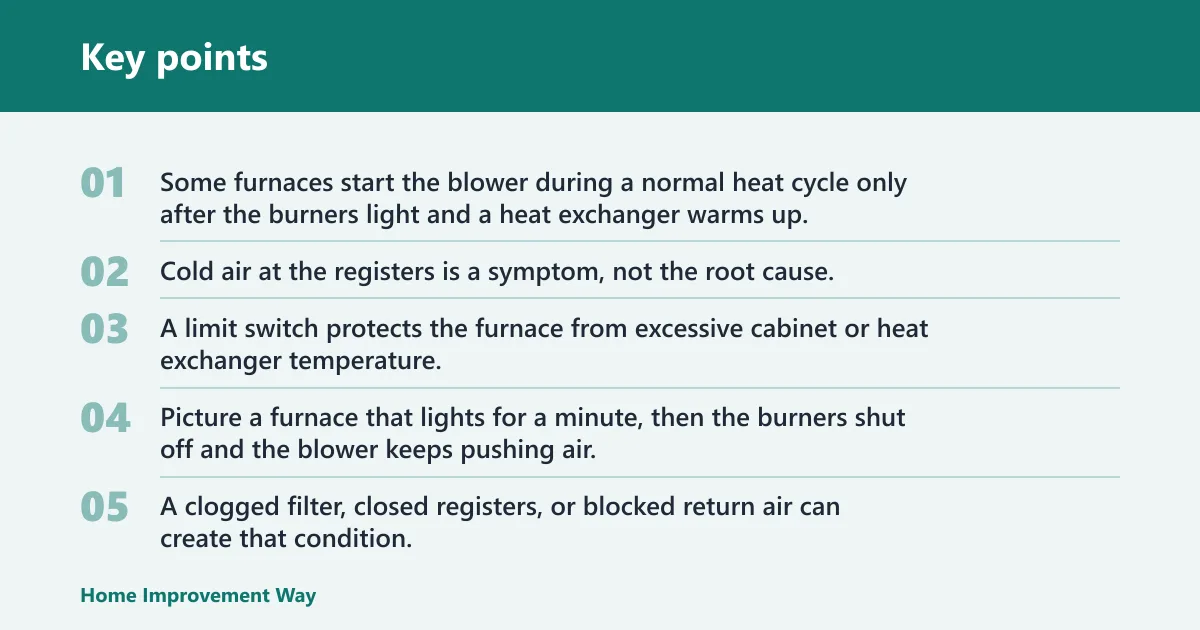
Some furnaces start the blower during a normal heat cycle only after the burners light and a heat exchanger warms up. If the blower starts but the flame never appears, the furnace may be stuck in the ignition stage, locked out after repeated failed starts, or waiting on a safety proof signal. Cold air at the registers is a symptom, not the root cause.
Limit switch trips from overheating
A limit switch protects the furnace from excessive cabinet or heat exchanger temperature. Restricted airflow can overheat the furnace, trip the limit switch, and shut the burners off while the blower continues to run to cool the unit. That produces a short cycle or a blower-only run with no steady warm air.
Picture a furnace that lights for a minute, then the burners shut off and the blower keeps pushing air. That often points to an overheating event, not a thermostat problem. A clogged filter, closed registers, or blocked return air can create that condition.
What stops ignition and flame?
The ignition sequence depends on gas supply, inducer draft, igniter operation, flame sensing, and control-board timing. If any one of those steps fails, the burners may never light or may light and then shut down. When the furnace runs but the air stays cold, the fault often sits in this part of the sequence.
Gas supply and shutoff checks
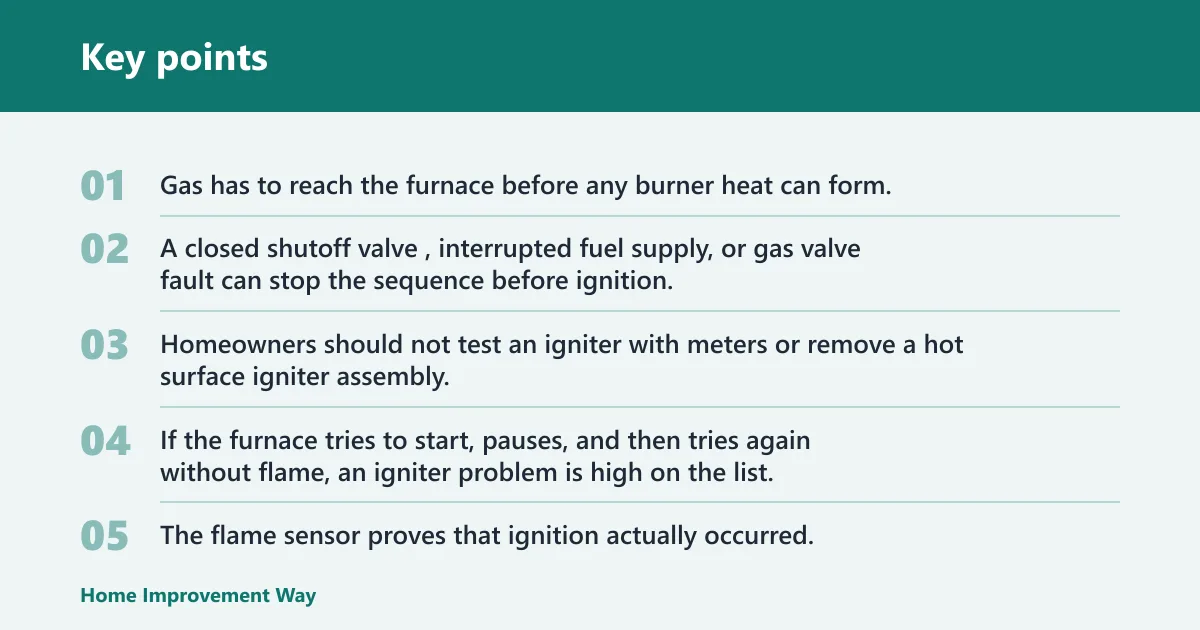
Gas has to reach the furnace before any burner heat can form. A closed shutoff valve, interrupted fuel supply, or gas valve fault can stop the sequence before ignition. One likely cause is that a valve may still be closed, so a visual check of the shutoff position is a sensible first step.
For many quarter-turn valves, the handle position shows the status: handles aligned with the valve body are open, and perpendicular handles are closed. If the furnace has been working previously and then lost heat, a closed valve, interruption upstream, or a service issue can explain the sudden no-heat condition.
Igniter failure
The igniter starts the burner light-off. A hot surface igniter or spark igniter can fail, crack, or stop reaching operating temperature, and then the burners never light. That is one of the most common furnace no-heat faults because the blower may still run while the ignition sequence fails again and again.
Homeowners should not test an igniter with meters or remove a hot surface igniter assembly. Those parts are fragile and tied to low-voltage controls. If the furnace tries to start, pauses, and then tries again without flame, an igniter problem is high on the list.
Flame sensor fault
The flame sensor proves that ignition actually occurred. If the sensor is dirty or coated, the furnace may light briefly and then shut the gas off because it does not detect flame. That can look like a furnace that “starts” but never delivers heat for more than a few seconds.
A dirty flame sensor is a technician-level cleaning or inspection item for most homeowners. If the furnace lights, then the flame drops out within a short time and the blower continues, the sensor is a likely suspect.
Pressure switch fault
The pressure switch proves that the inducer created the draft needed for safe ignition. If the switch does not close, the control board will usually block the rest of the sequence. That means the igniter may never energize, even though the thermostat is calling for heat.
Pressure switch faults can come from venting problems, inducer problems, condensate issues on high-efficiency furnaces, or a switch that is not proving correctly. This is not a homeowner test item. It is a safety interlock.
Airflow problems that shut heat down
An air filter that is too dirty can reduce airflow enough to raise furnace temperature and trigger shutdown. Restricted airflow can also make the furnace cycle off early, leave the blower running, or send only lukewarm air to the registers. Airflow problems are easy to miss because they do not always stop the fan.
Air filter restriction
Replace or inspect the air filter if the furnace is running but heat is weak or uneven. A clogged filter can lower airflow through the heat exchanger, and that can trip the limit switch or shorten burner run time. If the filter is visibly loaded with dust, swap it before blaming the thermostat.
Also check that supply registers are open and returns are not blocked by furniture, rugs, or storage. A furnace can overheat when it cannot move enough air, even though the blower motor is still running.
- Inspect the air filter. Pull the filter and check for dust loading or collapse. Replace it if it looks clogged or has not been changed on schedule, because restricted airflow can shut the burners down.
- Open the supply paths. Make sure the main registers and returns are open and clear. Closed registers can raise static pressure and make overheating more likely.
- Wait for a full cycle. After restoring airflow, let the furnace attempt another heat call. If the burners still do not stay on, the fault has likely moved past airflow and into ignition or safety controls.
Furnace no-heat decision table
This table separates the symptom you see from the subsystem most likely involved. Start with the observation, then move to the safest check you can make. Anything involving gas valve testing, igniter testing, flame sensing, or pressure switch checks belongs to a technician.
| Symptom | Likely subsystem | Homeowner-safe check | Technician-only check |
|---|---|---|---|
| Heat On display, but the furnace stays silent | Thermostat wiring or control board | Confirm Heat mode, raise the setpoint, check power to the furnace | Verify the R and W call circuit and board response |
| Blower runs, supply air stays cold | Ignition failure or gas supply issue | Check thermostat setting, furnace power, and gas shutoff position | Test igniter, gas valve, and ignition sequence timing |
| Burners light briefly, then shut down | Flame sensor or limit switch | Check the air filter and open registers | Clean or test the flame sensor and verify limit operation |
| Short cycling with warm air for a moment, then cold air | Airflow restriction or overheating | Replace a clogged filter and clear returns | Check heat exchanger temperature rise and limit-trip cause |
| No flame at all during startup | Igniter, pressure switch, or gas supply | Check gas shutoff and furnace power only | Inspect draft, ignition, and fuel delivery components |
Use the table as a sorting tool, not a final diagnosis. A cold register does not automatically mean the thermostat is bad, and a working blower does not prove the furnace is heating.
When should you call an HVAC technician?
Call a technician if you smell gas, the furnace locks out after repeated failed starts, or the unit keeps short cycling after you replace the filter and confirm the thermostat call. Repeated ignition failure, pressure switch faults, flame sensor issues, and gas valve problems need proper tools and safety checks. If the blower runs cold for about 10 to 15 minutes with no burner flame, that is also a good stopping point.
A technician should also handle any case where the furnace starts, then shuts off again and again. That pattern can mean airflow restriction, a limit switch trip, venting trouble, or a combustion problem that is not safe to guess at.
Safe stop points
- Stop on gas odor. Turn the system off if you smell gas and do not reset the furnace. Leave the area and follow local gas safety instructions before anyone restarts the unit.
- Stop after repeated failures. If the furnace tries to start several times and fails, let it sit and call for service. Repeated lockouts usually mean the control system is protecting the equipment.
- Stop on recurring short cycles. If a new filter does not fix repeated burner shutoff, the problem may be inside the furnace, not in the thermostat.
Frequently asked questions
Why does my thermostat say heat on but no heat comes out?
The thermostat is only sending a heat call. If the furnace does not light, loses flame, overheats, or loses the signal from the thermostat wiring, the display can still say Heat On while the registers stay cold. The fault is often in ignition, airflow, or a safety interlock rather than the thermostat itself.
Why is my furnace running but blowing cold air?
That usually means the blower motor is moving air before the burners are producing heat, or the burners have shut off while the blower keeps running. A failed igniter, gas supply problem, pressure switch fault, dirty flame sensor, or limit switch trip can all create that symptom.
What should I check first when my thermostat is calling for heat?
Start with the thermostat setting, furnace power, and gas shutoff position. Then inspect the air filter and make sure returns and registers are open. If the blower runs but the burners do not light within a few minutes, the problem has moved beyond the thermostat and toward the furnace ignition path.
Could a bad blower or limit switch make the furnace run with no heat?
Yes. A blower that runs at the wrong time can push cold air through the ducts, and a limit switch trip can shut off the burners while the blower keeps cooling the unit. That often points back to restricted airflow, a clogged filter, or another overheating cause.
Can a clogged filter cause the furnace to run but not heat?
Yes. A clogged filter can restrict airflow enough to overheat the furnace and trip the limit switch. The burners may shut down early, or the furnace may short cycle before warm air reaches the registers. Replacing a dirty filter is one of the safest first checks.
When should I call an HVAC technician for no-heat problems?
Call for service if you smell gas, the furnace repeatedly fails to light, the unit locks out, or the blower runs cold after you have checked the thermostat, filter, and gas shutoff. Igniter failures, flame sensor faults, pressure switch problems, and gas valve issues require a technician.
Can low gas, ignition failure, or airflow issues cause this symptom?
Yes. Low or interrupted gas supply can stop the burners, ignition failure can keep the flame from starting, and airflow restriction can trip the limit switch or shorten the heat cycle. Those three groups explain many cases where Heat On appears on the thermostat but no warm air reaches the room.
Sponsored / affiliate links. As an Amazon Associate I earn from qualifying purchases. I may earn additional commission from eligible campaigns.