Why Is My House Cold Even Though the Heat Is on?
If your heat is running but the house still feels cold, the usual causes are heat loss, blocked airflow, thermostat error, or heating equipment that cannot match the load. Start with the symptom pattern first: cold everywhere, one room, weak airflow, or nonstop running. Then move from safe homeowner checks to the right pro if needed. Leaving it alone can mean higher bills, uneven rooms, and extra wear on the system.
Why does my house feel cold with heat on?


A heated house can still feel cold when warmth escapes faster than the system can replace it, or when air is not moving where it should. The key distinction is whether the whole home feels underheated or only certain rooms do. That split points you toward heat loss, airflow faults, thermostat issues, or capacity limits. In very cold weather, even well-running systems can struggle if the home’s heat loss is high (DOE Energy Saver; CIBSE guidance on heat loss and comfort).
Whole-house cold vs room-specific cold
If every room feels chilly, look first at heat loss, thermostat placement, or a heating system that is not keeping up. If only one room or one floor is cold, the problem is more likely duct leakage, blocked returns, closed registers, or drafts around that part of the house. The symptom pattern matters more than the thermostat setting.
What heat loss looks like in plain symptoms
A cold house often shows up as long run times, rooms that warm slowly, floors that stay cool, and a noticeable drop in comfort near windows and exterior walls. Older homes are especially prone to heat loss from poor insulation and air leakage. DOE notes that sealing air leaks and adding insulation are two of the most cost-effective ways to reduce heat loss, and heat loss increases as outdoor temperature drops.
When the problem points to the heating system
If the furnace, boiler, or heat pump runs for long stretches but supply air stays lukewarm or weak, capacity or airflow may be the issue. DOE guidance notes that heating equipment has a finite output and that the right match depends on the home’s load, not just the equipment’s age or size. A system sized for milder weather may struggle in extreme cold.
Cold house diagnostic tree

Use this decision tree to separate envelope losses from HVAC faults. Start with the broad symptom, then follow the yes/no path to the most likely cause and the next safe step. If a branch points to equipment, the next call should be to an HVAC technician; if it points to the building shell, an insulation or air-sealing contractor is the better next step.
Start here: cold everywhere, one room, weak airflow, or nonstop running?
Cold everywhere? Check thermostat placement and setpoint, then look for drafts, insulation gaps, or outdoor conditions that exceed the system’s capacity. One room or one floor cold? Check vents, returns, and duct balance. Weak airflow? Check the filter and visible blockages first. System runs nonstop? That often means heat loss is too high or equipment output is too low for the load.
Yes/no path for homeowners
Is the whole house cold? If yes, ask: does the thermostat read correctly and sit away from drafts or direct sun? If no, move to room-specific checks. Is the problem in one room? If yes, check supply registers, return vents, and furniture blockage. Is airflow weak at several vents? If yes, inspect the filter and schedule HVAC service. Does the system run almost constantly in very cold weather? If yes, the next pro check is a load calculation and heat-loss review.
On house cold even checklist
- Confirm the thermostat is set to heat and the fan is on auto.
- Check whether the whole house feels cold or only certain rooms.
- Walk to exterior rooms and note drafts near windows, doors, and chimneys.
- Look at supply registers and return vents for blockage by furniture, rugs, or curtains.
- Check for closed registers in the cold rooms.
- Inspect the filter. A dirty filter can restrict airflow.
- Compare comfort near the thermostat with comfort near outside walls.
- Notice whether dry indoor air is making the home feel colder than the thermostat suggests.
- If the system is forced air, listen for weak blower sound or uneven airflow.
- Decide whether the issue is whole-house, room-specific, or tied to very cold outdoor weather.
On house cold even matrix
| Symptom | Most likely cause | Quickest safe check | Next professional step |
|---|---|---|---|
| Cold all over | Heat loss, thermostat error, or heating capacity shortfall | Check thermostat location, setpoint, and whether windows or attic access feel drafty | Have the thermostat checked and the home heat loss reviewed against system output |
| One room cold | Duct leakage, blocked return, closed register, or furniture obstruction | Inspect supply and return openings in that room | Have ducts sealed or repaired and airflow balanced |
| Upstairs colder | Air leakage, insulation gaps, or supply-air imbalance | Look for attic access leaks, low insulation, and weak upstairs supply flow | Request an insulation review and HVAC airflow check |
| Heat runs nonstop | High heat loss or undersized equipment | Compare comfort near exterior rooms with interior rooms; note outdoor temperature | Ask for a load calculation and system output review |
| Vents blow weak air | Dirty filter, blocked return, weak blower, or duct restriction | Check the filter and clear visible blockages | Schedule HVAC service for blower and duct inspection |
Are drafts stealing your heat?
Yes. Drafts and air leakage can pull warmth out of a house and replace it with cold outdoor air, especially around perimeter rooms. Windows, doors, chimneys, and penetrations are common leak points. Weatherstripping and sealing can cut infiltration, but larger gaps or chimney-related leaks may need professional attention. DOE Energy Saver recommends air sealing before or along with insulation because uncontrolled air movement can undermine comfort and efficiency.
Windows, doors, chimneys, and penetrations
Cold spots near exterior walls often trace back to leakage at trim joints, door thresholds, attic hatches, recessed openings, plumbing penetrations, or fireplace framing. Air leakage makes rooms feel colder even when the thermostat says the house is warm enough. That is why two rooms at the same temperature can feel different. CIBSE and ASHRAE both treat drafts and radiant asymmetry as key comfort factors, not just air temperature.
Why perimeter rooms feel colder first
Rooms on the edge of the house often face greater heat loss because they have more contact with the outside. If those rooms also sit near gaps in sealing, the comfort drop becomes obvious fast. This is one reason a house may seem fine in the center but chilly near the walls.
Is insulation letting heat escape?
Poor insulation is a major cause of heat loss, especially in older homes. Roof and loft insulation matter because warm air rises and escapes through the top of the house if the ceiling assembly is weak. Wall, floor, and cavity insulation also reduce how quickly indoor warmth leaks away. DOE guidance stresses that insulation works best when the building shell is sealed first so heated air stays inside long enough to matter.
Roof and loft insulation
Heat escaping through the roof can make an entire house feel harder to warm. If the top floor is cold, attic insulation and air sealing should be high on the list. Gaps around loft hatches, wiring, and duct penetrations can make the problem worse. The same source recommends checking the attic first in many homes because the roof assembly is one of the biggest heat-loss paths.
Wall, floor, and cavity insulation
Homes with cavity wall, solid wall, floor, roof, and loft insulation options benefit most when the right assemblies are treated in the right order. Older homes are especially prone to heat loss from poor insulation. Floor insulation can also matter when cold air moves under living spaces, particularly over crawlspaces or unheated basements.
Suppose a mid-size home has good attic insulation but a cold living room over an uninsulated crawlspace. The thermostat may read fine in the hall, while the living room still feels cold because the floor assembly is losing heat faster than the rest of the house. That is a building-shell problem, not just a thermostat problem.
Could the thermostat be wrong?
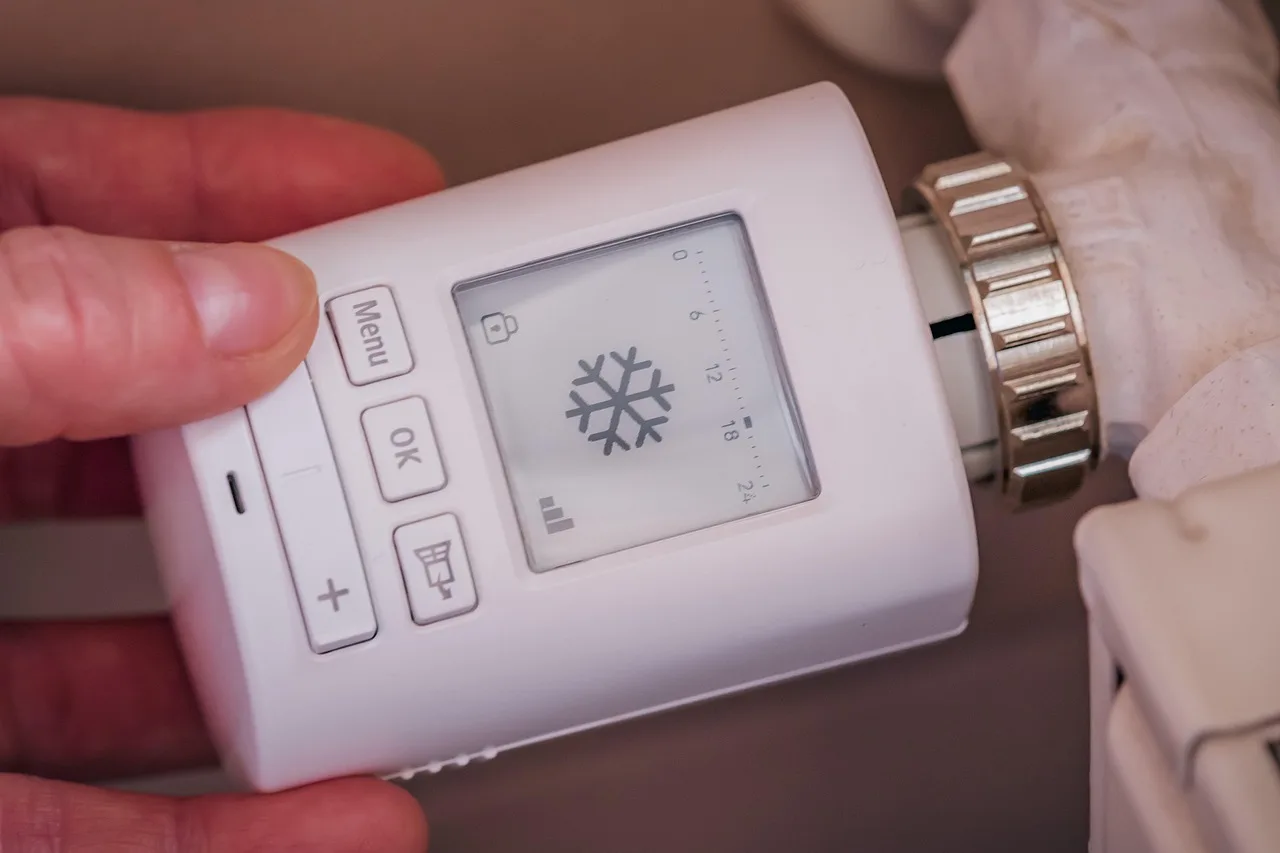
Yes. A thermostat can cause a cold house if it reads inaccurately, sits in the wrong place, or has wiring issues that prevent proper cycling. A unit near a draft, a sunny window, a supply register, or an exterior door may sense the wrong temperature and shut the heat off too soon or call for heat at the wrong time. ASHRAE comfort guidance also notes that air temperature, radiant conditions, and movement all affect how warm a room feels.
Calibration and sensor errors
Thermostat calibration matters because even a small error can change when the system runs. If the thermostat sensor reads warmer than the room really is, the house can stay cold. If it reads colder, the system may run too long and still leave some rooms uncomfortable. A sensor that is off by only a few degrees can create noticeable comfort problems.
Bad placement near drafts or sunlight
Placement matters as much as calibration. A thermostat in direct sun, near a draft, or close to a supply vent can make the whole system behave badly. It may stop the heat before the rest of the house warms up, or keep running when the room already feels too warm. That is why thermostat location matters in both installation and troubleshooting.
Wiring faults and cycling problems
Faulty wiring can interrupt calls for heat or cause short cycling. In heating diagnostics, rapid on-off behavior is often a control issue, sensor issue, or capacity mismatch rather than a simple setting problem. If the thermostat appears inconsistent, a technician should check the control circuit and staging logic before replacing major equipment.
Why some rooms stay colder
When one room stays cold while the rest of the home feels acceptable, the issue is often inside the air-distribution system. Leaky ducts can reduce delivered heat, and blocked returns or closed registers can unbalance the room-to-room split. Furniture can obstruct supply or return openings and cut airflow further. In forced-air systems, the path of the air matters as much as the heat source.
Air ducts and duct leaks
In vented forced-air systems, duct leaks can create room-to-room temperature differences and reduce delivered heat. Rather than relying on a single dramatic statistic, it is safer to say that duct leakage is common enough that DOE, utility programs, and HVAC guidance routinely recommend duct sealing when comfort is uneven or delivered airflow is weak. Leakage can waste conditioned air before it reaches the rooms that need it.
Blocked returns, closed registers, and furniture obstructions
Return vents need clear air to feed the blower. If a return is blocked, the system cannot move enough air, and supply vents may blow weakly. Closed registers can also throw off the balance from room to room. Even a sofa pushed over a return grill can create a comfort problem you feel every day. Keeping returns open is especially important because restricted return air can make the whole system underperform.
A common first-timer mistake is closing several upstairs registers to “push more heat downstairs.” In many homes, that simply raises resistance in the duct system and makes other rooms worse, because the blower still needs a clear path for supply and return air.
Supply and return balance in forced-air systems
Forced-air furnaces depend on balanced supply and return airflow. A dirty filter, weak blower performance, or restricted ducts can reduce the temperature rise across the system and leave distant rooms cold. If airflow is weak at several registers, the next step is HVAC service rather than another thermostat adjustment. In other words, the issue is often distribution, not just the heat source.
Is the system too small for the cold?
Yes, it can be. A heating system may be too small for the home’s design heat loss, especially during extreme cold. DOE guidance on sizing and heat-loss matching emphasizes that equipment must be matched to the home, not just selected by rule of thumb. When outdoor temperature drops, the building loses heat faster while the heater still has a fixed output limit.
Heating system capacity vs design heat loss
Capacity is not about the size of the equipment cabinet. It is about how much heat the system can deliver versus how much the house loses through walls, windows, air leaks, and the roof. If heat loss exceeds output, the house may never catch up on the coldest days. That is when a load calculation becomes the next step.
Why extreme cold can outrun average-sized equipment
Colder outdoor air increases the rate of heat loss, so a system that works fine in milder weather may struggle in a cold snap. If the home has high leakage, weak insulation, or a large amount of exterior surface, the demand can rise faster than the heater can respond. That is a common reason for comfort complaints in cold weather.
When a load calculation is the next step
If the home is cold all over, insulation and air sealing look weak, and the system runs for long periods without recovery, ask for a proper load calculation. That check compares the house’s design heat loss with the equipment’s output. It is better than guessing that a bigger furnace is needed, because oversizing can create new comfort and control problems.
Frequently asked questions
Why is my house so cold even with heating?
The most common reasons are heat loss, air leakage, blocked airflow, thermostat error, or a heating system that cannot keep up. Start by separating whole-house coldness from one-room coldness. That tells you whether to look first at insulation and drafts or at ducts, returns, filters, and blower airflow.
Why is my house cold even though the heat is on?
If the heat is on but comfort stays low, the system may be moving too little air, the thermostat may be sensing the wrong spot, or the home may be losing heat faster than it is made. Older homes with weak insulation and drafty openings are especially likely to feel this way.
Why are some rooms colder than others when the heat is on?
Room-by-room cold spots usually point to duct leaks, blocked returns, closed registers, or furniture blocking airflow. Perimeter rooms can also feel colder because drafts and poor insulation hit them first. If only one area is uncomfortable, the fix is often in distribution, not the thermostat.
Could poor insulation make my house cold even with the heating on?
Yes. Poor insulation in the roof, walls, floors, or cavities lets heat leave the house faster, and older homes are especially prone to that problem. A heater may be working normally while the building shell leaks warmth away. That is why insulation upgrades often improve comfort more than thermostat changes.
Can leaky ducts make a house cold even when the furnace is running?
Yes. Leaky ducts can reduce delivered heat, especially in forced-air systems, and they can create temperature differences from room to room. If a furnace runs but some vents feel weak or some rooms stay cold, duct sealing or repair is a strong candidate for the next professional step.
Can my heating system be too small for my house?
Yes. If the equipment output is lower than the home’s design heat loss, the house may stay cold in extreme weather even though the system is running. That is more likely in cold-climate homes or older homes with poor insulation. A load calculation is the right way to confirm it.
Why is my house so cold even with the heating on UK?
The same causes apply: drafts, insulation gaps, thermostat issues, airflow faults, duct leakage in forced-air systems, and equipment that cannot keep up in cold weather. The key is to separate whole-house discomfort from one-room problems, then check airflow and heat loss before assuming the boiler or furnace has failed.
Sponsored / affiliate links. As an Amazon Associate I earn from qualifying purchases. I may earn additional commission from eligible campaigns.