Why Is My Heat Pump Running Constantly in Winter?
A heat pump can run nearly nonstop in winter and still be normal if it holds set temperature and defrosts properly; suspect a fault when it cannot reach setpoint, short-cycles, or ice stays on the outdoor coil. Ignoring that difference can waste power, wear parts faster, and leave rooms cold. This guide gives a simple winter decision tree for normal runtime, undersizing, airflow restriction, refrigerant loss, and defrost problems.
Why a heat pump can run all winter
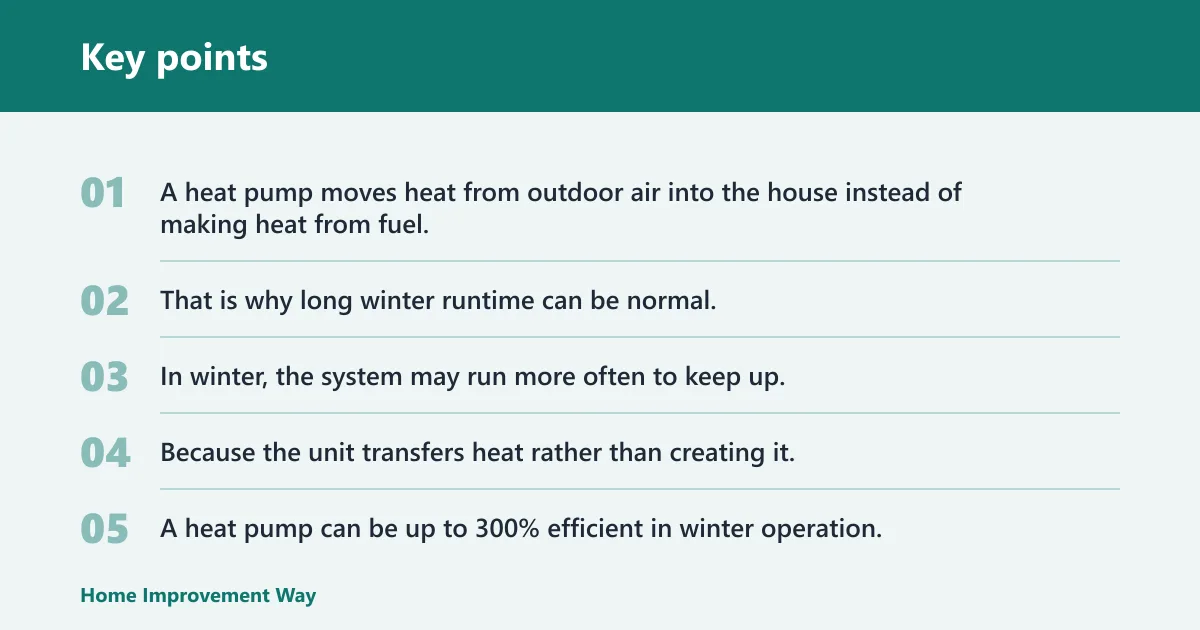

A heat pump moves heat from outdoor air into the house instead of making heat from fuel. That is why long winter runtime can be normal, especially when outdoor temperatures fall and the house needs steady heat. In winter, the system may run more often to keep up, but that does not automatically mean it is failing.
Heat moves from outdoors to indoors
Because the unit transfers heat rather than creating it, output drops as outdoor air gets colder. A heat pump can be up to 300% efficient in winter operation, but efficiency and capacity still depend on outdoor conditions. A common way to think about it: the colder it gets outside, the longer the system may need to run to deliver the same indoor comfort.
Why colder air extends runtime
Some heat pumps may reach their balance point around 30°F, and a competitor’s guidance puts that threshold around 20 to 30 degrees. Below that range, the home may need more heat than the heat pump can provide on its own, so runtime becomes continuous or nearly continuous. Modern cold-climate systems can maintain 70% heating capacity at -15°C (5°F), and some systems can operate effectively down to -30°C (-22°F).
What the balance point means
The balance point is the outdoor temperature where the house’s heat loss matches the heat pump’s heat output. Above that point, the system can usually cycle off at times. Below it, continuous runtime can be normal, and auxiliary heat or backup electric heat may start helping. That backup heat is more expensive than regular heat pump operation, so it should not be confused with emergency heat.
Heat pump runtime table
This table separates normal winter operation from faults that deserve attention. Use it as a quick branch point before you assume the system is broken.
| Symptom | Likely normal cause | Likely fault cause | Quick homeowner check | When to call for service |
|---|---|---|---|---|
| Outdoor temperature is below the balance point and the unit runs most of the day | Heat loss exceeds what the heat pump can cover alone | Undersized system or low capacity from a fault | Check the outdoor temperature, indoor setpoint, and whether the home still reaches target temperature | Call if the house cannot reach setpoint even with long runtime |
| Dirty filter | Sometimes long runtime happens anyway in cold weather | Restricted airflow can lower output and extend runtime | Inspect the filter; if it looks dusty or clogged, replace it | Call if a clean filter does not improve airflow or comfort |
| Blocked outdoor coil or cabinet | Snow or light frost can be normal during winter operation | Blocked clearance, packed snow, ice, or debris can reduce performance | Clear snow, leaves, and drifts; leave space around the unit | Call if ice keeps returning or the fan seems to struggle |
| Frequent defrost | Defrost mode is a normal winter cycle to melt ice | Too-frequent defrost can point to airflow, sensor, or refrigerant trouble | Notice whether the unit defrosts briefly or seems stuck in it | Call if defrost is very frequent, very long, or leaves the coil iced up |
| Never reaches setpoint | House load may be high in extreme cold | Low refrigerant, undersized equipment, poor insulation, or air leakage | Compare room temperature, thermostat setting, and door/window drafts | Call if the indoor temperature stays below target after basic checks |
| Unusually high utility bills | Cold weather and longer runtime naturally raise use | Faulty operation, poor airflow, or backup heat running too often | Check whether auxiliary heat or emergency heat is on | Call if bills jump without a clear weather change or comfort improvement |
Should my heat pump run all the time in winter?
Yes, it can. If the outdoor temperature is below the balance point or the house has high heat loss, long runtime may be normal. The key test is performance: if the system keeps the house near the setpoint, defrosts normally, and does not leave ice on the outdoor coil, constant runtime is not automatically a problem.
When long runtime is expected
Constant or near-constant runtime is common when the outdoor temperature drops, when wind increases heat loss, or when a home has poor insulation and air leakage. It is also more likely with variable-speed systems, which often run longer at lower output instead of snapping on and off. That is normal if indoor comfort stays stable.
When to suspect a problem
Look for the pattern, not just the runtime. If the home never reaches setpoint, some rooms stay cold, the thermostat keeps calling for heat all day, or bills rise sharply, the system may be undersized or faulted. A heat pump that runs continuously but leaves the house cold deserves service.
How system type changes the answer
Single-stage systems tend to cycle more, while variable-speed systems often run longer to maintain steadier temperatures. That means constant runtime is more expected with variable-speed equipment. Still, neither type should ignore obvious warning signs such as ice buildup, weak airflow, or backup heat running much more than usual.
Check these thermostat settings first
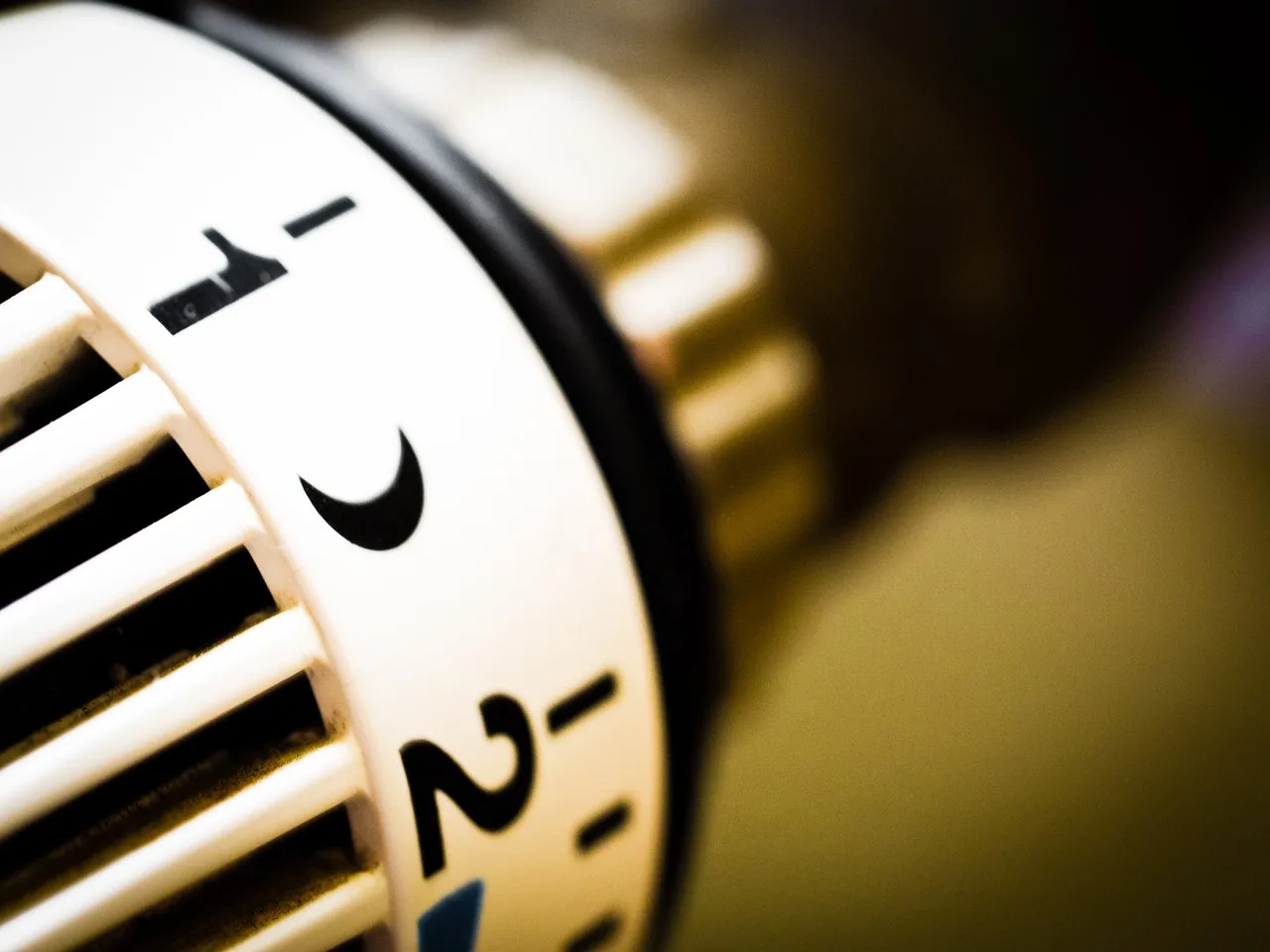
Before assuming the heat pump has failed, verify the controls. Wrong thermostat settings can make a normal system look like it is stuck on, or force expensive backup heat to run when it should not.
Heat mode versus auto
Make sure the thermostat is set to heat, not a mode that prevents the system from calling for heat properly. Check whether the fan is set to auto rather than on; a fan that runs continuously can make the system seem active even when heating output is low. If the thermostat shows emergency heat, that is a different mode and should not be left on unless the installer’s instructions say so or the system cannot maintain safe indoor temperature.
Setpoint and fan setting
A setpoint that is too high forces the system to run much longer. A low indoor setpoint can hide a problem, while a very high one can make normal winter runtime look unusual. Check the target temperature, then compare it with the actual room temperature and the temperatures in colder rooms.
Emergency heat
Emergency heat is not the first answer to constant runtime. It bypasses normal heat pump operation and uses backup electric heat, which costs more. If the system is still heating, leave emergency heat off. Use it only if the house cannot stay safe and the installer’s directions call for it.
Suppose a thermostat is set to 72°F with the fan on auto, and the outdoor temperature is 18°F. If the home holds 70°F but the unit seems to run almost all day, that can be normal near or below the balance point. If the same house stalls at 66°F, the issue shifts from normal winter runtime to a likely fault or sizing problem.
What temperature makes a heat pump run almost nonstop?
A heat pump may run almost nonstop once outdoor temperature falls near or below its balance point, often around 20 to 30°F in cold climates. The exact point depends on the system and the home’s heat loss. Below that threshold, auxiliary heat can come on, and runtime often stays long even when the equipment is working correctly.
Outdoor temperature below the balance point
The balance point is not a fixed number for every house. A well-insulated home may stay comfortable longer, while a drafty house may need continuous heat sooner. This is why the same heat pump can seem fine in one home and overworked in another at the same outdoor temperature.
Auxiliary heat at low outdoor temperature
Auxiliary heat or backup electric heat can engage below the balance point. That is normal in colder weather, but it is more expensive than heat pump operation. If the thermostat is calling for backup heat often, that can explain a higher bill even when the heat pump itself is still operating correctly.
Why setpoint and house load matter
Two homes with the same outdoor temperature can behave differently because the heating load is different. Bigger rooms, weak insulation, leaky windows, and attic air leakage all raise demand. A system that is properly sized for one house can run much longer in another with the same square footage but worse heat loss.
Why does my heat pump keep running?
Common causes include a dirty filter, blocked airflow around the outdoor unit, low refrigerant, or equipment that is undersized for the home. Winter runtime can also stay long when insulation is weak or drafty rooms keep pulling heat away faster than the system can replace it.
Dirty filter and blocked airflow
A dirty or clogged air filter restricts airflow and can force longer runtime. In winter, checking the filter monthly is a practical habit because heating use is often steady. If the filter is dirty, replace it and watch whether the system reaches setpoint more easily over the next day or two.
Snow, ice, or debris around the outdoor unit
Outdoor unit airflow matters. Snow drifts, packed ice, leaves, or storage items too close to the cabinet can reduce performance and increase runtime. Clear the area around the unit carefully and keep the coil, fan opening, and base free of blockage. Do not chip at ice on the coil with a tool.
Low refrigerant or undersized equipment
Can low refrigerant make a heat pump run constantly? Yes. Low refrigerant charge can reduce heating output and force longer runtime, but it requires professional diagnosis because the cause is often a leak or another system problem. Undersized equipment can also run long in winter even when operating as designed, especially in colder climates or poorly insulated homes.
A common first-timer mistake is blaming the thermostat when the real issue is airflow. Say your filter is packed with dust and the outdoor unit is clear. The system may still run constantly, but the weak airflow through the indoor coil is the reason it cannot deliver heat efficiently.
Does defrost mode make it look like it is always on?
Yes. Defrost mode is a normal winter cycle used to melt ice on the outdoor coil, and it can make the unit look like it is running continuously. That is especially common on cold or icy days. Frequent or long defrost cycles, however, can point to a problem with airflow, sensors, or refrigerant charge.
Normal defrost behavior
During defrost, the outdoor unit may change sound, pause heating briefly, or switch direction long enough to clear frost from the coil. On damp, cold days, that can happen more often than homeowners expect. Short, recurring defrost cycles alone do not mean the heat pump is failing.
Frequent defrost as a warning sign
If defrost happens very often, lasts too long, or leaves the coil iced again soon after, the system needs attention. That pattern can mean restricted airflow, low refrigerant, or another control issue. The question is not whether defrost happens; it is whether the unit spends too much time fighting ice.
Icing caused by airflow or refrigerant trouble
When ice forms because of a fault, the runtime pattern usually changes. The unit may seem to run constantly but deliver less heat, the indoor temperature may drift down, and bills may rise. If the outdoor coil stays frozen or the fan is blocked by ice, call for service rather than waiting for the next thaw.
When constant runtime means a problem with my heat pump
Constant runtime becomes a problem when comfort drops. If the home never reaches setpoint, some rooms stay cold, the system seems stuck in defrost, or the electric bill jumps sharply, the cause is more than normal cold-weather operation. At that point, you need to rule out airflow, refrigerant, sizing, and backup-heat issues.
Signs that point to a fault
- The thermostat target is not reached after many hours of runtime.
- One or more rooms stay noticeably colder than the rest of the house.
- The outdoor coil has repeated ice buildup that does not clear normally.
- Auxiliary heat seems to run too often for the outdoor temperature.
- Utility bills rise without a matching change in weather or indoor comfort.
What should you check first?
- Confirm the thermostat is in heat mode.
- Check the setpoint and fan setting.
- Look for emergency heat or auxiliary heat indicators.
- Replace a dirty filter.
- Clear snow, debris, and blocked airflow around the outdoor unit.
- Watch whether the system reaches setpoint after those checks.
Picture a 2,000-square-foot home with a heat pump set to 70°F on a 24°F night. If the system runs most of the night but the house stays at 69°F, that can fit normal winter operation. If the same setup stays around 64°F while set to 70°F and the outdoor coil keeps icing over, the balance point is probably not the only explanation.
Frequently asked questions
Why is my heat pump running constantly in the winter?
Constant winter runtime can be normal when outdoor temperatures fall near or below the balance point, when the home has high heat loss, or when defrost is active. It becomes a concern if the system cannot reach setpoint, leaves rooms cold, or sends your utility bill sharply higher.
What should I check first if my heat pump will not shut off?
Start with the thermostat, then the filter, then the outdoor unit. Confirm heat mode, correct setpoint, fan on auto, and no accidental emergency heat setting. After that, check for a clogged filter, snow, ice, or debris around the outdoor cabinet. Those are the fastest homeowner checks.
Can low refrigerant make a heat pump run constantly?
Yes. Low refrigerant can reduce heating output, lengthen runtime, and leave the house short of setpoint. It can also contribute to icing and poor defrost behavior. Because refrigerant problems need leak detection and system diagnosis, this is not a do-it-yourself repair.
Does defrost mode make a heat pump look like it is running all the time?
Yes. Defrost is a normal winter function used to melt frost on the outdoor coil, and it can make the unit seem continuously active. Short defrost cycles are expected on cold or humid days. Very frequent or extended defrost is a warning sign that needs professional attention.
Should I switch to emergency heat if my heat pump runs constantly?
Usually no. Emergency heat uses backup electric heat and costs more than normal heat pump operation. Leave it off unless the house cannot stay safe, the installer’s instructions say to use it, or the heat pump has failed and a technician has told you to switch modes.
Sponsored / affiliate links. As an Amazon Associate I earn from qualifying purchases. I may earn additional commission from eligible campaigns.