Why Does My Furnace Short Cycle?
Furnace short cycling happens when a heating system runs for only a few minutes, shuts off, then starts again more than about 2–3 times per hour; a normal winter cycle usually lasts about 10–15 minutes or longer. Short cycling can waste fuel, increase wear on parts, and hide a real safety issue like overheating or a blocked vent. The U.S. Department of Energy notes that poor HVAC operation and maintenance can raise energy use, and filters that are ignored too long can quickly restrict airflow; ASHRAE guidance is commonly used by pros to match filter service to dust load and operating conditions. This guide shows how to tell normal cycling from a problem, then check airflow, thermostat, and hazard causes in that order.
When to call a pro right away: stop troubleshooting and get HVAC service if you smell gas, hear a CO alarm, see smoke or sparking, notice an electrical burning smell, or the furnace keeps tripping the high-limit switch after you have checked the filter, vents, and thermostat. If the problem is an oil furnace with pump wear or an RV furnace with repeated ignition failures, professional diagnosis is the safest next step.
About the author: This article is written with HVAC troubleshooting standards in mind, including furnace airflow, combustion safety, and control-system fault patterns commonly used by licensed technicians.
Spotting short cycling versus normal winter operation
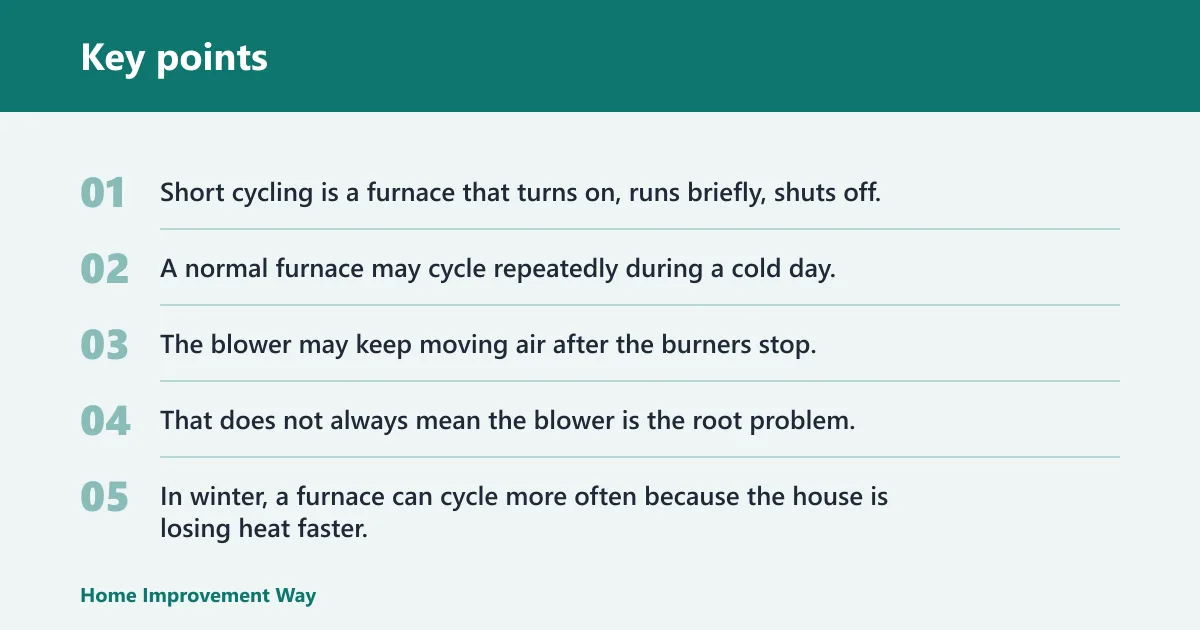

Short cycling is a furnace that turns on, runs briefly, shuts off, and repeats before a normal heating cycle finishes. A normal furnace may cycle repeatedly during a cold day, but the key is not only how often it starts, but whether each run is unusually short and the room still feels cold or uneven.
Cold-air blow can be part of the pattern. The blower may keep moving air after the burners stop, so you feel a burst of cooler air even though the furnace did ignite. That does not always mean the blower is the root problem; it can also point to burner shutdown, overheating, or a venting fault.
Normal cold-weather cycling versus a fault
In winter, a furnace can cycle more often because the house is losing heat faster. That is normal if each cycle is long enough to satisfy the thermostat and the rooms stay reasonably even. A fault is more likely when the furnace repeatedly starts, runs only about 2–5 minutes, and stops before the home reaches the setpoint.
Use three clues together: run time, setpoint behavior, and blower behavior. If the burners stop early, the thermostat is still calling for heat, and the blower keeps pushing lukewarm or cool air, the system is signaling a problem instead of ordinary winter operation.
Why brief starts, shutdowns, and repeats matter
Brief cycles can point to airflow restriction, thermostat error, or a safety shutdown. They also make it harder for the furnace to deliver steady heat, which can leave some rooms comfortable and others cold. Repeated starts are also hard on igniters, relays, and control boards.
Suppose the furnace fires, the blower comes on, and the burners shut off after 3 minutes while the thermostat still asks for heat. That pattern is not the same as a long, normal cycle. It is more consistent with a limit switch trip, a sensor issue, or a vent problem than with simply “cold weather.”
What cold-air blow and uneven room heat can mean
Cold-air blow often means the blower is moving air after combustion has stopped. Uneven room heat can mean the furnace is not running long enough to mix and distribute warm air through the home. Both signs fit short cycling, but they do not point to one single cause.
If the thermostat is satisfied too quickly, the furnace may be oversized. If the burners stop before the thermostat is satisfied, look harder at airflow, venting, or a safety control that is interrupting the call for heat.
Furnace short cycling decision table
Use this table to sort symptoms into a likely bucket before you open panels or call for service. Start with the easiest checks: filter, vents, thermostat, and clear air pathways. Stop immediately if the symptom points to gas, smoke, or electrical danger.
| Symptom | Likely bucket | Safe check | Stop DIY threshold |
|---|---|---|---|
| Runs only 2-5 minutes, then restarts soon after | True short cycling | Note whether the thermostat is still calling for heat | Repeated shutdowns with no clear airflow issue |
| Blower runs but air feels cool after ignition | Burner shutdown or limit trip | Check whether burners stay lit at all | Burners keep dropping out after ignition |
| Burner lights, then shuts off quickly | Flame sensor or safety shutdown | Look for repeated start-stop behavior | Gas flame keeps failing to stay on |
| Overheating smell near the cabinet | Airflow restriction or high-limit trip | Check filter and blocked vents first | Any electrical burning smell |
| Return grille is blocked by furniture or drapes | Restricted return airflow | Clear the grille and retest | Heat issue remains after clearing airflow |
| Filter looks dirty or clogged | Restricted airflow | Replace with the correct fit | Furnace still trips after filter change |
| Room temperature does not match thermostat reading | Thermostat misread | Check placement near sun, drafts, vents, or heat sources | Thermostat still behaves erratically after battery or setting checks |
| Short cycling happens after windy weather or a blocked exhaust path | Venting or flue problem | Look for blocked exterior termination only if it is safely visible | Any suspicion of flue blockage or pressure switch fault |
| House warms very fast, then shuts off again | Oversized furnace clue | Watch whether short cycles happen on mild days too | Needs a load calculation, not guesswork |
| CO alarm or gas alarm sounds | Safety hazard | Leave the area and get everyone out | Do not keep troubleshooting |
| Burners shut off and the blower keeps running | High-limit switch or combustion issue | Note how long the blower runs after burner shutdown | Persistent tripping means service is needed |
How to use the table
Read across one row at a time. The symptom tells you which system to inspect first, the safe check tells you what a homeowner can verify without opening sealed components, and the stop-DIY threshold tells you when the problem has moved beyond simple troubleshooting.
That order matters. If you jump straight to thermostat replacement or panel removal, you can miss an airflow restriction or a safety shutdown clue that should have changed the diagnosis.
Why is my furnace short cycling?
The most common causes are airflow restriction, thermostat error, overheating, and safety shutdowns. A dirty or clogged air filter can restrict airflow, which can make the furnace overheat and trip the high-limit switch. Thermostat placement and settings can also fool the system into stopping too soon.
Dirty air filter and restricted airflow
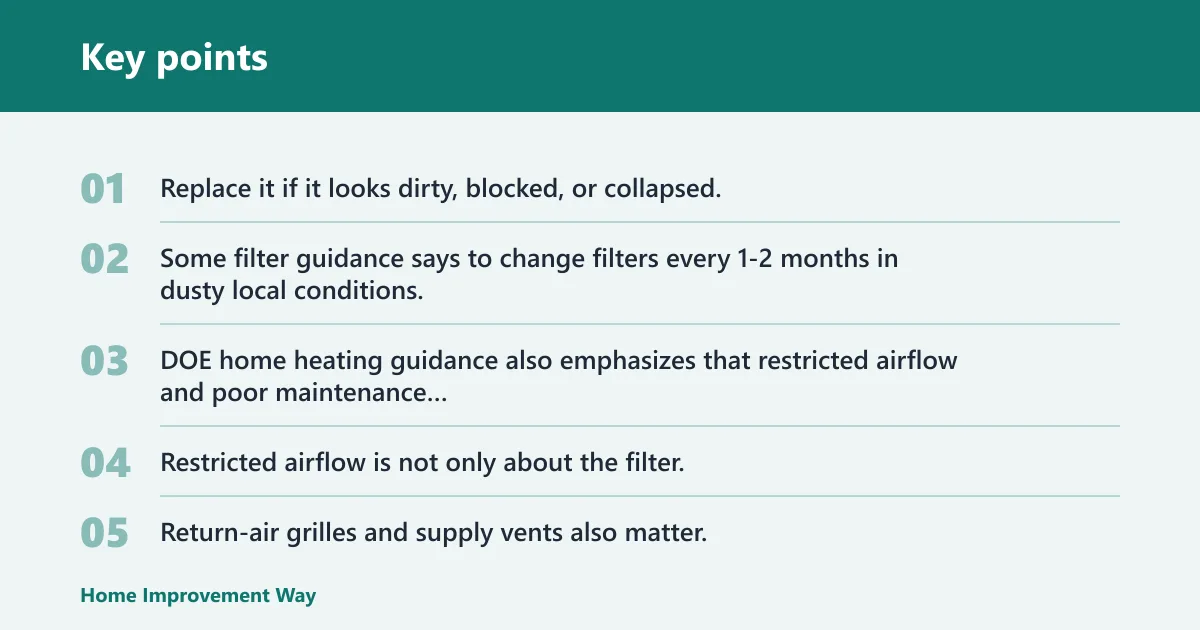
A dirty air filter can restrict airflow. Replace it if it looks dirty, blocked, or collapsed. Some filter guidance says to change filters every 1-2 months in dusty local conditions, and the replacement has to fit the slot correctly or air can still bypass poorly. DOE home heating guidance also emphasizes that restricted airflow and poor maintenance can reduce efficiency and increase energy waste, especially when filters are left too long.
Restricted airflow is not only about the filter. Return-air grilles and supply vents also matter. Closed vents, blocked return grilles, furniture, drapes, and doors can reduce circulation enough to contribute to overheating and short cycles. For filter service intervals, many pros follow the manufacturer’s schedule first and then adjust based on dust load, pets, and runtime; ASHRAE guidance is commonly used for those operating-condition decisions.
Thermostat misreads and placement issues
Thermostat placement near sunlight, drafts, heat sources, or supply vents can cause false readings. If the thermostat thinks the room is warmer than it is, it may shut the furnace down too soon. Battery problems and calibration issues can add erratic on-off behavior.
Check whether the thermostat is mounted where it gets direct sun, sits near a lamp or appliance, or feels drafty when a door opens. Those are small details, but they can change how the furnace behaves. If you want a quick refresher, see How to Read a Thermostat for Furnace Troubleshooting.
High-limit switch trips from overheating
The high-limit switch is a safety device that shuts burners off when overheating occurs. If the furnace runs briefly, stops, and then tries again, the switch may be reacting to a real heat buildup caused by restricted airflow or a blower issue.
Persistent tripping is not normal. If the furnace keeps resetting this way after you have checked the filter and open airflow paths, the problem needs diagnosis instead of repeated restarts.
Why does my furnace short cycle sometimes?
Intermittent short cycling usually points to a problem that changes with temperature, airflow, or burner behavior. A thermostat can misread only at certain times of day, a flame sensor can fail only after ignition, or a vent issue can appear when outdoor conditions or fan operation change.
Intermittent thermostat error or loose settings
A thermostat that is slightly off, low on battery, or placed in a bad spot may not misread every cycle. That is why the furnace can seem normal one day and short cycle the next. Check the temperature setting, battery condition, and mounting location before assuming a bigger failure.
Flame sensor problems after ignition
A dirty or failing flame sensor can shut gas off after ignition, which creates repeated startup and shutdown behavior. The furnace lights, senses a problem, cuts fuel, and tries again. That pattern can look like short cycling even when the thermostat is still calling for heat.
Say your gas furnace lights normally on the first try, then shuts the burners off after a short burst while the blower keeps running. That points away from a simple comfort complaint and toward a combustion-control problem that should be inspected. For common missteps people make during those checks, see Common Furnace Repair Mistakes That Lead to Short Cycling.
Vent or flue blockage that comes and goes
A blocked flue can trigger safety sensors that shut the furnace off quickly. Because the pressure switch and venting system have to verify safe exhaust flow, even a partial blockage can interrupt operation. That is more than an inconvenience; it is a safety-related shutdown path.
Wind, snow, debris, or a damaged termination can make the problem intermittent. If short cycling appears after certain weather or only on some calls for heat, venting deserves a closer look than the thermostat alone.
Oil furnace-specific short cycling causes
Oil furnaces add a couple of failure modes that are less common in gas systems. A restricted oil filter can starve the burner pump, and pump wear can make the fuel delivery unstable enough to cause repeated shutdowns or failed restarts. If an oil furnace lights and then loses flame quickly, do not assume it is only airflow; fuel delivery must be part of the diagnosis.
Oil furnace short cycling often shows up as burner instability after the system has already proven it can ignite. That pattern can fit a clogged oil filter, air in the fuel line, a worn pump, or a nozzle issue, especially when the burner starts and stops more than once in a short period.
RV furnace-specific short cycling causes
RV furnaces are usually smaller-capacity units and can cycle more quickly than a house furnace by design, but repeated very short cycles still point to a problem. Their ignition systems also differ from residential furnaces, so a weak sail switch, ignition fault, or voltage issue can create a start-stop pattern that looks like a house furnace short cycle. Because RV systems have tighter airflow and power constraints, a symptom that seems mild can still be meaningful.
For RV units, the key is to compare the cycle to the model’s expected operation rather than to a full-size home furnace. If the burner lights, drops out, and retries in rapid succession, the likely lead is often ignition or airflow control rather than simply “not enough heat.”
Why is my furnace short cycling and blowing cold air?
This pattern often means the burners are shutting off before the home is satisfied, while the blower continues to move air. That can happen after overheating, after a flame sensor dropout, or when the thermostat ends the call too early. Cold air from the registers is a clue, not a diagnosis.
Burner shutdown after ignition
If the burners ignite and then stop quickly, the air moving through the ducts will cool fast. The furnace may have heated the heat exchanger briefly, but not long enough to deliver a sustained warm supply. That is why the house can feel like it gets a burst of warm air followed by cool airflow.
Blower running after the burners stop
Many furnaces keep the blower on for a short purge after the burners shut down. That delay can make the air feel cold even though the system is still responding normally to a shutdown command. The question is whether the burners quit because the cycle ended or because a fault cut them off early.
Overheating smell and what it suggests
An overheating smell suggests the furnace may be running too hot inside the cabinet. That can happen when the filter is clogged, returns are blocked, or the blower cannot move enough air. It can also mean the high-limit switch is doing its job and shutting burners down to prevent damage.
What causes a furnace to short cycle?
Beyond filter and thermostat issues, short cycling can come from an oversized furnace, a venting problem, or a pressure switch fault. Gas furnaces can shut down for combustion-safety reasons, while heat-pump or dual-fuel systems can cycle differently because they use different controls and backup heat paths.
Oversized furnace clues and why load calculation matters
An oversized furnace can heat the home too quickly and cycle off too soon. That can feel efficient at first, because the house warms fast, but it can also create uneven comfort and frequent starts. Confirmation requires a load calculation such as Manual J, not a guess based on furnace age or fuel type.
Oversizing is one branch in the decision path, not the default explanation. If the furnace short cycles only when a filter is clogged or a vent is blocked, airflow is the better lead.
Pressure switch and venting system problems
The pressure switch helps confirm that the venting system is operating safely. A blocked exhaust path, blocked flue, or related venting fault can prevent safe operation and force the furnace to shut down. If the issue keeps returning, the venting system should be inspected by a professional.
Gas furnace versus heat-pump or dual-fuel behavior
Gas furnaces can short cycle from combustion, airflow, or safety-control issues. Heat-pump and dual-fuel systems can show different cycling patterns because the outdoor unit, backup heat, and thermostat logic interact in a different way. If your system is not a straight gas furnace, check the manufacturer’s listing for your model.
When to stop troubleshooting
Stop DIY work if you smell gas, hear a CO alarm, see smoke, notice sparking, or detect an electrical burning smell. Those are not routine short-cycling symptoms. They are safety warnings that require immediate action, not another filter change or thermostat reset.
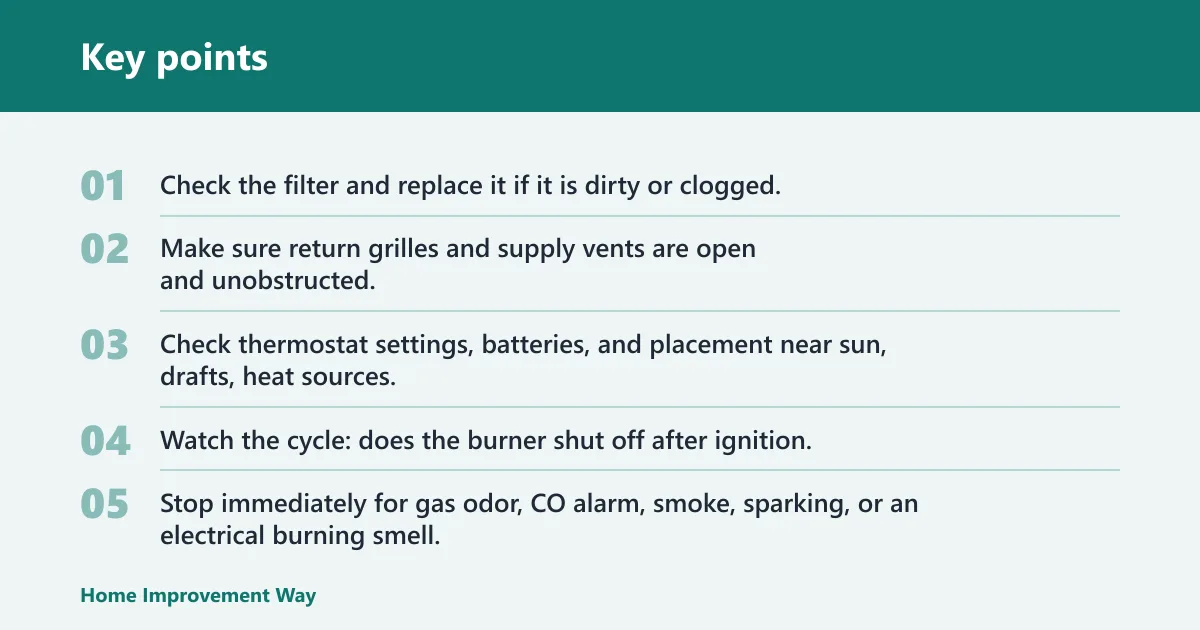
Also stop if the high-limit switch keeps tripping or the furnace shuts down repeatedly after you have checked the filter, vents, and thermostat. At that point, the problem may be inside the combustion, venting, or control system and needs an HVAC inspection.
- Check the filter and replace it if it is dirty or clogged.
- Make sure return grilles and supply vents are open and unobstructed.
- Check thermostat settings, batteries, and placement near sun, drafts, heat sources, or vents.
- Watch the cycle: does the burner shut off after ignition, or does the whole call end normally?
- Stop immediately for gas odor, CO alarm, smoke, sparking, or an electrical burning smell.
- Call an HVAC pro if shutdowns keep repeating or the high-limit switch appears to be tripping.
Frequently asked questions
Why does my furnace short cycle?
Your furnace short cycles when it starts, runs briefly, shuts off, and repeats before finishing a normal heating cycle. Common causes include a dirty air filter, blocked vents, thermostat misreads, overheating, a flame sensor issue, or a venting problem. If the cycle is only about 2–5 minutes, treat it as abnormal.
Why is my furnace short cycling at night?
Nighttime short cycling can happen if the thermostat sees a different temperature pattern after the house cools down, if airflow changes when doors close, or if a venting issue appears under different outdoor conditions. Check the thermostat location, filter, and return-air path first. If it keeps happening, service is the next step.
Why does my gas furnace short cycle?
A gas furnace often short cycles because the burners cannot stay lit, the heat exchanger is overheating, or a safety sensor is interrupting combustion. A dirty flame sensor, blocked flue, or high-limit switch trip are all possible. If you smell gas or hear a CO alarm, stop troubleshooting and leave the area.
Sources
- U.S. Department of Energy, heating and cooling efficiency guidance: https://www.energy.gov/energysaver
- ASHRAE guidance on indoor air quality and filtration practices: https://www.ashrae.org/technical-resources/ashrae-handbook
- U.S. Department of Energy, HVAC maintenance and filter guidance: https://www.energy.gov/energysaver/maintaining-your-air-conditioner
Sponsored / affiliate links. As an Amazon Associate I earn from qualifying purchases. I may earn additional commission from eligible campaigns.