Can a Dirty Furnace Filter Cause the Furnace to Shut Off?
Yes. A dirty furnace filter can make the furnace overheat and shut off, especially if it starts, runs briefly, then short cycles or the filter blocks light. Ignoring it can raise energy bills, strain parts, and leave you without heat. This guide shows the symptoms that point to the filter, and the signs that mean another shutdown cause is more likely.
Can a dirty furnace filter shut it off?


A dirty furnace filter can restrict airflow enough to make the furnace shut down. That shutdown may happen through overheating, a high-limit switch, or repeated short cycling. If the furnace starts normally, runs for a few minutes, and then stops, the filter is one of the first things to check.
How airflow restriction leads to shutdown
The furnace air filter catches dust, debris, hair, and other household particulates before they reach the blower fan and coils. If the filter is fiberglass or pleated, it still has to match the system size and allow enough air through. When it loads up, airflow drops.
Restricted airflow can leave heat trapped in the cabinet. On many systems, that can open the high-limit switch, which is a safety control that shuts the burners down. That is one way a dirty filter can stop the furnace even though the thermostat is still calling for heat.
Why short cycling matters
Short cycling means the furnace turns on and off repeatedly. A dirty filter can cause that pattern because the system overheats, shuts down, cools briefly, and then starts again. That on-off pattern is a strong clue that the problem may be airflow-related rather than a total equipment failure.
When the filter is the likely cause
The filter is the likely cause when the shutdown comes with weak airflow at the registers, a visibly loaded filter, and no other obvious fault. If the furnace restarts after cooling down, that also points toward an overheating response. If the filter is very dirty and the vents are open, replacement is a reasonable first step.
Furnace filter shutdown signs
Signs of a filter-related shutdown usually show up in airflow first. You may notice weaker air from supply registers, a hotter-than-normal furnace cabinet, or repeated starts and stops. Those clues matter because they separate a simple restriction from a flame sensor, venting, or condensate problem.
Look for weak airflow at registers
Walk through the home and feel the supply registers. If several are weak while the furnace is running, the filter may be too dirty, or another airflow issue may be present. Also check that return and supply vents are open and not blocked by furniture, rugs, or storage.
Check for a hot cabinet or burner shutdown
If the cabinet feels unusually hot or the burners shut down while the blower keeps running, the high-limit switch may be opening. That switch is there to protect the furnace from overheating. A clogged filter is a common reason it trips.
Compare a filter problem with other symptoms
A filter issue usually changes airflow first. A dirty flame sensor, by contrast, can shut the furnace off even when airflow seems normal. Vent blockages often show up with ignition problems or repeated safety lockouts. On high-efficiency furnaces, a condensate drain or float switch issue can sometimes stop operation, even without the same weak-airflow pattern.
How do I know if my furnace filter is too dirty?
A filter is too dirty when it looks loaded with dust and hair, feels heavy, or has discoloration across most of its surface. If the furnace has a compatible pleated filter, it may trap more fine material than a fiberglass filter, so it can clog sooner. Fit matters too.
Check filter condition and fit
Pull the filter and hold it up to light. If very little light passes through, the filter is likely overdue. Also check whether the filter matches the system size. Common sizes include 16 x 20, 16 x 25, 20 x 20, and 20 x 25. Thickness often comes in 1-, 3.75-, 4-, and 5-inch sizes.
A common first-timer mistake is replacing the filter with the wrong size because the old one “almost fits.” A loose fit lets air bypass the filter, while a too-tight fit can restrict airflow and still leave the furnace short cycling.
Review MERV rating and system match
MERV stands for minimum efficiency reporting value. It uses a 1–16 scale, and higher ratings capture finer particles. That does not mean the highest rating is always best for every furnace. The rating has to suit the HVAC system so the filter does not create avoidable resistance.
Pleated filters are stronger and thicker than fiberglass filters, and they are often described around a MERV 12 rating. That can be a good fit for many homes, but only if the furnace and filter slot can handle it. If the system is sensitive to airflow, a higher-MERV filter may contribute to shutdowns.
What else can shut a furnace off?
Several faults can stop a furnace even when the filter is clean. The most common ones to separate from filter trouble are the high-limit switch, a dirty flame sensor, blocked venting, and condensate or float-switch problems on high-efficiency units. A thermostat issue can also mimic a furnace fault.
High-limit switch trips
The high-limit switch opens when the furnace overheats. A clogged air filter is one cause, but blocked return or supply vents can do the same thing. If the burners shut down and the blower keeps moving air for a while, that pattern fits a limit-switch trip more than a thermostat problem.
Dirty flame sensor
A dirty flame sensor can make the furnace shut off quickly after ignition. The burners light, then the control does not get a reliable flame signal, so it shuts the system down. That problem can happen even when the filter is fine. Some sensors can be cleaned with fine emery cloth or contact cleaner.
Blocked vent or condensate switch
Blocked venting can disrupt combustion air or exhaust flow and trigger shutdown. High-efficiency furnaces add another possible fault point: the condensate drain or float switch. If the drain is clogged or the float switch is triggered, the furnace may stop as a safety response.
Thermostat problems
Before assuming the furnace itself has failed, check the thermostat. It should be in heat mode, set above room temperature, and have working batteries if it uses them. Wiring issues can also mimic furnace faults, especially if the system starts and stops without a clear mechanical cause.
Furnace filter troubleshooting table
Use this decision table to sort out whether a filter change is likely enough or whether the problem points to a different shutdown cause. Start with airflow and filter condition, then move to safety controls and venting if the symptom does not fit a simple restriction.
| Symptom | Likely cause | Immediate homeowner check | Escalation trigger | Filter change is likely enough | Call a pro now |
|---|---|---|---|---|---|
| Weak air at registers, furnace runs briefly, then stops | Restricted airflow from a dirty filter or blocked vents | Check the filter, return vents, and supply vents | Filter is clean or airflow stays weak after replacement | Yes, if the filter is loaded and airflow improves after replacement | If the furnace still short cycles after a new filter |
| Burners shut off, blower keeps running, cabinet feels hot | Overheated high-limit switch | Confirm the filter fit and open all vents | Repeated limit trips after airflow checks | Sometimes, if the filter was visibly clogged and the issue stops | Yes, if the furnace overheats again or keeps tripping |
| Ignites, then shuts off within seconds or a minute | Dirty flame sensor | Look for normal airflow and a clean filter | Shutdown happens even with good airflow and a fresh filter | No, not by itself | Yes, if cleaning the sensor is not a simple homeowner task or the fault returns |
| Startup problems, fault light, or shutdown tied to exhaust flow | Blocked vent | Inspect vent terminations for blockage or damage | Any sign of exhaust restriction, soot, or repeated lockout | No, a filter is only a secondary check here | Yes, venting faults can be a safety issue |
| High-efficiency furnace stops and shows condensate trouble | Clogged condensate drain or triggered float switch | Check for standing water, drain blockage, or a tripped float | Water is present, or the furnace will not reset | No | Yes, if the drain is blocked or the float keeps tripping |
When to change the filter
Change the filter when it looks dirty, airflow drops, or the furnace starts short cycling. In winter, heating cycles are longer and more frequent, so filters can load up faster than they do in mild weather. The right timing depends on use, dust level, pets, and the filter itself.
Winter change timing
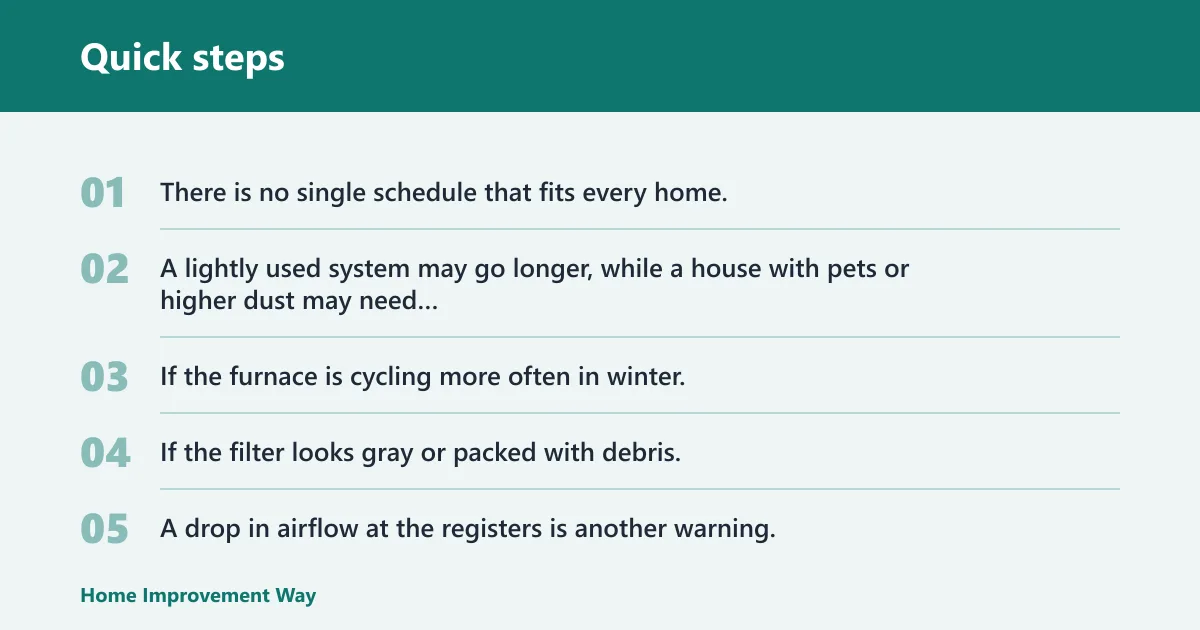
There is no single schedule that fits every home. A lightly used system may go longer, while a house with pets or higher dust may need more frequent changes. If the furnace is cycling more often in winter, check the filter sooner rather than waiting for a calendar date.
Signs the filter is overdue
If the filter looks gray or packed with debris, or if the furnace starts and stops more than usual, the filter is overdue. A drop in airflow at the registers is another warning. If the furnace is shutting off and the filter is filthy, replacement is the first move.
Choosing the right replacement
Use the correct size and thickness, and keep the MERV rating compatible with the system. A higher MERV rating captures finer particles, but it can add resistance if the furnace was not designed for it. Filters help protect the blower fan and coils, and they can help save money on HVAC repair or replacement over time.
When should you call a technician?
Call a technician when the furnace keeps shutting off after a new filter, when the shutdown points to a safety switch, or when the issue involves venting or condensate drainage. Those are not problems to keep cycling through with repeated resets. They need a closer inspection.
Repeated shutdowns after a new filter
If the furnace still short cycles after you install a clean, correctly sized filter, the filter is probably not the only cause. That is the point to look at the flame sensor, limit switch, thermostat, and venting. Repeated shutdowns mean the system needs more than basic maintenance.
Safety switch or venting concerns
If the furnace trips the high-limit switch, shows signs of blocked venting, or will not stay lit, stop treating it as a simple filter issue. Safety-related shutdowns protect the furnace and the home. They deserve a professional check, especially if the problem returns after a reset.
High-efficiency furnace condensate issues
On high-efficiency furnaces, a clogged condensate drain or float switch can stop operation. If you see water near the furnace, a tripped float, or repeated shutdowns tied to drainage, do not assume the filter will fix it. That system has another shutdown path that must be cleared.
Frequently asked questions
Can a dirty furnace filter cause the furnace to shut off?
Yes. A dirty furnace filter can restrict airflow enough to overheat the furnace and trip the high-limit switch. It can also contribute to short cycling, where the furnace turns on and off repeatedly. If the filter is heavily loaded and the airflow is weak, replacement is a reasonable first step.
Why does my furnace keep shutting off after a few minutes?
If the furnace starts and then stops after a few minutes, the most common causes are restricted airflow, a dirty flame sensor, or a safety switch trip. A dirty filter is one possibility, but a blocked vent or condensate issue can also do it. The symptom pattern matters more than the reset button.
Can a clogged filter make a furnace overheat?
Yes. A clogged filter can reduce airflow enough that heat builds up inside the furnace cabinet. That can trigger the high-limit switch, which shuts the burners down to protect the system. If overheating keeps happening after a new filter, the furnace needs a deeper check.
What else can cause a furnace to turn on and off repeatedly?
Repeated on-off cycling can come from a dirty flame sensor, blocked vents, a thermostat problem, or a condensate switch issue on a high-efficiency furnace. Restricted airflow is one common cause, but it is not the only one. If the filter is clean and the cycling continues, another fault is likely.
How often should I change a furnace filter in winter?
Change it based on condition and usage, not a fixed date alone. Winter heat cycles can load a filter faster, especially in dusty homes or homes with pets. If the filter looks dirty or airflow drops, change it sooner. A clean filter helps prevent short cycling and keeps the system moving air properly.
Sponsored / affiliate links. As an Amazon Associate I earn from qualifying purchases. I may earn additional commission from eligible campaigns.