How Often Should You Change a Furnace Filter in Winter?
Check a 1-inch furnace filter every month in winter and replace it every 30 to 60 days; use 4-inch filters about every 3 to 6 months, sooner if MERV 11 to 13 or the furnace cycles often. Waiting too long can cut airflow, raise energy use, and strain the blower or heat exchanger. This guide gives a simple winter schedule based on filter thickness, MERV rating, and how much your furnace runs. (Thisoldhouse)
Winter filter replacement guide


Winter changes the schedule because the furnace runs longer and pushes more air through the filter. That extra runtime loads the filter faster, so the usual 90-day rule often becomes too loose for cold weather.
A practical winter rule is simple: inspect monthly, then replace based on thickness, MERV, and how dirty the filter looks. Thin 1-inch filters usually need the tightest winter schedule. Thicker media filters can go longer, but only if the system is built for them.
| Filter type | Typical winter runtime | Check frequency | Likely replacement interval | Replace now triggers for pets, allergies, heavy dust |
|---|---|---|---|---|
| 1-inch | High runtime, especially during cold snaps | Every month | 30 to 60 days; many manufacturers still list 90 days as the outer limit | Replace sooner if the surface looks gray, airflow weakens, or the home has pets, allergies, or visible dust buildup |
| 2-inch | Moderate to high runtime | Every month | About 60 to 90 days, often sooner in winter if the furnace runs a lot | Replace sooner with pets, allergy concerns, or dusty rooms; do not wait for the full interval if the pleats look loaded |
| 3- to 4-inch | Moderate runtime in larger HVAC setups | Every month | 6 to 9 months in a suitable system | Move earlier if the house has pet dander, heavy dust, or the filter is a higher-MERV model that loads faster |
| 5- to 6-inch | Moderate runtime in high-capacity systems | Every month | 9 to 12 months in a suitable system | Check sooner in homes with pets, allergies, or remodeling dust, and replace early if airflow drops or the media looks packed |
That table gives a winter starting point, not a universal rule. A 3- to 4-inch pleated filter can last 6 to 9 months in the right setup, while a 5- to 6-inch media filter may last 9 to 12 months. A 1-inch filter clogs faster than thicker filters and usually needs the most frequent winter checks.
Say your furnace has a 1-inch filter, two cats, and the heat runs most evenings in January. The safe move is a monthly inspection and a replacement closer to 30 days than 60 if the pleats already look dusty.
Why winter clogs filters faster
Winter heating use pushes more air across the filter for longer stretches. That means more particles get trapped, and the filter loads up faster than it does in mild weather. Heavy winter heating can shorten filter life by up to 30%.
Longer furnace runtime
Cold weather makes the furnace cycle more often. The blower moves air through the filter for longer periods, so even a filter that looked fine in fall can load up much sooner in winter. Spire says winter use may justify changing the filter every 30 days.
More air moving through the filter
More runtime means more total air volume passing through the filter. That is why the same filter can age faster in January than it does in October. Northern dwellers may want to change filters every 30 to 60 days when winter demand is high.
Why cold snaps change the schedule
A cold snap can shift a filter from a routine 90-day interval to a much shorter one. In the coldest stretches, the furnace may run so often that monthly checks become the only reliable way to stay ahead of clogging.
How often should you check it?
Check the filter monthly in winter, even if the replacement interval is longer. That monthly look lets you catch faster loading before it starts affecting airflow. If the home has pets, allergies, or heavy dust, check it more often than once a month.
Monthly check rule
This Old House says winter warrants monthly checking, especially if the filter looks dirty. Panda Home Comfort also recommends checking filters monthly during cold weather. That is the right pace for most homes because runtime, not just calendar time, drives winter loading.
When to check more often
Check sooner than monthly if the furnace runs nearly nonstop, if vents already feel weak, or if the home has a lot of pet hair or indoor dust. A higher-MERV filter can also justify earlier checks because it captures more particles and can clog sooner.
What a visual check should tell you
A visual check is meant to answer one question: can this filter keep going, or is it already loaded enough to replace? Look for gray discoloration, packed pleats, caked dust, or bent media. If the surface looks loaded across most of the filter, replacement is the safer call.
Suppose a 4-inch pleated filter looks only lightly dusty after six weeks, and the furnace still sounds normal. That is a case for rechecking soon, not replacing immediately, unless pets, allergies, or heavy dust are also part of the picture.
How MERV affects winter timing
MERV rating measures how efficiently a filter captures particles. Higher ratings trap more particles, but they can also add more airflow resistance and clog sooner. For many residential furnaces, MERV 6 through 12 is the practical range, depending on the system and indoor air needs.
Lower versus higher MERV
Bob Vila says MERV 6 through 12 is best for residential furnaces, with MERV 6 through 9 often changed every 90 days and MERV 10 through 12 often changed every 60 days. That is a useful split because higher-efficiency filters generally load faster in winter.
Why higher efficiency can mean faster loading
A higher-MERV filter captures smaller particles, so it collects more material as air moves through it. In winter, when runtime is already up, that extra loading can shorten the replacement interval even further. A higher rating is not always better if the furnace struggles with added resistance.
What MERV range fits most homes
For many systems, MERV 6 to 12 is the practical residential range. Lower MERV filters are easier on airflow. Higher MERV filters may help with fine dust and sensitivities, but only if the furnace and duct system can handle the added restriction without weak airflow or longer cycles.
| MERV band | Winter timing tendency | Best fit |
|---|---|---|
| 6 to 9 | Often closer to a 90-day schedule, but winter checks still matter | Many standard residential systems |
| 10 to 12 | Often closer to a 60-day schedule in winter | Homes that want more particle capture and have a system that can handle the resistance |
| 13 and above | May clog sooner and can be harder on airflow | Only if the furnace and filter cabinet are designed for it |
Should you replace it sooner?
Yes, if the home has pets, allergies, or extra dust load. Those conditions shorten filter life and move the replacement date earlier. In winter, that often means following the calendar less and watching the filter condition more closely.
Pets in the home
Panda Home Comfort says standard one- to two-inch filters are common and need more frequent changes with pets or allergies. Pet dander loads a filter faster, especially during winter when the furnace runs often and keeps pulling air through the media.
Allergies and sensitivities
Households that want better particle control may choose a higher-MERV filter, but that can mean faster clogging. If allergies are a factor, monthly checks matter even more. Replace sooner if the filter looks loaded before the scheduled interval ends.
Heavy dust or renovation debris
Dust from remodeling, sanding, or a busy household can fill a filter quickly. That is true even with thicker filters. If the filter is catching a lot of visible debris, winter is not the time to stretch the interval just because the calendar says there is time left.
Signs the filter is overdue
A clogged filter often shows up as weak airflow, longer furnace cycles, or higher energy bills. Those signs do not prove the filter is the only issue, but they are strong warnings that the system is working harder than it should.
Reduced vent airflow
Restricted airflow is one of the clearest clues. If vents feel weaker than usual, the filter may be limiting the air supply. A loaded filter can cut vent output and make the furnace run longer to reach the set temperature.
Longer furnace cycles
When the furnace has to push through a clogged filter, it may stay on longer to do the same job. That extra runtime adds more wear on the blower and can keep the filter loading at an even faster pace. The schedule then slips further behind.
Higher energy bills
A dirty furnace filter can raise heating bills because the blower has to work harder to move air. That extra work does not always show up as a sudden failure, but it can show up as a slow, expensive drift in winter energy use.
A common first-timer mistake is waiting for a problem before checking the filter. By the time the furnace sounds strained, the filter may already be overdue, especially if it is a 1-inch filter in a house with pets and a long heating season.
When to replace now
Replace the filter now if it looks gray or packed, if airflow is weak, or if winter runtime has jumped. Those are the clearest signs that the current filter is no longer keeping up with the season. When in doubt, replacement is safer than stretching the interval.
If the filter looks gray or packed
Gray discoloration across much of the surface means the filter has already done a lot of work. If the pleats are matted or the media looks coated with dust, there is no reason to wait for a later date. Change it and reset the schedule.
If airflow is weak
Weak airflow often points to restriction somewhere in the system, and the filter is the first place to look. If a vent that used to push air well now feels soft, a dirty filter is a likely suspect. Replace it and see whether airflow improves.
If winter runtime has jumped
A sudden jump in furnace runtime means the filter is seeing more air and more debris. That is common during a cold spell, and it is exactly when a monthly inspection matters most. If the filter already looks loaded, replace it now rather than waiting for the calendar.
- Check the filter every month during winter.
- Replace 1-inch filters sooner, often every 30 to 60 days.
- Use longer intervals for 3- to 4-inch and 5- to 6-inch filters only if the system supports them.
- Move the replacement date earlier if pets, allergies, or dust are part of the house.
- Replace immediately if airflow drops, the filter looks packed, or the furnace starts running longer than usual.
Frequently asked questions
How often should you change a furnace filter in the winter?
In winter, a 1-inch filter often needs replacement every 30 to 60 days, while thicker filters can last longer if the system is sized for them. Most manufacturers still list 90 days as a standard interval, but winter runtime often makes monthly checking the better rule.
How often do you have to change the furnace filter?
For many homes, 90 days is the standard starting point if no manual is available. Winter can shorten that schedule, especially with frequent heating cycles. A 1-inch filter usually needs the closest attention, while 3- to 4-inch and 5- to 6-inch filters can last longer.
Should I change my furnace filter every month in winter?
Check it every month in winter, but do not assume every filter must be replaced monthly. A 1-inch filter often comes close to that schedule, while thicker filters may not. If the filter looks gray, airflow is weak, or the furnace runs heavily, replace it sooner.
Does furnace runtime affect how often the filter needs changing?
Yes. More runtime means more air moving through the filter, which loads it faster. That is why cold snaps matter so much. A furnace that runs often in January can shorten the replacement interval by weeks compared with a milder season.
How do I know if my furnace filter is already clogged?
Look for gray buildup, packed pleats, weak vent airflow, and a furnace that seems to run longer than usual. Higher energy bills can also be a clue. None of those signs alone proves the filter is the only issue, but together they point to replacement.
Can pets or allergies mean I need to replace the filter sooner?
Yes. Pets add dander and hair, and allergies often push homeowners toward higher-MERV filters that can load faster. Both conditions can shorten the winter interval, especially with 1-inch filters. Monthly checks become more important, and replacement may need to happen before the usual date.
Sponsored / affiliate links. As an Amazon Associate I earn from qualifying purchases. I may earn additional commission from eligible campaigns.
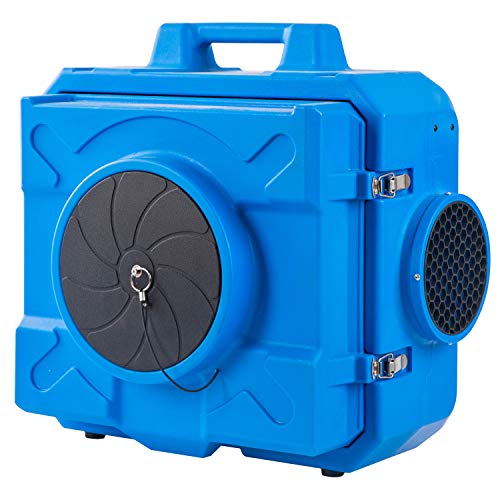 MOUNTO HEPA500 Commercial 500cfm Air Purifier Hepa Air Scrubber Negative Air Machine Roto-Molded (Blue)
 ROVSUN 18000 BTU Mini Split AC/Heating System with Inverter, 20 SEER2 Energy Saving 230V Ductless Split-System Air Conditioner with Pre-Charged Condenser, Heat Pump, Remote Control & Installation Kit