Is It Cheaper to Leave the Heat on or Turn It Off When You Leave?
For most homes, it is cheaper to turn the heat down than off for short absences: use a 7°F to 10°F setback for a workday, keep it low on weekend trips, and shut it off only for long stays if freeze risk, pipes, pets, and humidity are under control. Skip the wrong move and you can waste energy, freeze pipes, or let damp air damage the house. This guide gives a simple rule by absence length and heating type.
Is it cheaper to leave the heat on?


Usually, no. A cooler house leaks less heat to the outdoors, so a setback is usually cheaper than holding full comfort. A thermostat setback can save about 10 percent a year, and a 7 to 10 degree drop for about 8 hours a day is the standard pattern for normal daily use.
How long are you away?
The best setting changes with the length of the absence. A two-hour errand usually calls for little or no change. A workday is the clearest fit for a timed setback. Weekend trips and vacations need a colder house, but a full shutoff only makes sense when freeze risk, moisture, and system type are checked first.
For example, a house sits at 70°F on weekdays. Setting it to about 62°F before you leave for an 8-hour workday can reduce heat loss without making recovery the main job. Change only the absence length, not the house temperature, and the same setting matters less for a two-hour errand and more for a 48-hour trip.
How your heating system changes the answer
Forced-air furnaces, radiant or baseboard heat, and heat pumps do not behave the same way. Some systems handle a scheduled setback well. Others work better at a low steady temperature, especially when plumbing or dampness is a concern. Your thermostat choice should match the system, not just the weather.
- Forced-air furnace. A setback is usually the simplest choice for a workday away. A timed schedule can turn the furnace down automatically and bring the house back up before you return.
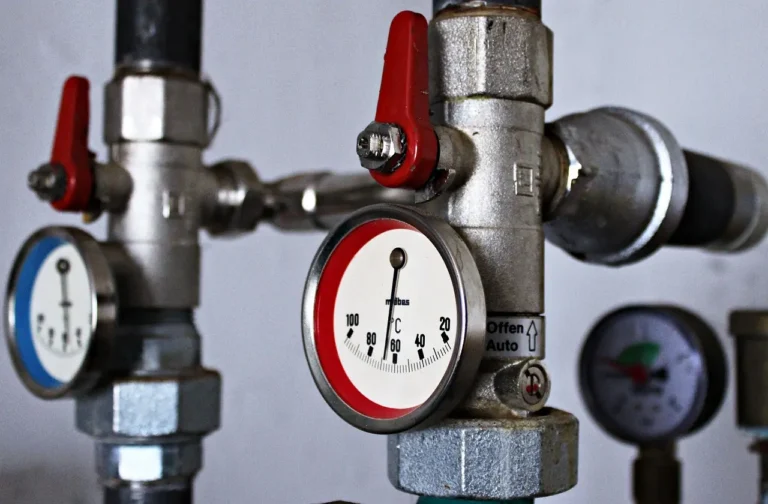
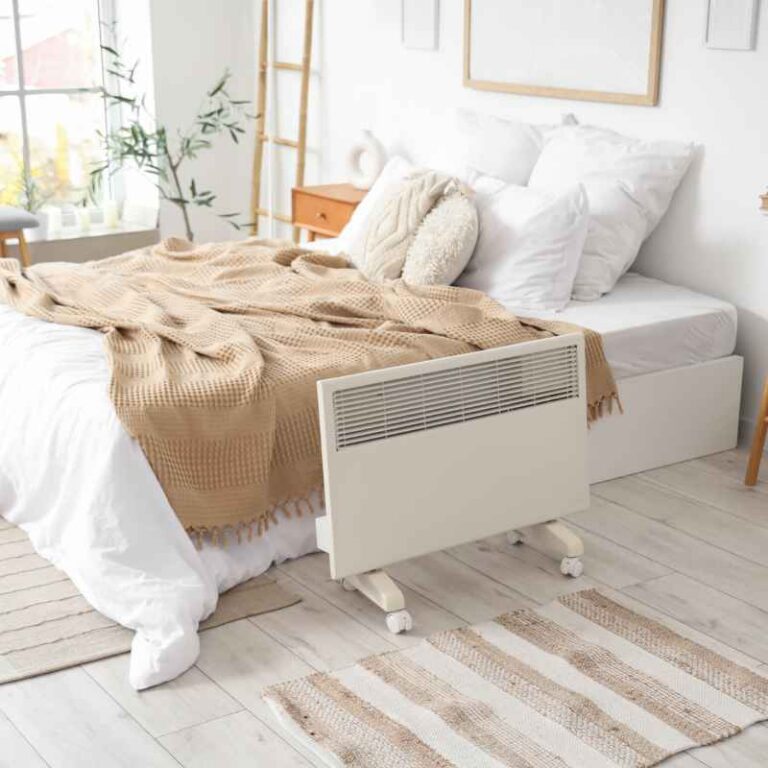
- Radiant or baseboard heat. Lowering the temperature is usually better than shutting radiators off completely. Turning radiators off can cause dampness, and the radiator guidance also warns about pipes freezing; if you use room-by-room control, keep a safe whole-house temperature rather than isolating rooms too aggressively.
- Heat pump. Heat pumps usually do best with a moderate setback rather than a large drop. Very deep setbacks can lengthen recovery time, so use the thermostat’s away mode and check the owner’s manual for the model-specific limit.
Heat setting decision table
This table gives a practical away-temperature matrix by absence length and heating system. It favors the lowest setting that is still safe for the house, pipes, and indoor air. Where a full shutoff is not the safest move, keep the home at a low steady temperature instead.
| Absence length | Forced-air furnace | Radiant or baseboard | Heat pump | Humidity and freeze notes |
|---|---|---|---|---|
| 2 hours | Action: leave it as is, or use a small 3°F to 5°F setback if the house is empty and the weather is cold. | Action: leave it as is for such a short trip. Short cycling the control is rarely worth the change. | Action: leave it as is, or use the system’s mild away mode if it is already programmed. | Freeze risk is usually low for a brief absence. Humidity changes are also small over two hours. |
| Workday | Action: use a 7°F to 10°F setback for about 8 hours. This is the standard daily use case for a programmable thermostat. | Action: lower the temperature by 7°F to 10°F rather than shutting radiators off completely. | Action: use a moderate away setting and avoid a very large drop. Check the owner’s manual for the model’s recommended limit. | Keep the house above any pipe-freeze concern. If the home has cold corners or a damp basement, use low-and-steady instead of off. |
| Weekend | Action: use a larger setback than a workday, but do not assume full shutoff is the cheapest or safest option. | Action: lower the temperature and leave a minimum floor temperature for pipes and wall cavities. | Action: use the away mode or a weekend schedule that holds a moderate setback. | Watch for window condensation and cold rooms on the north side. Damp houses often need a low steady temperature. |
| Vacation | Action: use a deep setback only if the house is protected against freezing and humidity. Otherwise keep a low steady temperature. | Action: do not shut radiators off completely unless the plumbing is protected and the indoor air stays dry enough. | Action: use the lowest safe away setting. Check the manual before leaving for more than a few days. | A full shutdown can let moisture build up, and radiator systems carry extra freeze risk. A safe vacation setpoint is often in the 50°F to 55°F range for freeze protection, but confirm your home’s plumbing and local weather first. |
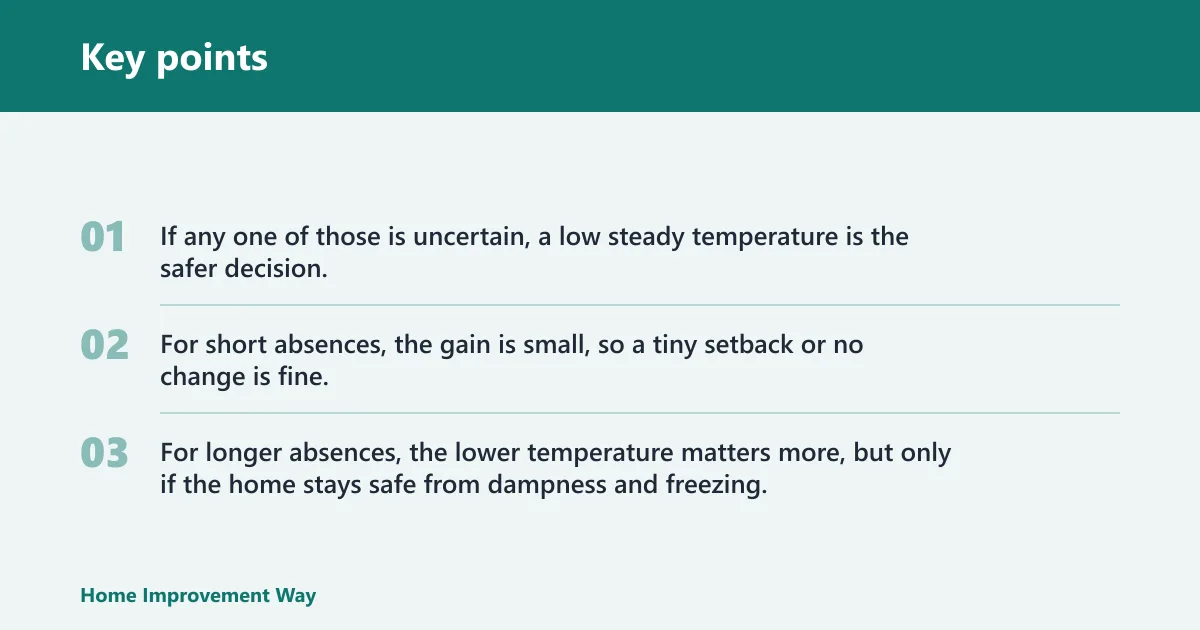
Full shutoff only if the house has no meaningful freeze risk, no vulnerable plumbing, no moisture problem, and a system that can recover safely after you return. If any one of those is uncertain, a low steady temperature is the safer decision. The table assumes normal recovery time, typical indoor humidity, and a home that is not unusually drafty or exposed to hard freezes.
Here is the break-even logic in plain terms: a setback saves money because the home loses less heat while it sits cooler. That is the main gain. For short absences, the gain is small, so a tiny setback or no change is fine. For longer absences, the lower temperature matters more, but only if the home stays safe from dampness and freezing.
How much should you setback the thermostat?
A daily setback of 7°F to 10°F is the usual target, and the recommended duration is about 8 hours a day. For many homes, that matches a workday away from home. The useful idea is simple: create a clear occupied-versus-away gap and automate it so the house is not held warmer than needed.
Programmable thermostat schedules
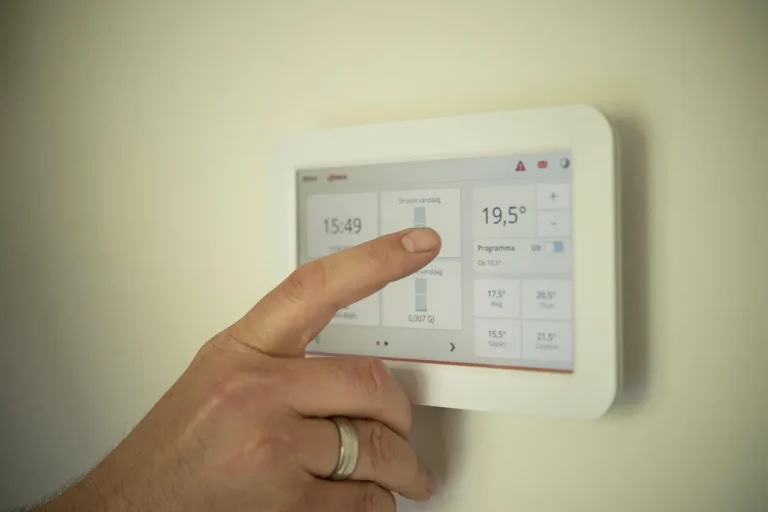
A programmable thermostat automates weekday and weekend schedules, so you do not have to change the temperature by hand. That matters most for repeatable patterns like leaving at 8 a.m. and returning at 5 p.m. A timed schedule also lowers the chance of forgetting to undo a setback before the house needs to be comfortable again.
- Set weekday away times. Program the thermostat for the hours you are gone on most workdays. Use the recommended 7°F to 10°F setback unless your system manual gives a narrower limit.
- Add weekend rules. Give Saturday and Sunday a different schedule if your home stays occupied longer or the family leaves later. Weekend programming keeps the house from running on a weekday pattern when nobody needs it.
- Confirm the display. Check that the thermostat is actually following the schedule and not stuck in a manual hold. A hold can cancel the savings you expected from the setback.
Smart thermostat away modes
A smart thermostat adds automatic away settings and can preheat before you return. That makes it easier to keep the house cooler while empty without arriving to a cold house. Use the app or built-in sensors to confirm that the away mode starts when the home is empty and ends before anyone gets back.
For example, a family leaves for a 3-day weekend and the thermostat is set to a 9°F setback. If the home warms back up an hour before return, the house is comfortable at arrival without holding peak temperature the whole time. The same pattern is less useful if the thermostat never exits away mode, so check the schedule after any power outage or setting change.
When should you keep a low steady temperature?
Keep a low steady temperature when freeze risk, dampness, or system behavior makes full shutoff unsafe. That is especially important in colder weather, in drafty homes, and in houses with plumbing in exterior walls, crawlspaces, attics, or other unheated areas. A low steady temperature is often the safer choice for long absences.
Freeze-risk homes
Turn the heat fully off only when you know the plumbing can handle it. If pipes run through cold spaces, or if your local forecast can drop hard during the trip, keep the thermostat at a protective low setting. For many homes, a vacation setpoint around 50°F to 55°F is often used as a practical freeze-protection range, though the exact safe number depends on the home and weather.
Humidity and dampness concerns
Indoor humidity matters because a cold house can feel damp and can hold moisture on cool surfaces. A full shutdown can let moisture build up, and the radiator guidance warns that turning radiators off can cause dampness. If you already see condensation on windows, musty spots, or damp basement walls, do not use full shutoff as a default.
Why some radiator and baseboard systems need a floor temperature
Radiator and baseboard systems often work better with a floor temperature rather than an on-off habit. Lowering the temperature is usually safer than turning radiators off completely, because room-by-room shutoff can create cold spots and pipe risk. Zoned heating helps only when the unused rooms stay within the building’s safe temperature range.
- Check the coldest rooms. Walk the house and note north-facing rooms, second-floor corners, and spaces above garages or crawlspaces. These areas lose heat faster and can guide where a low steady temperature is safer than a full shutoff.
- Inspect draft sources. Look at door and window gaps, attic access points, and door sweeps. Sealing those leaks reduces heat loss and makes lower thermostat settings more practical.
- Verify airflow and scheduling. Replace a dirty furnace filter if it is due under the manufacturer’s maintenance schedule. A clogged filter restricts airflow and can hurt system efficiency.
Role of insulation and drafts
Home insulation changes the answer because weak insulation lets heat escape faster. Attics and second floors are common weak spots, and window and door leakage can undo part of a setback’s benefit. Better insulation and draft-proofing do not change the basic rule, but they make lower settings more practical and more comfortable.
- Attic losses. Heat rises, so attic insulation matters a lot in winter. If the attic is underinsulated, the house cools faster and the thermostat will call for more heat after any setback.
- Second-floor leakage. Upper rooms often cool or overheat first. If the second floor is drafty, a deep setback can leave those rooms uncomfortably cold by morning.
- Window and door gaps. Seal gaps around frames, weatherstripping, and thresholds. Reducing leakage cuts heat loss and supports lower heating bills.
Practical checks before you leave
Before a workday trip or a weekend away, confirm that the thermostat schedule matches the plan and that the system is not stuck in an override. Also check the furnace filter, the return-air path, and any rooms with visible drafts. Those simple checks matter more than chasing a larger setback number.
- Confirm the schedule. Make sure the thermostat is set to the correct away period before you leave. For a workday, a 7°F to 10°F setback is the usual target.
- Inspect the filter. Check the furnace filter and replace it on the manufacturer’s schedule. Restricted airflow can reduce efficiency and make the system work harder.
- Close only safe rooms. If you use radiator valves or room-by-room controls, shut unused rooms only when the home still has a safe whole-house temperature. Do not isolate rooms so much that pipes or walls get too cold.
Frequently asked questions
Is it cheaper to leave the heat on or turn it off when I leave?
For short absences, it is usually cheaper to turn the heat down, not leave it at full comfort or shut it off completely. A 7°F to 10°F setback for about 8 hours a day is the normal target. For longer absences, a low steady temperature is often safer than full shutoff.
Should I turn my heat off when I leave for work?
Usually, no. A workday is the classic setback case, not a full shutoff case. Set the thermostat back by 7°F to 10°F while you are gone, and use a programmable thermostat so the house warms back up before you return. That keeps savings and comfort balanced.
Does turning the heat off save money in winter?
Sometimes, but only when the house stays safe. A full shutoff lowers heat loss because the house is colder, yet it can create dampness or freeze risk in winter. If the home has exposed plumbing, damp rooms, or radiator systems, a low steady temperature is usually the safer winter choice.
How many degrees should I lower the thermostat when I’m away?
Use a 7°F to 10°F setback for a normal workday away from home. That range fits the common daily pattern and lines up with the recommended 8-hour setback duration. For weekends or vacations, the right number depends on freeze risk, humidity, and the heating system.
Does turning the heat off cause pipes to freeze?
It can. A complete shutoff raises the risk when pipes run through cold walls, basements, crawlspaces, attics, or other unheated areas. If your home has those weak spots, keep the thermostat at a low protective setting instead of off, and be more cautious during cold weather.
How long can I leave the heat off safely?
There is no universal limit. A brief shutoff may be fine in mild weather and in a well-protected house, but multi-day absences are different from a short work trip. If you leave for a vacation, use a low steady temperature unless you have confirmed that plumbing, humidity, and local weather make shutoff safe.
Should I use a programmable thermostat for heating setbacks?
Yes. A programmable thermostat automates weekday and weekend schedules, which reduces forgetting to adjust the temperature. A smart thermostat adds away modes and can preheat before you return. Either one makes a 7°F to 10°F setback much easier to use consistently.
Sponsored / affiliate links. As an Amazon Associate I earn from qualifying purchases. I may earn additional commission from eligible campaigns.