How Long Should a Furnace Run Per Cycle?
A furnace often runs 10 to 15 minutes per cycle in mild weather and 15 to 20 minutes or more in colder weather; cycles under 10 minutes or nonstop running usually point to a problem. Ignoring unusual run times can push bills higher, leave rooms unevenly heated, and hide airflow or venting issues. This guide shows how to time a cycle and check the thermostat, filter, vents, and furnace size.
What a furnace cycle includes
A furnace cycle is more than burner time. It includes burner on-time, blower-only time after the burners stop, the off-time before the next call for heat, and how long the system needs to recover to the thermostat setpoint. Those pieces tell you whether the furnace is meeting the load or fighting a restriction.
Burner on-time versus blower-only time
Burner on-time is the period when gas is burning and heat is being made. Blower-only time can continue after shutdown, especially if the fan setting is on rather than auto. That extra blower time is normal in some setups, but it should not be confused with burner runtime when you are judging cycle length.
Off-time between cycles and setpoint recovery
Off-time is the gap between calls for heat. In milder weather, that gap is often longer because the house loses heat more slowly. Setpoint recovery is the time it takes the furnace to bring the indoor temperature back to the thermostat target after a setback or a colder outdoor spell.
What changes in single-stage, two-stage, and modulating furnaces
Single-stage furnaces usually run at one output level, so their cycles are easier to compare. Two-stage furnaces may start on low heat and move to high heat if the home needs it, which can lengthen or shorten the burner cycle. Modulating furnaces can vary output more continuously, so cycle length matters less than steady comfort and limited temperature swings.
How long should a furnace run per cycle?
A furnace cycle is usually judged by the weather and the equipment type, not by one fixed number. A typical furnace cycle lasts between 10 and 20 minutes under average winter conditions, and one ranking page describes normal cycles as 10 to 15 minutes. Short cycles are often under five minutes, and repeated 3- to 5-minute runs point to trouble.
What usually counts as normal in mild weather
In milder conditions, a standard furnace may run 2 to 4 cycles per hour, with each cycle often landing near the lower end of the normal range. That is common when the home heat load is light and the thermostat is not calling for much recovery. Shorter cycles are not automatically bad if the weather is mild and comfort stays even.
Why 20 minutes can be fine in winter
Longer runtime is normal when the outdoor temperature drops and the home loses heat faster. A furnace can run 15 to 20 minutes per cycle in typical conditions, and another says 15 to 20 minutes or more is common in colder weather. A 20-minute cycle is often fine if the furnace reaches setpoint, spaces feel even, and it shuts off cleanly.
When runtime becomes a short cycling clue
Short cycling means the furnace turns on and off too quickly. As a working flag, cycles under five minutes deserve attention, and cycles of only three to five minutes repeating usually indicate a problem. If the furnace is hitting that pattern, start with airflow, thermostat settings, and furnace size before assuming the weather is the only cause.
How often should a furnace cycle on and off?
Cycle frequency changes with outdoor temperature, insulation, house size, and how much heat the home is losing. In milder weather, a furnace may cycle a few times per hour. In colder weather, it can run more often and for longer stretches because the thermostat reaches the setpoint more slowly.
Why cycles per hour change with outdoor temperature
Cold air increases heat loss through walls, windows, and air leaks, so the furnace may need to start more often and stay on longer. Warm days reduce that heat loss, which usually lengthens off-time and can lower the number of cycles per hour. That shift is normal if comfort stays stable.
How heat loss, insulation, and room load affect the pattern
A drafty home, weak attic insulation, or a room with large glass areas may pull more heat than the thermostat expects. That can make the furnace cycle more often or run longer to recover. Room-to-room imbalance also matters. If one area gets warm quickly while another stays cool, duct losses or return-air blockage may be part of the problem.
What smart thermostat logs can tell you
Smart thermostat runtime history can show daily and weekly patterns that are hard to spot from memory. Look for repeated short burner runs, unusually long cycles on certain days, or a big change after a filter swap. Many thermostats also show cycle tracking, which makes it easier to compare yesterday’s runtime with today’s weather.
Furnace cycle log worksheet
Use one full day of logs before you judge the furnace. A single cycle can look odd because of a thermostat setback, a shower, a cooking spike, or a quick weather change. One day of notes gives you context and helps separate normal winter runtime from airflow, thermostat, sizing, or venting problems.
| Outdoor temperature | Thermostat setpoint | Cycle start/end time | Minutes per cycle | Cycles per hour | Blower-only time | Filter age | Vent condition | Comfort result |
|---|---|---|---|---|---|---|---|---|
| 28°F | 70°F | 6:10–6:27 a.m. | 17 | 3 | 2 minutes after burner off | 6 weeks | Clear outside, no visible blockage | Even, reaches setpoint |
| 38°F | 69°F | 8:05–8:09 a.m. | 4 | 8 | 0 minutes | 4 months | Leaf buildup near vent cap | One room feels cool |
| 15°F | 71°F | 9:40–10:02 p.m. | 22 | 2 | 1 minute after burner off | 2 weeks | Clear outside, no blockage visible | Stable, comfortable |
Log the table across a full day, not just one heating call. Include the weather, whether the fan was set to On or Auto, and whether the furnace reached setpoint without repeated restarts. If you use a smart thermostat, pull the daily history at the end of the day and compare it with your notes.
How to read the log by weather and comfort
A longer cycle in colder weather can be normal if the house is still comfortable. A short cycle in mild weather may also be fine if the thermostat is satisfied quickly and the furnace stays off for a reasonable period afterward. The trouble pattern is short runtime plus poor comfort, or long runtime plus rooms that still lag behind.
Say your furnace runs 16 minutes when it is 25°F outside and 11 minutes when it is 40°F outside. That shift is usually expected. If the same system starts running only 4 minutes at a time on both days, then the weather is less likely to be the main cause.
Likely normal, monitor, and call a pro patterns
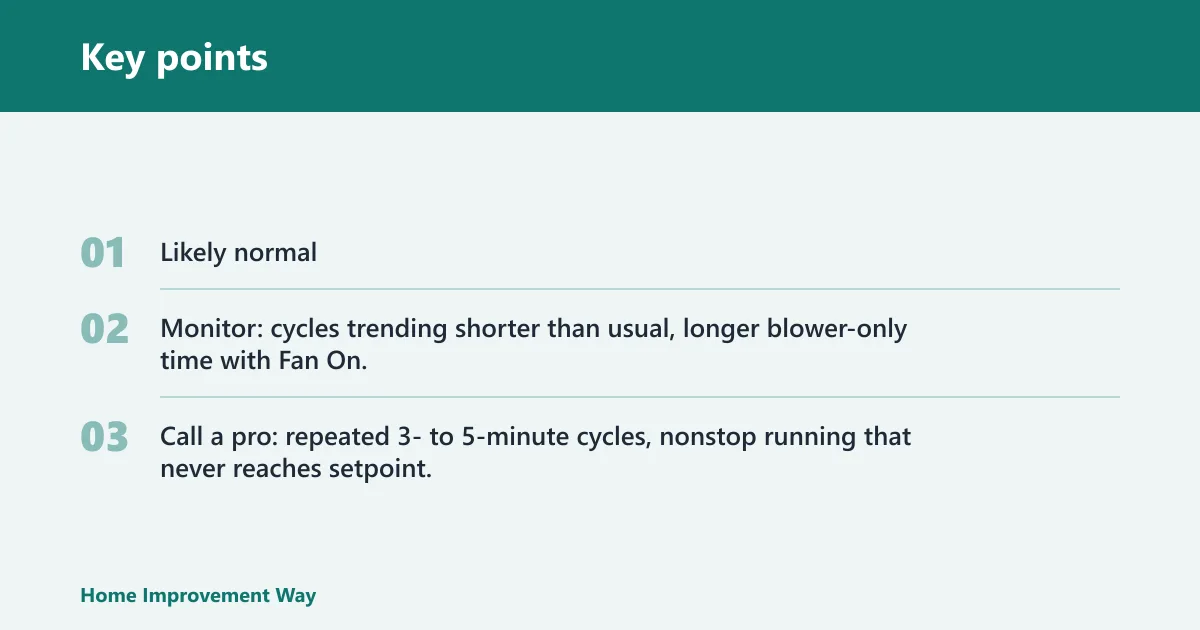
- Likely normal: 10 to 20 minute cycles, even room temperatures, no repeated shutdowns, clean filter, and no unusual vent or flame issues.
- Monitor: cycles trending shorter than usual, longer blower-only time with Fan On, or one room lagging while the rest of the home is comfortable.
- Call a pro: repeated 3- to 5-minute cycles, nonstop running that never reaches setpoint, visible vent blockage, or shutdowns that recur after basic checks.
What causes long or short cycles?
Long or short furnace cycles usually come from airflow, thermostat behavior, furnace sizing, or venting. A dirty filter can restrict air, a thermostat can read the room wrong, and an oversized unit can heat too quickly and shut off early. Long cycles can be normal in cold weather, but they can also point to a furnace that is struggling to move heat.
Dirty filter and blocked return airflow
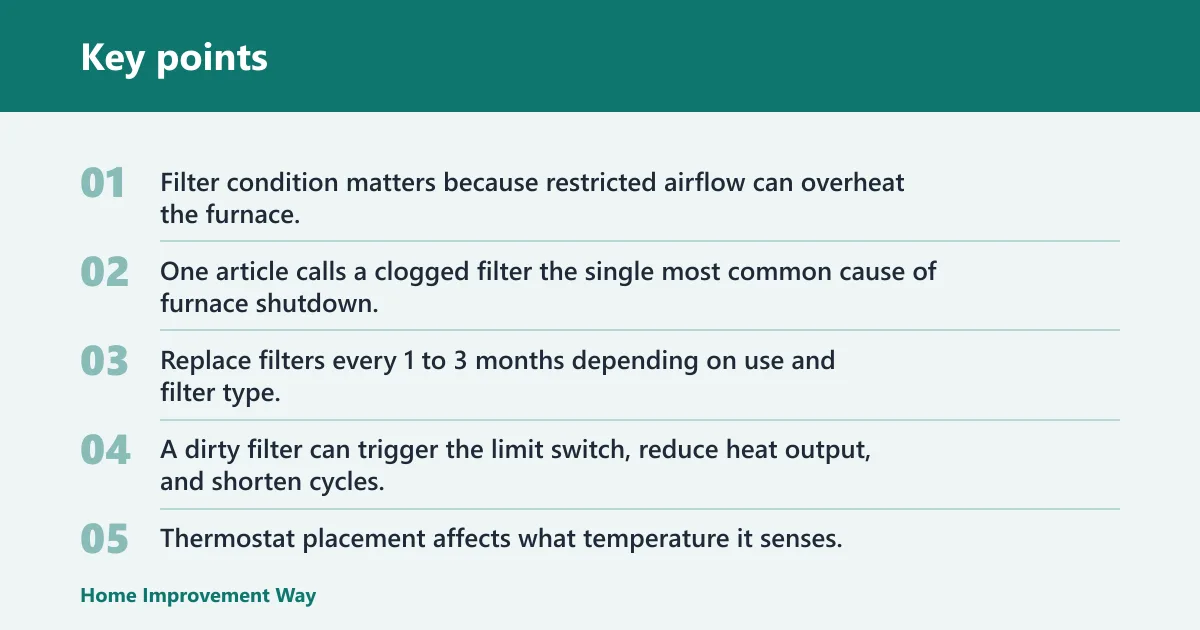
Filter condition matters because restricted airflow can overheat the furnace. One article calls a clogged filter the single most common cause of furnace shutdown. Replace filters every 1 to 3 months depending on use and filter type, and inspect them monthly during heating season. A dirty filter can trigger the limit switch, reduce heat output, and shorten cycles.
Thermostat placement, calibration, battery status, and fan setting
Thermostat placement affects what temperature it senses. If it sits near a supply register, a sunny wall, a draft, or a kitchen, it can end the cycle too soon or call for heat too often. Check calibration, battery status, and the temperature differential. Also confirm the fan setting. Fan On can add blower-only time after burner shutdown and make runtime logs look longer than they are.
A common first-timer mistake is reading a blower that keeps moving air and assuming the burner is still firing. If the thermostat is set to Fan On, the blower can keep running after the burners stop. That is a logging issue, not always a furnace problem.
Oversized or undersized furnace sizing
Oversized furnaces tend to short cycle because they satisfy the thermostat too fast. That can leave uneven room temperatures and fewer long, steady runs. Undersized furnaces do the opposite and may run almost continuously on very cold days because they cannot keep up with the home heat load. Both sizing errors can affect comfort and energy use.
AFUE also matters because it tells you how much of the input fuel becomes usable heat. A furnace with 100,000 BTU/h input at 90% AFUE delivers about 90,000 BTU/h usable heat. Lower AFUE means less usable output from the same input, which can lengthen runtime when the home needs the same amount of heat.
Flue or vent pipe blockage and limit switch shutdown
Blocked flue or vent pipe sections can disrupt exhaust flow and create an exhaust safety problem. Look at the outside termination point for snow, nests, leaves, or damage. If the furnace overheats because air cannot move across the heat exchanger, the limit switch may shut the unit off to protect it. That safety cutoff is an indicator of restricted airflow, not a nuisance to ignore.
Is it bad if my furnace keeps shutting off after a few minutes?
Yes, repeated shutdown after a few minutes is a short cycling pattern worth checking. It can be caused by a thermostat issue, but it can also point to overheating, blocked airflow, vent problems, or a furnace that is too large for the home. If the furnace stops after a brief run and then starts again soon after, treat it as a warning sign.
How to separate a limit switch trip from a thermostat issue
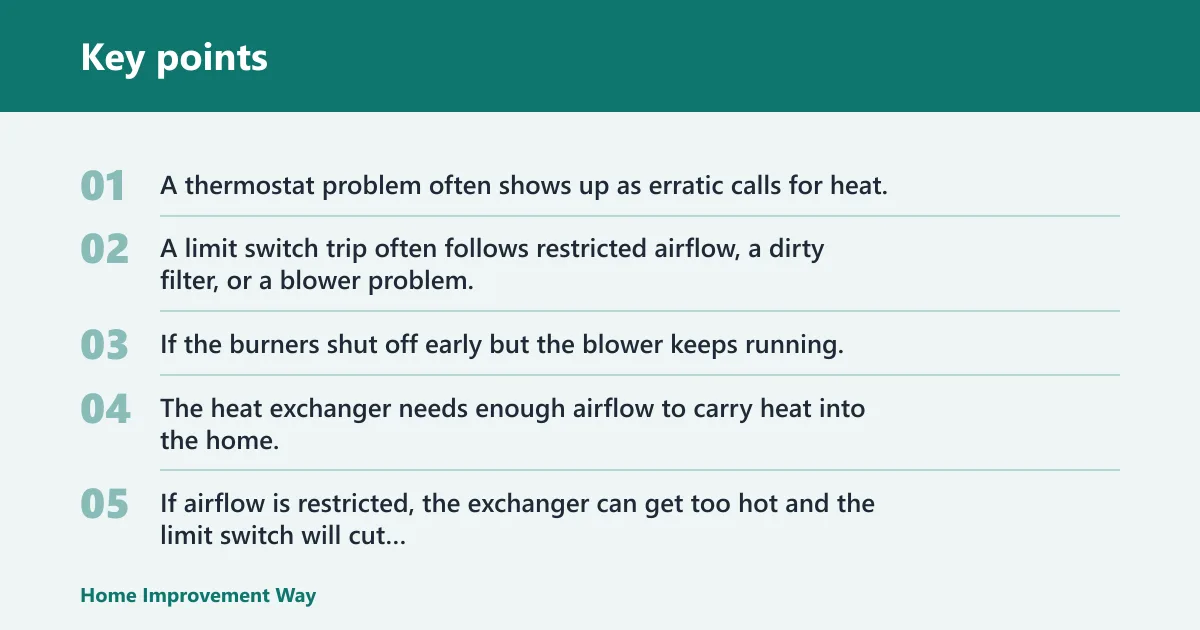
A thermostat problem often shows up as erratic calls for heat, wrong temperature readings, or frequent changes in demand. A limit switch trip often follows restricted airflow, a dirty filter, or a blower problem. If the burners shut off early but the blower keeps running, the furnace may be protecting itself from heat buildup rather than obeying the thermostat.
Why overheating points to airflow trouble
The heat exchanger needs enough airflow to carry heat into the home. If airflow is restricted, the exchanger can get too hot and the limit switch will cut burners off. That protects the furnace, but it also means the underlying airflow issue still needs attention. Check the filter, return grilles, closed registers, and duct blockage first.
When a cracked heat exchanger or venting problem needs fast attention
A cracked heat exchanger is a safety concern because it can allow combustion gases to mix with household air. A blocked or damaged vent can also keep exhaust from leaving the home correctly. If the carbon monoxide alarm sounds, leave the building and call 911 from outside. After that, have the furnace and venting inspected before you run it again.
Frequently asked questions
How long should a gas furnace run per cycle?
A gas furnace usually follows the same timing pattern as other furnaces: about 10 to 20 minutes in many homes, with longer cycles when it is colder outside. The key is not the fuel type alone. Burner runtime, airflow, and setpoint recovery tell you whether the cycle is normal.
How long does a furnace run per cycle in the winter?
In winter, longer cycles are common because the home loses heat faster. A furnace may run 15 to 20 minutes per cycle, and some homes will see more than that during colder stretches. The important check is whether the house reaches the thermostat setting without repeated shutdowns or uneven room temperatures.
What does short cycling mean on a furnace?
Short cycling means the furnace turns on and off too quickly. As a practical threshold, cycles under five minutes are a warning sign, and cycles of only three to five minutes repeating usually point to a problem. Common causes include airflow restriction, thermostat issues, and an oversized furnace.
When should I call an HVAC technician for furnace cycling?
Call an HVAC technician if the furnace keeps shutting off after a few minutes, runs almost nonstop without reaching setpoint, or shows repeated short cycles after you replace the filter and check the thermostat. Call sooner if the vent looks blocked, the limit switch trips, or you smell exhaust or suspect carbon monoxide.
Sponsored / affiliate links. As an Amazon Associate I earn from qualifying purchases. I may earn additional commission from eligible campaigns.
 ROVSUN 18000 BTU Mini Split AC/Heating System with Inverter, 20 SEER2 Energy Saving 230V Ductless Split-System Air Conditioner with Pre-Charged Condenser, Heat Pump, Remote Control & Installation Kit
 Garvee 14,000 BTU Portable Air Conditioner for Room Up to 750 Sq.Ft, 4 in-1 AC Unit with Cooling, Fan, Dehumidifier & Sleep Mode, Remote Control & Window Kit Included for Home, Office, Apartment,White