Does a Dehumidifier Work in a Cold Basement?
Yes, most compressor dehumidifiers tend to work well in a basement when the air stays around 65°F or warmer. Below 60°F they lose efficiency, and near 50°F or lower they can frost up. If you ignore that, you can waste power, leave moisture behind, and still feed mold growth. This guide explains the temperature cutoff, when a desiccant unit makes more sense, and how to reduce freeze-up and wasted energy.
Cold basement dehumidifier decision matrix
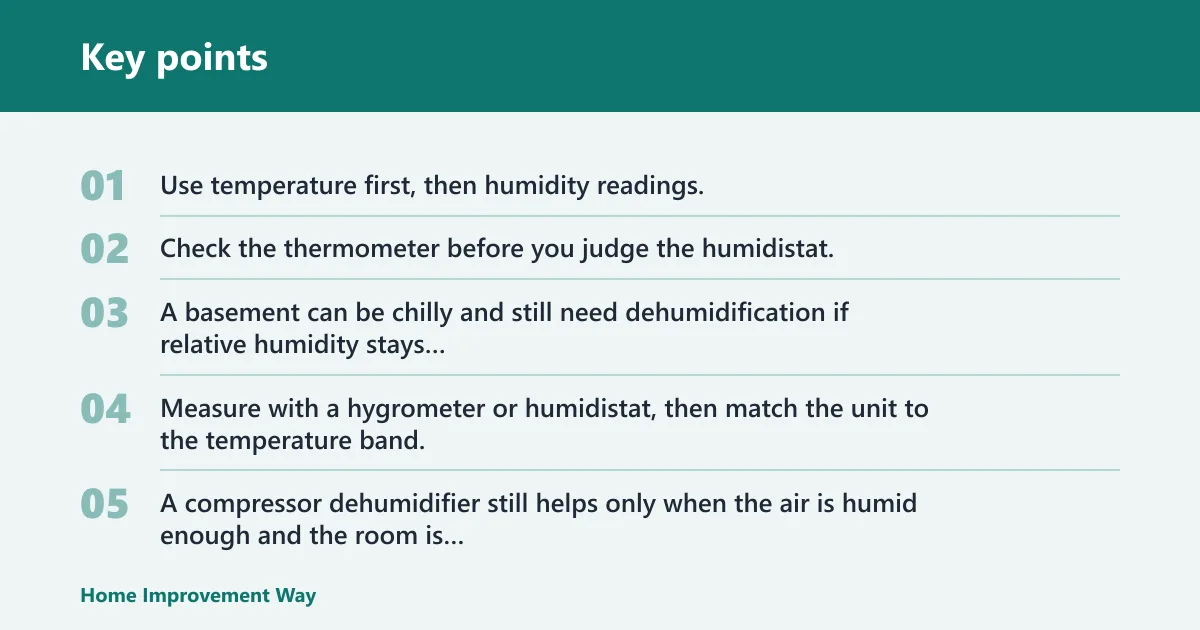


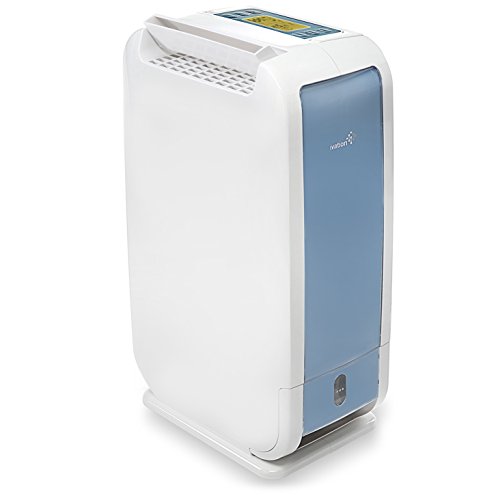
Use temperature first, then humidity readings. Check the thermometer before you judge the humidistat. A basement can be chilly and still need dehumidification if relative humidity stays above the target range, but the wrong machine will struggle or freeze before it dries the air. Measure with a hygrometer or humidistat, then match the unit to the temperature band.
| Basement temperature band | Visible symptoms | Best dehumidifier type | Run continuously? | Red-flag failure signs |
|---|---|---|---|---|
| 65°F and warmer | Damp air, musty odor, window condensation, RH above 50% | Compressor dehumidifier | Yes, until RH falls into the 30% to 50% range | Tank stays empty, humidity does not drop, short cycling |
| 60°F to 65°F | Cool, clammy air; RH near or above 60%; small wet spots | Compressor dehumidifier with auto-defrost, or desiccant if performance is poor | Usually yes, with closer monitoring | Frost on the coil, little water collected, frequent shutoffs |
| 50°F to 60°F | Cold slab, visible dampness, condensation on pipes or walls | Desiccant dehumidifier is often the better fit | Only if the compressor model still removes water reliably | Icing, long compressor pauses, warm air out with no water collected |
| Below 50°F | Very cold room, frost risk, water collection stops | Desiccant dehumidifier | No for most compressor units | Coils ice over, unit runs but collects nothing, repeated defrost cycles |
Temperature bands and visible symptoms
A compressor dehumidifier still helps only when the air is humid enough and the room is warm enough for the coil to condense water. The practical cutoff is temperature, not the calendar. If the basement reads below about 60°F, expect less water removal; near 50°F, many compressor units start freezing or cycling without useful drying.
Say your basement sits at 58°F and your humidistat shows 68% relative humidity. A compressor unit may run, but its coil can ice over before it removes much water. In that case, the machine is working against the room conditions, not just against a big moisture load.
Best dehumidifier type for each band
Compressor dehumidifiers use a refrigerant coil and fan. Most household units use a refrigerant cycle, not chemicals, to remove moisture. They work best when the air can cool below the dew point on the coil, because that is what makes water condense and drain away.
Desiccant dehumidifiers use moisture-absorbing material instead of refrigeration. They can keep working in colder spaces below 65°F, which makes them a better fit for chilly basements and many garages. They are usually the safer choice when a compressor model starts freezing or stops pulling water.
Run continuously or not
Run a unit continuously only long enough to bring relative humidity into the 30% to 50% range, then let the humidistat cycle it. Indoor humidity should stay below 60% to reduce mold risk. If the basement is already dry enough, continuous operation wastes energy and adds wear without adding protection.
A compressor unit also blows air back slightly warmer than the room, so long runtimes in a cold basement can add heat while still failing to dry much air. That tradeoff matters in winter. More runtime can mean more electricity and more cycling, but less useful moisture removal.
Will a dehumidifier work in a cold basement?
Yes, but only when the basement is warm enough for the unit type and humid enough to justify running it. A compressor dehumidifier can work in a cold basement only if it can keep its coil cold enough to condense water without icing up. When the room gets too cold, the same machine can stop collecting water even while the fan runs.
Why temperature matters more than the calendar
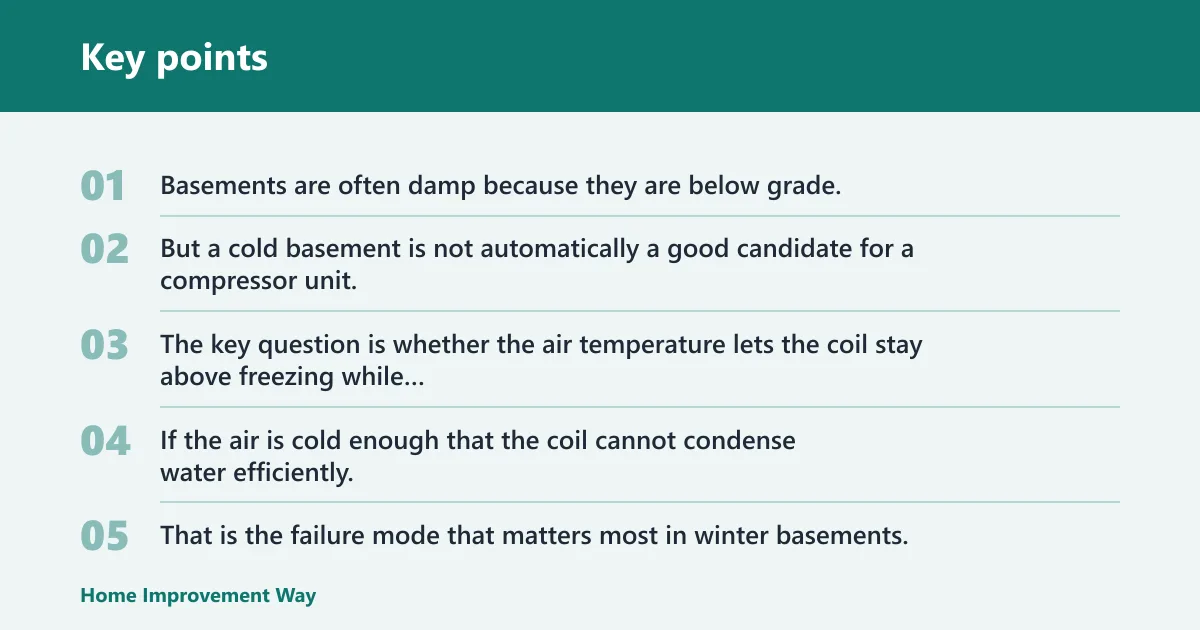
Basements are often damp because they are below grade, and that moisture can come from laundry, leaks, and groundwater seepage. But a cold basement is not automatically a good candidate for a compressor unit. The key question is whether the air temperature lets the coil stay above freezing while still dropping below dew point.
If the air is cold enough that the coil cannot condense water efficiently, the dehumidifier may run, hum, and move air without actually removing much moisture. That is the failure mode that matters most in winter basements.
What happens when the coil cannot stay above freezing
Cold room conditions can cause compressor coils to ice over. Frost on the coils can stop the unit from collecting water. Many basement-capable units include auto-defrost to limit that problem, but auto-defrost is a help, not a cure for a room that is simply too cold for the design.
A humidistat matters here because it automatically cycles the compressor on and off to hold the room near a set humidity target. In a cold basement, that cycling can become inefficient if the coil spends more time defrosting than drying.
How humidity level changes the answer
Relative humidity is the amount of water vapor in the air compared with the maximum the air can hold at that temperature. The typical indoor target range is 30% to 50% relative humidity, and the EPA-referenced upper limit for indoor humidity is below 60%. If a basement is cold but still above that range, dehumidification can still make sense.
If the basement is cold and already near 40% to 50% relative humidity, a dehumidifier may have little to do. In that case, the issue may be comfort or surface condensation, not bulk moisture removal.
What temperature is too cold for a compressor unit?
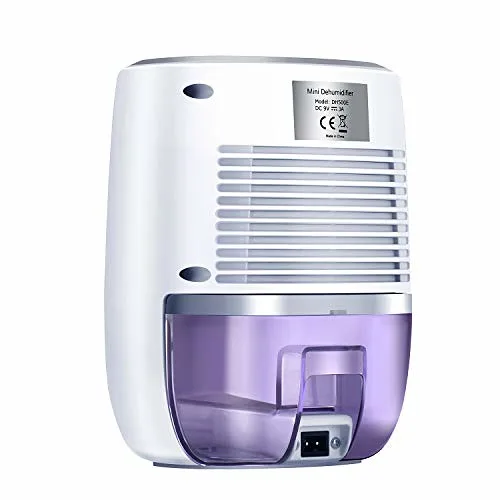
There is no single universal cutoff printed on every unit, but practical performance usually falls off as basement temperatures drop below about 60°F. Near 50°F, many compressor dehumidifiers begin to frost, short cycle, or collect very little water. That is the point where a desiccant model is often the better fit.
How compressor dehumidifiers remove moisture
A compressor dehumidifier pulls room air across a refrigerated coil. The coil has to get cold enough for the air to reach its dew point, which is the temperature at which water vapor condenses. That condensate drips into a tank or drains through a hose.
If the room air is too cool, the coil can swing past useful condensation and into ice. Once that happens, moisture removal slows down or stops.
Why frost and short cycling start in cold rooms
Short cycling happens when a humidistat or control system keeps turning the compressor on and off before the unit can complete a useful drying cycle. In a cold basement, that can happen because the coil frosts quickly, the unit defrosts, then restarts without removing enough moisture to make a difference.
The result is a machine that uses electricity, adds wear, and still leaves the basement damp. That is the main energy and wear tradeoff of forcing a compressor unit to work in a space that is too cold for it.
Practical signs the unit is outside its range
- The fan runs, but the tank stays nearly empty.
- Frost appears on the coil or grille.
- The unit repeatedly pauses for defrost.
- Relative humidity does not fall after several hours.
- The basement remains damp even though the machine seems active.
When a desiccant unit is the better choice
Use a desiccant dehumidifier when the basement is too cold for a compressor model to work reliably. Desiccant units keep working in colder spaces below 65°F, so they are often preferred for chilly basements or garages. They are the better fit when frost, zero water collection, or repeated short cycling keeps showing up.
How desiccant dehumidifiers work
Instead of refrigerating a coil, a desiccant unit passes air through moisture-absorbing material. That lets it remove water in conditions where a compressor unit would struggle. It is a different drying method, and the difference matters most when the room temperature drops.
Because the drying process does not depend on a cold coil, desiccant models avoid the same ice-over failure mode. They are usually the cleaner choice for basements that stay cool most of the winter.
Where they make the most sense in basements and garages
Use desiccant equipment in spaces that stay chilly for long stretches, especially if you need unattended operation. A continuous drain hose can reduce tank emptying, which helps for winter setups near a floor drain or sump. That is useful when you want the unit to run without daily attention.
Suppose a basement measures 900 square feet, sits at 54°F, and shows 65% relative humidity after laundry use. A compressor model may need repeated defrost cycles. A desiccant unit is the more practical choice because the room is below the temperature band where compressor drying is dependable.
Basement humidity targets and sizing
Set the target by humidity, not by guesswork. The usual indoor goal is 30% to 50% relative humidity, and you generally want to stay below 60% to reduce mold risk. A humidistat or hygrometer gives you the reading; without it, you are just guessing.
Relative humidity target and mold risk
Basement dehumidifiers are often described as reducing relative humidity and mold conditions. Lower humidity also helps with odor control and corrosion risk, which is why a dry basement often smells cleaner and leaves metal fixtures in better shape.
Do not chase very low humidity in a cold basement if the room already feels dry. Drying too far can waste energy without any practical gain.
Dew point and why it matters for moisture removal
Dew point is the temperature at which water vapor condenses. A compressor dehumidifier must get its coil below that point to remove moisture. If the room air is too cold or too dry, the unit may not reach that condition long enough to collect water.
That is why a basement can feel damp and still resist drying if the temperature is wrong for the machine. The coil has to cross the right line first.
How square footage and dampness affect capacity
Capacity is commonly rated in pints per day, and size depends on square footage and dampness. Bigger or wetter basements need higher capacity. Most basements need 35- to 50-pint units, while very damp or large basements may need 70 pints or two units.
A common sizing table also maps 1,000 sq ft basements to 35-, 50-, or 70-pint sizes depending on dampness. That is a reminder that floor area alone is not enough; water load matters just as much.
How to stop freezing and water-loss problems
Start with the controls, then check the installation. Auto-defrost helps manage frost on coils, and a humidistat keeps the compressor from running longer than needed. A continuous drain hose is useful when you do not want to empty a tank by hand during winter.
Auto-defrost and humidistat settings
Choose a basement-capable model with auto-defrost if the room runs cool. That feature does not change the laws of physics, but it can keep a borderline setup working longer. Set the humidistat to a practical target, usually within the 30% to 50% range.
If the humidistat is set too low for the room conditions, the unit may run almost continuously and still fail to reach the setpoint. That is often a sign the basement is too cold for a compressor model.
Continuous drain hose setup
A continuous drain hose lets water drain to a floor drain or sump. That reduces tank-emptying and helps with unattended winter operation. Make sure the hose slopes downward with no kinks, and confirm that the outlet point can accept the water without backing up.
Use the tank only if you can check it often. In a cold basement, a full tank can make a borderline moisture problem look like a machine failure.
Placement and airflow checks
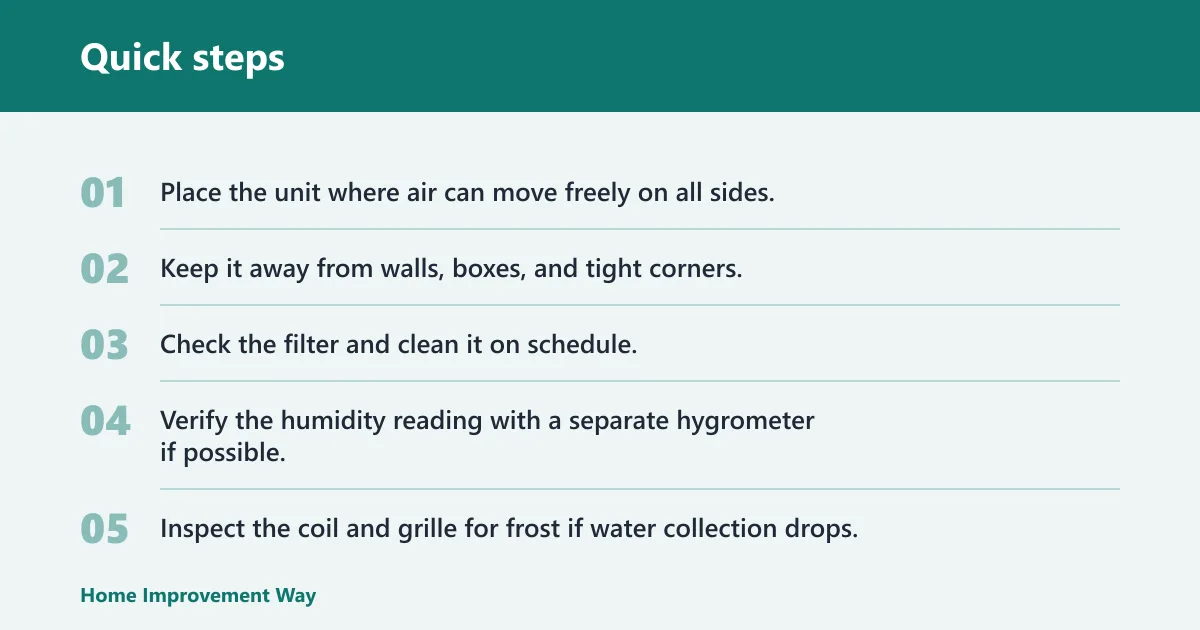
- Place the unit where air can move freely on all sides.
- Keep it away from walls, boxes, and tight corners.
- Check the filter and clean it on schedule.
- Verify the humidity reading with a separate hygrometer if possible.
- Inspect the coil and grille for frost if water collection drops.
Airflow matters because poor circulation can make a basement feel colder and less dry than it is. A blocked intake also makes frost problems worse.
Troubleshooting checklist
- Frost: raise the room temperature if possible, clean the filter, and use auto-defrost or switch to desiccant if icing returns.
- Zero water collection: confirm the basement is still above the unit’s practical temperature range and check whether humidity is already near target.
- Short cycling: move the humidistat to a realistic setting, improve airflow, and look for coil icing or an undersized unit.
Do you need to run one in winter?
Run a dehumidifier in winter only if the basement is still above your humidity target and the machine can work in that temperature band. If the basement stays above about 65°F, a compressor unit is usually a good fit. If it drops below about 60°F and the unit starts freezing or stops collecting water, switch approaches or stop running it.
When winter operation makes sense
Winter operation makes sense when the basement still reads above 60% relative humidity, has visible dampness, or shows musty odors and condensation. Those are signs that moisture is still present even if the air feels cold. A dehumidifier can help with a cold basement when the humidity is still high enough to matter.
When to stop running a compressor unit
Stop or pause a compressor dehumidifier when frost appears, water collection falls to zero, or the humidistat target has already been met. If the room keeps sitting near 50°F, the unit may be fighting conditions it was not built for. That is when a desiccant model is usually the better choice.
Energy and wear tradeoffs
Running a compressor unit in a cold basement can cost more than it returns if the coil keeps icing. You are paying for fan and compressor runtime, defrost cycles, and extra wear on parts. If the unit is not pulling moisture from the air, the energy use has little payoff.
A common first-timer mistake is leaving a compressor unit on all winter because the basement feels clammy, even after the reading drops below the target. If the hygrometer says the room is already near 45% to 50%, that machine may only be adding wear.
Frequently asked questions
Does a dehumidifier help with a cold basement?
It helps if the basement humidity is still too high, usually above 50% and especially above 60%. Temperature alone does not tell the whole story. If the room is cold but damp, a dehumidifier can still reduce mold risk, odors, and moisture damage.
Should you run a dehumidifier in your basement in the winter?
Run it in winter only when humidity readings justify it and the unit type matches the temperature. A compressor model is fine in warmer basements, but a cold basement may need a desiccant unit instead. If frost starts or water collection stops, switch course.
Why does my dehumidifier stop collecting water when the basement is cold?
Cold room conditions can keep the coil from staying in the right range for condensation. The coil may ice over, which blocks moisture removal and can trigger defrost cycles. If the basement is below about 60°F, that is a common reason for zero water collection.
What temperature is too cold for a compressor dehumidifier?
Below about 60°F, many compressor dehumidifiers lose efficiency, and near 50°F or lower they may frost up. That is not a hard universal cutoff, but it is a practical rule for basement use. If the room stays that cold, a desiccant model is usually better.
How do I stop a basement dehumidifier from freezing up?
Use a model with auto-defrost, keep the filter clean, leave space around the unit, and make sure the basement is warm enough for compressor drying. If the room keeps dropping below the practical range, the real fix is often to switch to a desiccant dehumidifier.
Should I use a desiccant dehumidifier instead of a compressor unit?
Yes, if the basement stays below about 65°F or if a compressor model keeps icing, short cycling, or failing to collect water. Desiccant dehumidifiers work better in colder spaces because they do not rely on a refrigerated coil to condense moisture.
Sponsored / affiliate links. As an Amazon Associate I earn from qualifying purchases. I may earn additional commission from eligible campaigns.