How to Keep a House Warm When the Furnace Is Broken
Keep one safe room at around 65°F or above if possible. Close off the rest of the house, seal drafts, and use only safe temporary heat in occupied rooms. Letting the temperature fall can freeze pipes, damage finishes, and raise the risk of carbon monoxide if heating is used the wrong way. This guide shows how to prioritize rooms, use safe backup heat, cut heat loss, and protect plumbing until the furnace is fixed.
What to check first
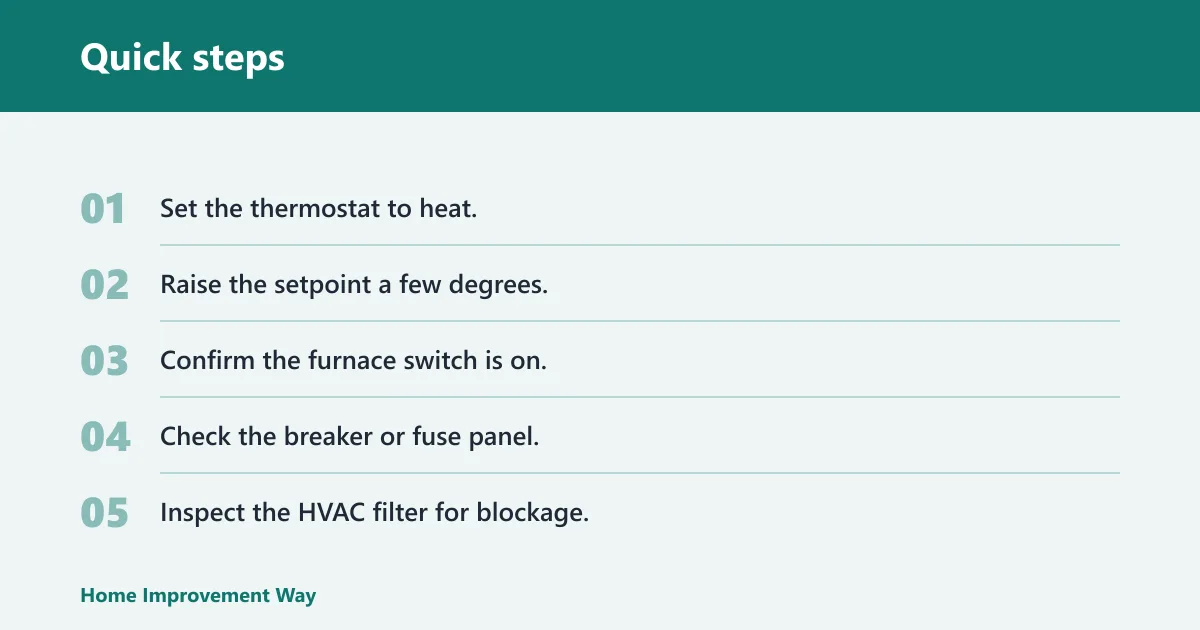


Start with the controls and the simple failure points. Confirm the thermostat is set to heat, then raise the setpoint a few degrees so the furnace has a clear signal to start. If the system still does nothing, check the furnace switch, the breaker, and the air filter before assuming the unit has failed.
A furnace should produce warm air shortly after a thermostat test. If the thermostat is calling for heat and the blower runs but the air stays cold, the problem may be airflow, ignition, or venting rather than the thermostat itself. If the unit is shutting down repeatedly or never lights, stop troubleshooting at the basics and escalate to HVAC service.
Quick checks in order
- Set the thermostat to heat.
- Raise the setpoint a few degrees.
- Confirm the furnace switch is on.
- Check the breaker or fuse panel.
- Inspect the HVAC filter for blockage.
- Look for closed supply vents, a dead thermostat battery, or a tripped safety switch.
Set thermostats on different levels to the same temperature if the house has more than one control. Some homes have a smart thermostat that can schedule heating, and that schedule can override the temperature you expect during an outage.
Filter timing is not one-size-fits-all. Replace or clean filters based on the manufacturer’s interval, filter type, MERV rating, and how much dust or pet dander the system handles; heavily used systems may need attention monthly, while some higher-capacity filters last longer. A clogged filter can restrict airflow enough to trigger furnace shutdowns or poor heat output.
Which rooms stay warm first?
Prioritize the room you are using now, then protect bathrooms, any room with exposed pipes, and spaces on exterior walls or over unheated areas. One warm, occupied zone is generally safer and more efficient than trying to warm the whole house at once.
Choose the sleeping area first if the outage will last overnight. After that, focus on any bathroom with plumbing on an exterior wall, a basement with exposed lines, and the room where people are spending the most time seated or resting. This is room triage, not whole-house comfort.
Room priority order
- Occupied sleeping room
- Main living room or family room
- Bathroom with plumbing on an exterior wall
- Basement or crawlspace-adjacent room with vulnerable pipes
- Rooms over unheated garages or slabs
Close interior doors to keep the warmest air where it helps most. Do not seal off every room if you are using a gas or oil heater, fireplace, or other fuel-burning backup source. Those devices need the ventilation their manuals require, and combustion appliances can create a carbon monoxide risk if air is cut off too aggressively. If a fuel-burning appliance is in use, follow the manufacturer’s clearance and ventilation instructions and make sure working CO alarms are present on every level of the home, including sleeping areas, per CPSC and NFPA guidance.
Say your main bedroom is 140 square feet and the nursery is next door. Keep the bedroom warm, shut the nursery door, and move a temporary heater only into the room that people are actually occupying. That gives you a smaller area to heat without pretending the whole house is safe and comfortable.
Space heater safety basics
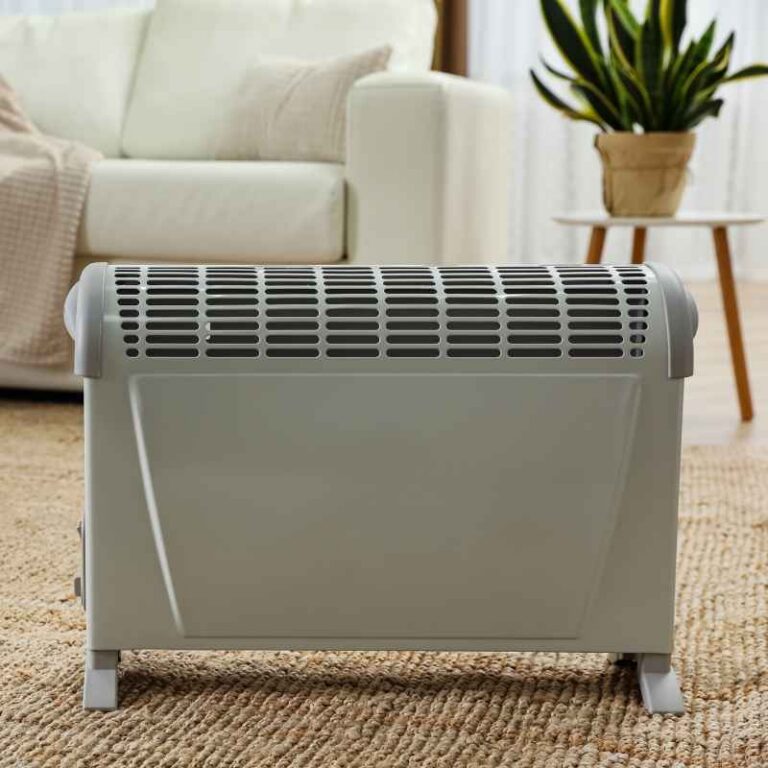
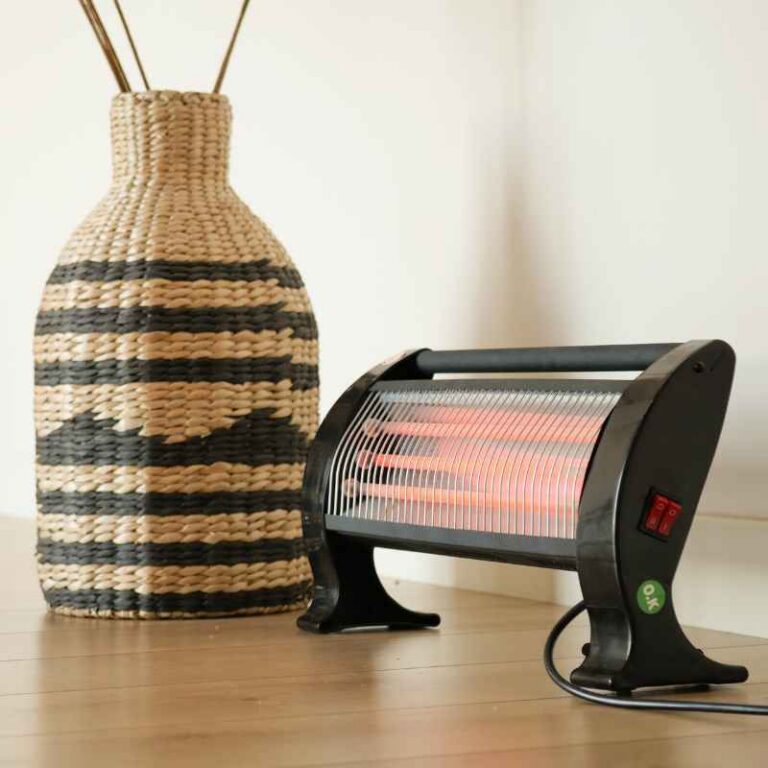
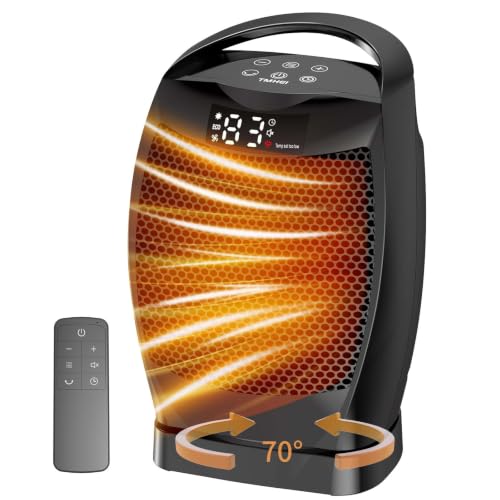
Use electric space heaters carefully for indoor room heating when the furnace is down. CPSC recommends choosing only heaters with an automatic shutoff, keeping them at least 3 feet from anything that can burn, and plugging them directly into a wall outlet rather than an extension cord or power strip. Fuel-burning heaters belong only in ventilated places and only when the manual allows indoor use.
Choose the right type
- Electric space heaters: Best for temporary room-level heating in a house when used exactly as directed.
- Gas or oil space heaters: Use only in ventilated places and follow the manual exactly; never treat them like a plug-in electric heater.
Look for a built-in safety shutoff. Keep the heater on a flat surface, away from bedding, curtains, carpet edges, and furniture. CPSC and NFPA both emphasize the 3-foot rule for combustibles and stable placement so the heater cannot be tipped easily.
Do not use an extension cord unless the heater manual explicitly allows it. High-wattage heaters can overload cords and plugs, and CPSC warns against running space heaters through extension cords or power strips. Plug the heater directly into a wall outlet if the instructions permit that setup.
Suppose a small bedroom keeps dropping below comfort while the rest of the house stays closed off. An electric heater can help that room recover fast, but a fuel-burning unit in the same room would need the ventilation and clearances the label requires. The safer choice is usually the electric model if the room and electrical circuit can support it.
What is the safest way to stay warm without heat overnight?
A practical overnight plan is one occupied room, one approved electric heater if needed, and clear space around it. Add blankets, layered clothing, and closed interior doors. Before bed, check smoke alarms and carbon monoxide alarms, and make sure the heater sits well away from sleep surfaces and fabric. If power is out, do not use fuel-burning appliances or generators indoors because of carbon monoxide risk.
Keep the sleeping room as compact as practical. Close the door, hang thermal curtains if the room has large windows, and block the draft under the door if air leaks are strong. The goal is to hold a safe temperature in one room, not to chase comfort across the whole home.
House warm checklist
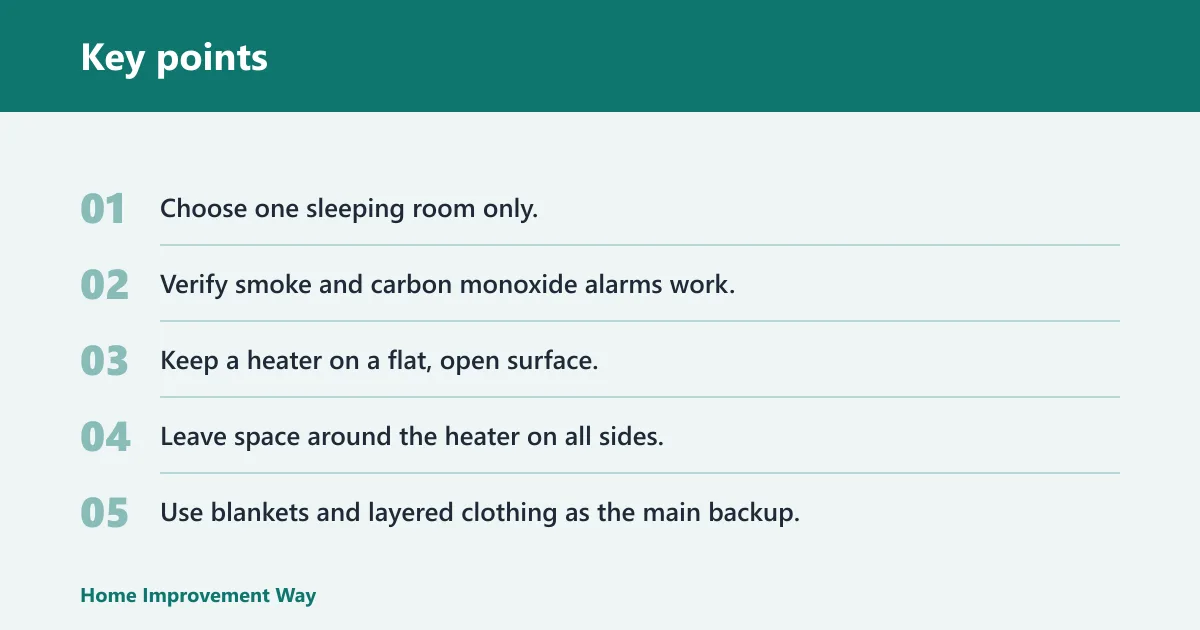
- Choose one sleeping room only.
- Verify smoke and carbon monoxide alarms work.
- Keep a heater on a flat, open surface.
- Leave space around the heater on all sides.
- Use blankets and layered clothing as the main backup.
- Do not run a heater if you cannot supervise its safe placement.
House warm checklist
Use this short triage list when the furnace suddenly stops or the house begins cooling fast. The goal is to confirm whether the problem is a simple control issue, to protect people and pipes, and to decide whether the home needs temporary heat or immediate professional escalation.
First 15 minutes
- Confirm the thermostat is set to heat and raise the setpoint a few degrees.
- Check the furnace switch, breaker, or fuse.
- Inspect the filter for obvious blockage.
- Listen for repeated clicking, short cycling, or a blower that runs without heat.
- If you smell gas, leave the area immediately and call the gas utility or emergency services from outside.
- Close off unused rooms and protect the room you are occupying.
- Move vulnerable pipes into the warmest practical zone and open sink cabinets on exterior walls.
- Decide whether an electric space heater is needed in only one occupied room.
Do not do
These are the fastest ways to turn a heating outage into a safety problem. If any of the following apply, stop and escalate rather than improvising heat. CPSC, NFPA, and utility safety guidance all stress that unsafe fuel use, blocked clearances, and gas odors require immediate action rather than troubleshooting.
Unsafe actions to avoid
- Do not use a space heater with an extension cord or power strip unless the manufacturer specifically allows it.
- Do not place heaters within 3 feet of bedding, curtains, furniture, or clothing.
- Do not use fuel-burning heaters indoors unless the manual explicitly allows it and ventilation is in place.
- Do not ignore a gas smell, hissing sound, or dead pilot/failed ignition if gas is suspected.
- Do not run a generator, grill, or other combustion device inside a garage, basement, or living space.
- Do not close off a room in a way that blocks required return air, vents, or combustion air for the heating system.
House warm matrix
This matrix ranks the fastest common actions for a furnace outage. Use it to decide what to do first, what costs little, and what carries more safety risk. The best move depends on whether you need room heat, draft control, or pipe protection right away.
| Action | Speed | Cost | Room coverage | Safety risk | Best use |
|---|---|---|---|---|---|
| Raise thermostat setpoint and verify heat mode | Very fast | Free | Whole house signal check | Low | First check before any other step |
| Check furnace switch and breaker | Very fast | Free | Whole system | Low | Simple power-related failure |
| Replace or inspect HVAC filter | Fast | Low | Whole system | Low | Airflow restriction |
| Close interior doors to one occupied room | Fast | Free | One room | Low | Room-by-room heat control |
| Use thermal curtains at night | Fast | Low | Single window or room | Low | Window heat loss |
| Use a door draft stopper | Fast | Low | Single doorway | Low | Under-door gaps |
| Use an electric space heater | Fast | Moderate | One room | Moderate | Temporary room heat |
| Install a window insulation kit | Fast | Low | Single window | Low | Short-term draft reduction |
| Use gas or oil backup heat | Fast | Moderate | One room or area | Higher | Only with proper ventilation |
| Call HVAC service | Variable | Higher | Whole system | Low when handled professionally | When basic checks do not restore heat |
How can I block drafts fast during a heating emergency?
Use thermal curtains, weatherstripping, window insulation kits, and door draft stoppers. These steps reduce heat loss fast enough to matter during an outage, especially at night and around the coldest windows and doors. They do not fix the furnace, but they slow the temperature drop. DOE Energy Saver recommends air sealing and window treatment steps as practical ways to reduce heat loss.
Fast draft-control steps
- Close thermal curtains so they reach all the way down to the floor.
- Replace worn weatherstripping on windows and doors so it contacts the sealing surface.
- Add a window insulation kit for a quick, inexpensive winter fix.
- Place a door draft stopper under gaps that let cold air rush in.
- Close the fireplace flue when the fireplace is not in use.
Thermal curtains have multiple layers and work best at night, especially on older windows. Weatherstripping helps only when it actually touches the frame or stop, so loose or damaged seals need replacement rather than a quick patch.
Window insulation kits are useful when you need a short-term fix and do not have time for a larger repair. A door draft stopper helps with standard gaps and wider openings, and different shapes fit different door bottoms.
Keep the fireplace flue closed when the fireplace is not in use. An open flue acts like a heat leak. If the fireplace has not been used for a long time, a chimney professional should evaluate it before you rely on it for heat.
How do I keep pipes from freezing when the heat is out?
Keep vulnerable rooms warmer than the rest of the house, especially bathrooms, basements, and rooms with pipes on exterior walls. Open cabinet doors under sinks on outside walls, and let faucets drip if freezing is likely. Protecting the pipes is part of the heat plan, not an afterthought. DOE and utility winterizing guidance both recommend these steps because moving air and warmer cabinet spaces reduce freeze risk.
Focus on the pipes most likely to freeze first. That usually means lines in unheated or poorly heated spaces, or plumbing against outside walls where the cold reaches them first. If one bathroom, one basement corner, or one sink area stays warmer, that can prevent a burst. If a pipe freezes anyway, shut off the water supply and call a plumber before the line splits.
Pipe protection steps
- Open cabinet doors under sinks on exterior walls.
- Keep those rooms warmer than the rest of the house.
- Let faucets drip if freezing is likely.
- Watch basements, crawlspaces, and outside-wall bathrooms first.
A common first-timer mistake is warming the living room while letting a bathroom sink cabinet stay sealed in a cold corner. That leaves the vulnerable pipe colder than the rest of the house. Small spaces near exterior walls need attention early.
Can I use space heaters if my furnace stops working?
Yes, if you use them carefully and choose the right model. Electric space heaters are the safer default for temporary indoor heat in homes. Fuel-burning heaters need ventilation and strict manual compliance, so they are a fallback only when the space and instructions allow it.
Put the heater in the room you are occupying, not in a hallway or unused room. Keep it away from carpet edges, bedding, drapes, and furniture. A built-in shutoff is important, but it does not replace safe placement and direct supervision. If the room cannot be monitored, the heater should not be left running unattended.
If the house has only one safe occupied room, a single heater may be enough to hold that space while you wait for repair. If multiple rooms need heat, that is a sign the outage is bigger than a minor comfort issue and may need a faster service call.
Should I close off rooms to keep the house warmer?
Usually yes, but only with a plan. Closing unused rooms and interior doors helps concentrate heat in the rooms you actually occupy. Do not close everything if you are using a fuel-burning heater or fireplace, because ventilation and combustion-air requirements still matter. If return-air grilles are in a room, do not seal that room in a way that starves the system of airflow.
Use room closure to support the warm zone, not to trap unsafe air. If the heat source is electric and the goal is to keep one bedroom or living room warm, closing the rest of the house can help. If combustion is involved, follow the equipment instructions first. If airflow to the furnace or return path is restricted, the system can overheat or short-cycle instead of heating better.
When should I call a professional if the furnace is broken?
Call for HVAC service if the thermostat, breaker, switch, and filter checks do not restore heat, or if the furnace still will not blow warm air after a thermostat test. A furnace that fails beyond basic homeowner checks needs professional diagnosis, especially if the blower runs without heat or the unit keeps locking out. Major manufacturers and utility guidance generally advise service when repeated resets do not solve the problem.
Also call if you smell gas, see repeated shutdowns, or suspect venting trouble. A furnace problem that survives basic checks is no longer a simple homeowner fix. It may involve ignition, airflow, control boards, or safety devices that need professional diagnosis. If gas odor is present, leave the area and call the gas utility or emergency services from outside rather than trying another restart.
Utility company energy audits can help after the emergency is over. Some utilities offer a free in-person evaluation that identifies heat-efficiency problem areas and gives an action plan. That is more useful once the furnace is running again and you want to reduce future heat loss.
Ceiling fan winter setting
Run the ceiling fan clockwise on low speed in occupied rooms to push pooled warm air down from the ceiling and improve comfort. This helps most in rooms with higher ceilings or noticeable stratification, and it only matters when power is on and the room layout makes circulation worthwhile. It supplements heat; it does not replace it.
How to use the fan in winter
- Switch the fan to clockwise rotation.
- Use the lowest speed that still moves air gently.
- Use it in the room people are actually occupying.
- Skip it if the ceiling is low and the room already feels evenly warm.
Frequently asked questions
How do I keep my house warm when the furnace is broken?
Start by verifying heat mode, the setpoint, power, and the filter. Then warm one occupied room first, close off the rest of the house, and block major drafts with curtains, weatherstripping, or door stoppers. If the furnace still will not respond, call HVAC service.
What rooms should I prioritize first when my furnace fails?
Prioritize the room you are using now, then the sleeping area, bathrooms, and any room with exposed pipes or exterior walls. That order protects people first and plumbing second. Interior doors help keep the warm zone contained, which makes temporary heat more effective.
Should I close rooms or keep air moving?
Close unused rooms when you are trying to hold heat in one occupied area, but do not block the return-air path or combustion-air needs of the heating equipment. Electric backup heat can work with tighter room closure; gas, oil, or fireplace heat needs the ventilation and clearances the manufacturer requires.
What should I do if I smell gas?
Leave the home immediately, avoid switches or flames, and call the gas utility or emergency services from outside. Do not try to restart the furnace or light anything. A gas odor is an immediate escalation, not a troubleshooting problem.
Sponsored / affiliate links. As an Amazon Associate I earn from qualifying purchases. I may earn additional commission from eligible campaigns.