Why Does My Furnace Keep Tripping the Circuit Breaker?
Byline: Reviewed and updated by an HVAC/electrical content editor using manufacturer guidance and code-based safety references. For breaker, AFCI/GFCI, and furnace circuit decisions, the safest rule is still the same: repeated tripping means the circuit is telling you something is wrong, not that the breaker needs to be “worked through.”
This guide is part of our Furnace Troubleshooting: Fix Common Winter Heating Problems series.
A furnace that keeps tripping the breaker usually has a motor, wiring, or control fault; if it trips immediately on startup or every reset, stop resetting it and call for service. Repeated resets can damage the breaker, motor, or board and may increase fire risk. This guide shows how trip timing points to the blower, inducer, igniter, control board, shared circuit, or faulted wiring. NFPA/NEC-based summaries commonly note that breakers protect against overloads and short circuits, while AFCI and GFCI devices are designed to trip on arcing and leakage faults respectively; CPSC guidance also warns that repeated breaker tripping can signal unsafe wiring or equipment conditions. Furnace manuals from major manufacturers routinely instruct owners not to keep resetting a tripping unit and to have the electrical cause inspected.
Why a furnace breaker trips


A circuit breaker opens the circuit when current rises above its rated limit. In furnace work, the usual causes are overcurrent, a short circuit, or a ground fault. A tripped breaker can shut off power to one room or to the furnace branch circuit only, which is why the rest of the home may still seem normal. NEC-based guidance and utility education pages describe a breaker’s main job this way: protect the wiring and connected equipment from sustained overload and fault current.
Repeated tripping points to a real fault, not a nuisance to ignore. A standard breaker uses thermal trip protection for sustained overloads and magnetic trip protection for sudden short circuits. GFCI and AFCI devices add different protection: GFCI trips on small leakage to ground, while AFCI trips on arcing from loose or damaged connections. That distinction matters because the trip type often narrows the likely cause before any tools come out.
Furnace breaker-trip decision table
| Symptom timing | Likely furnace component | Safe homeowner check | Escalation rule |
|---|---|---|---|
| Trips at startup, before heat comes on | Igniter, inducer motor, wiring, or control board | Turn the thermostat off, reset once, and listen for the sequence: inducer, igniter, then blower | If it trips again right away, leave it off and call HVAC service |
| Trips after the inducer starts | Inducer motor load, capacitor, or board fault | Note whether the inducer starts normally and then the breaker trips seconds later | Repeated trips after inducer start point to a failing motor, short, or board issue |
| Trips when the blower engages | Blower motor, capacitor, airflow stress, or control wiring | Check for weak airflow, loud motor noise, or a blower that hesitates before running | Stop using the furnace if the breaker trips when the blower kicks on |
| Trips only when other appliances run | Overloaded shared circuit | Unplug nearby loads and see whether the furnace still trips when they are off | Move the load off that branch or have a dedicated circuit evaluated |
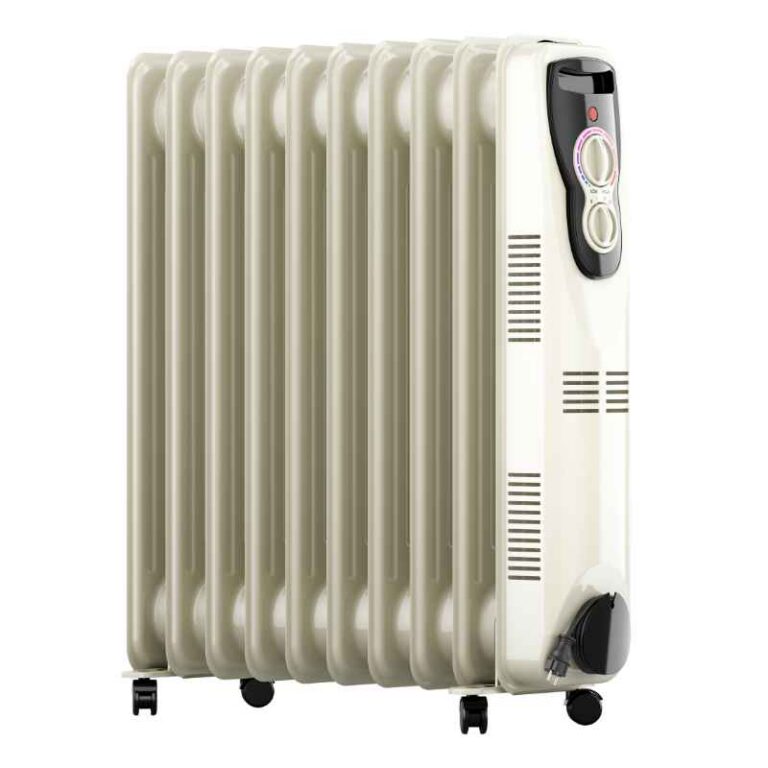
A common mistake is to assume a furnace that trips the breaker once has the same cause as a plugged-in space heater overloading the same circuit. A trip that happens the instant you reset the breaker points more toward a short circuit or ground fault. A trip after seconds or minutes of runtime points more toward overload, motor load, or a heating-related fault that builds as parts warm up. Technicians commonly use that delay pattern as a first-pass clue: immediate trip suggests fault current, while a delayed trip often means current rises as a motor warms or starts under strain.
What would cause a furnace to trip a breaker?
The furnace itself can be the source, and so can the circuit feeding it. A blower motor can trip a breaker when it is failing, overheating, or pulling too much current from worn bearings or shorted windings. An igniter can also be part of the startup path, and a control board can short or lose ground reference in a way that looks like a furnace power problem at the panel. Manufacturer troubleshooting guides often separate these faults by when the breaker opens in the startup sequence.
Blower motor problems that raise amperage
The blower motor is one of the most common furnace components tied to breaker trips during running. If bearings are worn, the motor can draw more amperage than normal as it struggles to turn. Shorted windings can do the same thing, and an overloaded motor often trips after the blower has been running long enough to heat up. Utility and manufacturer references both treat rising motor current as a classic overload trigger, especially when a motor starts normally but fails under sustained operation.
That pattern matters. If the furnace starts, the inducer runs, and the blower trips the breaker a little later, the motor or its capacitor rises on the list. A motor that sounds louder than usual, starts slowly, or cuts out under load deserves attention from an HVAC technician.
Igniter or inducer faults during startup
The igniter is part of the startup sequence, so it belongs in the diagnostic path even when it is not the breaker cause. If the breaker trips before the furnace produces heat, the inducer motor, igniter circuit, or control board may be failing under load. That is different from a simple overload that appears only after the blower has been running for a while. In NEC-style troubleshooting terms, the timing helps distinguish a startup surge from a true fault.
Suppose the furnace calls for heat, the inducer starts, and the breaker trips before the igniter glows. That timing points away from the blower and toward the startup circuit, the inducer, or a wiring fault in the control area.
Control board shorts, grounding issues, or damaged wiring
The control board is the low-voltage and line-voltage interface for many furnace functions. A short on the board, damaged wiring, or a grounding problem can mimic a motor fault. The panel only sees the current spike or leakage, not the component name, so the symptom can look like a generic electrical issue even when the root cause sits inside the furnace cabinet. Manufacturer manuals commonly flag board or wiring damage as a stop-use condition because the fault may recur immediately after reset.
Loose wiring can create heat that trips breakers and is a fire risk. AFCI breakers may also trip on arcing from a loose connection or damaged conductor. That is a useful clue, not a nuisance to override. CPSC safety guidance on repeated breaker or arc-device tripping supports treating recurring trips as a warning to inspect the circuit, not a condition to ignore.
Moisture, condensate pumps, and damp-area leakage
Moisture near the furnace can create a ground fault style symptom. Damp wiring areas, a leaking drain line, a wet condensate pump, or corrosion near the unit can let current leak to ground. GFCI protection trips on a few milliamps of leakage to ground, so a furnace-adjacent circuit in a basement, garage, or utility area can trip even when the heater itself is not the only issue. This is one reason electricians often check nearby outlets, pumps, and wet surfaces when a furnace circuit trips in a damp mechanical room.
If the furnace shares a space with a condensate pump or outlet load, inspect for standing water, wet plugs, or a pump that runs at the same time as the heat call. That shared area can produce a fault that appears only under certain conditions.
Could the circuit be overloaded?
Yes. An overloaded circuit is common when a furnace shares a branch circuit with a humidifier, condensate pump, outlet load, or other equipment. Overload trips often happen after seconds to minutes of runtime, not instantly, because the current rises as multiple loads run together and the breaker heats up. Load-calculation guidance from utilities and electrical code summaries treats continuous use conservatively: a 15-amp, 120-volt circuit has 1,800 watts available in theory, but the safer continuous-load target is about 1,440 watts; a 20-amp circuit is roughly 2,400 watts in theory, with about 1,920 watts as the common continuous-load target.
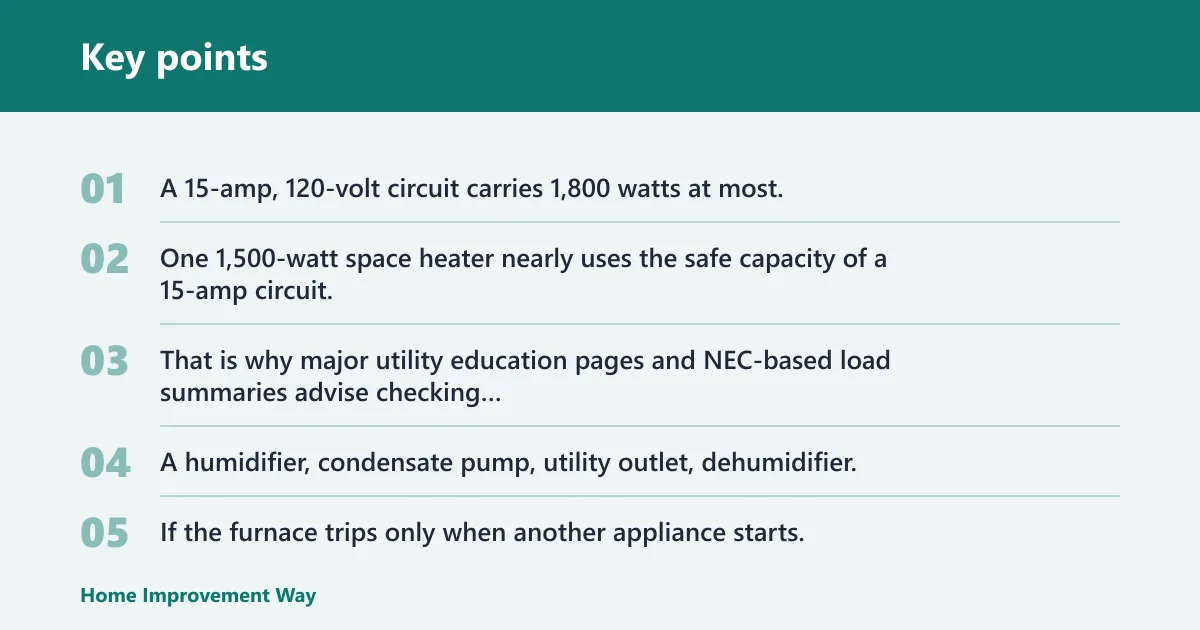
A 20-amp circuit tops out near 2,400 watts. One 1,500-watt space heater nearly uses the safe capacity of a 15-amp circuit, so a furnace circuit that shares additional loads can run out of headroom fast. That is why major utility education pages and NEC-based load summaries advise checking the total branch load, not just the furnace nameplate.
Accessories and nearby outlets that add load
Check what else is on the same breaker. A humidifier, condensate pump, utility outlet, dehumidifier, or even a nearby light and receptacle group can tip the circuit into overload. If the furnace trips only when another appliance starts, the branch circuit is telling you the load is too high for the wiring and breaker combination.
A dedicated circuit is often the right fix for recurring overloads. It separates the furnace from other loads so the blower, inducer, and controls are not competing with unrelated equipment.
Why a dedicated circuit often solves repeat trips
When the furnace shares power with other loads, the breaker may trip after the fan starts or after a pump cycles on. That is a shared-load problem, not a furnace control problem. Moving the extra load off the branch or having an electrician add a dedicated circuit is usually safer than chasing random reset cycles.
How to tell whether the furnace is actually on a dedicated circuit: the breaker label should identify the furnace alone, the branch should not feed receptacles or lights elsewhere in the home, and turning off that breaker should affect only the furnace equipment and any listed furnace accessories on the same branch. If you find outlets, a humidifier, a condensate pump, or basement receptacles on that breaker, it is not truly dedicated.
What a reset tells you
The breaker’s response after a reset is one of the best clues you have. If it trips immediately, suspect a short circuit, ground fault, or a failed component that hard-shorts as soon as power returns. If it runs for a short time before tripping, overload or motor heating moves higher on the list. If the breaker itself feels hot, buzzes, or trips with no clear load pattern, the panel hardware may be failing. Manufacturer service literature often distinguishes “instant trip,” “trip on start,” and “trip after run time” because each points to a different fault class.
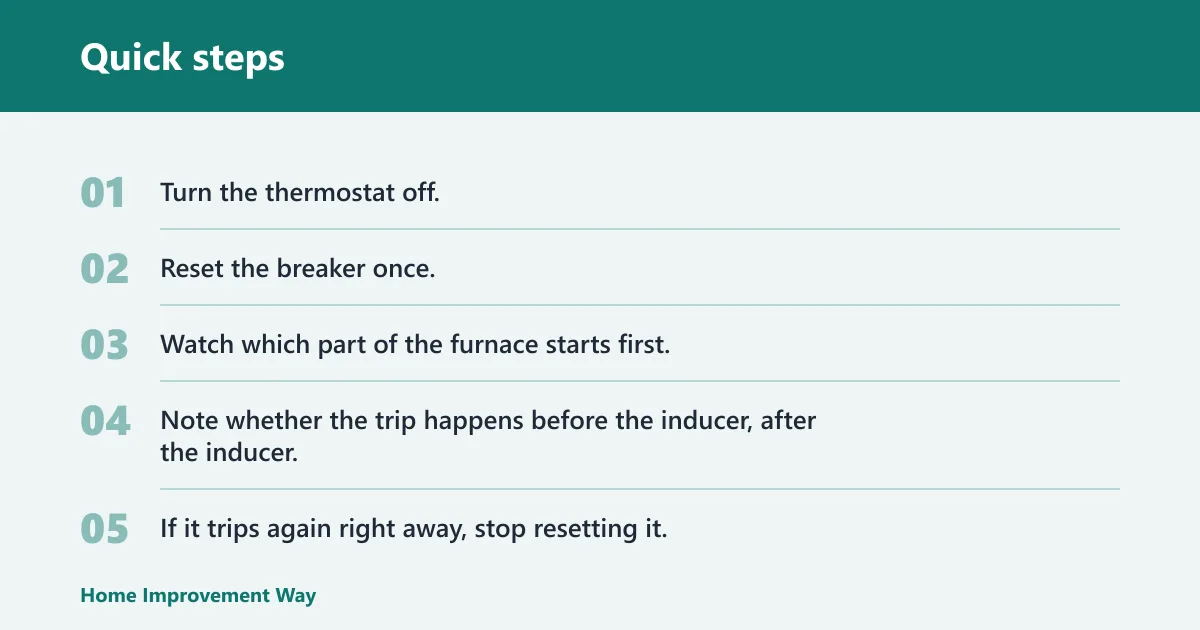
- Turn the thermostat off.
- Reset the breaker once.
- Watch which part of the furnace starts first.
- Note whether the trip happens before the inducer, after the inducer, or when the blower starts.
- If it trips again right away, stop resetting it.
Picture a furnace that starts normally and runs for two minutes before tripping. That pattern fits an overload or a motor that heats up under load. Now picture a furnace that trips the instant the breaker is reset, before the blower can even start. That pattern points more toward a short or ground fault than to simple load sharing.
Why would a furnace trip the breaker after it starts running?
If the furnace runs for a short time and then trips, the likely issues are a blower motor pulling excess current, a capacitor that cannot support the motor, or a shared circuit that is accumulating load as other equipment comes on. A breaker that trips after warm-up is reacting to rising current or heat, not just a startup spike. That delayed timing is a strong clue that the problem shows up under sustained operation rather than at the moment of energizing.
That timing also helps separate furnace faults from panel faults. A breaker that trips only after the blower engages often points to the motor circuit. A breaker that trips only when another appliance starts points back to the branch circuit and its total wattage.
Can a bad blower motor make a furnace trip the breaker?
Yes. A bad blower motor can trip a breaker when failing bearings, shorted windings, or overheating raise amperage beyond what the circuit can carry. The symptom often shows up when the blower engages or after it has run long enough to heat up, which is different from an immediate trip at reset. This is one of the most common HVAC-vs-electric split decisions: if the trip follows blower engagement, the furnace motor gets investigated first.
Motor noise, slow startup, or intermittent running are all worth taking seriously. The blower is a common furnace load, and when it fails, the breaker is doing its job by stopping the circuit before wiring overheats.
Why a bad capacitor can fit the symptom pattern
If the blower capacitor is weak or failing, the motor may struggle to start and draw excess current. That can look like a furnace electrical fault at the panel. The same logic applies to the inducer motor capacitor where one is used. The breaker is reacting to the current demand, not to the name on the part label.
Is it safe to keep resetting a furnace breaker?
No. If the breaker trips immediately again, stop resetting it. Repeated resets can heat the breaker, stress the motor, and damage the control board. A breaker that keeps tripping is warning you about an actual fault, and the same fault can worsen if you keep forcing power back onto the circuit. CPSC and manufacturer guidance both support treating repeated trips as a stop-and-diagnose condition, not a reset loop.
Call for service right away if you smell burning, hear buzzing, feel heat at the panel, or see visible damage. Do not install a bigger breaker to make the trip go away; the wire size does not change, so the protection no longer matches the circuit.
When should I call an HVAC technician or electrician for a tripping furnace breaker?
Call an HVAC technician when the trip lines up with furnace operation, such as startup, inducer run, or blower engagement. Call an electrician when the breaker trips with other household loads, when the panel device feels hot or buzzes, or when AFCI or GFCI protection keeps tripping without a clear furnace motor pattern. If you see damage or smell burning, stop using the furnace until it is inspected. In practical terms, HVAC handles the appliance side; electrical handles the circuit, breaker, and panel side.
A furnace-specific problem can still look electrical. That is why timing matters more than the word “breaker” alone. The same symptom can point to a blower motor, a control board, a shared circuit, or moisture near condensate equipment.
Frequently asked questions
Why does my furnace keep tripping the circuit breaker?
A furnace keeps tripping the circuit breaker when current rises too high from a motor fault, a short circuit, a ground fault, or an overloaded shared circuit. The timing matters: immediate trips suggest a short or ground fault, while trips after startup often point to the inducer, blower motor, or a control board issue. Manufacturer manuals and code-based guidance both treat repeated tripping as a fault to diagnose, not as a normal reset condition.
What does it mean if the circuit breaker keeps tripping?
It means the breaker is detecting a fault that could overheat wiring or start a fire. Repeated trips are usually caused by overload, a short circuit, or a ground fault. With a furnace, the next clue is timing, because the trip location in the startup sequence often points to a specific component or shared load. Safety guidance from CPSC-style resources treats repeated tripping as a warning sign, not a normal occurrence.
Sources
NFPA/NEC guidance commonly summarized in electrical safety references on overloads, short circuits, continuous-load sizing, and dedicated circuits; U.S. Consumer Product Safety Commission safety guidance on repeated breaker tripping and electrical fire risk; major furnace manufacturer installation and service manuals describing stop-use behavior for repeated trips; major utility load-calculation and branch-circuit education pages; AFCI and GFCI device manufacturer explanations of arc and ground-fault trip behavior.
Sponsored / affiliate links. As an Amazon Associate I earn from qualifying purchases. I may earn additional commission from eligible campaigns.