How Cavity Wall Insulation Prevents Heat Loss By Radiation
Cavity wall insulation prevents heat loss by radiation by creating a barrier that reflects thermal energy back into the room. It stops heat waves from traveling through the empty space in your walls and escaping outside. This makes your home much warmer. It also helps lower your energy costs.
Understanding Heat Loss Through Walls
Walls in many homes have a gap inside. This gap is called a cavity. It’s a space between the outside brick and the inside wall.
In older homes, this space might be empty. In newer homes, it’s often filled with insulation. Heat naturally moves from warmer places to cooler places.
This is a basic rule of nature. Your warm house wants to send its heat out into the colder air outside. This makes your heating system work harder.
There are three main ways heat can escape. These are conduction, convection, and radiation. Conduction is like heat traveling through a solid object.
Think of a metal spoon in hot soup. The spoon gets hot too. Convection is heat moving through air or liquid.
Hot air rises. This is why warm air collects near the ceiling. Radiation is heat traveling in waves.
The sun heats the Earth through radiation. Your body also gives off heat through radiation.
Walls can lose heat through all three ways. Bricks and plaster conduct heat. Air moving in the wall cavity can cause convection.
Heat also radiates from your warm inner walls to the cooler outer walls. Cavity wall insulation tackles these issues. It mostly works by stopping convection and radiation.
It also helps reduce conduction a bit.
How Cavity Wall Insulation Works
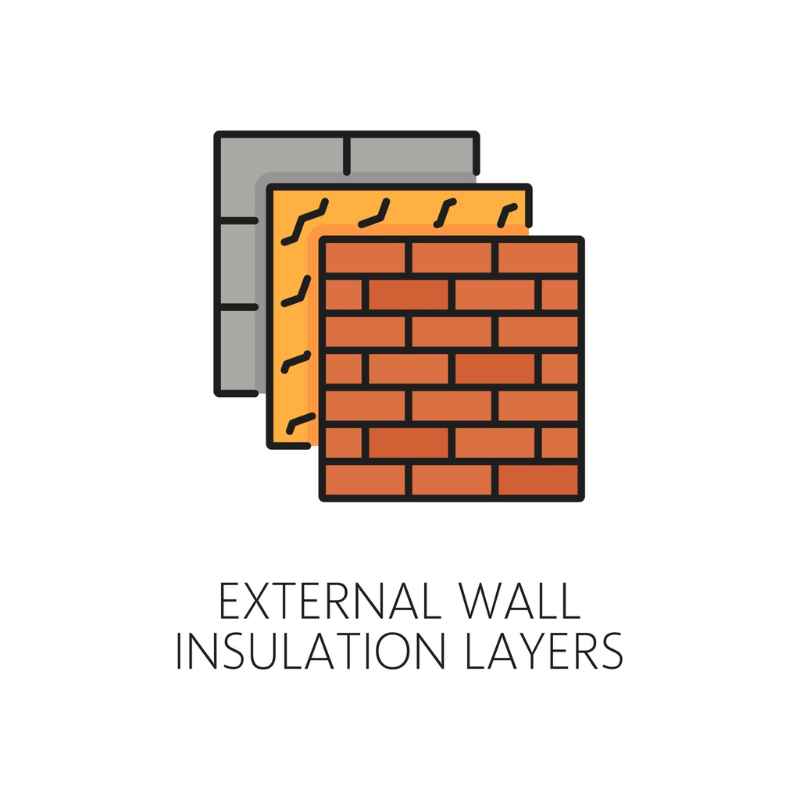
Cavity wall insulation is usually made of special materials. These can be small foam beads, mineral wool, or fiberglass. Sometimes it’s a spray foam.
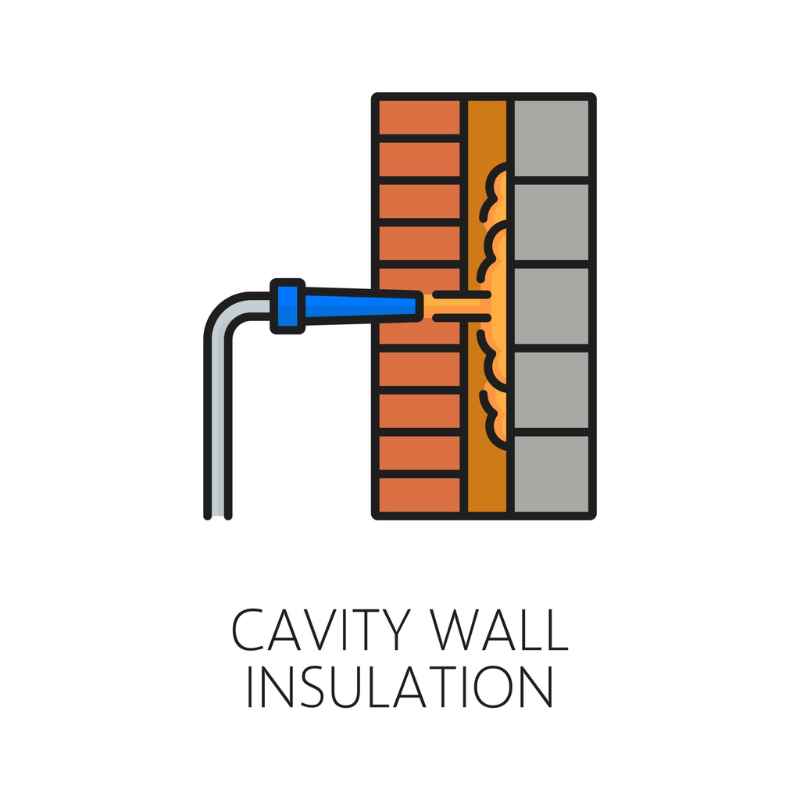
These materials are put into the empty space, the cavity, in your walls. This is done by professional installers. They drill small holes in the outside walls.
Then they blow the insulation material into the gap.
Once the cavity is filled, something important happens. The insulation material traps air. Tiny pockets of still air are created.
Air is a good insulator. It doesn’t move heat very well. This trapped air stops heat from moving by convection.
It stops drafts from forming inside the wall.
The insulation material itself also plays a role in radiation. Many insulation materials are not shiny. They are dull.
This helps them reflect heat waves. Think of wearing dark clothes in summer. They absorb heat from the sun.
Wearing light clothes reflects the sun’s heat. Insulation materials are like light clothes for your walls. They reflect heat back into your home.
So, the insulation fills the gap. It stops air moving around. It also reflects heat waves.
This keeps more of your home’s warmth inside. It stops heat from escaping through the walls as easily. This means your heating system doesn’t have to run as much.
Your home stays warmer for longer. It feels more comfortable too.
The process is quite quick. Installers often finish a whole house in less than a day. They use special equipment to blow the material evenly.
After they finish, they seal the holes. You can barely see where they drilled.
Many homes built between the 1920s and the 1990s have cavity walls. Older homes might have solid walls. Newer homes usually have wall cavities already filled with insulation.
It’s a good idea to check your home. You can ask a professional. They can tell you if you have cavity walls and if they need insulation.
My Own Experience with a Drafty House
I remember one winter a few years ago. It was especially cold. My house, an older one, felt like a sieve for heat.
I’d put on sweaters. I’d use blankets. But still, the chill seemed to creep in from the walls.
I would stand near the outer walls and feel a distinct coldness. It wasn’t just a feeling; I could almost sense the heat leaving my body.
I tried to seal up any tiny gaps I could find. I used draft excluders around doors and windows. I even put thick curtains up.
It helped a little. But the main problem felt bigger. It felt like the walls themselves were just letting the warmth escape into the cold air outside.
I remember one evening, sitting in my living room, and feeling a cold draft near the fireplace. It was coming from the wall behind the TV, a wall that faced the outside. It was a strange feeling, like the house was breathing out all its warmth.
I started researching ways to improve my home’s insulation. I learned about different types. Loft insulation was easy to understand.
But the walls seemed more mysterious. The idea of filling the cavity was new to me. I was a bit worried.
Would it be messy? Would it make a difference? I talked to a few neighbors.
One mentioned they had cavity wall insulation done. They said their heating bills dropped significantly. That got my attention.
It sounded too good to be true, but the thought of a warmer home without constant bills was very appealing.
The process sounded simple enough. Professionals drill holes, fill the space, and seal it up. I decided to get a quote.
The cost seemed reasonable for the potential savings. I chose a company that had good reviews. They explained everything clearly.
They checked my walls first to make sure they were suitable. On the day of the work, it was quite fascinating to watch. They were in and out within a few hours.
The difference wasn’t instant, like flipping a switch. But over the next few days, I noticed it. The house felt more stable in temperature.
The cold spots near the walls seemed to disappear. I didn’t feel that constant need to add another layer of clothing. And when I checked my heating bill the following month, it was noticeably lower.
It felt like a little victory. That experience showed me how important wall insulation really is. It’s not just about keeping warm; it’s about making your home more efficient and saving money.
How Insulation Reflects Radiant Heat
Imagine your walls like a mirror for heat. When your inner walls are warm, they send out heat waves. These waves travel through the air. In an empty wall cavity, these waves can travel to the outside wall and escape.
Insulation materials have surfaces that are not good at absorbing heat waves. Instead, they bounce them back. This bouncing back is called reflection.
So, the heat waves hit the insulation and turn around. They go back into your living room. This keeps the heat inside your home.
It’s like a cozy blanket for your walls that sends heat back to you.
The Science Behind Radiation in Walls
Heat radiation is a form of electromagnetic energy. We feel it as warmth. It travels in waves.
These waves can move through a vacuum, like space. They can also move through air or solids. Your body gives off heat radiation.
A warm radiator gives off heat radiation. When you stand near a fire, you feel its radiation. Your walls are no different.
The inside surfaces of your walls absorb heat from your room. This heat makes the wall material warm. The warm inner wall then gives off heat radiation.
These heat waves travel across the empty cavity. They reach the inside surface of the outer wall. The outer wall is cooler.
It absorbs some of this radiation. But a lot of the heat is then lost to the outside air.
The key is to stop these heat waves from reaching the outer wall and escaping. This is where cavity wall insulation shines. The materials used are often designed to be poor absorbers and good reflectors of thermal radiation.
Think of a shiny emergency blanket. It’s designed to reflect your body heat back to you. Many insulation materials work similarly.
They have surfaces that scatter or reflect the heat waves away from the outer wall.
The air trapped within the insulation also plays a role. While air is mostly transparent to radiation, the insulation material itself acts as a barrier. It interrupts the path of the heat waves.
It forces them to interact with the insulation material. This interaction leads to reflection and absorption. By reflecting a significant portion of the radiant heat back into the room, the insulation drastically reduces heat loss.
It’s a clever way to manage energy flow.
The effectiveness depends on the type of insulation. Some materials are better at reflecting radiant heat than others. However, most common cavity wall insulations provide a good balance.
They address both convection (by trapping air) and radiation (by reflecting heat waves).
Quick Scan: Factors Affecting Radiant Heat Loss
| Wall Surface Temperature | Warmer walls radiate more heat. |
| Cavity Width | Wider cavities can allow more air movement (convection) and radiation. |
| Insulation Material | Some materials reflect heat better than others. |
| Emissivity | A property of the surface. Low emissivity surfaces reflect heat well. |
Cavity Walls and Their Design
Cavity walls became popular in the UK and other countries as a way to build more efficient homes. Before cavity walls, most houses had solid walls. These were made of thick brick or stone.
Solid walls lose a lot of heat through conduction. They also let in dampness more easily.
The idea behind a cavity wall was simple. Build two separate walls, one inside and one outside. Leave a gap between them.
This gap is the cavity. The outer wall acts as a shield against the weather. It stops rain from soaking the inner wall.
The inner wall provides the structure for the house. The air in the cavity acts as a natural insulator.
However, as homes became more energy-efficient, building regulations changed. It became clear that just an air gap wasn’t enough. So, insulation started being added to the cavity.
This was done during construction or as a later upgrade.
The width of the cavity matters. Most modern cavities are about 50mm wide. Older cavities can be wider or narrower.
The type of brick used for the outer wall can also affect things. Some bricks are more porous and can let moisture through. If there’s no proper damp-proof course, water can travel across the cavity and reach the inner wall.
This can lead to damp problems. Insulation helps to prevent this by stopping the movement of air and moisture.
The way the walls are built is important. The inner and outer walls are tied together with metal ties. These ties pass through the cavity.
They help keep the walls stable. However, these metal ties can sometimes conduct heat. They can create a path for heat to travel across the cavity.
Modern insulation helps to reduce the impact of these ties. Some insulation materials are designed to cover the ties. This reduces the heat bridging effect.
Understanding the design of your cavity wall helps. It shows why adding insulation is so beneficial. It turns an empty, drafty space into a well-insulated barrier.
This barrier stops heat from escaping in multiple ways. It makes your home much more comfortable and energy-efficient.
Contrast: Normal Cavity vs. Insulated Cavity
Normal Cavity Wall (Uninsulated)
What happens: Air moves freely. Heat radiates easily across the gap. Heat transfers by conduction through wall ties.
Result: Significant heat loss. Cold spots on inner walls. Drafts.
Insulated Cavity Wall
What happens: Insulation traps air, stopping convection. Material reflects radiant heat. Dampness is managed.
Result: Much less heat loss. Warmer walls. Lower energy bills.
Improved comfort.
The Role of Air Movement (Convection)
While we are focusing on radiation, convection is also a big part of heat loss in uninsulated cavity walls. Convection is heat transfer through the movement of fluids, like air. In an empty cavity wall, air can move up and down.
Think of it like a chimney. Warm air inside your house rises. It can find its way into the wall cavity through small gaps.
Once inside the cavity, this warm air rises further. As it moves up, it cools down. Then it starts to sink.
This creates a continuous cycle of air movement within the wall. This is called a convection current.
This moving air carries heat with it. The warm air rising on one side of the cavity is replaced by cooler air sinking on the other side. This constant flow of air helps to transfer heat from your warm inner wall to your cold outer wall.
The outer wall then loses this heat to the outside air.
Cavity wall insulation works by stopping this air movement. The insulation material, whether it’s foam, beads, or wool, fills the cavity. It breaks up the space into many tiny pockets.
These pockets trap the air. The air can no longer move freely up and down. It becomes still air.
Still air is a very poor conductor of heat. It also prevents convection currents from forming.
By stopping convection, the insulation significantly reduces heat transfer. It’s like putting a lid on a pot of boiling water. The boiling stops.
Similarly, the insulation stops the ‘boiling’ movement of air in your walls. This keeps more heat inside your home. It’s a dual action: stopping air movement and reflecting heat waves.
When is Cavity Wall Insulation Not Suitable?
While cavity wall insulation is great for many homes, it’s not for everyone. There are a few situations where it’s not recommended. Knowing these helps you avoid problems.
It’s important to have a professional check your home first.
One main concern is damp. If your home already has rising damp or penetrating damp issues, you need to fix these first. Insulation can trap moisture.
If there’s already dampness, the insulation could make it worse. It might spread the dampness further or make it harder to dry out the walls. This can damage your property and affect your health.
Homes exposed to very high winds and rain might also have problems. If the outer wall is not weather-proof, water can get into the cavity. This is called penetrating damp.
If the cavity is filled with insulation, the water can travel across the cavity. It can then reach the inner wall and cause dampness inside your home. Older homes with exposed walls in very wet areas might need special considerations.
Sometimes, a damp-proof course or improved pointing of the brickwork is needed before insulation.
The type of building material can also matter. Some older buildings might have walls made of certain materials that are not suitable for insulation. For example, some types of stone or timber structures might need different solutions.
It’s rare, but professionals will identify this.
Finally, the cavity itself needs to be clear. If there’s debris or old building material in the cavity, it might need to be removed. This is because it could block the insulation from being installed properly.
Or it could create pathways for moisture. A professional survey will check for these issues.
So, it’s crucial to get an assessment. Reputable installers will do this. They will tell you if your home is suitable.
They will explain any risks. They will also suggest alternatives if cavity wall insulation isn’t the best option. This ensures you get the right solution for your home and avoid potential problems.
What to Look for: Signs of Wall Issues
- Damp Patches: Dark, wet-looking areas on walls.
- Peeling Wallpaper: Often happens where dampness is present.
- Mold or Mildew: Fuzzy or black spots on walls or ceilings.
- Flaking Plaster: Plaster may crumble or fall away.
- Musty Smells: A damp, earthy odor in rooms.
If you see these, talk to a damp specialist BEFORE considering cavity wall insulation.
The Impact on Energy Bills
One of the biggest benefits of cavity wall insulation is its effect on energy bills. When your home loses less heat, your heating system doesn’t have to work as hard. This means it uses less energy.
Less energy used means lower bills. It’s a direct link.
Studies and real-world experience show significant savings. For a typical semi-detached home, savings can be hundreds of pounds each year. The exact amount depends on many factors.
These include the size of your home, how well insulated it is already, your heating habits, and the local climate.
But the savings are real. People often report that their homes feel warmer for longer. They might be able to turn their thermostat down a degree or two.
This alone can make a difference. The comfort level improves. You feel less of that cold draft from the walls.
Think about it this way: your heating system is like a car engine. If the car’s body has holes, the heat from the engine escapes. The engine has to work harder to keep the inside warm.
Insulation seals those holes. The heat stays inside. The engine doesn’t need to run at full power all the time.
Over the lifespan of the insulation, the savings can add up to much more than the initial cost. Many government schemes and grants have been available in the past to help with the cost. This makes it even more accessible.
Even without grants, it’s often considered a wise investment. It pays for itself over time.
It’s not just about saving money. It’s also about being more energy-efficient. This is good for your wallet and good for the environment.
Burning less fuel means fewer carbon emissions. So, you’re helping the planet too. It’s a win-win situation.
Payback Period for Insulation
What it means: The time it takes for the money saved on energy bills to equal the cost of the insulation.
Typical for Cavity Wall Insulation: Often between 3 to 10 years.
Factors influencing payback:
- Initial cost of insulation.
- Current energy prices.
- Amount of heat loss before insulation.
- How much you use your heating.
This investment often provides a good return.
What This Means for Your Home’s Comfort
Beyond the money saved, the most noticeable benefit is comfort. Cold walls can make a room feel much colder than the thermostat reading suggests. This is because your body loses heat through radiation.
If the walls are cold, they radiate heat away from you. This makes you feel chilly, even if the air temperature is okay.
When you add cavity wall insulation, the inner walls become warmer. They radiate less heat away from you. Instead, they might even radiate a little warmth back into the room.
This makes the whole room feel more comfortable. The temperature feels more even throughout the space.
You’ll notice fewer cold spots. These are areas in a room that always feel colder. Often, these are near external walls or windows.
With insulated walls, these cold spots tend to disappear. The warmth is distributed more evenly.
This increased comfort is especially important for certain people. Elderly individuals, young children, and those with health conditions can be more sensitive to cold. A warmer, more stable home environment can improve their well-being.
It can also help prevent health issues related to cold. For example, cold homes are linked to respiratory problems.
Furthermore, the insulation can help reduce condensation. Cold walls can cause warm, moist air to condense on their surface. This leads to dampness and mold.
By keeping the inner wall surface warmer, insulation reduces condensation. This creates a healthier living environment.
It’s a simple change, but the impact on your daily life can be significant. Coming home to a warm, cozy house after being out in the cold is a wonderful feeling. It’s the feeling of your home truly protecting you from the elements.
Cavity wall insulation helps achieve that.
Quick Tips for Maximum Comfort
- Ensure even insulation: A professional job covers all cavities well.
- Address other heat loss: Check your loft and floor insulation too.
- Ventilate properly: Even in a warm house, fresh air is needed.
- Consider your heating: Use thermostats wisely to maintain steady temperatures.
The Environmental Benefits
Choosing to insulate your cavity walls is a step towards a greener lifestyle. When your home is more energy-efficient, you use less energy. This usually means burning less fossil fuel for heating.
Fossil fuels like gas and coal release greenhouse gases when burned.
Greenhouse gases, such as carbon dioxide, trap heat in the atmosphere. This leads to climate change. By reducing your energy consumption, you are directly reducing your household’s carbon footprint.
This is a positive action for the environment.
Many countries, including the U.S., are working to reduce their carbon emissions. Individual actions, when done by many people, can have a big collective impact. Insulating your home is one of the most effective ways for a homeowner to contribute.
It’s not just about global warming. Reducing energy use also lessens the demand on power grids. This can lead to fewer power plants being built or operated.
It’s a move towards more sustainable living. It’s about making our homes work with nature, not against it.
So, when you feel the warmth spreading through your home after insulation, remember that you’re not just making yourself comfortable. You’re also making a small but important contribution to a healthier planet for future generations. It’s a responsible choice that benefits everyone.
Frequently Asked Questions
How long does cavity wall insulation last?
Cavity wall insulation is designed to last for many years. Most types, like mineral wool, foam, or beads, can last for the lifetime of your property, often 25 years or more. It doesn’t degrade significantly over time if installed correctly and in suitable conditions.
Regular checks are still a good idea, but it’s a very durable solution.
Can I insulate my cavity walls myself?
It is generally not recommended for homeowners to try and insulate cavity walls themselves. The process requires specialized equipment and knowledge. Professionals use specific blowing machines to ensure the insulation is installed evenly and without gaps.
Incorrect installation can lead to damp problems or ineffective insulation. It’s best left to certified installers.
Will cavity wall insulation stop my walls from getting damp?
Cavity wall insulation can help reduce condensation on inner walls. This is because it keeps the inner wall surface warmer. However, it does not fix existing damp problems like rising damp or penetrating damp.
These issues must be addressed by a specialist before insulation is installed. Insulation can trap moisture if the underlying cause of damp is not fixed.
What is the difference between cavity wall insulation and solid wall insulation?
Cavity wall insulation is for walls that have a hollow space (a cavity) inside them. Solid wall insulation is for homes with walls made of a single layer of material, with no gap. Solid walls are typically found in older properties, often built before the 1920s.
The methods for insulating them are different. Solid wall insulation usually involves adding insulation boards to the inside or outside of the walls.
Does cavity wall insulation make noise?
No, once installed, cavity wall insulation is completely silent. The materials used, such as foam, beads, or mineral wool, are inert and do not make any noise. You will not hear them.
The only sound associated with the process is the machinery used by the installers during the brief period of installation.
How do I know if my house has cavity walls?
You can usually tell if your house has cavity walls by looking at the brickwork. If your house was built after the 1920s, it likely has cavity walls. A quick visual check: if your external walls are built with bricks that are all the same way up (e.g., all showing the large face), you probably have cavity walls.
Solid walls often have bricks laid in a pattern where both the ends and faces of the bricks are visible. You can also ask a professional installer; they can check for you using a boroscope.
What materials are used for cavity wall insulation?
The most common materials used for cavity wall insulation are:
- Mineral wool (rock or glass fibre): Often comes in a form that can be blown into the cavity.
- Polystyrene beads: Small, lightweight beads that fill the cavity.
- Foam (Polyurethane): Sprayed into the cavity, it expands and hardens.
Each material has its own benefits and is chosen based on the specific property and conditions.
Conclusion
Cavity wall insulation is a smart way to improve your home. It keeps more heat in. It stops heat loss through radiation and convection.
This makes your home warmer and more comfortable. It also helps you save money on energy bills. Plus, it’s good for the environment.
If you have cavity walls, it’s worth looking into. It’s an investment in your home and your comfort.
Sponsored / affiliate links. As an Amazon Associate I earn from qualifying purchases. I may earn additional commission from eligible campaigns.