How to Clean Fireplace Glass Doors
Clean fireplace glass doors by matching the cleaner to the residue: dry soot on wood fireplaces usually needs a damp ash paste or fireplace glass cleaner, while white mineral film on gas units often needs vinegar or a gas-rated cleaner; never use abrasives. Use the wrong method, and you can scratch tempered glass, leave haze, or keep soot coming back. This guide shows which cleaner to use for gas, wood, and electric fireplace doors, plus the safest steps to get clear glass without streaks.
Before you clean


Let the glass cool completely
Wait until the fireplace is fully cool before touching the glass. One competitor advises 6-8 hours of cool-down time, which is long enough to avoid burns and reduce the chance of cleaning residue on warm glass.
For wood fireplaces, make sure the embers are out. For gas units, shut off the gas and confirm the appliance is off before you remove or wipe any door panels. For electric fireplaces, switch the unit off and let the glass cool before cleaning.
Check the manual for the glass type
Fireplace doors are often ceramic glass or tempered glass, and cleaner limits can differ. Manufacturer instructions come first, especially if the glass has a coating, tint, or special finish. Some cleaners that work on plain glass can leave haze on coated surfaces.
What you’ll need
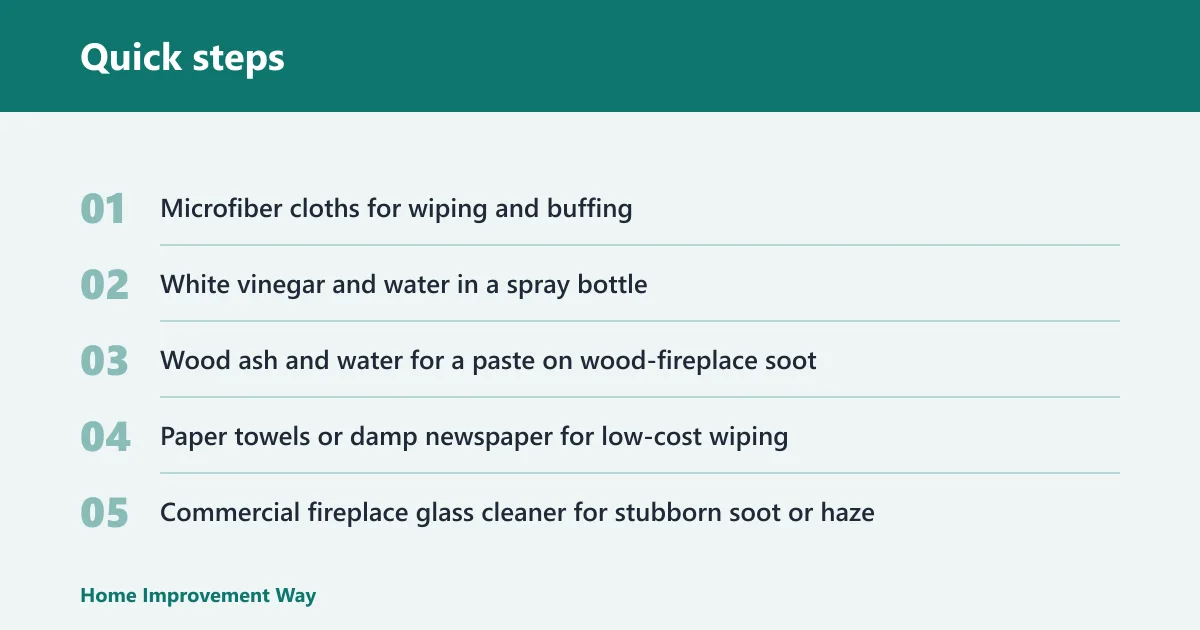
- Microfiber cloths for wiping and buffing
- White vinegar and water in a spray bottle
- Wood ash and water for a paste on wood-fireplace soot
- Paper towels or damp newspaper for low-cost wiping
- Commercial fireplace glass cleaner for stubborn soot or haze
- Warm water for mixing and rinsing residue
How do you clean fireplace glass doors?
Start with the mildest cleaner that fits the residue, then move up only if needed. Remove loose dust first, wipe the glass with the chosen cleaner, and dry it right away so residue does not set into streaks. Use one cloth for cleaning and a fresh cloth for final buffing.
- Open the door only after the unit is cool and off.
- Wipe away loose ash or dust with a dry microfiber cloth.
- Choose vinegar, ash paste, or a label-approved commercial cleaner based on the residue.
- Apply the cleaner to the cloth or spray it onto the glass as directed.
- Let it dwell briefly, then wipe in overlapping circles.
- Rinse with a clean damp cloth if the product calls for it.
- Buff dry with a fresh microfiber cloth or dry newspaper.
Suppose a 36-inch gas fireplace has a thin gray film after a few fires. A diluted vinegar wipe often clears that faster than a heavy cleaner, because the residue is light and not baked on. If the film returns quickly, check the burner pattern and venting instead of scrubbing harder.
How do you clean gas fireplace glass doors?

Clean gas fireplace glass doors with the unit off, cool, and free of active flame or heat. Light cloudy film and some soot can respond to diluted white vinegar, while stubborn haze usually needs a commercial fireplace glass cleaner used exactly as the label says. Avoid harsh abrasion on coated glass.
Use vinegar for light film
Mix white vinegar with water in a spray bottle and apply it to the glass. A common dilution is one part vinegar to three parts warm water. Warm water helps the mixture blend and wipe more evenly. Let it sit briefly, then wipe with a microfiber cloth.
Use a commercial cleaner for stubborn haze
If the film stays after vinegar, use a fireplace glass cleaner that the label says is safe for the door material. Some products may contain ammonia or silicone, so follow the directions exactly and test only where the manufacturer allows it. One competitor recommends waiting 30 minutes after spraying before wiping.
Clean both sides when needed
The inside surface usually gets the heaviest residue and may need the stronger method. The outside surface often only needs a light vinegar wipe and dry buffing. Keep the steps separate so soot from the inside does not smear onto the outer pane.
How do you clean wood fireplace glass doors?
Wood fireplace glass doors often collect dry soot, and wood ash mixed with water can be a mild abrasive for that job. Use it on cool glass only, and favor ceramic glass when the manual allows ash cleaning. For some buildup, damp newspaper or paper towels help lift residue without scratching.
Make a mild ash paste
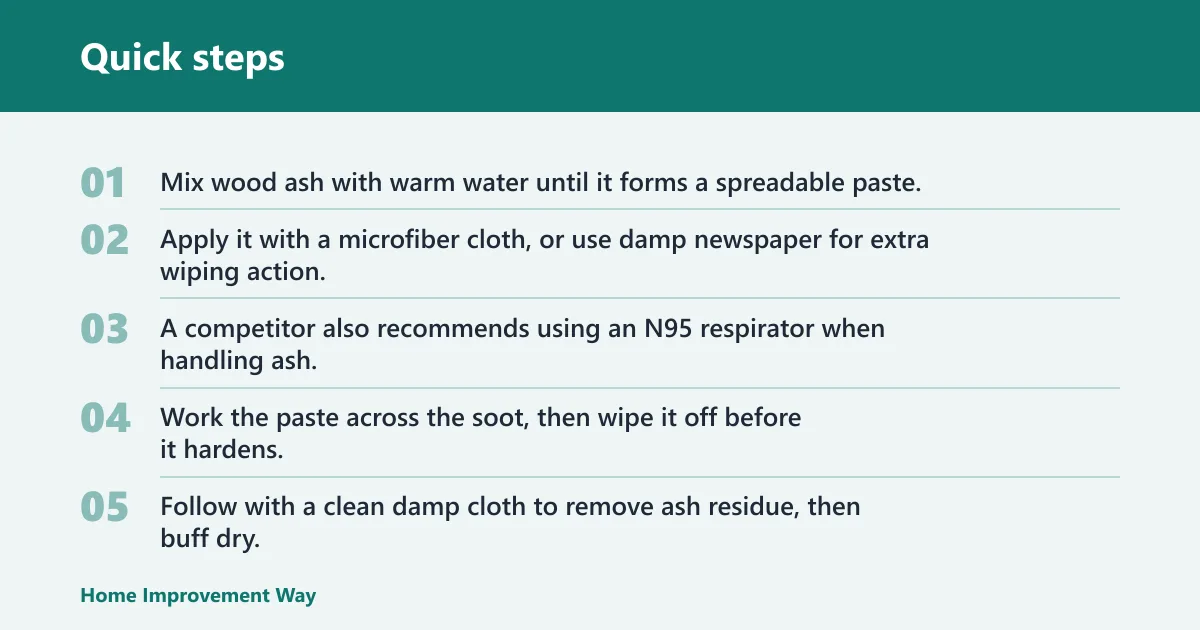
Mix wood ash with warm water until it forms a spreadable paste. Apply it with a microfiber cloth, or use damp newspaper for extra wiping action. A competitor also recommends using an N95 respirator when handling ash, which helps reduce exposure to fine dust.
Wipe, then rinse before the paste dries
Work the paste across the soot, then wipe it off before it hardens. Follow with a clean damp cloth to remove ash residue, then buff dry. If the soot is thick and tar-like, a commercial fireplace glass cleaner may work better than repeated scrubbing.
Say your wood insert has one pane with a black band at the top and a gray smear across the center. That usually means the soot is on the inside surface, and the ash paste can help if the glass is ceramic and the deposit is still loose enough to move. If the band stays after one pass, switch to a label-approved cleaner instead of pressing harder.
What should you use to clean fireplace glass doors?
Use the mildest cleaner that fits the residue and the door material. For light soot or cloudy film, white vinegar diluted with water is a practical first step. For wood-fireplace soot, wood ash and water can work well. For stubborn haze or baked-on buildup, use a commercial fireplace glass cleaner that matches the label and the glass type.
Do not use steel wool, scouring powder, or abrasive pads on fireplace glass. Those can scratch ceramic and tempered glass, and scratches tend to hold soot later. Also avoid any cleaner the manual forbids, especially on coated doors or specialty finishes.
Fireplace glass doors decision table
| Residue | Safest cleaner | What not to use | Expected dwell time | Wipe tool | Check airflow or combustion? |
|---|---|---|---|---|---|
| Soot | Wood ash paste with warm water, or a fireplace glass cleaner if the soot is stubborn | Abrasive pads, steel wool, scouring powder | 1-3 minutes | Microfiber cloth or damp newspaper | Yes, if it returns quickly |
| Cloudy film | Diluted white vinegar in a spray bottle | Strong alkaline cleaners on coated glass | 30-60 seconds | Microfiber cloth | Sometimes, if the film keeps coming back |
| Baked-on buildup | Label-approved commercial fireplace glass cleaner | Dry scrubbing and razor blades | 10-30 minutes | Microfiber cloth, then fresh cloth | Yes, especially on wood or gas units |
| Greasy haze | Commercial fireplace glass cleaner or vinegar if the manual allows it | Excess water on door seals and harsh solvents | 1-5 minutes | Microfiber cloth | Yes, if it reappears after cleaning |
Common mistakes
Using the wrong cleaner on coated or ceramic glass can leave permanent marks or a cloudy finish. If the manual limits vinegar, ammonia, or silicone products, follow that guidance first.
Scrubbing too hard can leave fine scratches that catch soot later. Use pressure only enough to move the residue, and let the cleaner do the work.
Ignoring streaks or recurring black buildup wastes time. Repeated soot often points to airflow, combustion, or venting problems rather than a cleaning miss.
If the buildup is thick, comes back fast, or sits on both the inside and outside after a short burn cycle, schedule an inspection. Annual professional fireplace cleaning and inspection is commonly recommended.
A common first-timer mistake is cleaning only the outside pane of a gas fireplace because it looks cloudy from across the room. The inside usually holds the real residue, and the outside often needs only a quick vinegar wipe and dry buff after the inner surface is cleaned properly.
How do you clean the inside of fireplace glass doors?
Clean the inside surface first, because that is where soot, haze, and baked-on film usually collect. Use the method that matches the fuel and residue, then finish with a dry microfiber cloth. On removable doors, take the panel off only when the fireplace is fully cool and off.
If the inside surface stays black after a normal cleaning, do not keep increasing pressure. Move up to a stronger label-approved cleaner, or look for a combustion issue if the residue returns after the next fire.
Frequently asked questions
How do you clean fireplace glass doors with vinegar?
Mix white vinegar with water in a spray bottle, usually diluted with warm water, and spray it on light soot or cloudy film. Let it sit briefly, then wipe with a microfiber cloth and buff dry. If the manual says vinegar is not suitable for coated glass, choose another cleaner.
What is the best way to clean soot off fireplace glass doors?
For light soot, wood ash paste is often the most effective DIY option on wood fireplaces. For stubborn soot or repeated buildup, use a commercial fireplace glass cleaner that matches the glass type. Avoid abrasive tools, because they can scratch the surface and make future soot cling faster.
How do you clean ceramic glass fireplace doors?
Use the gentlest cleaner allowed by the manual, because ceramic glass can tolerate some fireplace-specific products but not all household cleaners. Diluted vinegar may work for light film if the manufacturer allows it. For soot, a microfiber cloth and approved fireplace glass cleaner are safer than scrubbing.
How do you clean tempered glass fireplace doors?
Use a non-abrasive cleaner and a microfiber cloth, and follow the glass-maker or fireplace manual first. Tempered glass can still scratch, so avoid steel wool, razor blades, and scouring powders. If the residue is stubborn, use a fireplace glass cleaner that is specifically labeled for the door.
Sponsored / affiliate links. As an Amazon Associate I earn from qualifying purchases. I may earn additional commission from eligible campaigns.
 3D SiO2 Ceramic Glass Cleaner, GLW Series | Water & Rain Repellent | All-Weather Protective Ceramic Glass Cleaner | Safe for Tinted, Non-Tinted Windows & Mirrors | DIY Car Detailing | 16 oz
 BODEGACOOLER Commercial Bar Cooler With 3 Glass Doors,12 Cu.Ft Counter Height Back Beverage Refrigerator,Display Bar Fridge with LED Lighting,Beverage Cooler for Beer Stainless Steel Top,With Casters