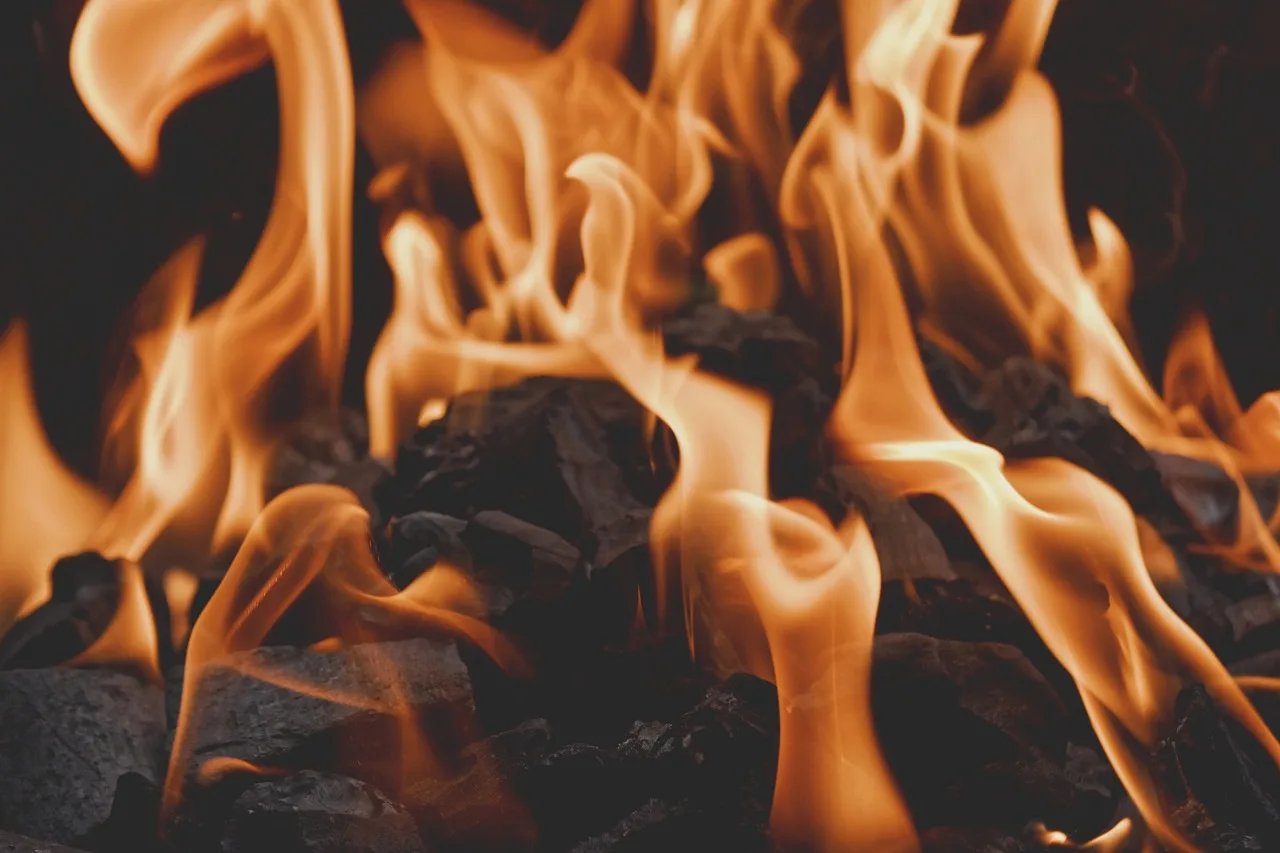
Smoke Smell After Using the Fireplace: How to Remove It
Start by cleaning the fireplace, ash dump, damper, and nearby textiles, then run the damper fully open during and after the fire. If the odor returns after a couple of cleanings, or you smell smoke with no fire, the chimney should be inspected. Left behind, smoke odor can soak into drywall, fabric, and wood, and a draft or creosote problem can turn a smell issue into a safety issue. This guide covers what to clean, what to replace, and when to call a chimney professional.
This guide is part of our Space Heaters, Fireplaces and Winter Humidity Guide series.
What you need first


Gather the tools before you start so you can clean in the right order. Smoke residue moves from the firebox to the room fast, and stopping halfway often leaves odor in fabrics, dust, and the HVAC system. For the ventilation basics behind this approach, see the EPA’s guidance on indoor air flow and source removal, and for filtration basics, see ASHRAE’s material on particulate capture and ventilation efficiency. HVAC filter replacement is especially important if smoke reached the return side of the system.
- Box fan or exhaust fan
- HEPA air purifier with activated carbon
- Vacuum with a clean filter
- Baking soda
- White vinegar
- Microfiber cloths and mild cleaner
- Replacement HVAC filter
How do I get rid of smoke smell after using the fireplace?
Start with airflow, then remove ash and residue, then clean fabrics and porous surfaces. That order matters because fireplace smoke odor comes from airborne particles, smoky ash, and residue that clings to nearby materials. If the smell returns when the fireplace or HVAC runs, stop treating it as a simple room odor problem. The EPA and ASHRAE both emphasize controlling the source, increasing ventilation, and filtering fine particles rather than relying on masking alone.
What to do in order
- Open windows on opposite sides of the room and run a box fan or exhaust fan to push smoky air out.
- Remove cold ash, then wipe the hearth, ash dump, and firebox edges.
- Vacuum nearby floors and soft surfaces with a clean filter.
- Wash removable textiles and curtains.
- Replace the HVAC filter if smoke reached the system.
- Set out activated carbon or run a HEPA purifier with carbon to help with remaining airborne particles and odor molecules.
Why the order matters
Smoke residue is tar-like and sticky. If you clean fabrics first, ash dust from the hearth can settle back onto them. If you skip the HVAC filter, smoke can recirculate every time the fan runs. If you need a broader check on how the fireplace is drafting, see chimney draft problems.
What should I clean first after a smoky fireplace night?
Clean the ash and hearth first, then the hard surfaces near the fireplace, then the textiles closest to the odor source. That sequence removes the largest amount of residue before it spreads into more surfaces. If the room still smells after that, check porous materials and the filter next. For soot on nearby finishes, see soot cleanup.
Step-by-step cleanup order
- Shovel cold ash into a sealed container.
- Wipe the hearth, surround, and mantle with a damp microfiber cloth.
- Vacuum the floor, rugs, and baseboards near the fireplace.
- Wash blankets, throws, and washable covers.
- Replace the HVAC filter if smoke odor entered the ducted air path.
Say your living room is 200 square feet and the fire was mild, but the sofa still smells the next morning. That usually means residue settled on fabric or carpet fibers, not that the whole house needs heavy restoration. Start with the fireplace zone and work outward. If the smell keeps coming back, it can be worth checking when to schedule chimney inspection.
Will opening windows get rid of fireplace smoke smell?
Opening windows helps, but it usually clears only the air that is still moving. Cross-ventilation works best when you open windows on opposite sides of a room, and fans should blow smoky air outward. That helps with airborne particles, not with odor already trapped in drywall, upholstery, or carpet padding. EPA guidance supports cross-ventilation and source removal as first-line steps for indoor air problems.
Use ventilation the right way
Open windows on opposite sides of the home. Place a box fan in one window or use an exhaust fan so air moves out, not back into the room. Keep it running long enough to clear settled airborne particles, then keep going if the smell returns when the house quiets down.
Top-up and recheck
If the room still smells after 30 to 60 minutes, add another fan or move the existing fan closer to the smoky room and recheck after the next air exchange cycle. Do not rely on a brief breeze if odor is still coming from fabrics or the fireplace itself.
Why does fireplace smoke smell linger?

Fireplace smoke smell lingers because soot and smoke residue cling to surfaces, then release odor again as the room warms up or air moves through it. Fireplace-specific causes also include poor draft, downdrafts, cold chimney air, creosote buildup, and smoke spill from the firebox into the room. In chimney safety guidance, recurring smoke smell is a warning sign, not just a nuisance; see CSIA and NFPA materials on draft, venting, and chimney hazards.
Three common source types
- Airborne particles: fine smoke that HEPA filtration can help capture.
- Residue on surfaces: soot and smoke film on walls, furniture, and trim.
- Chimney problems: smoke spilling back into the room because the draft is weak or reversed.
Smoke odors can linger in walls, furniture, carpets, and clothes. Porous surfaces such as drywall, upholstery, carpet, and padding trap odor more deeply than tile or metal, so they often need more than a quick wipe.
How do I remove fireplace smoke smell from walls and furniture?
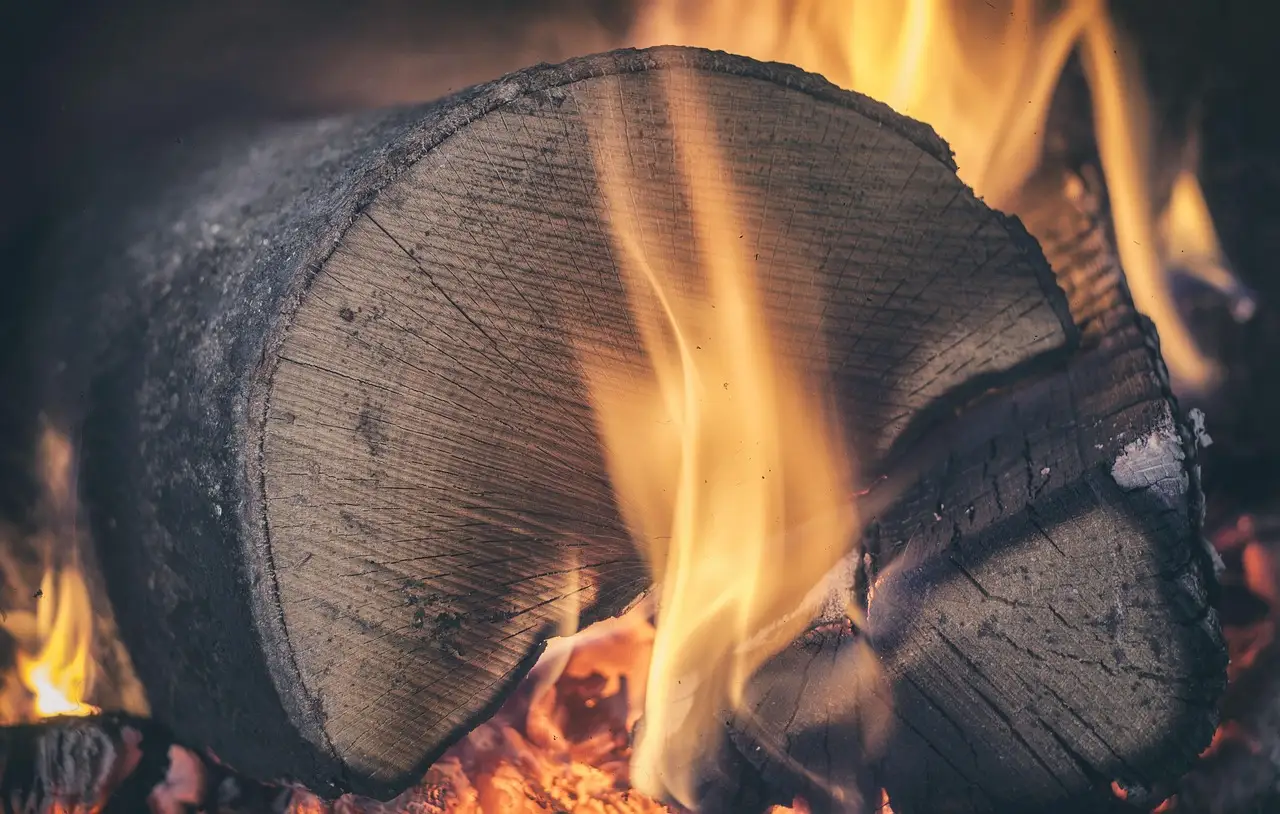
Use physical cleaning first, then odor control. Walls, upholstery, and nearby wood can hold smoke residue, and masking sprays do not remove the residue that keeps releasing smell. White vinegar can help on some hard surfaces and fabrics, but use caution on finishes, stone, and sensitive materials. For manufacturer-neutral limits on odor control, HEPA filtration captures particles but does not remove gases, while activated carbon can adsorb odor compounds but becomes less effective as it loads up.
Best products for the job
- HEPA air purifier: captures smoke particles in the air.
- Activated carbon: adsorbs odor molecules from the air.
- Baking soda: works best on light, fresh odor in bowls, rugs, or upholstery before vacuuming.
- White vinegar: can neutralize residue on suitable hard surfaces and some fabrics after a spot check.
Wipe walls and hard furniture with a damp microfiber cloth and mild cleaner first. Vacuum upholstery and carpet edges with a clean filter. Then use baking soda for lighter odor, or a vinegar solution where the finish allows it. The temporary vinegar smell should fade after drying.
When to replace instead of clean
| Item | Clean if | Replace or seal if |
|---|---|---|
| Rugs | Odor is light and no soot is visible | Smell returns after cleaning or padding holds odor |
| Cushions | Cover is removable and odor is surface-level | Core foam still smells after airing and washing |
| Curtains | Fabric is washable and smoke was light | Odor remains after washing and drying |
| Nearby drywall | Only a faint film is present | Visible soot or deep odor remains after cleaning |
Can smoke smell come from the HVAC system after using the fireplace?
Yes. Smoke can recirculate through the HVAC system, which is why replacing the filter right away matters after smoke exposure. If the smell returns when heat or air conditioning turns on, the system may be moving smoke residue through the duct path or pulling it from nearby rooms. EPA and ASHRAE guidance support prompt filtration changes when particle loading is likely.
Check the system in this order
- Replace the HVAC filter immediately after smoke exposure.
- Run the fan for a short cycle and smell near the return grille.
- Check whether the odor returns when heat or AC turns on.
- If it does, inspect registers, return vents, and nearby duct surfaces for residue.
HEPA air purifiers are recommended for removing smoke particles from the air, and activated carbon helps with smell molecules. Use them alongside cleanup, not instead of it. For a more focused walkthrough, see HVAC filter replacement.
When does fireplace smoke smell mean the chimney needs service?
Repeated odor after every fire, visible soot around the fireplace, smoke entering the room, or a smell that returns when the damper is open all can point to a chimney or draft problem. Those signs can mean poor draft, downdraft, cold chimney air, creosote buildup, or a liner issue that needs inspection. CSIA and NFPA guidance treats smoke back-up, soot spill, and recurring odor as reasons to stop using the appliance until it is checked.
Call a chimney pro if you notice any of these
- Odor returns after every fire
- Visible soot around the firebox, surround, or mantle
- Smoke spills into the room instead of going up the flue
- Odor comes back when the HVAC fan turns on
- You smell smoke with no active fire
Suppose the fireplace is used on a cold night and the room smells smoky again the next morning, even after cleaning the hearth and replacing the filter. That pattern points away from a one-time cleanup issue and toward draft or liner trouble. For related warning signs, see creosote buildup.
Smoke odor triage checklist
Use this checklist to decide whether the problem is a normal post-fire smell, a repeat odor issue, or a chimney problem. Follow the branch that matches what you see and smell, then stop if the trigger list points to professional service. The fastest way to narrow it down is to ask two questions: Did HVAC run? Do textiles still smell after washing?
| Branch | What you see or smell | Exact cleanup order | Replace filter or textiles? | Call a chimney pro? |
|---|---|---|---|---|
| Fresh smoky room after a normal fire | Light smoke smell, no visible soot | Open opposite windows → run fans out → remove ash and clean hearth → wipe hard surfaces → vacuum → wash removable fabrics | Yes if the HVAC ran during the fire or the odor hits the vents; no for light odor that clears after washing and airing | No, unless smell returns after cleaning |
| Repeated odor after every fire | Smell returns each time the fireplace is used | Clean ash and hearth → inspect damper area → replace HVAC filter → clean walls, upholstery, and rugs → check return grilles | Yes if rugs, cushions, or curtains still smell after cleaning; replace if odor is embedded in porous material | Yes, because draft or creosote may be involved |
| Odor plus visible soot or backdraft | Soot on surround, smoke in room, or odor with no fire | Stop using the fireplace → ventilate → clean only safe hard surfaces → replace filter → keep textiles closed off until inspected | Yes if fabric, carpet padding, or drywall stays smoky after cleaning; porous material may need sealing or replacement | Yes, immediately |
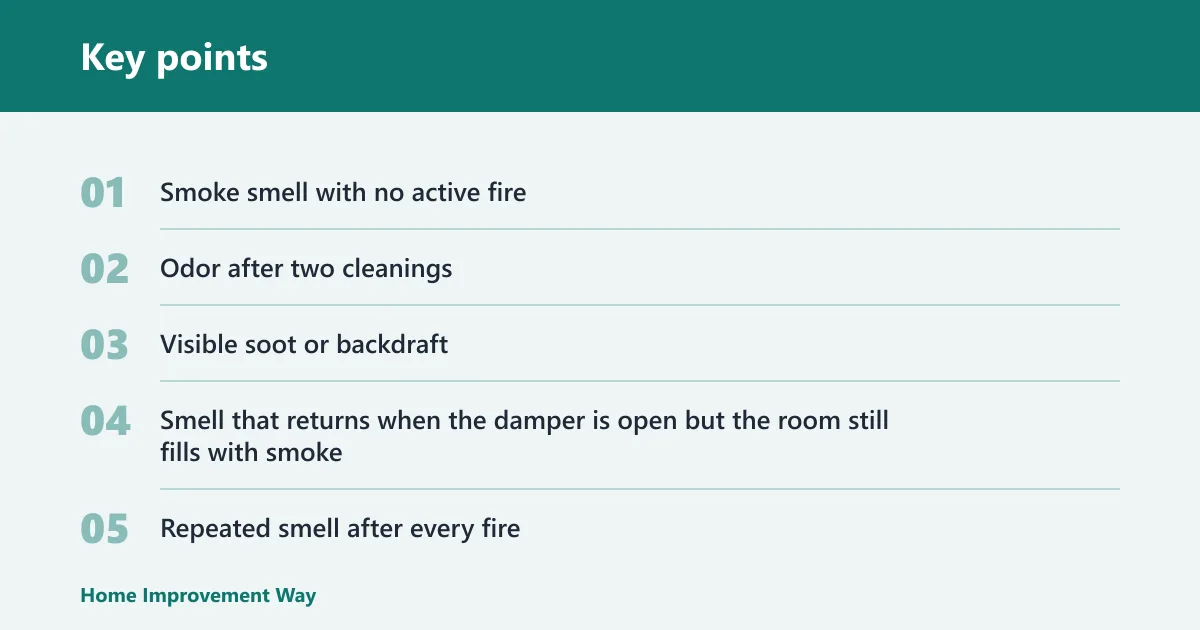
Call a chimney pro triggers
- Smoke smell with no active fire
- Odor after two cleanings
- Visible soot or backdraft
- Smell that returns when the damper is open but the room still fills with smoke
- Repeated smell after every fire
If the answer to “Did HVAC run?” is yes, change the filter and check the returns before assuming the odor is only in the room. If the answer to “Do textiles still smell after washing?” is yes, treat the problem as embedded residue or porous-material contamination. If either branch also comes with smoke spill or no-fire odor, stop using the fireplace and get the chimney inspected.
Common mistakes
The biggest mistake is trying to mask fireplace odor before removing ash and residue. That only hides the smell for a short time. Another mistake is skipping the filter change, which lets smoke recirculate through the house and settles the odor back onto fabrics. A third mistake is ignoring chimney warning signs and keeping the fireplace in service when draft or creosote is the real issue.
- Using air fresheners instead of cleaning residue
- Skipping the ash pan, damper area, or hearth edges
- Cleaning fabrics before hard surfaces
- Using vinegar on every surface without checking the finish
- Keeping rugs, cushions, or drywall that still smell after cleaning
Activated carbon can help reduce odor in the air, but it is not a substitute for removing the source. Likewise, HEPA filtration helps with particles, not all gases or deeply embedded residue. For a chimney-focused next step, see when to schedule chimney inspection.
Frequently asked questions
Why does smoke smell linger after a fireplace fire goes out?
Smoke odor lingers because fine particles and soot cling to walls, furniture, carpet, and clothes. A weak draft, downdraft, or creosote buildup can also spill odor back into the room. If the smell appears again after the fire is cold, the source is often deeper than room air.
Sponsored / affiliate links. As an Amazon Associate I earn from qualifying purchases. I may earn additional commission from eligible campaigns.