Can You Use a Space Heater and a Humidifier in the Same Room?
Yes, you can use a space heater and a humidifier in the same room if you keep them apart, keep mist off the heater, and keep indoor humidity around 30% to 50%. Used badly, that setup can lead to condensation, mold, burns, or electrical trouble. This guide covers safe placement, humidity targets, and the warning signs that mean the combination is not worth using.
Can you use both in the same room?
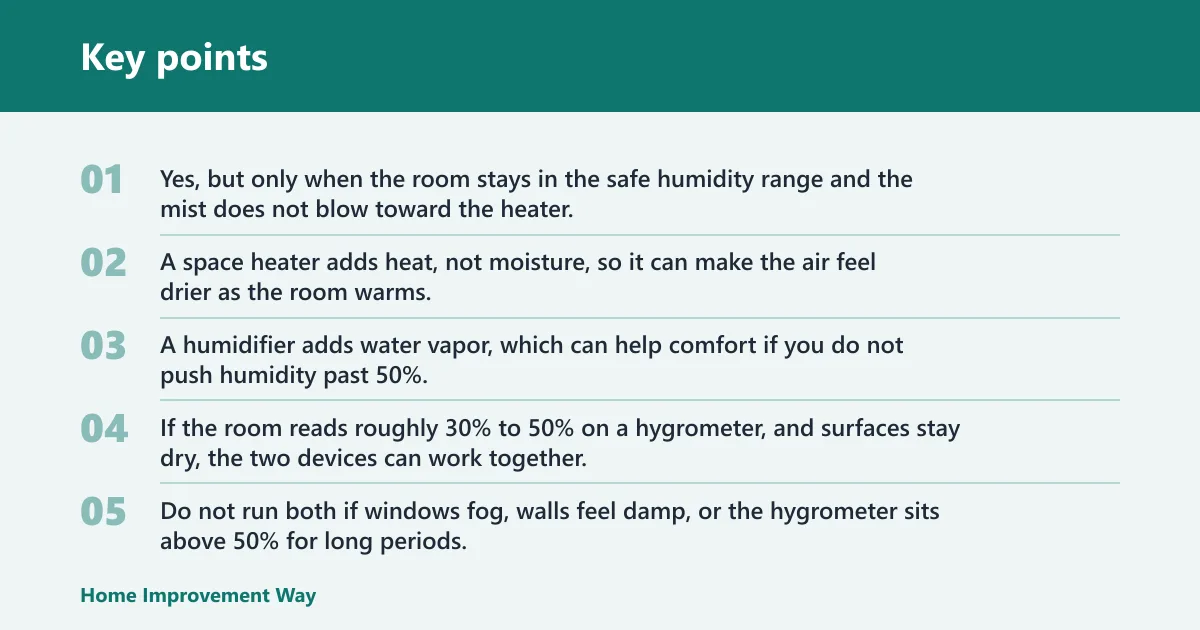


Yes, but only when the room stays in the safe humidity range and the mist does not blow toward the heater. A space heater adds heat, not moisture, so it can make the air feel drier as the room warms. A humidifier adds water vapor, which can help comfort if you do not push humidity past 50%.
When the combo is usually fine
The setup works best in a bedroom, office, or other closed room that tends to drop below 30% relative humidity in winter. That happens often when heating dries indoor air. If the room reads roughly 30% to 50% on a hygrometer, and surfaces stay dry, the two devices can work together.
When to avoid running both together
Do not run both if windows fog, walls feel damp, or the hygrometer sits above 50% for long periods. Above 50% can support bacteria and mold growth, and readings above 60% are too humid for safe indoor comfort. Skip the humidifier first if the room is already near the target range.
Say your roughly 120-square-foot bedroom has a small space heater set on low and a cool-mist humidifier on the dresser. If the hygrometer shows 42% and the window stays clear, that is usually a workable setup. If the same room climbs to 55% overnight, the humidifier should come off before moisture starts collecting on cool surfaces.
What humidity level is best in winter?
The best winter target is 30% to 50% relative humidity, with 40% to 45% as a practical comfort sweet spot. Below 30% the air is too dry for most homes, especially when winter heating pulls moisture down. Above 50%, the risk of mold and bacterial growth rises.
Why 30% to 50% is the target
This range balances comfort with moisture control. It is high enough to reduce that dry, heated-air feeling, but low enough to limit condensation on windows, cold walls, and other surfaces. A room that stays in this band usually needs less guesswork and fewer emergency adjustments.
What happens above 50%
Once humidity climbs past 50%, moisture begins to collect more easily on cooler surfaces. That can support indoor mold growth, dust-mite activity, and lingering dampness around trim, windows, or electronics. If the room hits 50% to 60% often, the humidifier output is too high or the room is too closed off.
How far should they be placed?
Keep the humidifier far enough from the heater that mist never reaches hot surfaces, intake grilles, cords, outlets, or nearby furniture. There is no single universal distance for every model, but the practical rule is simple: place them on opposite sides of the room whenever you can. Heat and moisture should stay apart.
Keep moisture away from hot surfaces
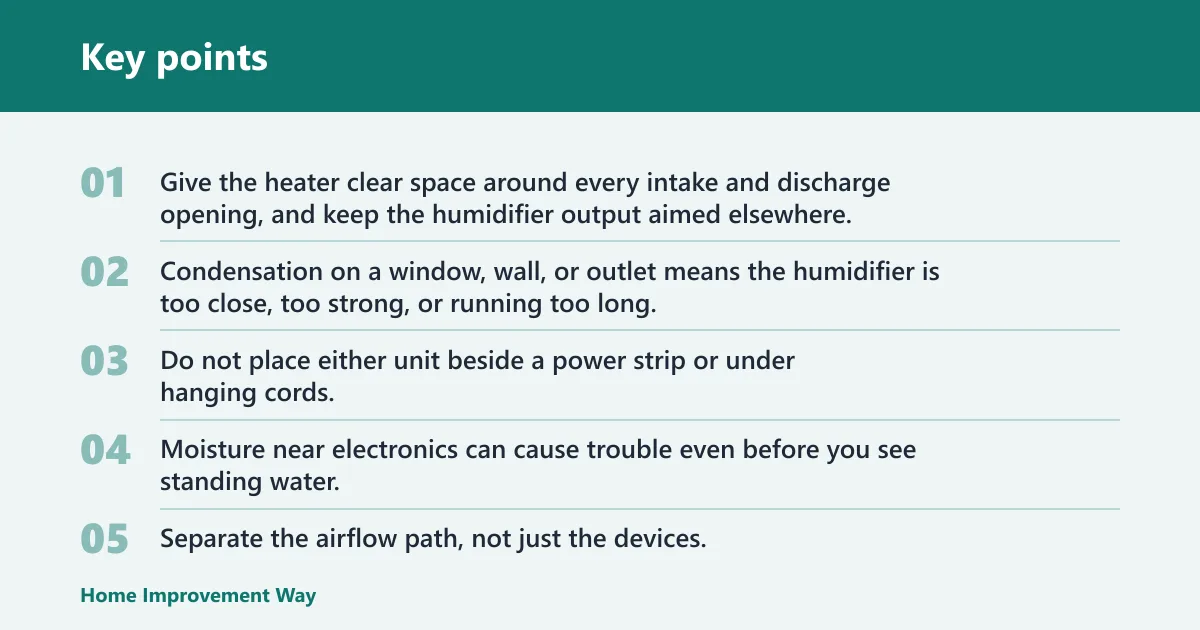
A humidifier that blows directly toward a space heater can put moisture into the heater body and onto plastic parts, wiring, or filters. That raises the odds of damage, mineral buildup, and nuisance shutoffs. Give the heater clear space around every intake and discharge opening, and keep the humidifier output aimed elsewhere.
Watch walls, windows, cords, and electronics
Condensation on a window, wall, or outlet means the humidifier is too close, too strong, or running too long. Do not place either unit beside a power strip or under hanging cords. Moisture near electronics can cause trouble even before you see standing water.
A common first-timer mistake is setting a cool-mist unit on a nightstand three feet from a heater because the corner feels convenient. If the heater warms the air but the mist strikes the cold window behind it, condensation can form even though the room itself still feels comfortable. Separate the airflow path, not just the devices.
Which humidifier type should you choose?
Cool mist is usually the safer pick around children and pets because it does not release hot water, but it can disperse minerals and other particles if you do not use distilled water. Warm mist may work better in some cold-and-cough situations, yet it carries burn risk because it contains hot water. Choose based on the room, not habit.
Cool mist for child-focused safety
Cool-mist units avoid the burn hazard tied to hot water. That makes them easier to place in a child’s bedroom or a family room with active pets, as long as you still watch humidity and cleaning. Use distilled water to help reduce white dust and airborne mineral residue.
Warm mist for burn-risk tradeoffs
Warm-mist humidifiers boil water before release, so the tank and steam path can burn skin if touched. They may feel useful in a colder room, but they are a poor choice where a child, pet, or crowded walkway can reach them. Keep them away from bedding, fabric, and traffic paths.
| Humidifier type | Main benefit | Main risk | Best fit |
|---|---|---|---|
| Cool mist | No hot water at the outlet | Can disperse minerals and other particles | Rooms with children, pets, or night use |
| Warm mist | Boils water before release | Burn risk if touched | Adult-only spaces with careful placement |
Same-room heater + humidifier safety check
Use this checklist before running both devices together. If you answer “no” to any item, fix that issue first or skip one device for the day. The safest setup depends on room size, humidity, placement, and whether the room can handle the added moisture without trapping it.
| Check | Yes/No | What to verify |
|---|---|---|
| Room size is suitable | The room is not so small that humidity rises too fast. | |
| Humidity is measured | A hygrometer shows the room is between 30% and 50%. | |
| Heater type fits the setup | The heater has clear space around hot surfaces and intakes. | |
| Clearance from combustibles | Fabric, paper, bedding, and curtains are kept away from the heater. | |
| Humidifier type is chosen well | Cool mist or warm mist matches the room’s safety needs. | |
| Distilled water is available | The unit uses distilled water when the model calls for it. | |
| Cord routing is safe | Cords are not under rugs, across walkways, or near mist. | |
| No condensation is forming | Windows, walls, and nearby surfaces stay dry. | |
| Child and pet access is controlled | Neither device can be bumped, tipped, or touched easily. | |
| Shutoff conditions are clear | You know when to stop: fog, damp surfaces, odors, or readings above 50%. |
How do you avoid mold and condensation?

Use a hygrometer and act on the reading instead of guessing from dry skin or foggy windows. Keep indoor humidity between 30% and 50%, and stop or reduce humidifier output if readings drift above that range. Condensation is a warning sign that moisture is building faster than the room can handle.
Use the hygrometer, not guesswork
A hygrometer gives a room reading over time, which is more reliable than feeling dry air or noticing static shock. Check the number in the morning, evening, and after the heater has been on for a while. That helps you see whether the room stays in range or only feels comfortable for a short period.
Stop when surfaces fog
If windows fog, paint feels damp, or the air starts to smell musty, the room is holding too much moisture. Turn down the humidifier first. If the room still stays above 50%, open the door or increase airflow so moisture does not stay trapped.
-
Place the humidifier first. Set it where mist will not hit the heater, outlets, or electronics. A side table across the room is usually safer than a spot beside the heater.
-
Check the room reading. Confirm the hygrometer shows 30% to 50% before you let both devices run together. If it is already at 45% or higher, the humidifier may not be needed.
-
Watch the surfaces. Look at windows, cold walls, and the floor near the heater after the room warms up. Any dampness means the setup needs less moisture or more spacing.
-
Open the door if needed. Keep room doors open when moisture starts to build, especially in tighter rooms. That helps prevent over-humidifying and trapped condensation.
Cleaning and water choices
Humidifiers should be cleaned after every use, and they should be used only when needed, not all the time. Distilled water is commonly recommended for humidifiers, especially many cool-mist units, because it can help limit mineral dust and residue. Poor maintenance can turn the device into a source of bacteria, odors, and extra irritation.
Why distilled water helps
Cool-mist units can disperse minerals and other particles from tap water. Distilled water lowers that risk and reduces white dust on furniture and nearby surfaces. It also helps keep the humidifier’s output cleaner, which matters more when the device runs near a space heater that is already changing room conditions.
How maintenance affects air quality
Standing water in a humidifier can go stale quickly. Regular emptying, cleaning, and fresh fill-ups reduce the chance of bacteria and smells spreading into the room. If maintenance slips, the humidifier can add moisture while making the air less pleasant at the same time.
Frequently asked questions
Can you use a space heater and a humidifier in the same room?
Yes, if the room stays between 30% and 50% humidity and the humidifier is not aimed at the heater. The heater dries the air by warming it, while the humidifier adds water vapor. The combination works best when you monitor the room with a hygrometer and stop before condensation appears.
Is it safe to put a humidifier near a heater?
Usually no. Moisture should not blow toward hot surfaces, intakes, outlets, or cords, because that can create condensation, damage parts, or trigger nuisance shutoffs. Keep enough separation that the heater warms the room without taking in mist or getting damp itself.
How far should a humidifier be from a space heater?
Far enough that mist cannot reach the heater or any nearby wall, cord, or outlet. There is no universal number for every room and model, so a better rule is opposite sides of the room when possible. The key is preventing direct moisture contact with hot or electrical parts.
Does a space heater make a room too dry?
A space heater does not remove water from the air, but it can make a room feel drier because warmer air lowers relative humidity. In winter, that can pull indoor readings below 30%. A humidifier can help, but only if the room still stays under 50% humidity.
Do I need a hygrometer to use both devices safely?
Yes. A hygrometer is the simplest way to avoid guessing, especially when a heater changes the room’s feel faster than its actual moisture level. It lets you track whether the humidifier is helping comfort or pushing the room into the too-humid zone where condensation and mold become more likely.
Sponsored / affiliate links. As an Amazon Associate I earn from qualifying purchases. I may earn additional commission from eligible campaigns.