Why Does My Furnace Smell Like Burning Plastic?
If your furnace smells like burning plastic, shut it down at once when the odor is strong, keeps getting worse, or comes with smoke, then arrange HVAC service; a light dusty smell that fades within 30–60 minutes of first startup is usually normal. Ignoring the wrong odor can melt wiring, damage the blower, or create a fire risk. This guide shows how to tell dust burn-off, plastic near vents, and electrical overheating apart.
This guide is part of our Furnace Troubleshooting: Fix Common Winter Heating Problems series.
What that burning smell means

- Measures voltage, current, resistance, and continuity
- Auto-ranging helps simplify readings
- Backlit display improves visibility in low light
A true burning-plastic furnace smell is usually sharp, chemical, and hard to ignore. That differs from the dusty odor many systems give off at the start of the heating season. If the smell stays around, gets stronger when the blower runs, or comes with smoke or a breaker trip, treat it as a warning sign rather than a normal startup smell.
Dust burn-off vs. plastic odor
Dust burn-off usually comes from dust on the furnace cabinet, heat exchanger area, and ductwork after months of little use. Trane says first seasonal startup dust should dissipate relatively quickly, and a clean filter can help at the start of heating season. A plastic odor is more concerning because it can point to electrical overheating or melting insulation.
Odor strength, sharpness, and duration
Normal startup odor is usually light, dusty, and short-lived. A burning-plastic smell is often sharper, more acrid, and more likely to linger. If the odor is still there after the furnace has been running long enough for startup dust to clear, or if it returns every time the heat cycles, it needs attention.
When the smell is a warning sign
Any smell that grows stronger, appears with smoke, or keeps coming back after a filter change deserves a shutdown and inspection. The same source says burning plastic can signal an electrical problem, and it recommends shutting off the furnace and calling for repair. That fits overheated parts much better than a harmless first-run smell.
Does it only happen on first startup?
If the smell appears only when heat first turns on, it may be dust burn-off from the furnace or ductwork. If it keeps showing up after the first run, gets stronger over time, or starts happening on every cycle, the cause is less likely to be simple dust. A clean filter can help, but it will not fix an electrical fault.
Why seasonal dust smells happen
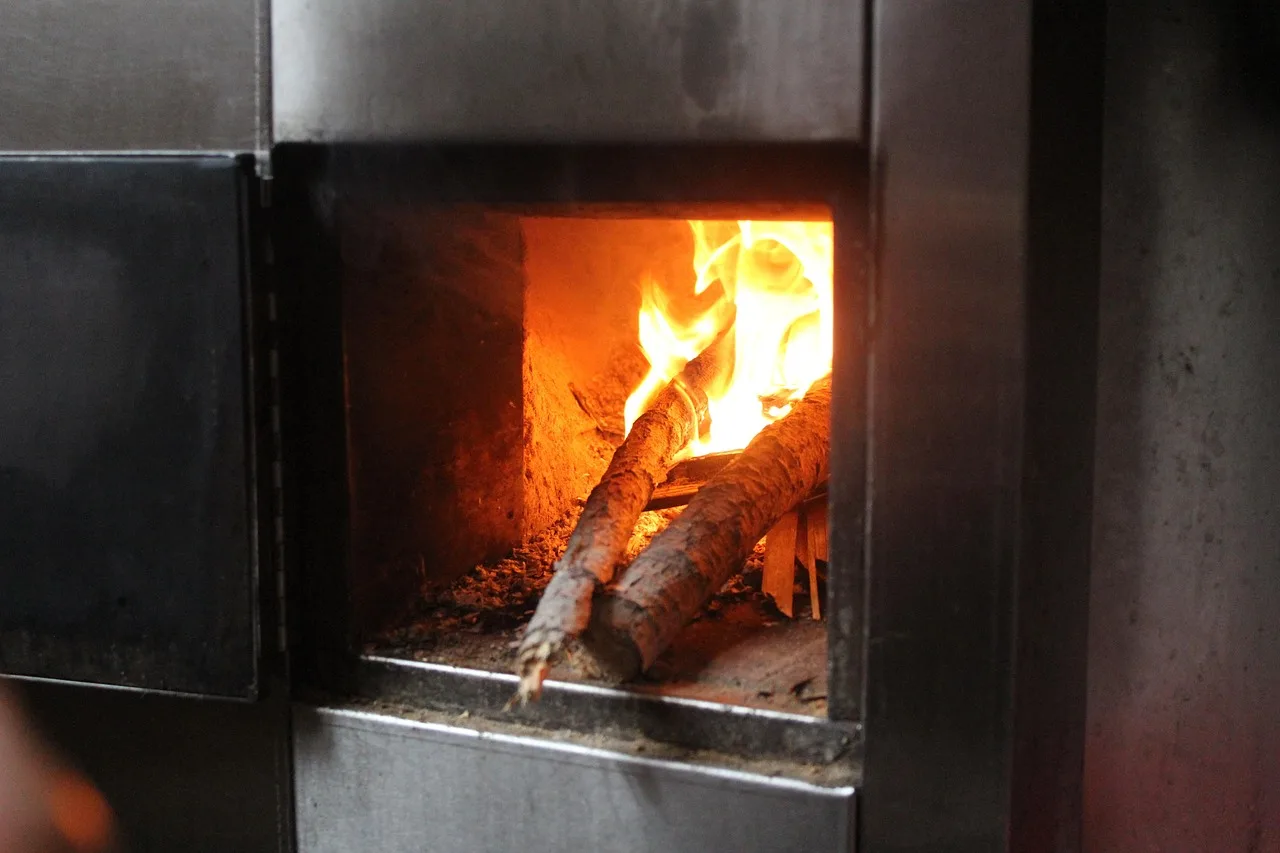
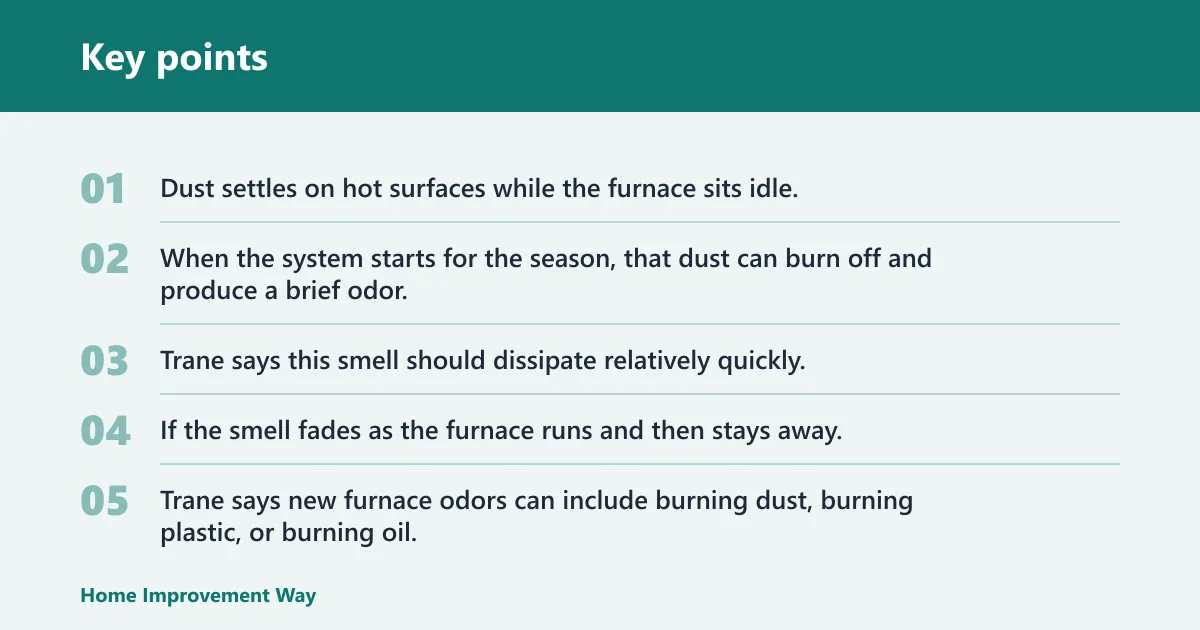
Dust settles on hot surfaces while the furnace sits idle. When the system starts for the season, that dust can burn off and produce a brief odor. The same source says this smell should dissipate relatively quickly. If the smell fades as the furnace runs and then stays away, that pattern usually fits dust rather than overheating plastic.
How long normal startup odor should last?
New furnace odors can also be temporary. The same source says new furnace odors can include burning dust, burning plastic, or burning oil, and that they should dissipate in about an hour. If a new system keeps smelling beyond that window, the odor is no longer behaving like normal break-in.
Why a filter check belongs here
A clogged air filter can restrict airflow and make startup odors worse. The same source recommends starting the heating season with a clean filter. Many filters need replacement every 30 to 90 days, depending on filter type, so a dirty filter can be a simple reason a dusty smell hangs around longer than expected.
Suppose your furnace smells dusty for 20 minutes on the first cold night, then stops. That points toward normal startup burn-off. If the same furnace smells sharper after a month of use, and the smell returns after every cycle, that is a different problem and should not be treated the same way.
Furnace smell triage checklist
This checklist helps you separate dust, vent contamination, and real overheating problems. Match the odor to the most likely source, then take the next step. If you are unsure between two rows, choose the safer action.
| Odor description | Most likely source | Action |
|---|---|---|
| Light dusty smell on first startup of the season | Dust burn-off from furnace and ductwork | Run the system briefly, confirm the smell fades, and check the filter |
| Sharp chemical or plastic odor | Electrical overheating or melting wire insulation | Turn the furnace off and arrange repair |
| Smell only at vents or registers | Melted plastic, packaging, or debris near supply vents | Inspect vent openings and remove the object if safe to do so |
| Smell after a new install | Coatings, lubricants, or break-in odors | Monitor for about an hour; call if the odor persists |
| Smell with breaker trips or furnace shutdown | Overheated blower motor or electrical fault | Leave the unit off and schedule HVAC inspection |
| Smell that stays after a filter change | Overheating motor, wiring, or another internal fault | Do not keep resetting the system; arrange service |
Could it be an electrical problem?
Yes. A burning-plastic furnace smell often points to an electrical issue, especially if it is acrid, persistent, or paired with shutdowns. That smell can come from wire insulation, motor parts, or another component running hotter than it should. These problems are not the same as ordinary dust burn-off.
Blower motor overheating
The blower motor moves air through the system, and if it overheats it can create a plastic-like odor. Weheatyourhome lists an overheated motor as another cause of burning-plastic odor, and Sealed notes that some furnaces may smell like burnt plastic when warm air begins moving through the system. A stressed motor may also trip the breaker or shut the furnace off.
Melted wire insulation
Electrical wire insulation can melt when overheated, creating an acrid plastic smell and a fire hazard. Trane identifies melting plastic wire casing as a possible source of the odor. That is a repair issue, not a filter issue. Do not keep running the furnace to see whether the smell clears on its own.
Breaker trips and shutdowns
If the furnace trips the breaker, cycles off unexpectedly, or smells worse right before shutdown, treat that as a stronger warning sign. A breaker trip can be the system protecting itself from heat or electrical overload. Keep it off until an HVAC technician checks the wiring, motor, and related components.
Why a new furnace can smell at first
A new furnace can smell unusual during break-in. The same source says new furnace odors can include burning dust, burning plastic, or burning oil, and they should dissipate in about an hour. That short window matters. If the odor lasts longer, gets stronger, or seems to come from one spot, the situation is no longer routine.
Coatings and lubricants burning off
New equipment may give off odors as protective coatings or lubricants warm up for the first time. That can smell dusty, oily, or slightly plastic-like. The key detail is duration. A normal break-in odor should fade, not build.
What is normal during break-in?
During the first heat cycle, a faint odor that disappears as the furnace warms up can be normal. The smell should not fill the house for hours, and it should not come with smoke. If your new furnace smells only on the first few runs and then stops, that pattern fits break-in better than failure.
When a new-install odor is abnormal
Arrange service if the odor lasts beyond about an hour, keeps returning after several cycles, or becomes sharp enough to smell like melting plastic. Persistent odor after installation can point to a wiring problem, a motor issue, or debris left in the system. New equipment still needs a close look when the smell is strong.
A common mistake is brushing off a sharp plastic-like odor from a furnace that just started up after months of sitting idle. Picture a newly installed 80,000 BTU gas furnace that smells faintly oily for one heat cycle, then clears. That is different from the same furnace smelling like hot plastic every time the blower starts, which calls for an inspection.
What to do right away
Start with the safest step. If the odor is sharp, persistent, or paired with smoke, turn the furnace off. Then check the filter and look for anything obvious near vents. If the smell points to electrical or motor trouble, or if it returns after a filter change, stop there and call an HVAC technician.
- Turn the furnace off if the odor is sharp, persistent, or smoky.
- Check the air filter and replace it if it is clogged.
- Look for smoke, breaker trips, or repeated shutdowns.
- Inspect visible vents and registers for melted plastic or debris.
- Arrange HVAC service if the smell suggests electrical or motor trouble.
Call an HVAC technician when electrical or motor issues are suspected
An HVAC technician should inspect the furnace, wiring, and moving parts when the smell suggests overheating. That includes blower motor problems, damaged insulation, and other electrical faults. Smoke, a smell that keeps returning, or any breaker trip means the unit should stay off until it is checked.
Use a carbon monoxide detector as a safety backstop
A working carbon monoxide detector matters in any home with fuel-burning equipment. A burning-plastic odor is not the same as a carbon monoxide warning, but furnace problems can overlap with combustion or exhaust concerns. If the detector alarms, leave the area and follow the detector’s instructions before restarting anything.
Can the smell come from vents instead?
Yes. A smell that shows up only at supply vents can come from something melted or trapped near the registers rather than from the furnace itself. That includes plastic packaging, a toy, pet hair, or debris in the duct opening. If the odor is localized to one or two vents, the source may be in the room, not the burner cabinet.
Melted plastic near registers or ducts
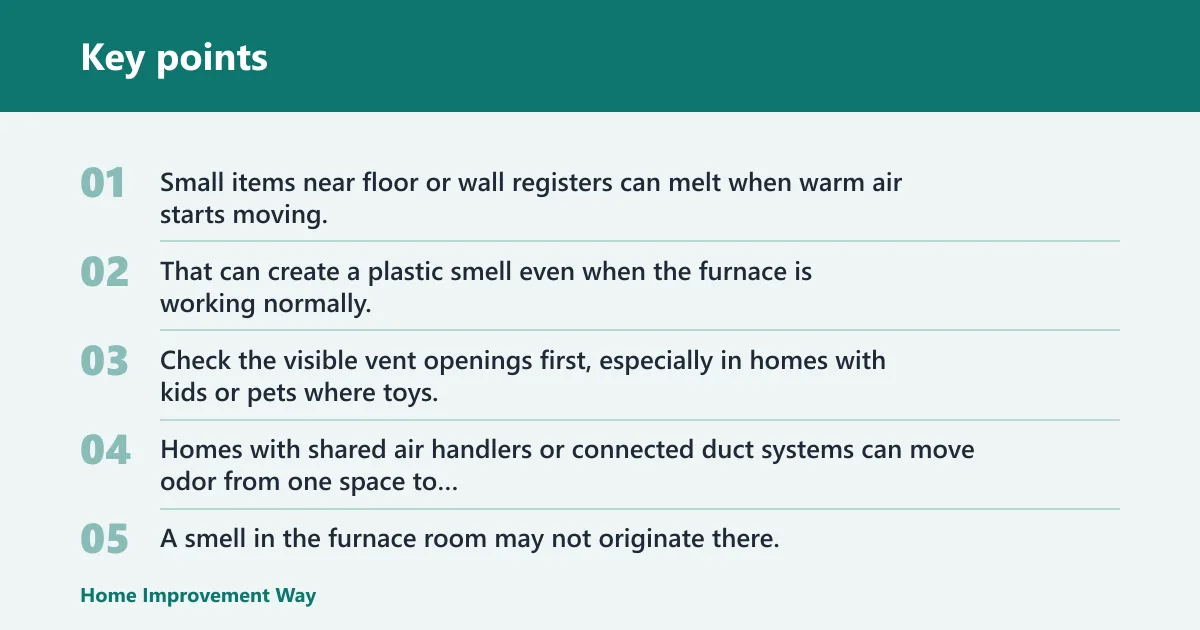
Small items near floor or wall registers can melt when warm air starts moving. That can create a plastic smell even when the furnace is working normally. Check the visible vent openings first, especially in homes with kids or pets where toys, wrappers, or soft plastic items can end up near the grille.
Homes with shared air handlers or connected duct systems can move odor from one space to another. A smell in the furnace room may not originate there. If the odor appears only through certain vents, inspect nearby rooms for the likely source before assuming the furnace is overheating.
Pets, kids, packaging, or foreign objects near supply vents
Vent contamination is common enough to check before assuming a serious furnace fault. If the smell starts right after a move, remodel, or unpacking, a bit of packaging may be lodged near a register. Remove only what you can see safely. Do not open sealed furnace compartments unless you are qualified to do so.
Frequently asked questions
Why does my furnace smell like burning plastic?
A furnace that smells like burning plastic often has an electrical issue, such as overheating wire insulation or a stressed blower motor. If the odor is sharp, persistent, or comes with smoke, turn the unit off and arrange repair. A short-lived dusty smell on first startup is a different situation.
Why does my furnace smell like melting plastic?
Melting-plastic odor usually points to overheating parts, especially wire casing or nearby plastic contamination. Trane identifies melting plastic wire casing as a possible source of the smell. That is not a normal furnace odor. Shut the system down and arrange HVAC service if the smell lingers or worsens.
Why does my new furnace smell like burning plastic?
A new furnace can smell like burning dust, plastic, or oil during break-in. The same source says those odors should dissipate in about an hour. If the smell keeps coming back after that, or if it gets sharp and smoky, the install should be checked for a fault or leftover debris.
Why does my heat smell like burning plastic?
If the smell appears only when heat runs, the source may be dust burn-off, vent contamination, or an overheating component that only acts up under load. A clean filter can help if the issue is dusty. A sharp plastic odor, breaker trip, or smoke means the system should be turned off.
Why does my house smell like burning plastic?
When the whole house smells like burning plastic, the odor may be moving through the ductwork from the furnace, or it may be coming from a vent-side object that heats up with airflow. Check whether the smell only appears with the furnace on. If it does, treat the furnace as the likely source first.
Is a burning-plastic smell ever normal when the heat first turns on?
Sometimes, yes, but only briefly. A light startup smell can come from dust or break-in odors on a new furnace. The same source says those odors should clear relatively quickly, and new-unit smells should dissipate in about an hour. Anything stronger, longer, or smoky is not normal and should be checked.
Sponsored / affiliate links. As an Amazon Associate I earn from qualifying purchases. I may earn additional commission from eligible campaigns.