How to Test Indoor Humidity Without a Hygrometer
You can estimate indoor humidity with simple checks like condensation, static, comfort, and a salt reference check; persistent fogged windows or brittle air often point to humidity outside the 30% to 50% target range. Guessing wrong can leave you with dry air, mould risk, or damage to wood and paint. This guide shows simple checks, their limits during heating season, and when a real hygrometer is worth buying.
Quick room checks before testing


You can use a few quick checks to sort a room into “likely dry,” “likely damp,” or “needs a real meter.” The best checks are screening tools, not exact readings. They work best in the room’s center, away from vents, windows, doors, and direct sun.
What you’ll need
- A clear glass, water, and ice cubes for the ice cube test
- Two thermometers, cotton wick, and distilled water for a wet-and-dry bulb check
- Table salt and a sealable bag or small airtight container for a salt check
- Paper and pen to record what you see over time
- A digital hygrometer if the rough checks disagree or the room is in heating season
- Check the room first. Stand in the center of the room and note static, throat dryness, paint flaking, or a musty smell. Those clues can point to low or high humidity, but drafts, showers, cooking, and cold glass can skew them.
- Run a quick ice glass test. Fill a glass with water and ice cubes, then wait about 5 to 10 minutes. Fogging or beads on the outside suggest the air near the glass is at least close to its dew point; a dry glass suggests the air is farther from saturation, but this is only a clue and can be affected by glass temperature and room conditions.
- Use a thermometer pair if needed. Set up a dry bulb and a wet bulb with a cotton wick dampened by distilled water, and make sure air moves steadily over the wet bulb as it would in a psychrometer. Wait until both readings settle, then compare the two temperatures with a psychrometer chart or calculator.
- Try a salt check for calibration. Put damp table salt in a sealed bag or container beside the thermometer setup. In a sealed container, a salt environment can be used as a rough calibration check for the setup rather than a way to measure room humidity.
- Write down the result. Record what happened, the room temperature, and whether heaters, fireplaces, showers, or open windows were running. Relative humidity changes with temperature, so the same moisture content can read differently in a warmer or colder room.
Say your bedroom feels dry, your lips crack by morning, and the baseboard paint looks flaky. That points toward low humidity, but the same signs can also appear when a space heater runs hard overnight. In that case, a hygrometer is the next step, not more guessing.
Humidity checks decision table
| Check | Reliability | Time to result | Common false positives | Exact next step |
|---|---|---|---|---|
| Ice glass | Low | 5 to 10 minutes | Cold glass, air conditioning, open window, draft | If condensation forms quickly in a normal room, treat it as a high-humidity clue and confirm with a hygrometer. |
| Mirror or steam | Low to medium | 1 to 3 minutes | Shower steam, kitchen steam, closed bathroom door, cold mirror | If fog appears fast only near steam, do not treat it as whole-house humidity; move to a room-centered check. |
| Wet-and-dry bulb | Medium | 5 to 15 minutes | Drafts, wet wick contact errors, bad chart use | If the two thermometer readings stay several degrees apart, use a psychrometer chart and repeat away from drafts. |
| Salt | Medium for setup checks | Several hours to overnight | Leaky container, wet salt clumps, wrong temperature assumption | If the container does not settle near the expected 75% RH reference, check the setup before trusting any humidity reading. |
| Sensory cues | Low | Immediate | Seasonal dryness, medication effects, dusty heat, sleeping position | If you notice static, dry throat, or cracked paint in winter, buy a hygrometer and verify the room over a full day. |
Ice cube glass test

The ice cube test is a quick screen, not a precise measurement. It uses a glass, water, and ice cubes to estimate whether the air near the glass is close to saturation. If condensation appears on the outside of the glass after a few minutes, the surface is cooling the nearby air to its dew point.
- Chill the glass. Fill a glass with water and ice cubes, then leave it on a table away from a vent or sunny window for about 5 to 10 minutes.
- Read the condensation. If the outside fogs or beads up quickly, the air near the glass is likely moist enough to condense on that cold surface. If it stays clear and dry, the air near the glass is less likely to be near saturation, though a cold room can also delay fogging.
- Use it only as a screen. If the result matters for mould, comfort, or wood damage, move to a real hygrometer. A glass of ice water is not a measurement.
What does condensation on a glass mean for humidity? It usually means the air near the glass is wet enough to cool below its dew point, but a cold surface by itself can make that happen even when the room is not especially damp. That is why the test works best as a quick yes/no clue.
Wet-and-dry bulb method
Yes, you can use two thermometers to test humidity at home. A psychrometer uses two thermometers, water, and a cotton wick, and it depends on airflow over the wet bulb for evaporation to work correctly. The dry bulb reads room temperature, and the wet bulb reads cooler because evaporation removes heat. The size of that gap points to relative humidity.
- Set up both thermometers. Place them side by side in the room’s center, away from drafts, vents, windows, and direct sun. Keep one bulb dry and wrap the other with a cotton wick dampened with distilled water.
- Wait for stable readings. Leave them where there is steady airflow over the wet bulb for about 5 to 15 minutes until the numbers stop changing. A moving fan or open door can pull the wet bulb lower than it should be.
- Compare the temperatures. Use a psychrometer chart or calculator to convert the dry-bulb and wet-bulb difference into relative humidity. The calculation depends on room temperature, so the same gap can mean different RH values in different rooms.
This method gives more detail than a glass test, but it still depends on correct setup and a chart. A small placement mistake near a register or window can throw it off.
When should you stop guessing and use a hygrometer?
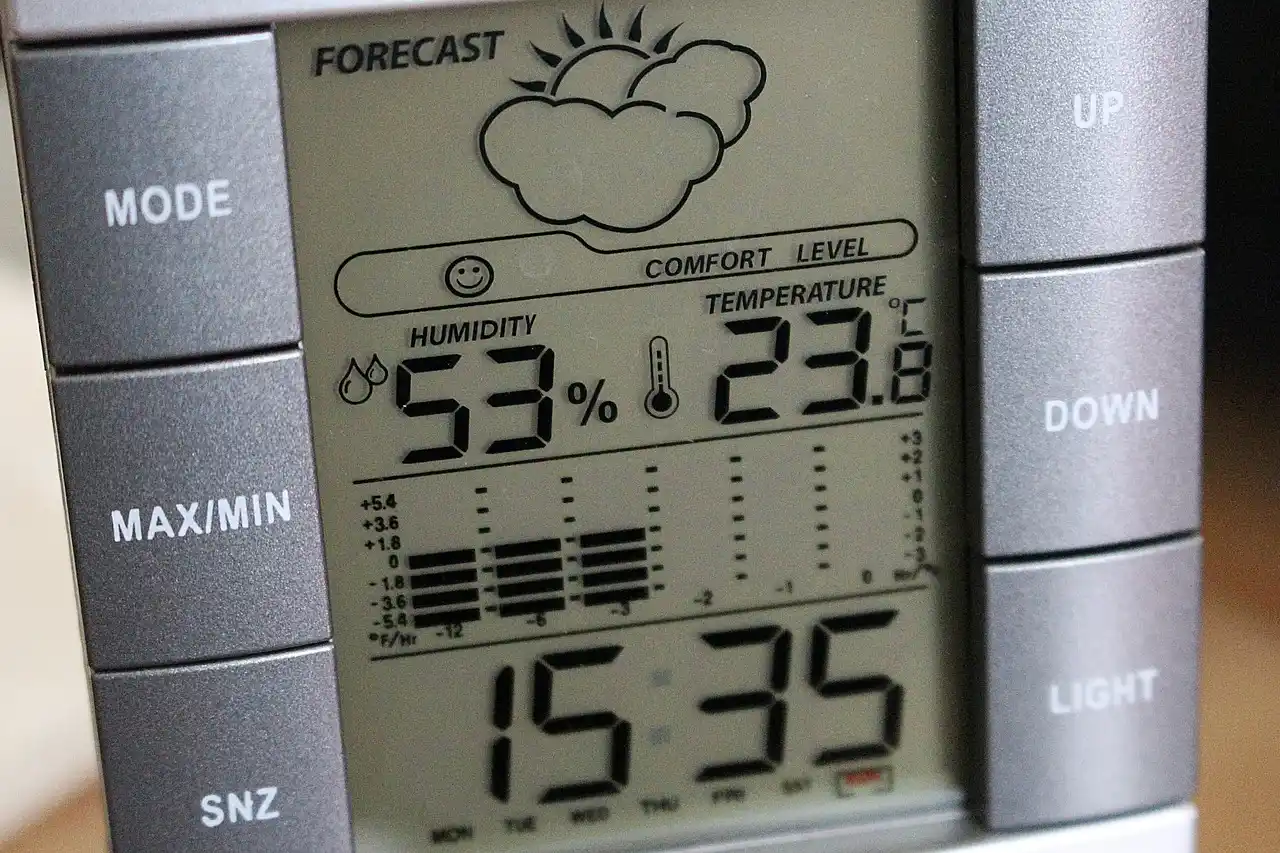
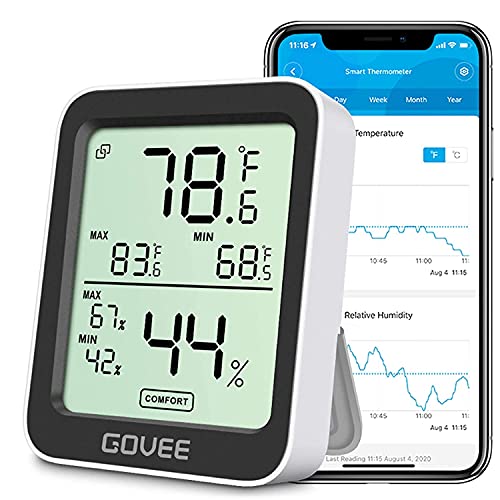
Stop guessing when the room is heated, when the rough checks disagree, or when you care about mould, dust mites, wood movement, or comfort. A digital hygrometer is the default for indoor spaces because it gives a direct reading and lets you track the room over time.
What a hygrometer should do
Look for a digital model with stated accuracy in the product specs, then place it away from vents, windows, and sunlight. Give it time to settle after you move it. If the reading seems odd, compare it with a simple calibration check before you trust it.
Analog units can work as a quick reference, but digital units are usually easier to read and check. Put the sensor in the center of the room, not by a bathroom door, kitchen hood, or heater.
Suppose a living room reads fine on a salt check, but the same space feels dry whenever the furnace cycles on. That split result is a warning sign. Heating season can drop relative humidity fast, and the room temperature shift can make rough checks look better or worse than they really are.
Common mistakes
Most wrong readings come from location, heat, or steam. Bathrooms, kitchens, open windows, and air vents distort the air you are trying to judge, so they make bad sampling spots.
- Do not read a mirror right after a shower and call that whole-house humidity.
- Do not place a test near a draft, heater, fireplace, or sunny window.
- Do not treat the ice cube test as an exact RH reading.
- Do not ignore temperature; relative humidity changes when room temperature changes.
- Do not rely on smell alone if the house has both dry-air signs and condensation.
Low humidity signs include frequent static electricity, eye, nose, or throat dryness, and dry, flaky paint on walls. High humidity signs include condensation, a musty odor, and conditions that can support mould growth or make dust mites more likely when humidity stays elevated for long enough.
Indoor humidity is usually best kept between 30 and 50 percent if possible. Many people find 30 to 60 percent comfortable, but winter heating can push rooms below that range and make dry-air symptoms more obvious.
Prevention: Check the same room at the same time of day for a few days. That makes changes from heating, weather, and occupancy easier to spot.
Frequently asked questions
How do I test the humidity in my home without a hygrometer?
Use the ice glass test, a mirror fog check, sensory cues, or a wet-and-dry bulb setup. The fastest screen is condensation on a cold glass, but the more reliable check uses two thermometers with a chart. For any result that matters, confirm with a hygrometer.
What can I use instead of a hygrometer to measure humidity?
You can use a psychrometer, which relies on two thermometers, or a salt reference check for calibration. The ice cube test and mirror fog test can only tell you whether humidity looks high or low. They cannot give an exact RH number.
Is the ice cube test accurate for indoor humidity?
No. It is a rough yes/no indicator only. If the outside of the glass fogs quickly, the room may be damp; if it stays clear, the room may be dry. Cold glass, drafts, and room temperature can all mislead the result.
Can I use two thermometers to test humidity at home?
Yes. Set up one dry bulb and one wet bulb with a cotton wick dampened by distilled water, then compare the readings after they settle. Use a psychrometer chart or calculator to convert the difference into relative humidity, and keep the thermometers away from drafts and vents.
What indoor humidity level should I aim for?
A good target is 30 to 50 percent RH, with 30 to 60 percent often feeling comfortable. In winter, heated rooms may fall below that range, which can bring static, dry throat, and flaky paint. Use a hygrometer if you need to know where the room actually sits.
How can I tell if my house is too dry in winter?
Look for static shocks, dry skin or throat, and cracked or flaky paint, especially when heat is running often. A room that feels comfortable in mild weather can read much drier after heating raises the temperature, so the most useful check is a hygrometer placed in the room center.
Sponsored / affiliate links. As an Amazon Associate I earn from qualifying purchases. I may earn additional commission from eligible campaigns.