Can You Use a Propane Heater Indoors Without Ventilation?
By the Home Improvement Way Editorial Team — Expert reviewed by an HVAC and fire-safety professional
This guide is part of our Space Heaters, Fireplaces and Winter Humidity Guide series.
Editorial check notes: This guide was verified against manufacturer manuals, listing-label language, and public fire-safety guidance from the CPSC, CDC, NFPA, and state fire marshal resources. When you check a heater, look for the exact wording on the rating plate and in the manual—for example, “indoor use only,” “outdoor use only,” required clearances, and any stated ventilation or room-size limits.
Do not run a propane heater indoors unless the unit is specifically rated for indoor use and its manual allows that room size, clearance, and fresh-air setup. Many portable propane heaters are intended for outdoor use only. Poor setup can create carbon monoxide risk, oxygen depletion, and moisture buildup. This guide explains which propane heaters may be used indoors, what “ventless” really means, and which room conditions change the risk.
Propane heater decision checklist

| Heater type | Indoor label | ODS present | Minimum ventilation needed | Safe room types | Red-flag conditions | Use indoors without ventilation? | Short reason |
|---|---|---|---|---|---|---|---|
| Outdoor-only portable propane heater | No | Varies by model | Not approved for indoor use | Outdoor spaces only | Bedrooms, bathrooms, closets, sealed rooms, sleeping use | No | It is not listed for indoor combustion and can put CO into the room. |
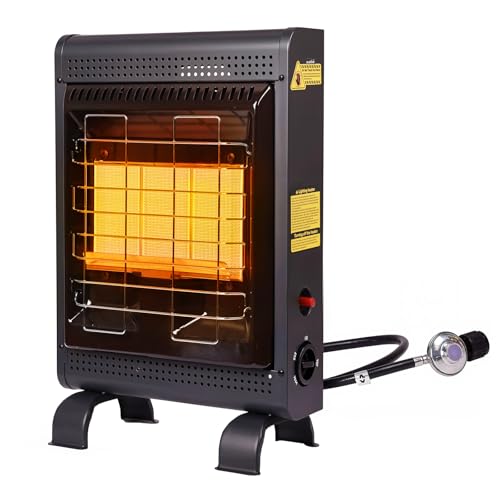
| Indoor-rated portable propane heater | Yes | Usually yes | Per manual; indoor heaters should follow the room-air and ventilation instructions in the manual | Rooms allowed by the manual, with required clearances | Missing listing mark, blocked airflow, dead detector batteries, sleeping in a tight room | Sometimes | Some indoor-rated units may be allowed without external venting, but only under the label and manual limits. |
| Ventless propane heater | Often yes | Usually yes | No external venting, but room-air exchange may still be required | Rooms that meet the manufacturer’s size and ventilation rules | Sealed rooms, poor airflow, moisture buildup, sleeping use if the manual forbids it | No, not by default | “Ventless” means no flue, not no ventilation needs. |
| Direct vent propane heater | Installed system, not a portable room heater | Varies by model | External venting required | Properly installed spaces with the correct vent path | Improvised installation, blocked vent path, missing service access | No | It expels combustion byproducts outside, so it is not a no-ventilation setup. |
How to read the table
The key split is simple: outdoor-only heaters are out, indoor-rated heaters may be allowed, and ventless is not the same as “safe in any sealed room.” Direct vent systems move combustion byproducts outside, but they still depend on the correct appliance type, installation, and vent path specified by the manufacturer and any applicable code or listing requirements.
Say your rental bedroom is small, the heater has no indoor-use label, and the manual is missing. That is a hard stop. Turn it off, leave the room, and use a heater that is clearly listed for indoor use if the space and manual allow it.
Can you use a propane heater indoors safely?
Only if the heater is specifically approved for indoor use and you follow the manual exactly. Safety depends on the heater type, the room size, the clearance around the unit, and whether the room has the air exchange the manufacturer requires. Outdoor-only propane heaters should never be used indoors.
Indoor-rated versus outdoor-only models
Check the label first, then the manual. An indoor-rated propane heater should identify indoor use in its instructions and usually includes a recognized listing mark such as UL, CSA, or ETL where applicable. If the label says outdoor use only, keep it outdoors.
Why combustion changes the risk
Propane combustion can produce carbon monoxide, which is colorless and odorless. It also uses room oxygen and adds water vapor to the air, so a tight room can become unsafe even before the heat feels excessive. Public guidance from the CPSC, CDC, and state fire marshals consistently treats portable combustion heaters as a carbon-monoxide hazard when they are misused or used in poorly ventilated spaces.
A carbon monoxide alarm is important, but it is not a substitute for the right heater, the right room, or the right ventilation.
What happens in a closed room?
In a closed room, a propane heater can lower oxygen, raise carbon monoxide risk, and push moisture into the air. The oxygen depletion sensor may shut the heater off, but that does not make the space safe for prolonged use, sleeping, or repeat operation in a sealed room.
Carbon monoxide risk
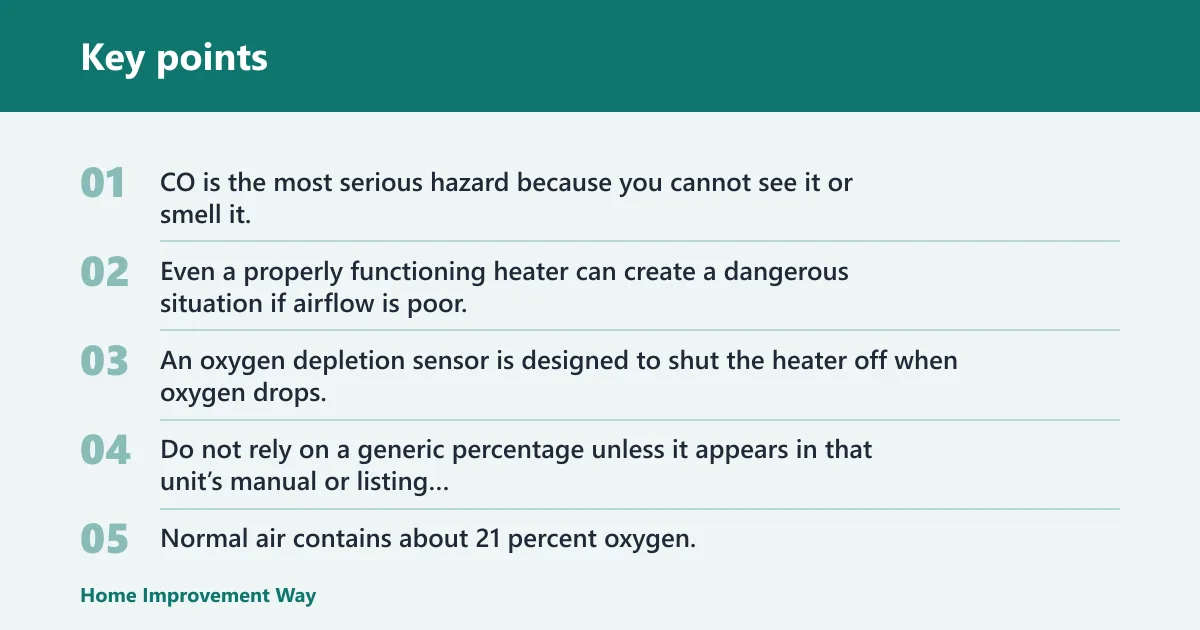
CO is the most serious hazard because you cannot see it or smell it. Even a properly functioning heater can create a dangerous situation if airflow is poor, the vent path is blocked, or the heater is used in a room that is too small for the model.
Oxygen depletion and ODS limits
An oxygen depletion sensor is designed to shut the heater off when oxygen drops, but the shutdown point is model-specific and must be taken from the manufacturer’s documentation. Do not rely on a generic percentage unless it appears in that unit’s manual or listing information. Normal air contains about 21 percent oxygen, so any shutdown condition is a warning that the room setup is wrong.
Moisture buildup and condensation
Propane combustion releases moisture into the room. In a closed bathroom, bedroom, or closet, that moisture can condense on cooler surfaces and contribute to dampness or mold. Tight spaces make that problem worse because there is less air exchange to carry the moisture away.
A common first-timer mistake is to think “the heater shut off, so the room is fine.” It may have shut off because the air got too low in oxygen. The heater did its job; the room still failed the test.
Indoor-rated heaters versus ventless models
Ventless does not mean ventilation-free. It means the heater does not use external venting, not that it can run anywhere with no fresh-air exchange. Direct vent propane heaters are different: they route combustion byproducts outside and depend on the venting and installation described by the manufacturer.
Ventless or unvented heater basics
Ventless propane heaters use room air for combustion and release heat and moisture into the room. They may still require ventilation, room-size limits, and monitoring. If the manual calls for a cracked window, a door gap, or another opening, that instruction matters.
Direct vent propane heater basics
Direct vent propane heaters connect to a dedicated vent path or vent system, depending on the model. They expel combustion byproducts outside, so they are not the same as a portable room heater. They still require correct installation and a vent system that is not blocked.
Why ventless is not the same as sealed
“Ventless” and “no ventilation needed” are not interchangeable. A ventless heater may still depend on room-air exchange, a minimum room volume, and active monitoring of oxygen and combustion conditions. If the room is sealed or undersized, the risk goes up quickly.
How much ventilation does a propane heater need?
The exact amount depends on the heater and the manual. There is no single universal ventilation number that applies to every propane heater. Use the appliance’s installation and operating instructions first, because required room size, opening size, and air-exchange instructions vary by model and listing.
Cracked window or door guidance
A cracked window or partially open door may be required for some heaters, but not all. Follow the manual instead of guessing. If the manufacturer requires a fresh-air opening, provide it. If the heater is not approved for indoor use, no opening makes it acceptable.
Cross-ventilation and room exchange
Cross-ventilation is better than a single stagnant opening because it helps move combustion byproducts out and fresh air in. Avoid sealed rooms. If the room cannot maintain the airflow the heater requires, the heater does not belong there.
Why room size matters
Room size matters because a heater that may be acceptable in one space can be unsafe in another. The same BTU output that is acceptable in a larger room may overwhelm a small bedroom or closet. If the manual gives a room-size limit, follow that limit exactly.
How do you know if a propane heater is indoor-rated?
Look at the manufacturer label, the owner’s manual, and any recognized listing mark tied to the product. An indoor-rated heater should state indoor use plainly in the documentation. If you do not find that wording, assume it is not approved for indoor use.
Label and manual checks
Check for the exact use case, not a loose phrase on the box. The manual should explain where the heater may be used, what clearance it needs, whether ventilation is required, and whether the model has an oxygen depletion sensor or automatic shutoff. For a solid label check, verify the rating plate language, the model number, and the use-location statement in the manual match each other.
UL, CSA, or ETL listing marks
An indoor propane heater should carry a recognized listing mark where applicable, such as UL, CSA, or ETL, and that mark should match the heater model and the manual. The key point is the recognized listing itself and the matching instructions, not a generic “safe” claim on the package.
Why outdoor heaters should stay outside
Outdoor propane heaters are not safe inside unless the manufacturer specifically says otherwise. That is the right default. If the heater is built for patios, job sites, or outdoor cooking, do not bring it into a house, garage, RV, tent, or other enclosed space unless the maker clearly says it can be used there.
Placement and clearance basics
Keep combustible materials away from the heater and follow the spacing in the manual. Clearance requirements vary by model, so do not rely on a universal number. Follow the listing and the owner’s manual for front, side, top, and rear spacing, as well as floor-surface requirements.
- Place the heater on a stable, level surface.
- Keep the front, sides, and top clear to the listed distances.
- Keep fabric, paper, furniture, and other combustibles away.
- Do not use it in bedrooms, bathrooms, closets, or sealed rooms unless the manual explicitly allows that space.
- Check that the oxygen depletion sensor, shutoff, and carbon monoxide detector are working before use.
Picture a living room with heavy curtains and a ventless heater pushed close to the wall. Even if the model is indoor-rated, that setup can still be wrong if the required clearance is not met or the manual calls for more room. The label and layout both matter.
Frequently asked questions
Can you use a propane heater indoors without ventilation?
Only if the heater is specifically indoor-rated and the manual allows that room size and setup. Even then, “without ventilation” is a misleading phrase because some ventless heaters still require room-air exchange or monitoring. Outdoor-only propane heaters should never be used inside.
Do propane heaters need ventilation indoors?
Often yes, even when the heater is ventless. The needed airflow depends on the model, the room size, and the manufacturer’s instructions. A ventless heater does not mean ventilation is irrelevant; it only means the heater does not use external venting.
What happens if you run a propane heater in a closed room?
Oxygen can drop, carbon monoxide can build up, and moisture can collect on surfaces. The oxygen depletion sensor may shut the heater off if oxygen falls far enough, but that does not make a closed room safe. Sleeping in that space raises the risk.
Do propane heaters produce carbon monoxide indoors?
They can. Carbon monoxide is colorless and odorless, which is why it is so dangerous indoors. A detector is recommended, but the safer approach is to use only an indoor-rated heater, provide the required ventilation, and never ignore blocked airflow or a failing alarm.
Should you open a window when using a propane heater indoors?
Sometimes, but only if the manual calls for it or the heater’s ventilation instructions require fresh air. Do not assume every indoor-rated heater needs a cracked window, and do not assume a cracked window makes an outdoor heater safe. Match the setup to the model.
Sponsored / affiliate links. As an Amazon Associate I earn from qualifying purchases. I may earn additional commission from eligible campaigns.