Where Is the Best Place to Put a Space Heater in a Room?
Put a space heater 3 feet from anything combustible, on a flat floor, and place it for the job you need: near a drafty window or door to blunt cold air, near you for direct warmth, or in an open central spot for room-wide circulation. Poor placement can waste power, leave cold areas, or start a fire. This guide explains the safest spot for bedrooms, offices, living rooms, and drafty rooms.
Heater placement decision table
Use the room’s coldest entry point as your starting clue, then match the heater to the job. A portable space heater is a supplemental heater, so its best spot depends on whether you need to block drafty air, warm one seated person, or move heat through the room without obstruction.
| Room scenario | Best heater location | Minimum clearance | Surface restrictions | Do not place here |
|---|---|---|---|---|
| Bedroom | Open floor space where the heater can warm the occupied side of the room, not the bed itself | Follow the owner’s manual; keep the unit clear of bedding, curtains, and furniture, with at least 3 feet from combustible items | A flat, hard floor is generally preferred. | A space heater should not be used on a bed, beside drapes, behind a dresser, or anywhere it could run while you sleep. |
| Home office | Near your seated position in open air, aimed to warm your lower body without being tucked under the desk | Follow the owner’s manual; keep clear of papers, chair legs, and any fabric | Hard floor is safest; keep cords out of traffic paths | Under a desk, under a table, behind a printer, or against a wall that blocks airflow |
| Living room | Open central area for whole-room circulation, or near the cold edge if a draft is the main problem | Keep the heater out in the open with the manual’s required clearances | Flat, stable floor away from rugs with thick pile | Behind a sofa, inside a corner trap, or near throw blankets and curtains |
| Drafty exterior-wall room | Near the external wall or under the window if that is the main cold source | Keep the unit clear of window treatments and wall coverings per the manual | Hard, level floor; use a heat-sensitive surface only if the manufacturer allows it | Directly against curtains, in a corner with poor airflow, or where the outlet requires an extension cord |
| Carpeted room | Only where the manufacturer allows carpet use, with the heater still in open air | Follow the manual exactly; do not shrink the clearance zone | Carpet or rug is higher risk; some units require a hard floor only | Any carpeted spot not approved by the maker, especially thick rugs or loose fibers |
📊 Consumer Reports tests space heaters in a 204-square-foot room over 15 minutes. Source: Space Heater Buying Guide.
Where is the best place to put a space heater in a room?
Start with the room’s coldest entry point, then decide whether you need direct warmth or wider circulation. A heater belongs where it can meet the heating need without blocked airflow: near a draft source, near the person using the room, or in an open area that lets warm air move freely.
Use the coldest entry point as the clue
If cold air enters under a window, exterior wall, or leaky door, that area is often the best target. Experts recommend placing an electric heater near an external wall or under a window, but that works best when the unit still has open air around it and is not boxed in by furniture or drapes. A heater jammed into the wrong spot will not warm a room well.
Match the spot to the heating job
For spot heating, place the heater where it warms the seated person directly. For whole-room comfort, choose a more open central location so convection or fan-forced heat can circulate. Say your home office feels cold at your feet but the rest of the room is fine; a radiant heater near your desk can help more than one parked in the far corner.
Keep the unit out in the open
Portable heaters should be out in the open, not behind furniture or in a corner. Those spots trap heat, block airflow, and can leave the heater working against itself. If the room layout only leaves a tight corner, that is a signal to choose a different model or a different room.
Should a space heater go near a window or outside wall?
Yes, sometimes. Near a window or external wall can be the right spot when cold air infiltration is the main problem, especially in rooms that lose heat at the perimeter. It is not a universal rule, though. The heater type, room shape, and clearance around the unit still control whether that placement works well.
When under-window placement helps
Under or near a window can help counter cold air that falls from the glass or leaks through the frame. That is useful in a drafty bedroom or exterior-wall room. Keep it away from curtains and blinds, though, because window coverings can block airflow and create a fire risk.
When the outside wall is only part of the answer
An exterior wall is a common placement target because it is where heat loss often shows up first. But if the heater is too close to the wall, blocked by a sofa, or aimed into a dead space, the location loses value. The best placement still leaves room for air movement.
When a central open spot works better
For a family room or open living area, a central open spot can beat the coldest edge because it spreads heat more evenly. Consumer Reports tests space heaters in a 204-square-foot room over 15 minutes, and it also measures spot heating with a mannequin within 4.5 feet of the appliance. That difference matters: one placement may be better for the person on the couch, another for the room as a whole.
How far should a space heater be from furniture and curtains?
Keep the heater at least 3 feet away from walls or furniture, and give curtains, bedding, paper, and clothing the same space. The exact clearance can vary by model, so the owner’s manual wins for rear, side, and top distances. Open airflow is part of the safety system.
Why blocked airflow raises risk
When a heater is boxed in, it cannot move air the way it was designed to. That can reduce performance and increase the chance of overheating. Fan-forced units need room for intake and output. Radiant heaters still need space because nearby objects can overheat even if the heater itself seems to be working normally.
What to keep away from the heater
Keep curtains, bedding, furniture, throws, and paper out of the clearance zone. Do not use the heater where fabric can brush against the housing or where the hot air stream points straight into drapes. If the room needs a heater close to a window treatment, the safer answer is often moving the treatment or choosing a different placement, not squeezing the heater closer.
Can you put a space heater on carpet or a rug?
Usually not. Space heaters should not be placed on a carpet or rug unless the manufacturer specifically allows that setup, and even then the instructions should be followed closely. Soft flooring can hold heat, catch debris, and make the heater less stable. Improvised heatproof bases are not a good substitute for approved placement.
Why soft flooring is a higher-risk surface
Carpet or rug material can be flammable or heat-sensitive. It also makes it easier for a heater to sit unevenly, which matters for tip-over risk. A rug with loose fibers can be worse than a low-pile carpet because airflow and stability both suffer.
When a manufacturer may allow it
Some models may permit use on certain floor surfaces, but you need the manual for that answer. Follow the manufacturer’s listing for your model instead of improvising with a board, mat, or other heatproof base unless the instructions explicitly allow it. If the manual does not approve it, do not use that surface.
Which heater type fits the placement best?
Heater type changes the best spot. Convection heaters work best where air can move through the room. Fan-forced heaters help push warm air farther. Radiant or infrared heaters are best when you want direct warmth on a person or a small zone, so placement should match the target, not just the nearest outlet.
Convection heaters for whole-room circulation
Convection heaters warm air, so they do better in open areas where warm air can rise and mix. If you want the whole room to feel steadier, place the unit where furniture will not block the flow. A central open floor spot often works better than a wall pocket for this type.
Fan-forced heaters for moving heat
Fan-forced models send heat across the room more quickly, which can help in medium spaces or rooms with uneven temperatures. They still need a clear intake and output path. Do not hide them under furniture or in a corner, because the fan cannot compensate for blocked airflow.
Radiant heaters for a person or a small zone
Radiant heaters are useful when you want warmth aimed at the person sitting nearby. That makes them a strong fit for a desk, chair, or reading spot, as long as the unit stays clear of fabrics and remains in the manufacturer’s required clearance zone. They are not the best choice for trying to heat a whole room from one spot.
Where should you never place a space heater?
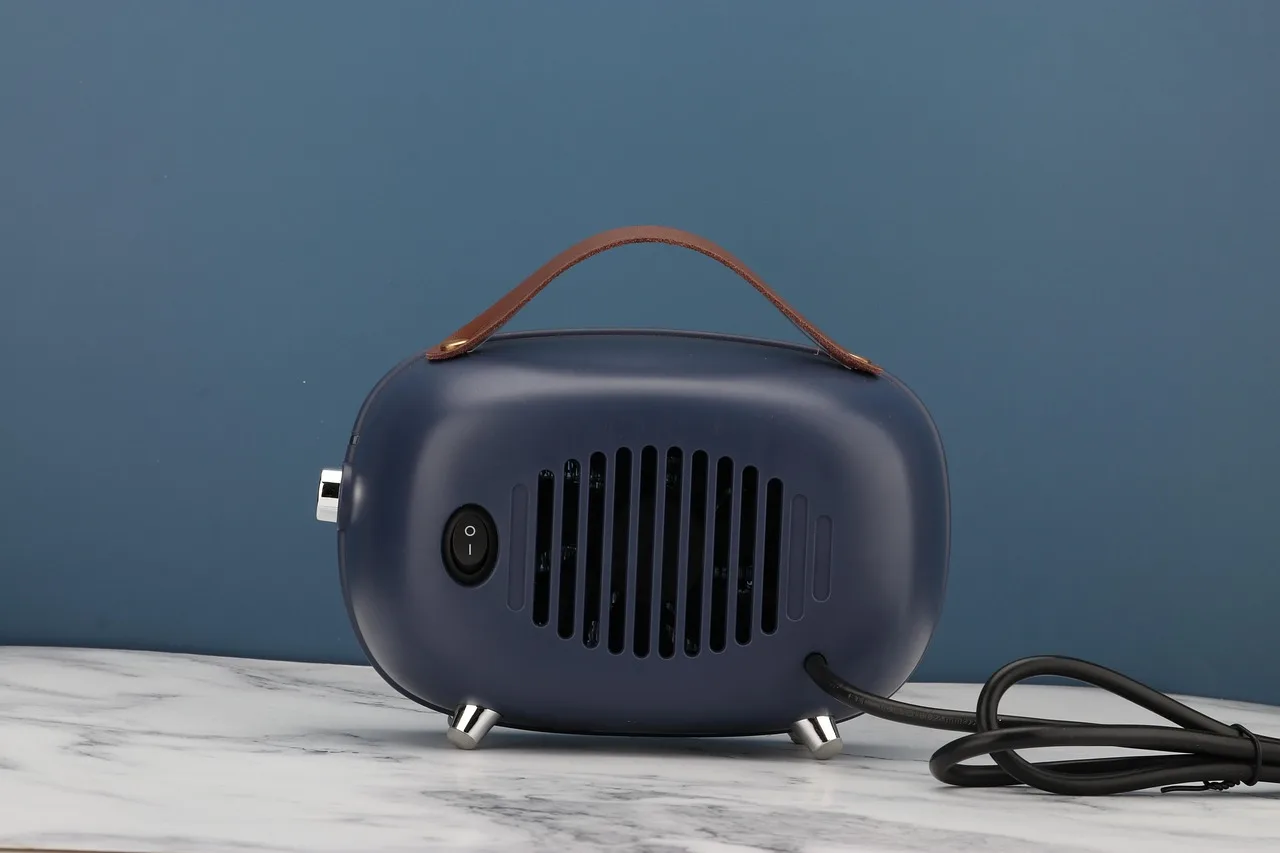
Never place a space heater in a bathroom or laundry room, behind furniture, under drapes, in a tight corner, or under a desk or table that traps heat. Those locations either increase moisture risk, block airflow, or put flammable materials too close to the heater. Always keep the outlet and cord setup direct and simple.
Bathrooms and wet areas
Bathrooms and laundry rooms are not safe places for space heaters. Water and portable heat do not mix well, and humidity can create extra risk. If the room is damp or has splashing water, do not bring a heater in as a quick fix.
Behind furniture and in corners
Behind a sofa, bookcase, or dresser, the heater loses airflow and can heat nearby surfaces instead of the room. Cramped corners can have the same effect. A corner may seem convenient, but it often traps heat rather than moving it where you need it.
Under desks or tables
Do not put a space heater under a desk or table unless the manufacturer specifically allows that setup, which many do not. The underside of furniture can trap heat, and chair legs, bags, paper, and cords can crowd the unit quickly. A heater should stay where air can move freely around it.
- Choose the room’s cold source: window, exterior wall, or drafty door.
- Decide the goal: direct warmth for one person, or circulation for the room.
- Place the heater in open air, not behind furniture or in a corner.
- Keep the unit at least 3 feet from combustible items, unless the manual requires more.
- Set it on a flat, approved surface and avoid carpet or rug unless the maker allows it.
- Plug it directly into a wall receptacle that can handle the load; do not use an extension cord or power strip.
- Use a model with tip-over shutoff and overheat protection.
- Turn it off when you sleep or leave the room unattended. (Familyhandyman)
How to pick the safest spot fast
Picture a drafty bedroom with a window on one wall and the bed on another. The best spot is usually open floor space near the cold edge, but not beside the curtains and not aimed at bedding. That placement blocks the draft without trapping the heater in fabric or forcing it to fight a wall of furniture.
A common first-timer mistake is putting a heater in the nearest empty corner because the outlet is close. That often fails twice: the corner traps air, and the cord setup becomes awkward. A better choice is the nearest open floor area that still lets the heater face the room or the cold source directly.
Frequently asked questions
Is it safe to use a space heater in a bedroom overnight?
No portable space heater should run while you sleep or when you leave the room unattended. Bedrooms need extra caution because bedding and curtains are close by. Use the heater while you are awake, then turn it off before sleeping, even if the model has safety features.
What type of space heater works best for a bedroom or office?
For a bedroom or office, choose the heater type that matches the goal. Radiant units are useful for direct warmth at a desk or beside a chair. Convection or fan-forced models are better when you want the room to feel warmer overall and airflow stays open.
Sponsored / affiliate links. As an Amazon Associate I earn from qualifying purchases. I may earn additional commission from eligible campaigns.
 AZEUS Portable AC and Heater Unit, 420W 110V Compact Air Conditioner for Tent RV Truck Cabin and Small Room, 1400W Cooling, 800W Heating, Remote Control, Dehumidifier, Sleep Timer, ChampagneMEGAWISE Portable Air Conditioner and Heater, 420W 110V Compact AC Unit with Remote Control, 1400W Cooling Capacity, 800W Heating, Dehumidifier, Fan, Sleep Timer, Champagne