Can You Use a Space Heater in a Garage or Workshop?
A space heater can be used in a garage or workshop only if the room is dry, the heater is approved for indoor use, and the power source, clearances, and stored materials all fit the heater’s requirements. Used the wrong way, it can trip breakers, overheat wiring, ignite solvents, or fill the space with carbon monoxide. This guide covers the safety checks, heater types, and setup limits that matter most.
When a space heater works (and when it does not)
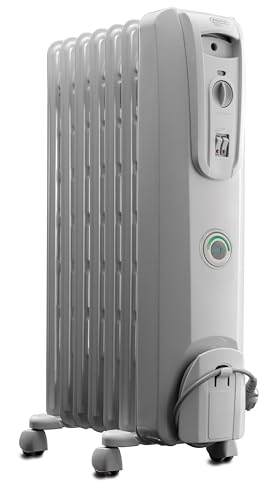


Yes, sometimes. A space heater can work in a small insulated shop, a clean workshop, or a finished garage when the heater type fits the room and the electrical setup can handle the load. It is a poor fit for dusty, cluttered, or fuel-storing garages unless the heater is built for that use and installed correctly.
When the answer is yes
A 120V portable electric space heater can work as supplemental heat or spot heat in a small insulated space. A larger detached garage often needs a hard-wired 240V heater or a gas unit. If the room is insulated, the garage door seals well, and the heater has the required clearances, the answer can be yes.
When the answer is no
The answer turns into no when the garage is dusty, the ceiling is very high, the walls and door leak heat, or the heater would share power with tools and chargers on a weak circuit. It is also no for fuel-burning heaters unless the exact unit is allowed for the space, vented as required, and installed to code.
📊 Family Handyman says the heater is designed for a 1,250- to 1,667-square-foot space. Source: Familyhandyman.
Garage heater decision table
This table gives a fast fit check for four common garage and workshop setups. Treat it as a screening tool, not a substitute for the heater manual, local code, or an electrician or HVAC pro when the installation is fixed in place.
| Garage or workshop scenario | Recommended heater type | Ventilation needs | Electrical needs | Key no-go conditions |
|---|---|---|---|---|
| Small insulated workshop | 120V portable electric space heater for spot heat | None for electric heat, but keep the area clear and dry | Standard indoor outlet may work if the circuit can carry the load | Do not use extension cords or power strips; avoid sawdust buildup and tight storage around the unit |
| Attached unfinished garage | 240V hard-wired garage heater or ceiling-mounted fan-forced heater | None for electric; if fuel-burning, venting and code rules depend on the exact unit | Usually needs a dedicated electrical circuit and hard-wired installation | Do not assume a plug-in unit can warm the whole garage; avoid shared circuits with tools and chargers |
| Detached dusty garage | Listed heater rated for workshop use, often hard-wired electric; gas only if properly vented and installed | Fuel-burning units need the exact venting the manufacturer requires | Often needs dedicated power; some setups need professional wiring | Do not place it near solvents, gasoline, cardboard, or piles of dust and debris |
| Large insulated bay | 240V hard-wired heater or gas-fired unit heater | Electric needs no combustion venting; gas units require proper venting and installation | Dedicated circuit or hard-wired feed, depending on the unit | Do not rely on a 1500W plug-in heater for whole-space heat; do not ignore ceiling height limits |
What heater type fits the space?

The best heater depends on room size, insulation, and how you use the space. A small insulated workshop can often get by with a 120V portable unit. Medium and large garages usually need more output, which is where 240V hard-wired heaters, ceiling-mounted fan-forced units, or gas-fired unit heaters come in.
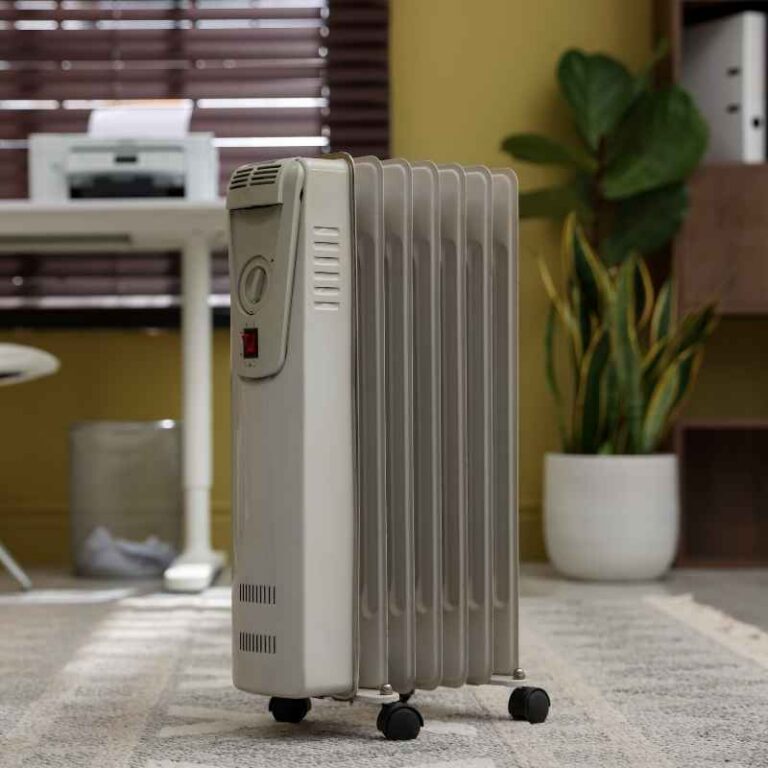
120V portable electric space heater
This is usually a supplemental heat or spot-heating choice, not a whole-garage answer. A common 1500W output ceiling is roughly 5,000 BTU/h equivalent, which can take the chill off a small insulated area but will struggle against big air leaks, cold slab floors, and an open or poorly sealed garage door.
A common first-timer mistake is buying a small plug-in heater for a two-car garage and expecting it to hold the whole room at room temperature all day. That setup may warm the area right in front of the heater, while the far side stays cold.
240V hard-wired garage heater
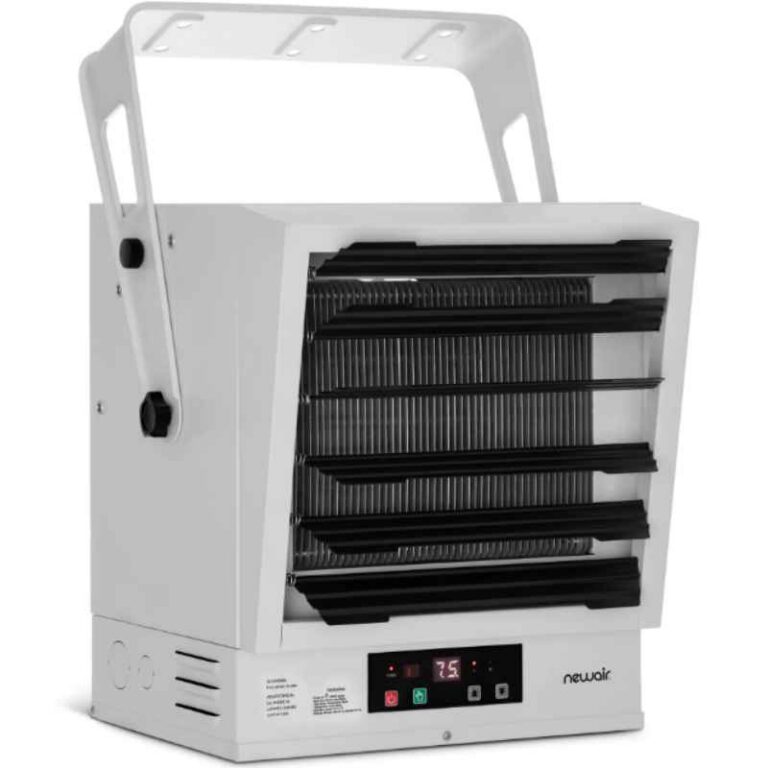
A 240V hard-wired garage heater is a better fit for medium to large workshops because it can deliver more output than a plug-in unit. Many are ceiling mounted, which keeps floor space open and lets the heater push warm air across the room. Installation is fixed in place, so the wiring and branch circuit need to match the unit.
For garage use, this matters because tools, battery chargers, and compressors often share the same space. If the heater and the tools are on the same undersized circuit, nuisance trips are likely. In many cases, a dedicated electrical circuit is the right answer.
Ceiling-mounted fan-forced heater
A ceiling-mounted fan-forced heater suits a workshop where you want the floor clear and the heat distributed across the bay. Bob Vila recommends a ceiling-mounted heater for garage workshops if properly sized, and notes that these heaters may leave the inches nearest the floor cold. That tradeoff matters if you work low to the ground.
Ceiling height also affects sizing. Square-foot ratings usually assume 8- to 10-foot ceilings, so tall garages need more capacity. A 20 by 24 by 16 feet workshop example works out to a 55,158 BTU heating requirement, which shows how quickly tall ceilings change the load.
Gas-fired unit heater
Gas-fired unit heaters, whether propane or natural gas, can suit large spaces. They are not plug-and-play appliances. They require proper venting, proper clearance, and professional installation, and the guide recommends them only in well-ventilated areas. A carbon monoxide detector is recommended for garage heaters, especially where fuel is burned.
Do not treat “well ventilated” as a blanket permission slip. The exact venting path, combustion-air needs, and clearance rules depend on the exact heater type and the manufacturer’s instructions. A gas heater that is wrong for the room can be a serious hazard even if the garage door is cracked open.
Do garage heaters need ventilation?
Fuel-burning heaters do. Electric heaters generally do not need combustion ventilation, but they still need open space around them and a dry, uncluttered setting. For propane or natural gas units, follow the exact venting requirements for that model and do not assume a garage door left open is enough.
Fuel-burning heater requirements
Fuel-burning heaters belong in well-ventilated areas, and the installation rules change with the heater design. Some units vent outdoors through fixed piping or a flue. Others have specific combustion-air and clearance requirements. If the heater manual says professional installation is required, that is the standard to follow.
Why electric heaters are different
Electric heaters do not create combustion gases, so they do not need venting for exhaust. That does not make them carefree. They still need proper clearance, a sound outlet or hard-wired supply, and enough room to avoid contacts with stored materials, cords, and dust. A heater that is electric can still be unsafe in a messy garage.
Carbon monoxide detector placement
A carbon monoxide detector is commonly recommended for garage heaters, especially fuel-burning ones. Placement should follow the detector manufacturer’s instructions, not a generic garage rule. If the garage is attached, the detector strategy should also fit the home’s layout so exhaust or backdrafting is not ignored.
What electrical setup do you need?
Many garage heaters need more power than a typical room outlet can safely provide. A dedicated circuit is often the cleanest solution for a high-draw heater, especially if the garage also runs lights, chargers, a compressor, or power tools. The heater manual should be the starting point for circuit and wiring requirements.
Dedicated circuit basics
A dedicated circuit keeps the heater from competing with other loads. That reduces breaker trips and lowers the chance that a heater shares power with saws, vacuums, or battery chargers. For a 240V heater, a fixed branch circuit is common. For a plug-in 120V unit, the outlet circuit still needs enough capacity for the draw.
Why extension cords are a problem
Extension cords and power strips should not be used with high-draw space heaters. They can overheat, drop voltage, and create a fire risk, especially in a garage where tools and dust already increase the load on the space. If the heater needs a different outlet location, the better fix is the right circuit, not a longer cord.
When a hard-wired unit makes sense
A hard-wired heater makes sense when the garage is large, the heater will run often, or the unit’s electrical draw is too much for a portable plug-in model. That setup is common in insulated workshops and large bays where a 120V portable heater would only provide spot heat, not stable room heat.
What clearance and storage rules matter?
Clearance requirements matter as much as heater output. Every unit has manufacturer-specific minimum distances from combustibles, and garage storage makes those distances easy to violate. Boxes, lumber, paper goods, shop rags, and seasonal items can all creep too close to a heater if the area is not planned carefully.
Combustibles and stored materials
Keep the heater away from anything that can burn or melt. That includes shelving loaded with cardboard, plastic bins, hanging fabric, and wood scraps. In a garage, the problem is not only the heater itself but also the room’s habit of turning into storage space. Leave the required clearance on every side.
Dust, sawdust, and shop debris
Dust changes the answer. A clean workshop with a listed heater is very different from a sanding bay full of sawdust. Dust can collect on heater surfaces, drift toward hot elements, and make cleanup harder. General housekeeping matters, but the safer choice is a heater meant for workshop duty and kept clear of debris.
Gasoline, solvents, and other flammables
Gasoline storage, paint thinner, adhesives, and solvent cans change the risk profile fast. Do not place any heater near fuel cans or chemical storage. In a garage used for automotive work, keep the heater away from spill-prone areas and from anything that could off-gas or ignite. If those materials are present, the setup needs a stricter review.
How do insulation and sealing change the answer?
Insulation and air sealing often matter more than a stronger heater. The same source notes that many garages lack insulation and have cold concrete floors, and that is why they are hard to keep warm. The garage door is often the weak link, so sealing leaks can change what size heater you need.
Garage door sealing
Weatherstripping and door insulation improve comfort because they cut the biggest heat loss in many garages. A heater sized for a sealed room can seem underpowered in a leaky one. Before buying a bigger unit, check the door edges, the threshold, and any gaps around the frame.
Walls, ceiling, and air leaks
Wall and ceiling insulation, plus air sealing around penetrations, help a heater hold temperature instead of fighting constant draft. That matters most in detached garages and large bays. If the building shell leaks badly, even a larger heater may only keep up while it runs continuously.
Why heat loss changes heater size
Heat loss changes whether a 1500W plug-in heater is enough, whether a 240V unit is sensible, and whether a gas-fired heater is justified. A small insulated shop may only need a portable 120V unit. A larger detached garage often calls for a hard-wired 240V heater or gas unit.
Suppose a detached garage has an uninsulated overhead door and a lot of air leakage. A small electric heater may warm your feet near the bench, but the room will still feel cold at the far wall. Sealing the door first can do more than doubling heater size.
Frequently asked questions
Can you use a space heater in a garage safely?
Yes, but only when the garage is dry, the heater is listed for indoor use, and the room conditions match the heater’s requirements. The safe answer depends on the garage type, the fuel source, the wiring, and what is stored nearby. A cluttered or fuel-filled garage needs a much stricter check.
What type of space heater is best for a workshop?
A small insulated workshop can often use a 120V portable electric unit for supplemental heat. Medium and large shops usually do better with a 240V hard-wired heater or a ceiling-mounted fan-forced model. If the space is large, tall, or leaky, a gas-fired unit heater may be the better fit.
Do garage space heaters need ventilation?
Electric heaters do not need combustion venting, but fuel-burning heaters do. Propane and natural gas units require the exact venting and installation the manufacturer specifies, along with proper clearance. A garage door cracked open is not a substitute for the required venting system or for code-compliant installation.
Can a 1500 watt space heater heat a garage?
Usually not as whole-garage heat. A 1500W plug-in heater is typically spot heat, not full-room heat, and it works best in a small insulated space. In a drafty garage, or one with high ceilings and cold concrete floors, it will usually fall short except near the heater itself.
Should a garage heater be ceiling mounted?
It can be a smart choice when you want to keep floor space open and move heat across the room. Ceiling-mounted heaters are common in workshops, but they can leave the lowest inches of the room cooler. The right answer depends on ceiling height, room layout, and the heater’s rated use.
Do I need a dedicated circuit for a garage space heater?
Often yes, especially for higher-wattage electric heaters. A dedicated circuit helps avoid breaker trips and keeps the heater from sharing power with tools, chargers, and compressors. Do not run high-draw heaters from extension cords or power strips. If the unit is hard-wired, have the wiring sized for the model.
Sponsored / affiliate links. As an Amazon Associate I earn from qualifying purchases. I may earn additional commission from eligible campaigns.