Can You Plug a Space Heater Into an Extension Cord?
No, do not plug a space heater into an extension cord or power strip. Plug it straight into a wall outlet, and use a dedicated circuit if the room layout or the heater’s load makes that necessary. A poor connection can heat cords and contacts, trip breakers, or start a fire. The right choice depends on the heater manual, the circuit, and whether the outlet setup shows any warning signs.
Space heater safety checklist
| Device wattage | Cord or strip rating required | Recommended action |
|---|---|---|
| 750W | Even if a cord or strip is rated for the load, extension cords and power strips are still not the right choice for a heater. | Plug directly into a wall outlet. If the heater manual says not to use an extension cord, follow that instruction. |
| 1,500W | A standard 15-amp circuit is about 1,800 watts maximum, but that does not make a cord or strip safe for heater use. | Use a wall outlet only. A space heater around this load should not be moved onto a strip or cord just because the numbers seem close. |
| Over 1,500W | Check the manufacturer’s listing for your model and the circuit rating in the room. Any appliance using more than 1,500 watts should be on a dedicated circuit. | Do not guess based on gauge alone. Move the heater, use another outlet, or have an electrician address the outlet or circuit problem. |
| Any wattage with a warm plug, soft plastic, discoloration, buzzing, loose fit, or tripped breaker | No rating is acceptable once the connection shows stress. | Stop using it immediately and unplug the heater. Replace the setup with a wall connection or get the circuit checked. |
Space heater safety starts with the outlet
A space heater is a high-draw heating appliance. Consumer Product Safety Commission guidance treats portable heaters as a fire-risk product category and recommends plugging them directly into a wall outlet, not into an extension cord or power strip. Many heater manuals say the same thing. Follow the manual first, then verify that the outlet and circuit can handle the load safely.
The key point is not whether the heater turns on. The key point is whether the connection can carry heat safely for long enough without warming the plug, softening plastic, or loosening contacts. A heater can run for a while and still be a bad setup.
A standard US 15-amp circuit is about 1,800 watts maximum under the simple watt formula. But a 1,500-watt heater already uses about 12.5 amps, so it leaves little room for anything else on the same circuit. That math is useful, but it does not replace the heater’s instructions or the condition of the outlet.
Picture a 1,500-watt heater on a bedroom floor with a thin cord draped under a rug. It may work at first. Then the plug feels warm, the cord jacket softens, and the outlet face shows discoloration. That is not a setup to “keep an eye on.” It is a stop signal.
Can you plug a space heater into a power strip?
No. A power strip is the wrong tool for a space heater, even when the strip has a 15-amp rating. Many consumer power strips are designed for electronics and light-duty use, not sustained heater loads. The safer answer is still no unless the heater manufacturer specifically allows that exact setup, which most do not.
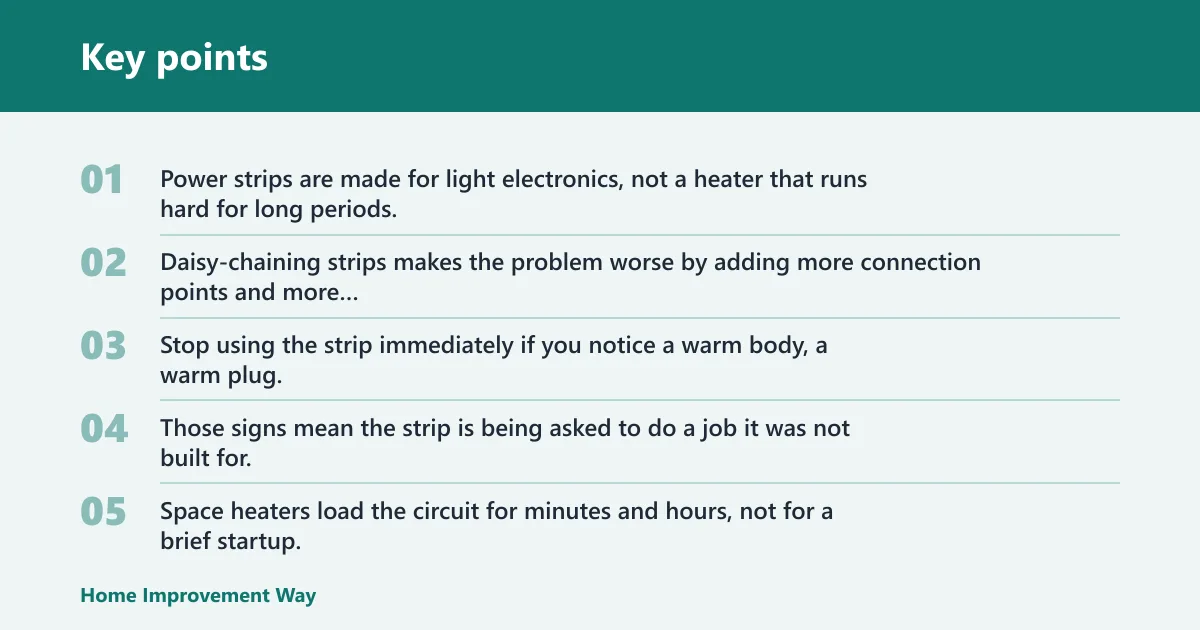
Power strips are made for light electronics, not a heater that runs hard for long periods. Daisy-chaining strips makes the problem worse by adding more connection points and more heat risk.
Stop using the strip immediately if you notice a warm body, a warm plug, a loose connection, a flicker when the heater cycles, or a breaker that trips after the heater starts. Those signs mean the strip is being asked to do a job it was not built for.
Why space heaters are not safe on power strips
Space heaters load the circuit for minutes and hours, not for a brief startup. That sustained draw matters. The strip, its outlets, and its internal wiring are not meant to handle heater heat over time, especially if the connection is already loose or the heater is near the circuit limit.
A surge protector does not change that. Surge protection is about voltage spikes, not heater load. If the heater demands too much current for the strip or the branch circuit, the strip still runs hot or fails under stress.
What kind of extension cord is safe for a space heater?
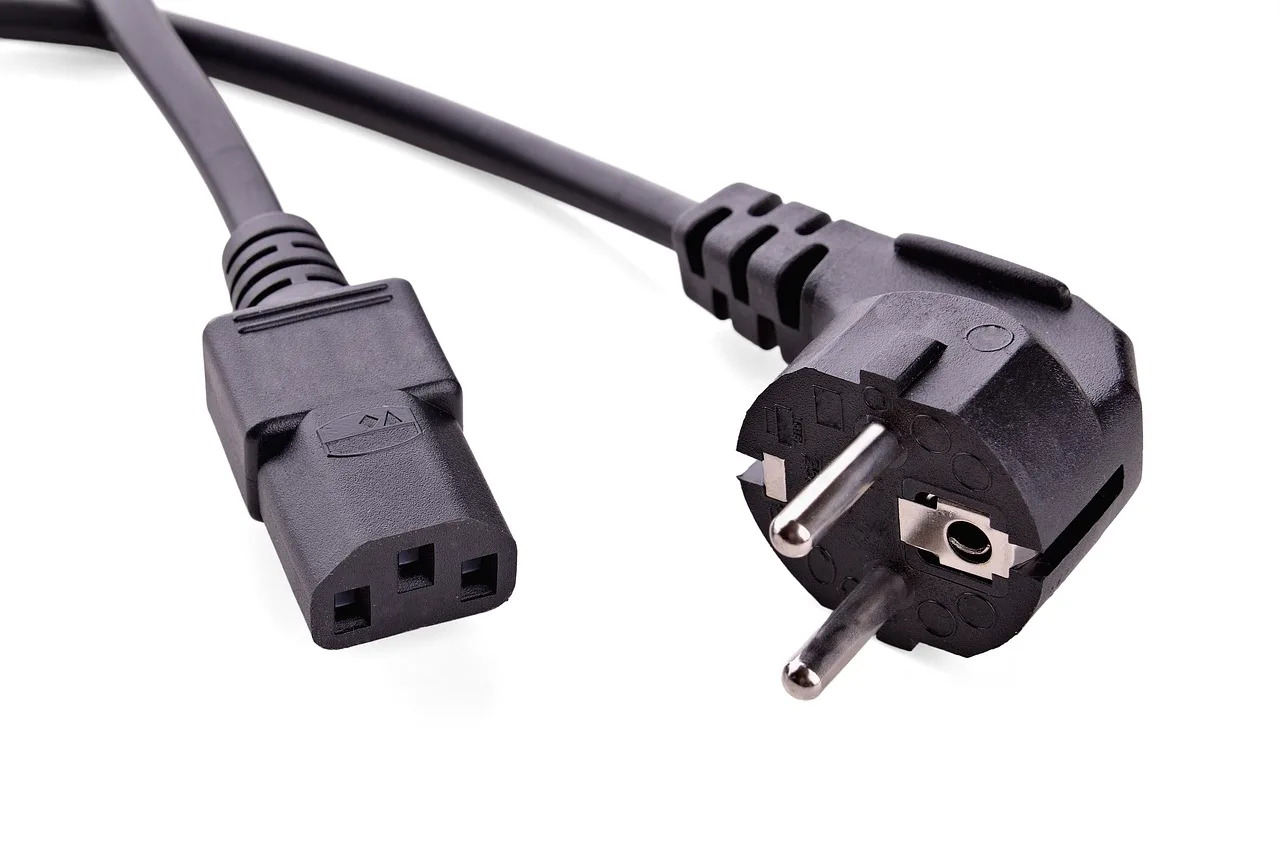
In practical terms, none is the preferred answer unless the heater manual specifically allows it. Even then, the cord must match the appliance, length, temperature rating, and construction details in the listing. Gauge alone does not make a cord safe for a heater, and manufacturer instructions control over general math.
For basic electrical sizing, 16 AWG cords are generally lighter-duty than 14 AWG, and 12 AWG is heavier-duty than both. But that does not make any of them a blanket fix for a space heater. A 1,500-watt heater draws about 12.5 amps continuously, which is close to the practical ceiling of a 15-amp circuit and leaves little margin for losses, heating, or other loads.
UL or ETL certification matters on cords and strips because it shows the product was evaluated as built. It does not mean every certified cord is suitable for every appliance. If the heater manual says not to use an extension cord, certification does not override that instruction.
What 14-gauge, 16-gauge, and 12-gauge mean here
Think of gauge as one part of the picture, not the whole answer. A 16-gauge cord is more appropriate for lamps and small electronics, not a typical 1,500-watt heater. A 14-gauge cord has a higher capacity, but it is still not a blanket fix for heater safety. A 12-gauge cord is heavier-duty, but it still does not override the heater manual or eliminate the fire risk from a long, heated run.
Indoor and outdoor jackets matter too. Outdoor cords are built for different conditions, but outdoor-rated does not mean heater-safe. If a heater manual does not permit a cord, a tougher jacket does not change the instruction.
How many amps does a space heater draw?
Many portable heaters draw close to the upper end of a common household circuit. A 1,500-watt heater draws about 12.5 amps at 120 volts, and that is before accounting for anything else on the same branch circuit. That is a large load for a single outlet.
That load is why the heater can trip protection devices or heat up a weak connection. A breaker may trip, or the cord ends may get warm before the breaker ever reacts. Neither outcome is a sign to keep using the same setup.
Why space heaters strain cords and strips
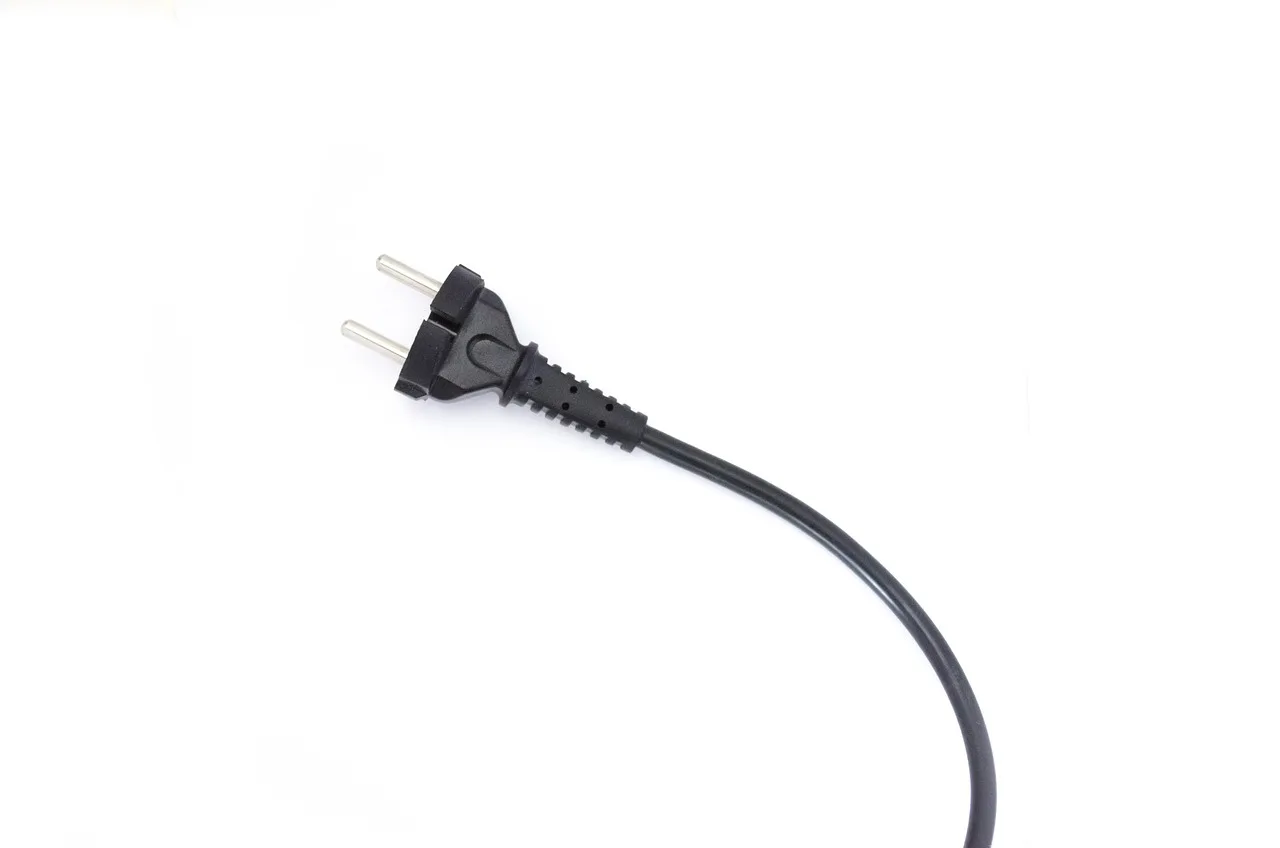
Heat buildup is the danger. A cord or strip can have a watt rating on paper and still overheat if the run is long, the connection is loose, or the heater is used for hours at a time. That is why direct wall connection is the safest default.
Cord length matters because voltage drop and resistance rise with distance and with smaller conductors. The farther the heater sits from the outlet, the more the cord has to do. That stress is exactly what you want to avoid with a heater.
The Consumer Product Safety Commission treats portable heaters as a fire-risk category and recommends direct wall connection. NFPA home-heating safety guidance also emphasizes keeping portable heaters clear of combustible materials and using them with care on dedicated, suitable circuits. Those recommendations line up with the practical rule: use the outlet in the room, not a workaround that adds heat and failure points.
What to do instead of using a cord
Move the heater closer to the outlet so you do not need a cord at all. That is the simplest and safest fix. If the heater will only reach by crossing a walkway or using furniture as a staging point, choose a different outlet or a different room instead of forcing the connection.
If the room layout makes heater placement awkward, the real issue may be the outlet location or the circuit layout. That is when an electrician is the right fix. A new outlet, a better-placed receptacle, or a circuit review is safer than betting on a cord rating.
Suppose your office has one outlet behind a desk and the only open floor space is across the room. The safer move is not a 20-foot cord. It is to place the heater elsewhere, use a different room, or have the outlet situation corrected.
Are any surge protectors safe for space heaters?
No. Surge protection does not make a heater safe on a strip. Even a strip with a high amp rating does not make it the right choice for a space heater because the issue is continuous current, connection quality, and the heater’s own instructions. If the manual says not to use one, that instruction controls.
Some heavy-duty power strips are rated for more current than a standard bedroom strip, but that still does not make them a good choice for a space heater. The question is not only capacity. It is whether the heater can run without stressing the cord, the strip, or the outlet.
UL or ETL certification matters because it shows a product has been tested to a safety standard. It does not mean the product is approved for every appliance or every room condition.
What happens if you use a thin extension cord with a heater?
A thin cord can run hot, soften its jacket, discolor the plug, or fail at the connection point. The danger is concentrated at the blades, receptacle, and the section of cord carrying the heater load. That is where melted insulation and loose contacts start.
What often surprises people is that the heater may seem fine until the cord gets warm after a while. By then, the damage may already be building. A tripped breaker is a warning, not a green light to try again with the same setup.
Should a space heater always be plugged directly into the wall?
Yes. That is the safest default and the clearest recommendation from fire-safety guidance and heater manufacturers. Plug the heater directly into the wall unless the manufacturer’s instructions say something different and the cord or circuit arrangement still meets those instructions.
Use the outlet that is already there. If you cannot, solve the outlet problem instead of trying to solve the heater problem with a cord. That means moving the heater, using another room, or calling an electrician when the layout does not fit the load.
Frequently asked questions
Can you plug a space heater into an extension cord?
Usually no. Even if a cord has a watt rating that seems close, space heaters are high-draw appliances that should plug directly into a wall outlet. CPSC guidance points that way, and many heater manuals say the same. Follow the manual first.
What size extension cord do I need for a 1500 watt space heater?
The safest answer is no extension cord. A 1,500-watt heater draws about 12.5 amps continuously, which is close to the practical limit of a standard 15-amp circuit. Even heavier cords do not change the fact that most guidance says not to use a cord for the heater at all unless the manual explicitly allows it.
Can a 14-gauge extension cord handle a space heater?
Do not treat 14-gauge as a safe heater solution. Basic electrical references place 14 AWG above 16 AWG in capacity, but gauge alone does not settle the issue. Cord listing, length, construction, and the heater manual matter, and the heater should still go directly into the wall unless the appliance instructions specifically allow otherwise.
Is a 16-gauge cord ever okay for a heater?
It is not the right choice for a typical space heater. A 16-gauge cord is generally for lighter loads, not a high-wattage heater. If a heater needs more reach, the safer solution is a wall outlet, a different room, or a circuit fix.
Sources
- U.S. Consumer Product Safety Commission: portable heater safety guidance and cord/power strip warnings
- National Fire Protection Association: home heating and portable heater safety guidance
- Manufacturer manuals for portable space heaters: most direct users to plug the appliance directly into a wall outlet and avoid extension cords or power strips
- UL and ETL listing guidance: certification indicates a product was tested to a safety standard, not that it is suitable for every appliance or setup
- Basic electrical references: 120V × 12.5A = 1,500W; a 15A circuit is commonly treated as about 1,800W maximum on paper, before practical load margin is considered
Sponsored / affiliate links. As an Amazon Associate I earn from qualifying purchases. I may earn additional commission from eligible campaigns.
 AZEUS Portable AC and Heater Unit, 420W 110V Compact Air Conditioner for Tent RV Truck Cabin and Small Room, 1400W Cooling, 800W Heating, Remote Control, Dehumidifier, Sleep Timer, ChampagneMEGAWISE Portable Air Conditioner and Heater, 420W 110V Compact AC Unit with Remote Control, 1400W Cooling Capacity, 800W Heating, Dehumidifier, Fan, Sleep Timer, Champagne