How to Build a Fire in a Fireplace Step by Step
Open the flue fully, warm a cold flue if needed, then build the fire with 2 small logs, 1 tinder bed, and kindling arranged so air can move up through the stack. A weak start can push smoke into the room, stall the draft, and waste kindling and time. This guide gives a step-by-step lighting sequence plus a quick fix branch for weak draft, smoke rollback, and other first-fire problems.
This guide is part of our Space Heaters, Fireplaces and Winter Humidity Guide series.
Fireplace fire basics


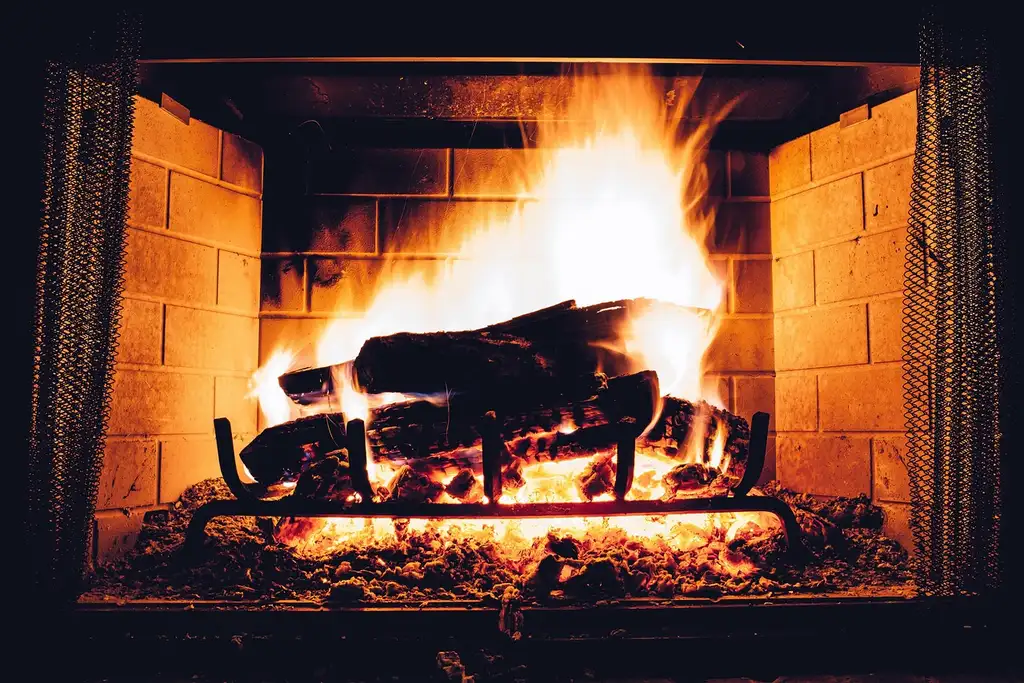
A safe first fire starts with a clean fireplace, a clear chimney, a working spark screen, and a grate that keeps fuel lifted off the hearth. Open the fireplace damper fully before lighting so draft and ventilation can begin right away. If the flue is blocked, the fire may smoke into the room instead of drawing upward.
Use dry, seasoned firewood rather than wet or green wood. Seasoned means dried for at least 6-12 months. The first load should be modest enough to catch cleanly, then grow after the tinder and kindling are established. Keep a working carbon monoxide detector near the fireplace.
What you’ll need before you light
- Dry, seasoned firewood
- Kindling, cut to pencil-thickness or smaller
- Tinder such as paper, cotton balls, or a commercial fire starter
- A fireplace grate
- A spark screen, free-standing or attached
- A fireplace fireback, if your fireplace has one
- A long match or long lighter
- Heat-resistant gloves
- A working carbon monoxide detector near the fireplace
- A shovel, ash bucket, and brush for cleanup
Do not use gasoline, kerosene, charcoal lighter fluid, or other liquid accelerants. The setup should rely on tinder, kindling, and dry logs only. If you have been storing wood outside, bring in the first load ahead of time so the surface is dry.
Is your fireplace ready to light?
Use the checklist below before you strike a match. If one item fails, fix it before lighting. If you smell smoke at the fireplace opening, see signs of damage, or cannot confirm the chimney is clear, stop and call a pro for inspection and cleaning.
| Branch | What you check | What to do |
|---|---|---|
| Ready to light | Damper fully open; chimney smells normal, not strongly smoky; wood is dry and seasoned; grate and screen are in place; carbon monoxide detector is working | Build the fire |
| Fix before lighting | Damper is partly closed; wood feels damp; grate or screen is missing; ash or debris is clogging airflow; the flue feels cold and the draft is weak | Correct the issue, then recheck |
| Stop and call a pro | Persistent chimney odor, signs of soot or creosote buildup, nests or clogs, cracks, visible damage, or a carbon monoxide detector alarm | Do not light the fire |
Build the fire base
Open the damper fully
- Move the damper handle to the fully open position before any match is lit.
- Check that the flue opens freely and does not bind.
The fireplace damper controls draft and ventilation. A partly closed damper can push smoke back into the room, especially in a cold chimney.
Set the grate and screen
- Place the grate in the center of the firebox.
- Set the spark screen in front of the opening or attach it if your model is fixed in place.
- Keep curtains, rugs, and furniture at least three feet away.
The grate keeps logs elevated and prevents them from rolling around. The spark screen contains flying sparks and embers, which wood fires produce.
Arrange tinder and kindling
- Place 1 tinder bed on the grate.
- Add a loose layer of kindling over and around it.
- Leave open spaces so air can move through the stack.
- Add 2 small logs only after the tinder is set and the kindling is ready to catch.
Tinder should light easily and keep burning long enough to catch the kindling. Kindling should be dry, small, and easy to ignite. If the pile is packed tight, the flame can stall before the first logs catch.
Light and feed the fire
Start with tinder, then let kindling build a stable flame before you add seasoned firewood. Feed the fire gradually so you do not smother it. A first fire should grow in stages, not all at once.
- Light the tinder at one or two points.
- Watch for the kindling to catch across the top and sides.
- Add 1 small log at a time only after the kindling is burning steadily.
- Wait for a stronger flame before adding the second log.
- Keep the screen closed enough to contain sparks while still allowing airflow.
If the fire starts on a cool evening and the first flames cling low in the grate, add one more piece of kindling, not another full log, then wait for the draft to improve. That keeps the fire from choking on excess fuel.
If a deep firebox and two medium logs sit too close together, the flame may light, then fade. Pull the logs apart, reopen the air gaps, and let the kindling rebuild a coal bed before adding more wood.
What if smoke comes into the room?
Smoke spillage usually means the draft is weak, the damper is not fully open, or the flue is cold and slow to pull air. Start with the easiest fix: confirm the damper position, then warm the flue if needed. If smoke keeps spilling, stop lighting and inspect the chimney before trying again.
Check draft and damper position
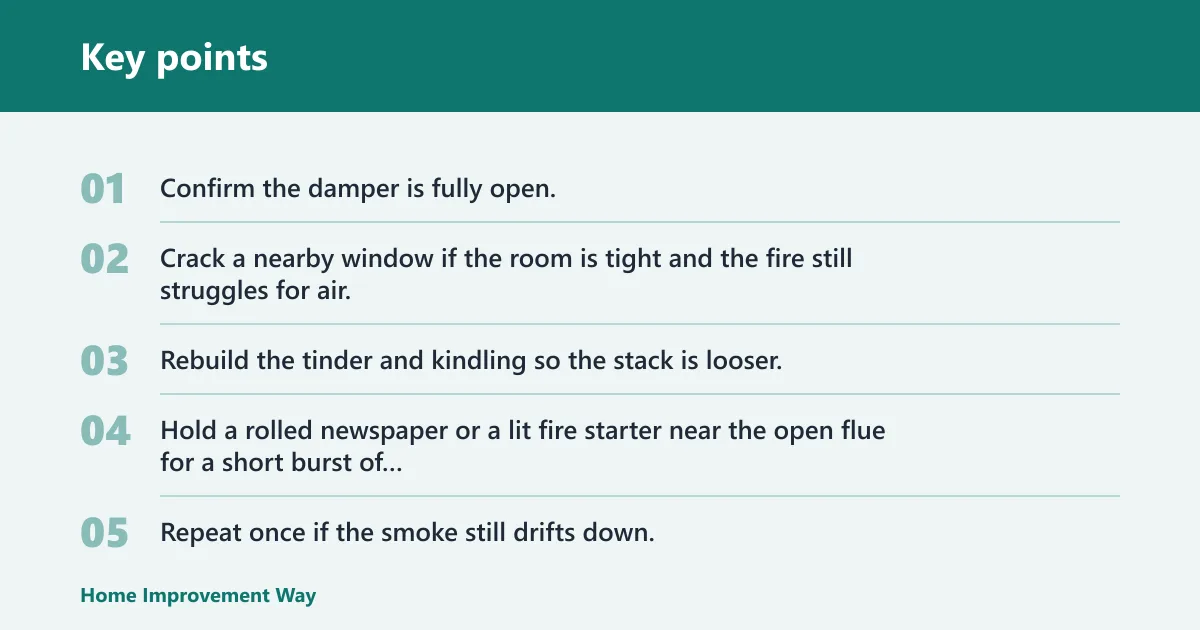
- Confirm the damper is fully open.
- Crack a nearby window if the room is tight and the fire still struggles for air.
- Rebuild the tinder and kindling so the stack is looser.
A closed or partly open damper is the most common first check. A blocked chimney, soot, or creosote can also keep a flue from drawing air.
Warm a cold flue
- Hold a rolled newspaper or a lit fire starter near the open flue for a short burst of warm air.
- Repeat once if the smoke still drifts down.
- Then relight the tinder and watch the smoke line closely.
This step is for a cold flue, not a blocked one. If the chimney is clogged, cracked, or damaged, warming the flue will not solve the problem.
Stop if smoke keeps spilling
- Extinguish the fire safely.
- Close the screen and let the embers die down.
- Arrange a chimney inspection and cleaning before the next attempt.
Annual chimney maintenance is the normal baseline, and NFPA211 is the reference point many homeowners use. Cleaning should remove soot or creosote and check for nests, clogs, cracks, and damage.
Common mistakes to avoid
Wet or green wood is a poor first choice because it burns less cleanly and can make smoke problems worse. Start with dry, seasoned firewood, then add more only after the kindling catches. A fire that dies too soon often needs more air, not more fuel.
Overpacked kindling is another common error. If the pile is tight, flame cannot move through it. Leave channels for air. Also avoid liquid accelerants. A fireplace is not the place for charcoal lighter fluid or similar products.
Do not walk away from the fire. A screen helps, but it does not replace attention. Keep the first load modest, then top up in controlled steps once the fire is stable.
What is the upside-down fire method?
The upside-down fire method places the logs first, then kindling, then tinder on top, so the flame burns downward as the stack heats. It can work well in a clean fireplace with dry wood because the lower logs preheat while the top layer lights cleanly. It still needs a fully open damper and a grate.
When to use top-down
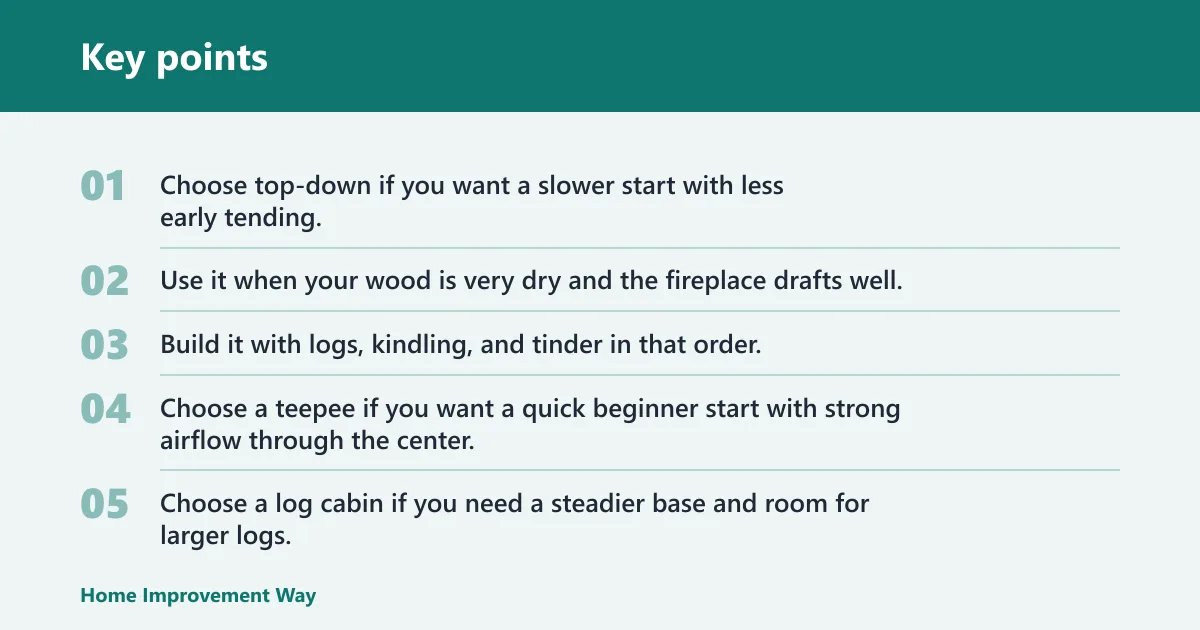
- Choose top-down if you want a slower start with less early tending.
- Use it when your wood is very dry and the fireplace drafts well.
- Build it with logs, kindling, and tinder in that order.
This method can help reduce early smoke if the stack is airy and the flue is ready.
When teepee or log cabin is better
- Choose a teepee if you want a quick beginner start with strong airflow through the center.
- Choose a log cabin if you need a steadier base and room for larger logs.
- Use either method only after the damper is open and the chimney is clear.
A teepee is simpler for first-timers because it shows flame quickly. A log cabin gives a flatter base and can support slightly larger wood once the fire is stable. Top-down is helpful, but it is not required for a first successful fire.
Frequently asked questions
How to start a fire in a fireplace for the first time
Begin with a clean, inspected fireplace and a working carbon monoxide detector nearby. Use dry seasoned wood, pencil-thin kindling, and tinder that lights easily. Leave space between pieces so air can move upward, then add the first logs only after the kindling is burning well.
What should I check before lighting a fireplace fire?
Check that the damper is fully open, the chimney is clean and clear, the grate and spark screen are in place, and the wood is dry. Also confirm that the carbon monoxide detector works and that no smoke smell, nests, clogs, cracks, or damage are present.
What materials do I need to start a fireplace fire?
You need tinder, kindling, seasoned firewood, a grate, a spark screen, and a long lighter or match. A fireback can also help reflect heat in some fireplaces. Skip liquid starters and use only dry fuel that can catch without soaking or splashing.
How do I stop smoke from coming into the room when I light the fireplace?
Open the damper fully, warm a cold flue if needed, and rebuild the tinder and kindling so air can move through the stack. If smoke still spills after those steps, stop lighting, let the fire die down, and schedule chimney cleaning and inspection.
Can I use liquid fire starters in a fireplace?
No. Do not use charcoal lighter fluid, gasoline, kerosene, or other liquid accelerants in a fireplace. Use tinder, dry kindling, and seasoned firewood instead. If your fire needs help catching, adjust the air gaps and fuel size rather than adding a liquid product.
How much kindling and firewood should I use at first?
Use enough kindling to support a steady flame, then start with 2 small logs only after that flame is established. If the fire weakens, add one small log or a little more kindling, then wait. Overloading the firebox too early can smother the burn.
Should the damper be open before I light a fireplace?
Yes. Open the fireplace damper fully before lighting any tinder. The damper controls draft and ventilation, and a partly closed setting can send smoke into the room. Check the opening before every fire, even if the fireplace was used recently.
Sponsored / affiliate links. As an Amazon Associate I earn from qualifying purchases. I may earn additional commission from eligible campaigns.