Why Is My Baseboard Heater Not Getting Hot?
A baseboard heater that stays cold is usually caused by a tripped breaker, bad thermostat, failed heating element, closed valve, air in the line, or a circulation problem; start with the heater type, then narrow the fault to electric or hot-water. Ignoring weak heat can waste energy, leave rooms cold, and hide an electrical or boiler fault that gets worse. This guide walks you through a symptom-based decision tree with safe DIY checks and clear points for calling a pro.
Note: This page covers baseboard heaters only. If you meant an electric water heater, use electric water-heater troubleshooting instead. Do not mix appliance types when diagnosing heat problems.
What to check first

Separate electric from hydronic baseboard heat before you touch anything else. Electric baseboards use line-voltage resistance heating and a dedicated 20–30A double-pole breaker; hydronic baseboards rely on boiler-fed hot water, air removal, and circulation. The right symptom points to the right fix. For electric baseboards, manufacturer guidance commonly places the unit on a dedicated branch circuit with a line-voltage thermostat matched to the circuit rating, and utilities advise confirming the correct breaker and thermostat type before replacing parts. Breaker troubleshooting and thermostat replacement are the right next reads if the unit is dead at the controls.
If one room is cold but the rest of the house heats normally, treat that as a local problem first. If every baseboard is cold, look at power, thermostat, boiler, or pump issues before you assume a single unit failed. That symptom split matters because hydronic zones often fail room by room, while electric failures usually stay tied to one circuit or control.
Turn off power before opening any electric unit. Baseboard heat should be 3 inches above the floor or carpet, so blocked clearance can also limit airflow. Keep combustibles, drapes, and furniture clear of the cover and discharge area, and follow the heater manufacturer’s installation instructions for minimum clearances and service access. If the unit is hot to the touch, stop and let it cool before opening the cover.
What you’ll need
- Flashlight
- Vacuum with soft brush attachment
- Non-contact voltage tester
- Multimeter with continuity mode
- Screwdriver
- Small container
- Towel for hydronic bleeding
Why is my baseboard heater not getting hot?
The fastest split is simple: cold, electric baseboards usually point to power, thermostat, or element trouble; cold hydronic baseboards usually point to air in the zone, a valve problem, or circulation loss. Weak heat often means airflow blockage or a partial control failure rather than a total shutdown. If you are chasing a specific electric symptom, electric baseboard heater troubleshooting is the right branch; if you are dealing with hot-water heat, jump to bleeding hydronic baseboards and zone valve issues.
Use the symptom first. A unit that never warms at all needs a different path than one that is warm but weak, noisy, or only cold in one room.
Use this symptom matrix
| Symptom | Heater type | Most likely cause | DIY test | Typical fix | When to call a pro |
|---|---|---|---|---|---|
| One room cold | Hydronic | Air trapped in the zone | Bleed at the valve until air stops and water drips steadily | Purge air, then verify boiler pressure at 12–18 PSI | If the room stays cold after bleeding or the zone valve will not open |
| Heater warm but weak | Electric | Dust, bent fins, or blocked airflow | Inspect fins and vacuum with a soft brush attachment | Clean the unit and clear furniture or drapes | If the element is damaged or the unit still underheats |
| Breaker trips | Electric | Shorted element or wiring fault | Reset once and watch for immediate retrip | Replace failed parts and check wiring | Immediately, if the breaker trips again |
| No click at thermostat | Electric or hydronic | Failed thermostat or control mismatch | Turn to max and listen within 30 seconds | Replace with the correct line-voltage or low-voltage model | If the thermostat rating or wiring is unclear |
| Noise with no heat | Hydronic | Air in pipes or a zone-valve issue | Listen for hiss, gurgle, or banging while a zone calls for heat | Bleed air; inspect zone valve action | If banging continues or the valve cycles oddly |
How to troubleshoot electric baseboard heat
Start at the breaker, then the thermostat, then the heater itself. Electric baseboard heaters usually sit on dedicated 20–30A double-pole breakers, so a tripped breaker or bad control can stop heat fast. If the breaker trips immediately after reset, the element may have shorted. Manufacturer installation manuals for common electric baseboard heaters also specify matching the thermostat to the circuit voltage and amperage, and utility guides recommend checking the branch circuit before replacing the heater.
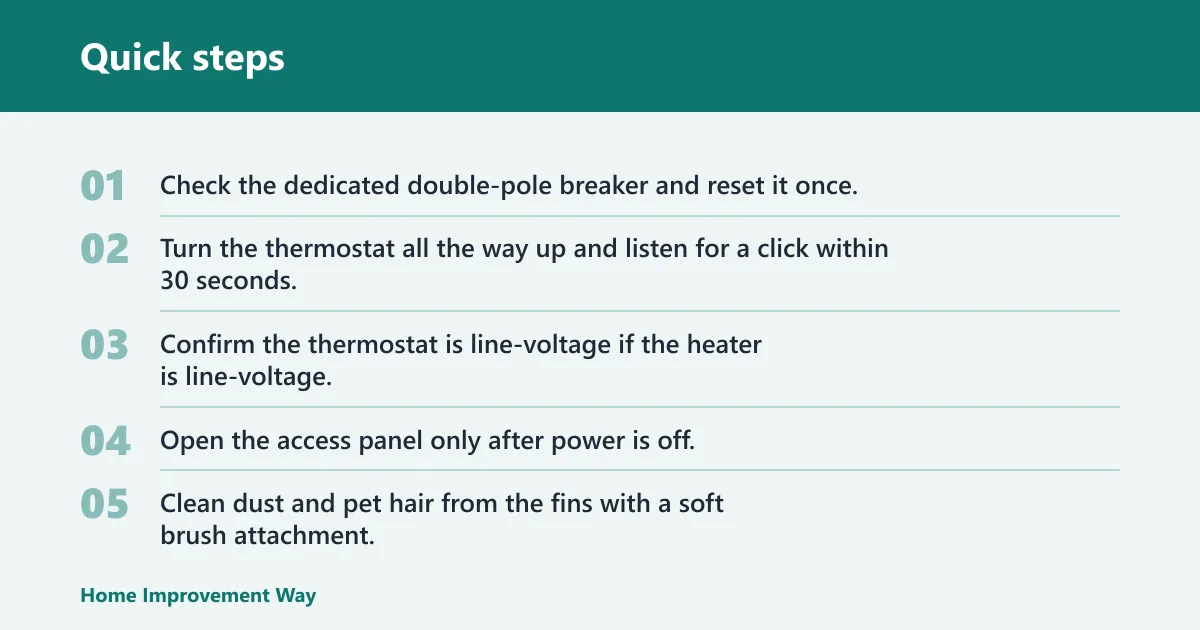
- Check the dedicated double-pole breaker and reset it once.
- Turn the thermostat all the way up and listen for a click within 30 seconds.
- Confirm the thermostat is line-voltage if the heater is line-voltage; a mismatch can leave the unit dead or unsafe.
- Open the access panel only after power is off, then inspect the heating element for burn marks, breaks, or obvious damage.
- Clean dust and pet hair from the fins with a soft brush attachment, and straighten only lightly bent fins.
A thermostat can fail without the element failing. If there is no click, that points to the control path; if there is a click but no heat, the element or wiring is more suspect. Thermostat replacement also needs the correct amperage rating, often around 15–22A for the control device. If the thermostat is still in doubt, see thermostat replacement before swapping the heater itself.
If a short baseboard stays warm at the ends but throws barely any heat into the room, that often means dust-packed fins or blocked airflow, not a dead element. Clear the area, clean the fins, and recheck before replacing parts.
The heating element
The heating element is the resistance coil that turns electricity into heat. In a healthy unit, it warms evenly when the thermostat calls for heat and the breaker stays stable. Signs of trouble include burn marks, a visible break, a unit that stays cold even though the thermostat clicks, or a breaker that trips as soon as the heater energizes. The safest DIY check is visual inspection only after power is off, plus a continuity test if you are comfortable using a multimeter. Escalate to an electrician if the element reads open, shows a short, or the circuit trips repeatedly.
The baseboard fin coil
The fin coil is the metal tubing and attached fins that spread heat into the room. It does not create heat by itself; it moves heat from the element or hot water into the air. Failure signs include matted dust, bent fins, crushed sections, or weak airflow even when the pipe or element is warm. The safest DIY check is to vacuum the fins with a soft brush attachment and look for obstructions without bending the fins hard. Escalate if fins are crushed, the coil is leaking, or the room remains weak after cleaning and clearance checks.
Why is my baseboard heater not getting hot enough?
Weak heat usually means the heater is working partly, not failing completely. In electric units, dust, bent fins, and blocked airflow can reduce convection and cut output. In hydronic units, trapped air or low circulation can leave the room lukewarm even when the pipe feels warm. If the issue is hydronic, skip ahead to bleeding hydronic baseboards or circulator pump problems.
Fix weak heat in electric units
- Turn off power at the circuit breaker before opening the cover.
- Vacuum the fins with a soft brush attachment and remove lint, dust, and pet hair.
- Inspect for bent fins that could block airflow or restrict convection.
- Move furniture, curtains, and rugs so air can rise and circulate.
Do not bend the fins back aggressively. They are fragile and bend easily. If the heater still feels weak after cleaning, look harder at the element, thermostat, or breaker sizing. If the thermostat seems slow to respond, some line-voltage models should click shortly after a call for heat; if there is no response at all, the control path deserves inspection before the heater is replaced.
Picture a dining chair pressed against a 6-foot baseboard. The heater may be fine, but the blocked airflow makes it feel underpowered. Move the chair first; replacing the unit is the wrong first move.
The bleed valve
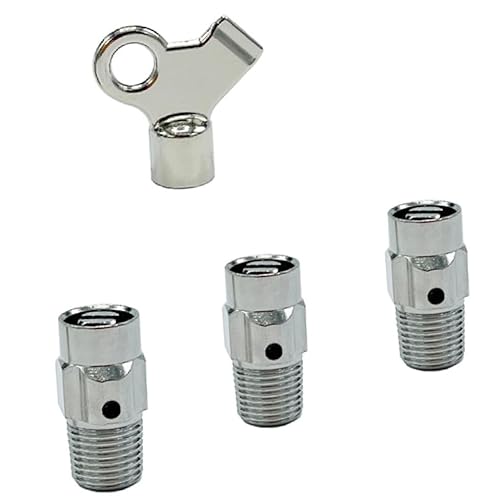
The bleed valve lets trapped air out of a hydronic baseboard section. It is usually a small brass fitting at the top or end of the unit. Failure signs include gurgling, a cold section after the rest of the zone warms, and air spurting before water appears. The safest DIY check is to place a small container or towel under the valve, open it slowly, and stop when water flows steadily. Escalate if the valve leaks afterward, will not close, or the boiler pressure drops below normal after bleeding.
Why is only one room cold?
A single cold room usually means the issue is local, not whole-house. For hydronic systems, the first suspect is air trapped in that zone. For electric systems, look at the room’s breaker, thermostat, or element before blaming the boiler or panel. If the room has no response at the thermostat, use breaker troubleshooting before moving deeper into the heater.
Bleed a hydronic baseboard
- Turn the thermostat up and confirm the boiler and circulator are trying to run.
- Find the small brass bleed valve at the top or end of the baseboard unit.
- Open the valve into a small container until you hear air hiss out.
- Close it when water drips steadily, then check boiler pressure.
After bleeding, residential boiler pressure should read 12–18 PSI, which is a common cold-system range on many homes with hydronic heat. If it drops below that range, the system may not circulate correctly. If the room is still cold, a zone valve may not be opening or the circulator may not be moving water. See zone valve issues and circulator pump problems for the next branch.
Say your upstairs bedroom is the only cold room and the baseboard makes a brief gurgling sound. That fits trapped air far better than a bad boiler, so bleeding the unit is the first safe step.
The zone valve
The zone valve controls hot water flow to a specific heating zone. When it opens properly, hot water reaches that room or loop; when it sticks closed or fails electrically, the zone stays cold even though the boiler is firing. Signs include one cold zone, a valve that does not move when heat is called, or a motor that hums without opening. The safest DIY check is to confirm the thermostat is calling for heat and listen or feel for the valve motor trying to move. Escalate if the valve will not open, the end switch never triggers, or the valve body is hot but the zone remains cold.
Common mistakes
People often replace parts before checking power and thermostat operation. That wastes time and can hide a shorted element or bad breaker.
Another mistake is installing the wrong thermostat type. Line-voltage and low-voltage controls are not interchangeable, and the amperage rating has to fit the circuit.
Do not ignore noise. Ticking can be normal thermal expansion, but banging in hydronic heat can point to air in the pipes or a zone valve that closes too quickly. Water hammer is a separate cause of banging and needs its own fix.
Do not clean fins with power on. Dust removal starts by turning off power at the circuit breaker.
Do not force boiler pressure above the manufacturer’s range. If you need to add water repeatedly after bleeding, the system may have an expansion tank, feed valve, or leak problem that needs professional service.
If that didn’t work, try this next
If the unit is still cold after the basic checks, move to the most likely deeper fault. On electric heat, that means testing the thermostat with a multimeter for continuity and checking the element for an open or shorted condition. On hydronic heat, that means checking the zone valve, circulator, and boiler pressure together.
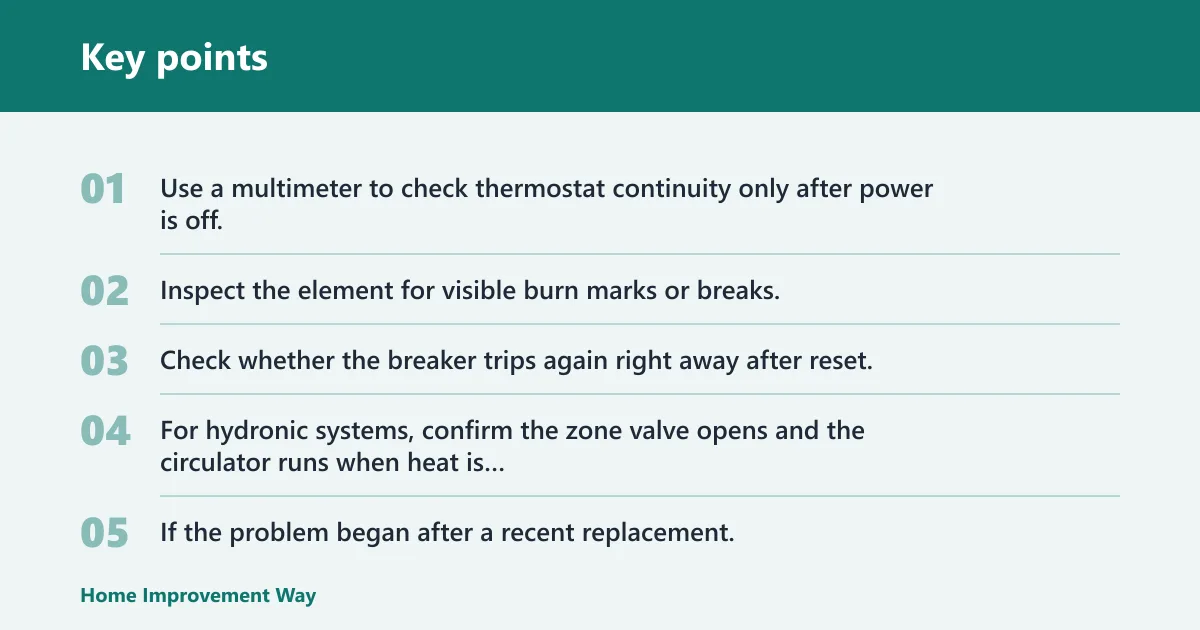
- Use a multimeter to check thermostat continuity only after power is off.
- Inspect the element for visible burn marks or breaks.
- Check whether the breaker trips again right away after reset.
- For hydronic systems, confirm the zone valve opens and the circulator runs when heat is called.
- If the problem began after a recent replacement, verify that the new part matches the system type and rating.
A newly installed unit that stays cold often points to the wrong thermostat, incorrect wiring, or a mismatch between the part and the circuit. That is the point where a pro is usually the right call.
Frequently asked questions
Why is my baseboard heater not working?
Start with the breaker, then the thermostat, then the heater itself. If the unit is electric, look for a tripped 20–30A double-pole breaker and a thermostat that clicks on within 30 seconds. If it is hydronic, check for trapped air, valve problems, or lost boiler pressure.
Why won’t my baseboard heater turn on?
A heater that never turns on often has no power at the control point. Reset the breaker once, turn the thermostat fully up, and listen for a click. If there is still no response, the thermostat may be failed or the wiring may be open.
Why is my baseboard heater not very hot?
Weak heat is often an airflow problem in electric units or an air issue in hydronic ones. Clean dust from the fins, clear obstructions, and check whether the unit is getting warm but not transferring heat well. If only one room is affected, bleed that zone.
Why is my electric baseboard heater not getting hot enough?
Dirty fins, bent fins, or blocked airflow are common reasons. Turn off power, vacuum the fins with a soft brush attachment, and check the thermostat for a proper click. If the element shows burn marks or breaks, replacement is usually the next step.
Why is my electric heater not getting hot?
Electric baseboard heat depends on a live breaker, a working thermostat, and an intact resistance element. If the breaker trips again immediately, stop and call an electrician. If the thermostat never clicks, test or replace it with the correct line-voltage model and amperage rating.
Why is my new electric water heater not getting hot?
For a newly installed electric heater, the most common issue is a wiring, control, or part mismatch rather than wear. Confirm the breaker, thermostat type, and element rating match the unit. If the heater is actually a baseboard unit, use the line-voltage troubleshooting path above.
Sponsored / affiliate links. As an Amazon Associate I earn from qualifying purchases. I may earn additional commission from eligible campaigns.