Why Does My Furnace Smell Like Rotten Eggs?
Rotten eggs near a furnace usually means natural gas odorant or a sewer smell. If the odor is strong or persistent, leave the home, avoid switches and phones, and call the gas utility or 911 right away. Missing that split can mean fire, carbon monoxide exposure, or the wrong repair bill. This guide helps you sort gas leak, flue or exhaust, and drain or condensate odors before you touch the furnace.
Why does my furnace smell like rotten eggs?
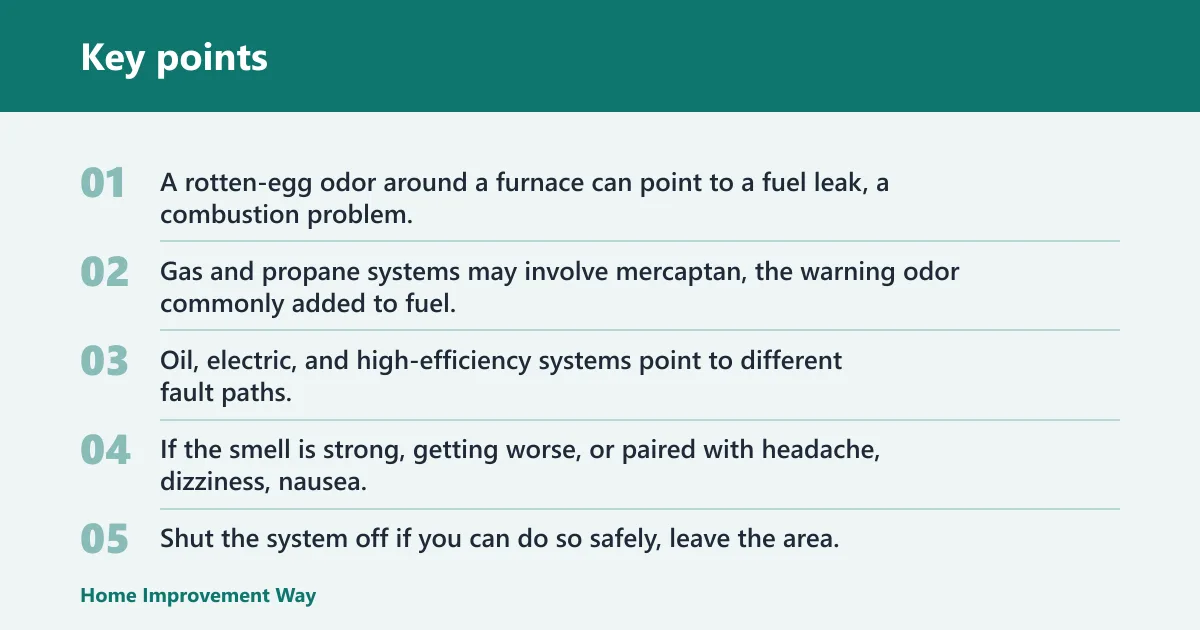


A rotten-egg odor around a furnace can point to a fuel leak, a combustion problem, or a separate odor source nearby. The risk depends on fuel type. Gas and propane systems may involve mercaptan, the warning odor commonly added to fuel. Oil, electric, and high-efficiency systems point to different fault paths.
If the smell is strong, getting worse, or paired with headache, dizziness, nausea, or a carbon monoxide alarm, treat it as urgent. Shut the system off if you can do so safely, leave the area, and call the right party first: the gas utility for suspected gas leaks, an HVAC technician for furnace and vent problems, or a plumber for drain and sewer issues.
Furnace odor decision table
| Smell location | Fuel type | Accompanying symptoms | Most likely source | First call to make |
|---|---|---|---|---|
| Right at the furnace cabinet | Gas or propane | Odor is strong or sudden | Natural gas odorant or propane leak | Utility gas company |
| At startup, then fades in a few minutes | Gas, propane, or oil | No other symptoms | Startup dust or first-cycle odor | HVAC technician if it returns or worsens |
| Near supply registers or return grilles | Any | Musty or decaying odor | Dead rodent or animal in ductwork | HVAC technician |
| Near the exhaust vent or vent connector | Gas, propane, or oil | Headache, nausea, or CO alarm | Blocked flue, backdrafting, or exhaust spill | Leave the area, then utility or emergency services if gas is suspected |
| Near the furnace when it rains or during wind | Gas, propane, or oil | Odor gets stronger with burner operation | Flue or exhaust vent blockage | HVAC technician |
| Near the condensate line or floor drain | High-efficiency gas | Sewer-like odor, no fuel smell | Condensate trap or drain issue | HVAC technician or plumber |
| Near a bathroom, laundry room, or basement drain | Any | Odor appears after the home was closed up | Sewer gas crossover or dry trap | Plumber |
| Throughout the house, not just the furnace room | Any | Black stains on fixtures or odd water taste | Hydrogen sulfide from air or water | Plumber or water treatment professional |
Is it a gas leak or normal startup odor?
A mercaptan odor in natural gas or propane can smell like rotten eggs and should be treated as a leak until proven otherwise. A brief startup odor can happen on a first heat cycle because dust burns off the burner assembly or warm air moves stale debris. Ongoing or intensifying odor is different.
How startup odor differs from a leak
Startup dust usually shows up only at the first cycle after shutdown or seasonal changeover, then fades. A leak does not behave that neatly. If the odor is present before the furnace runs, grows stronger near the cabinet, or lingers after shutdown, call the utility gas company first. They can test shutoff and line conditions.
Say your gas furnace has been off for months, and the first heat call smells sharp for 2 to 5 minutes, then clears. That pattern points more toward dust or residue than a leak. If the same smell returns every cycle, or you notice hissing, leave immediately and do not relight anything.
When to shut off the system
- Stop using switches, phones, and anything that may spark if the smell is strong.
- Turn off the furnace only if you can do it safely.
- Leave the building if the odor is intense, spreading, or worsening.
- Call the utility gas company for any suspected gas leak.
- If anyone has headache, dizziness, nausea, or a carbon monoxide alarm sounds, call emergency services.
Could the smell be coming from exhaust or combustion?
Yes. A furnace can smell odd when combustion gases do not leave the home as they should. A blocked flue or exhaust vent can push odor indoors. A cracked or leaking furnace heat exchanger can also allow combustion gases to escape, which needs a professional inspection if the odor is strong or persistent.
Blocked vent and backdrafting
The flue or exhaust vent carries combustion byproducts outdoors. If it is blocked by debris, ice, birds’ nests, corrosion, or a damaged connector, the system can spill exhaust back into the home. That can create a sharp, stale, or sulfur-like smell near the furnace or nearby living space.
Backdrafting is more likely when a home is tightly closed, fans are running, or another appliance depressurizes the space. If the odor changes when the blower starts or when a bath fan runs, the exhaust path deserves attention before anything else.
Heat exchanger problems
The furnace heat exchanger separates combustion gases from household air. If it cracks or leaks, the odor may be persistent, stronger during heating calls, and accompanied by a carbon monoxide alarm or symptoms such as headache or nausea. That is not a DIY diagnosis. It calls for a pro inspection.
A common first-timer mistake is assuming any furnace smell is “just dust” because the unit still runs. A cracked heat exchanger can still produce heat while sending combustion gases where they do not belong.
Could it be water, drain, or sewer gas?
Yes, and this is where many homeowners get misled. Hydrogen sulfide can create a rotten-egg taste or odor, and the smell can come from naturally occurring decay and chemical reactions. Sulfur bacteria in groundwater, wells, or plumbing can produce the odor, and water-heater chemistry can also create hydrogen sulfide smell.
Condensate drain or trap odors
High-efficiency furnaces make condensate, and the drain or trap can hold stagnant water. If that water sits, it can contribute to sewer-like odors near the furnace. The smell is often strongest near the floor, drain line, or condensate pump rather than at the burner area itself.
If the system has been idle, the trap may dry out or collect debris. That can let sewer gases move the wrong direction. A plumber or HVAC technician can clear the drain, refill the trap, and check for a venting problem if the odor keeps returning.
Sewer gas crossover often shows up away from the furnace, especially near a basement drain, laundry standpipe, or bathroom fixture. F [1] through [4] matter here: hydrogen sulfide in air can be harmful at high levels, and water odor may be isolated by checking hot and cold faucets after being away for a few hours. Black stains on silverware and plumbing fixtures can be a sign.
If the odor is stronger from hot water than cold, the water heater or plumbing is a better suspect than the furnace. Testing well water for coliform bacteria and nitrate is recommended when well water is involved. In that case, a plumber or water treatment professional is usually the better first call.
What about dead animals or dirty components?
Dead rodents or animals in ductwork can create a decaying-organic smell that homeowners may describe as sulfur or rotten eggs. Dirty burner components can also smell odd during ignition or incomplete combustion. Electric furnaces do not burn fuel, so their odor problems are more likely from dust, wiring, insulation, or another source nearby.
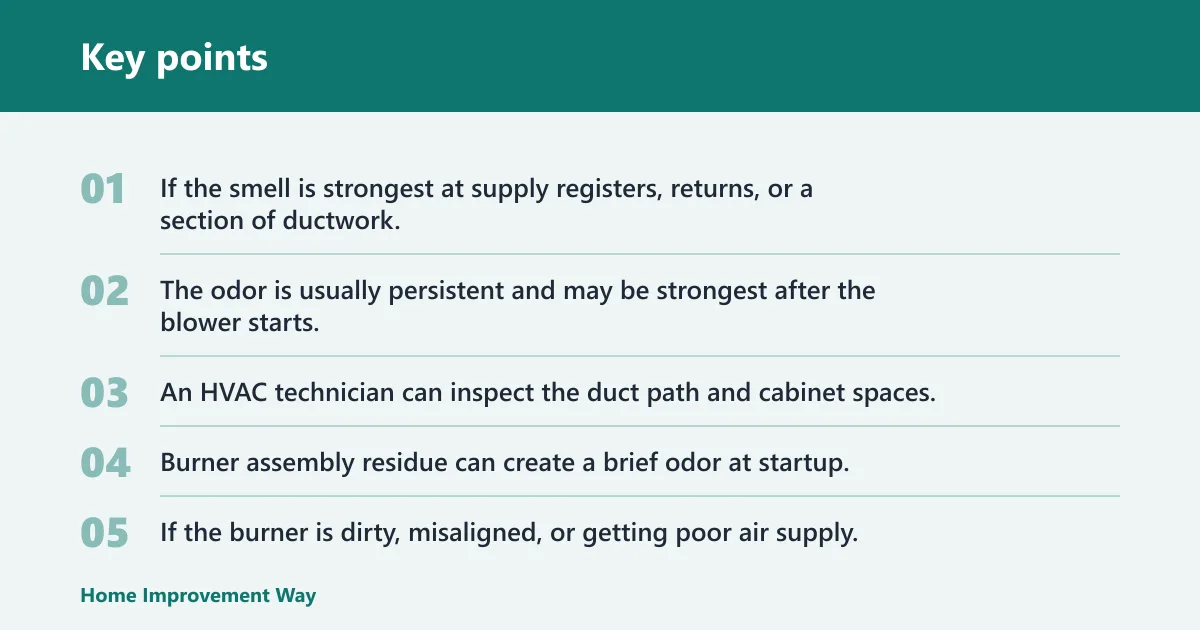
Dead rodent odor in ductwork
If the smell is strongest at supply registers, returns, or a section of ductwork, a dead rodent or animal is a real possibility. The odor is usually persistent and may be strongest after the blower starts. An HVAC technician can inspect the duct path and cabinet spaces, then remove the source and clean the area.
Burner assembly residue and incomplete combustion
Burner assembly residue can create a brief odor at startup. If the burner is dirty, misaligned, or getting poor air supply, incomplete combustion may leave a stronger smell. That is more concerning than a short dust odor and should be checked by an HVAC technician, especially if the smell shows up with soot, repeated shutoffs, or poor flame quality.
Why electric furnaces can still smell odd
An electric furnace does not have a gas flame, so a true fuel leak is not the issue. The smell may come from dust on heating elements, overheated wiring, an electrical fault, or a nearby drain, sewer, or water odor. Do not assume the furnace itself is the source just because the odor is strongest near the air handler.
How to sort the smell before you touch the furnace
Start with location, then fuel type, then symptoms. That order keeps you from calling the wrong trade first. The key split is simple: gas or propane odors with a mercaptan smell go to the utility first; sewer-like, water-related, or drain odors usually go to a plumber; exhaust or furnace-side smells go to an HVAC technician.
- Notice where the smell is strongest: furnace room, vents, drains, bathrooms, or the whole house.
- Check the fuel type: gas, propane, oil, or electric.
- Look for symptoms: headache, dizziness, nausea, or a carbon monoxide alarm.
- Decide whether the odor changes when the furnace runs or stays constant.
- Call the utility, HVAC technician, or plumber based on the most likely source.
How to reduce the chance of the smell returning
After the source is fixed, keep the area clear around the furnace, inspect vent terminations for blockage, and keep condensate drains flowing. If the system is gas or propane, ask the technician to check the burner assembly, flue, and heat exchanger during service. If the problem involved water or sewer odors, address traps, drains, and water quality at the source.
Suppose a high-efficiency gas furnace smells like sewer gas only after a long weekend away. A dry condensate trap is a better bet than a fuel leak, and refilling the trap may stop the odor. If the same house also has hot-water sulfur odor at a bathroom sink, the plumbing system needs attention too.
Frequently asked questions
Why does my hvac smell like rotten eggs?
“HVAC” can point to the furnace, ductwork, condensate drain, or even a nearby plumbing source. The smell may come from mercaptan in gas, sewer gas from a trap, or dead organic material in the ducts. Check whether the odor is strongest at the equipment, the registers, or a drain before deciding who to call.
Why does my electric furnace smell like rotten eggs?
An electric furnace is unlikely to produce a fuel leak smell because it does not burn gas or oil. The odor may be dust on heating elements, overheated wiring, or a separate sewer or water odor drifting into the air handler area. If the smell is strong or electrical burning is suspected, shut the unit off and call for service.
Why does my propane furnace smell like rotten eggs?
Propane systems can smell like rotten eggs when there is a leak, because the fuel odorant is added for warning. Treat that smell as a leak until a utility or qualified technician rules it out. If the odor is strongest near the cabinet or outdoors by the tank line, leave the area and call the propane supplier first.
Why does my oil furnace smell like rotten eggs?
Oil furnaces do not use mercaptan, so the smell is more likely from incomplete combustion, a venting problem, or a separate sewer or drain odor near the equipment. A blocked flue, dirty burner assembly, or heat exchanger issue can create odor. Persistent exhaust smell calls for an HVAC inspection, not guesswork.
Why does my house suddenly smell like rotten eggs?
A sudden whole-house odor can come from a fuel leak, a sewer gas crossover, contaminated water, or a dead animal in ductwork. If you also notice headache, dizziness, nausea, or a carbon monoxide alarm, leave right away. If the odor tracks with the furnace room, the utility or HVAC path is more likely than a general household issue.
Sponsored / affiliate links. As an Amazon Associate I earn from qualifying purchases. I may earn additional commission from eligible campaigns.
 MEGAWISE Portable Air Conditioner and Heater, 420W 110V Compact AC Unit with Remote Control, 1400W Cooling Capacity, 800W Heating, Dehumidifier, Fan, Sleep Timer, ChampagneAZEUS Portable AC and Heater Unit, 420W 110V Compact Air Conditioner for Tent RV Truck Cabin and Small Room, 1400W Cooling, 800W Heating, Remote Control, Dehumidifier, Sleep Timer, Champagne