Why Does My Humidifier Leave White Dust Everywhere?
White dust usually means an ultrasonic humidifier is aerosolizing minerals from hard tap water, and the quickest fix is to move to distilled water or switch to an evaporative model with a wick. If you ignore it, the dust can coat furniture and vents, and the wrong replacement may solve nothing. This guide explains why it happens, how to tell whether the humidifier or the water is the problem, and what to try first.
The source of white humidifier dust
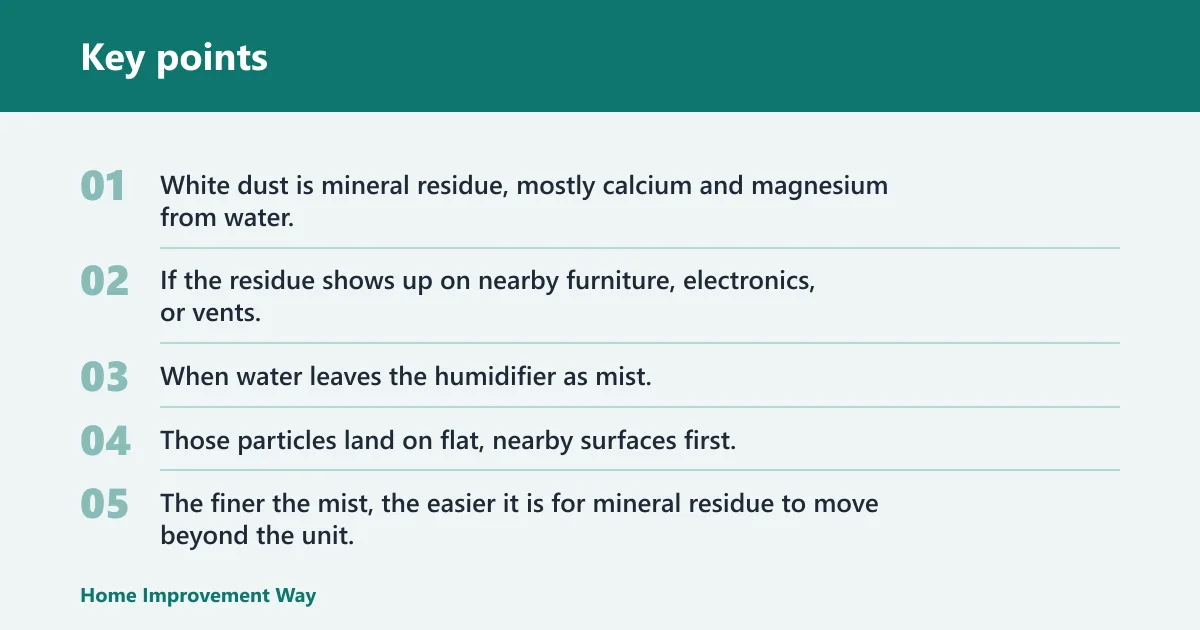

White dust is mineral residue, mostly calcium and magnesium from water, that settles after a humidifier sends tiny droplets into the air. It is not mold. If the residue shows up on nearby furniture, electronics, or vents, water quality and humidifier type are the first things to check.
Why it settles on surfaces
When water leaves the humidifier as mist, the water evaporates and the minerals stay behind. Those particles land on flat, nearby surfaces first, then on anything in the room that catches airflow. The finer the mist, the easier it is for mineral residue to move beyond the unit.
When it points to hard water
Hard water contains more calcium and magnesium, so it leaves more visible residue. Municipal water can be hard, and well water often is too, though the hardness varies by source. If the dust appeared suddenly after a water change, the new source is a strong clue.
Which humidifiers cause white dust?
Ultrasonic and impeller humidifiers can send minerals into the air as white dust, while evaporative humidifiers usually avoid that problem. The difference matters because a working humidifier may be doing exactly what its design allows. If you choose the wrong fix, you can replace a good unit and still see residue. (Wikihow)
Ultrasonic humidifiers and fine mist
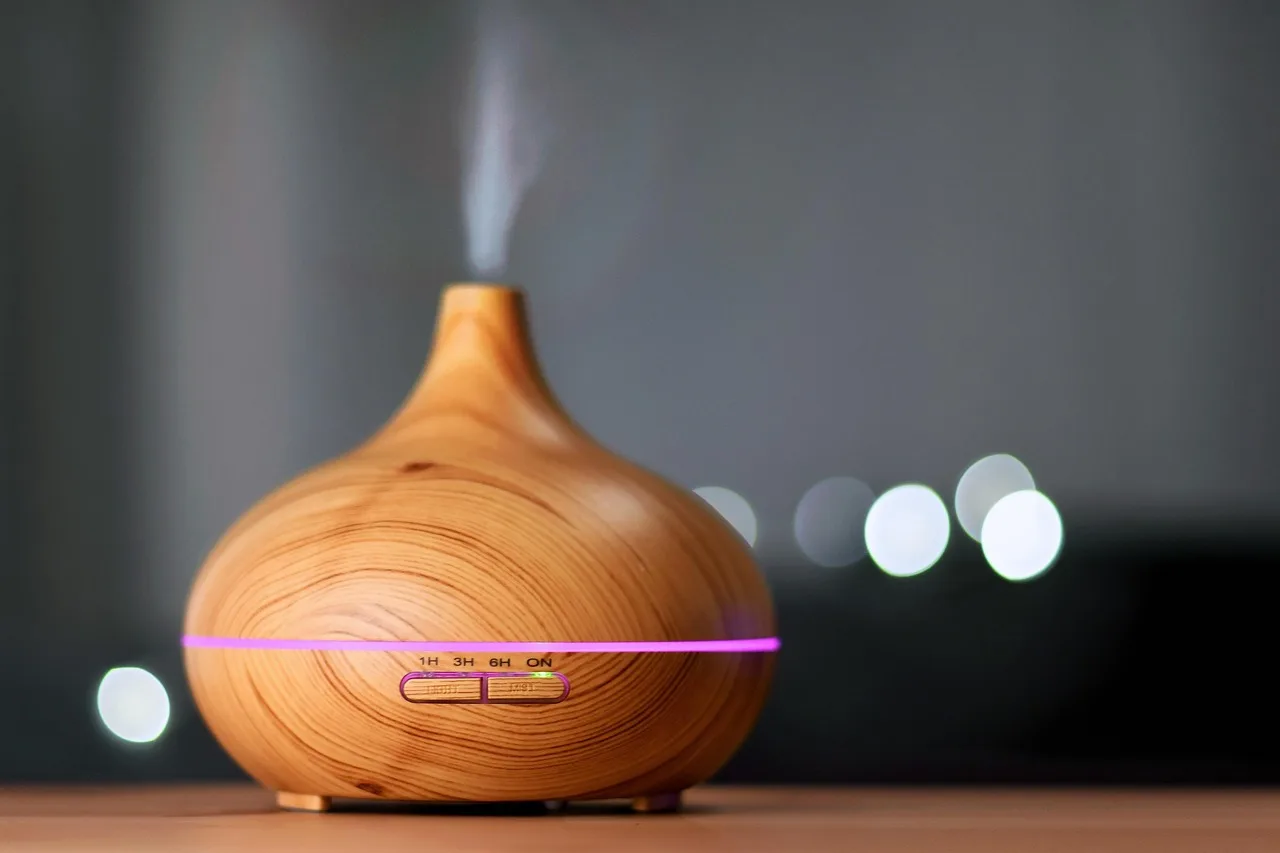
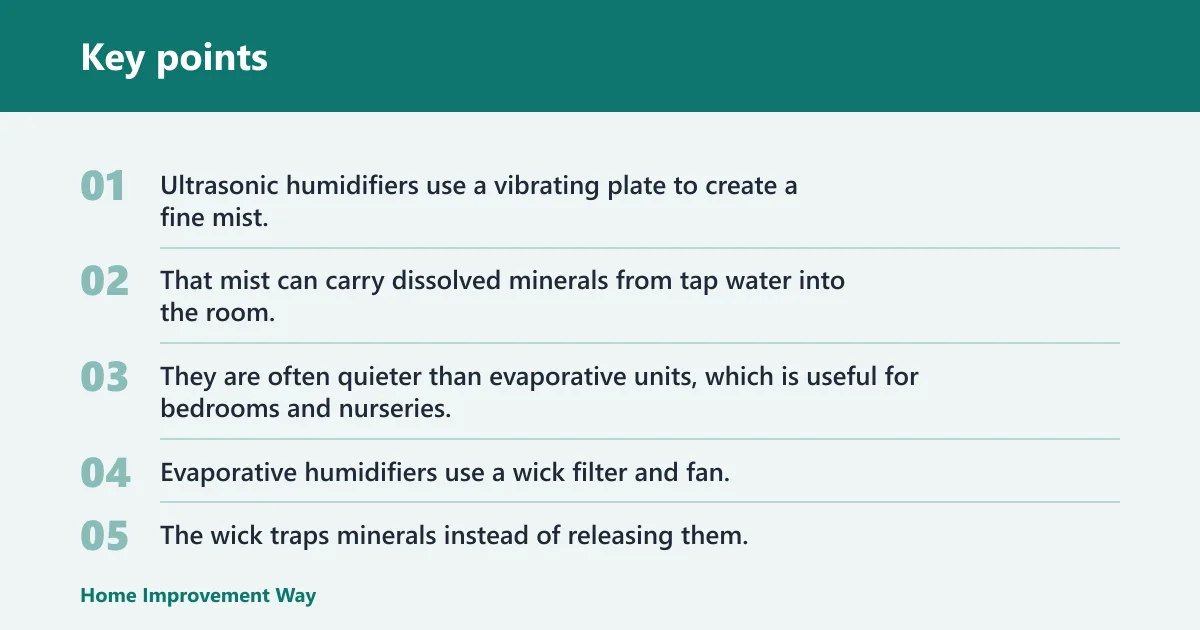
Ultrasonic humidifiers use a vibrating plate to create a fine mist. That mist can carry dissolved minerals from tap water into the room, which is why these units are most associated with white dust. They are often quieter than evaporative units, which is useful for bedrooms and nurseries.
Evaporative humidifiers and wicks
Evaporative humidifiers use a wick filter and fan. The wick traps minerals instead of releasing them, so these units generally avoid white dust. They do need regular wick replacement, because a loaded wick can restrict airflow and reduce performance.
Which type is better for no residue?
If your main goal is to avoid white dust, evaporative models are the safer default. If you already own an ultrasonic unit, distilled water or a demineralization cartridge may be enough. A full swap makes sense when residue persists after the water and cleaning checks.
Why your water matters
Water hardness is the main reason one humidifier leaves dust and another does not. Distilled water cuts down white dust because it has far fewer minerals than tap water, and some guides say it can stop the problem entirely. Softened water can reduce residue, but it may not remove it completely.
Tap water versus distilled water
Tap water is the common trigger because it carries dissolved minerals. Distilled water has far fewer minerals, so there is less left behind when the mist dries. If the dust starts after filling with tap water, switching to distilled water is the first fix to try.
What softened water can and cannot do
Softened water can lower the amount of calcium and magnesium that reaches the mist, so visible residue may drop. It is not a guarantee. If dust still appears with softened water, the humidifier may still be releasing minerals, or the room may be getting too much humidity from an oversized unit.
Humidity level and room use
Keeping home humidity between 40% and 50%, and another cites 30% to 50%. Too much humidity can create new problems, including mold or mildew. In a small bedroom, especially with overnight use, a unit that runs too long can push moisture higher than needed.
Say your nursery humidifier is set to high all night in a roughly 120-square-foot room, and you start seeing a film on the crib rail and dresser. Before buying a new machine, lower the runtime, check the mist output, and switch the fill water to distilled. The residue may drop without a replacement.
White dust decision table
Use this table to match the problem to the most likely fix. Start with the water and the humidifier type before you assume the unit has failed. If white dust still shows up after the first fix, move to the next line in the sequence.
| Humidifier type | Water source | Visible residue | Best first fix |
|---|---|---|---|
| Ultrasonic | Tap water | Light to heavy white dust | Switch to distilled water or add a demineralization cartridge |
| Ultrasonic | Distilled water | Persistent dust | Inspect assembly, clean the tank, and confirm the unit type is right for the room |
| Evaporative | Tap water | Usually little or no white dust | Check wick or filter condition; replace it if it is loaded or overdue |
| Evaporative | Distilled water | Little or no white dust | Continue regular maintenance and wick replacement |
| Ultrasonic | Softened water | Reduced but not eliminated residue | Use distilled water if possible, or test a demineralization cartridge |
This table also helps separate hard-water dust from product failure. If residue improves when you change water, the humidifier is probably not broken. If residue stays the same after distilled water, the unit may be assembled incorrectly, dirty inside, or simply the wrong style for the room.
How do you stop white dust from a humidifier?
Start with distilled water, then add a demineralization cartridge if the model supports one. Clean the tank, confirm that the unit is assembled correctly, and replace the wick in evaporative models on schedule. If the problem continues with distilled water, the machine type may be the mismatch rather than the mineral source.
Switch to distilled water
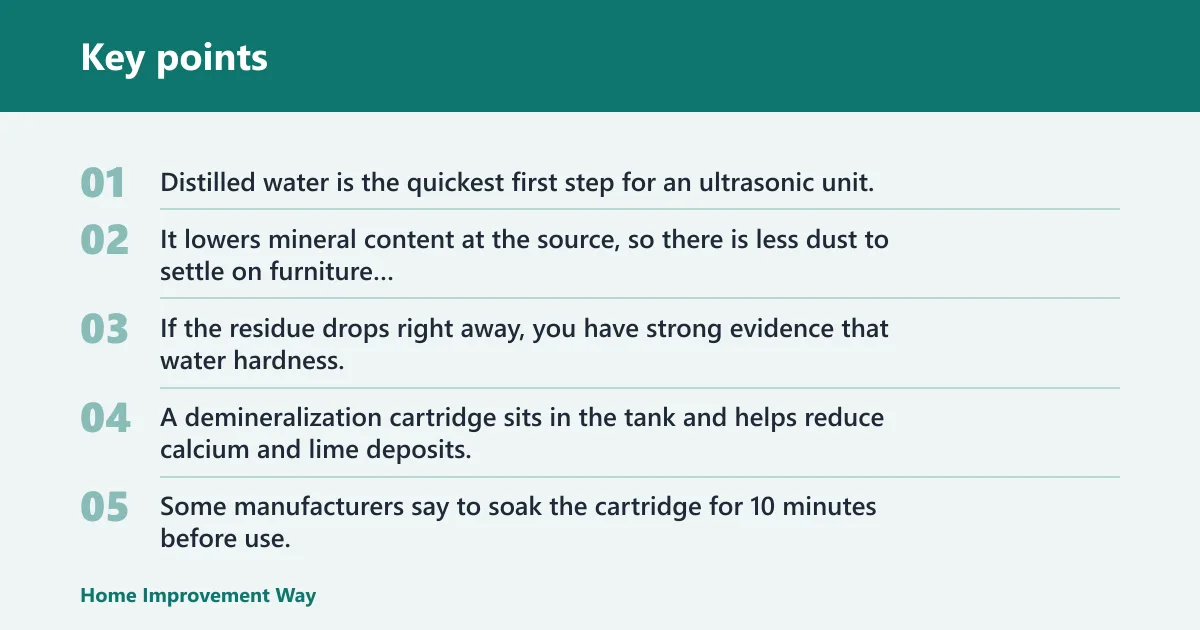
Distilled water is the quickest first step for an ultrasonic unit. It lowers mineral content at the source, so there is less dust to settle on furniture and electronics. If the residue drops right away, you have strong evidence that water hardness, not a defective machine, was the main problem.
Use a demineralization cartridge
A demineralization cartridge sits in the tank and helps reduce calcium and lime deposits. To soak the cartridge for 10 minutes before use. It does need replacement on the maker’s schedule, so it is a maintenance item, not a one-time fix.
Check assembly and tank cleaning
If white dust remains after switching water, inspect the tank, base, and any removable parts for buildup or incorrect assembly. A dirty tank can recirculate residue. A mis-seated part can also change how the mist forms, which can make the dust problem look worse than it is.
Replace the wick in evaporative models
Evaporative humidifiers depend on the wick to trap minerals. When the wick is clogged or worn, airflow drops and performance falls. Replace it according to the manufacturer’s schedule, especially if the unit has been running daily through a dry season.
A common first-timer mistake is swapping an ultrasonic unit for another ultrasonic unit after seeing white dust. Suppose the room is large and the old model was already near its limit. A new ultrasonic humidifier may still spread minerals if the water stays hard and the mist output is still high.
How can you clean white dust from surfaces?
Use a microfiber cloth to clean furniture and electronics, since it is commonly used to lift residue without grinding it around. Dry wiping works for many hard surfaces, while a barely damp cloth is safer where static, screens, or ports are involved. The goal is to remove the dust, not spread it.
Furniture cleaning with a microfiber cloth
For tables, shelves, and dressers, start with a dry microfiber cloth. If residue is stuck, lightly dampen the cloth and wipe again, then dry the surface. Avoid heavy spray on wood or around seams, since extra moisture can create a new problem.
Cleaning electronics without spreading residue
On electronics, use a barely damp microfiber cloth and keep liquid away from vents, buttons, and connectors. White dust can settle around screens and ports, so gentle wiping is better than aggressive scrubbing. If a device has vents, make sure the humidifier is not aimed directly at it.
How often to wipe nearby surfaces
If the humidifier runs every day, nearby surfaces may need frequent wiping, especially during the first week after a setup change. Once the water source and unit type are sorted out, the dust load often drops. If it does not, revisit the decision table instead of cleaning forever.
Frequently asked questions
Why does my humidifier make white dust?
White dust usually comes from calcium and magnesium in tap water. Ultrasonic and impeller humidifiers can disperse those minerals into the air as fine particles. If the dust appeared after switching water sources or filling from a hard-water tap, that is the first thing to fix.
How can I prevent white dust from a humidifier?
Fill the tank with distilled water, empty and refill it daily, and keep humidity in a moderate range around 40% to 50%. Regular maintenance matters because mineral buildup starts in the reservoir. If the room is small, avoid running the unit harder than necessary.
Do evaporative humidifiers leave white dust?
Evaporative humidifiers generally avoid white dust because the wick traps minerals instead of releasing them. They still need maintenance, though, especially wick replacement. If you want the lowest chance of visible residue, this style is usually the safer pick.
How do I eliminate white dust from a humidifier?
The most direct way is to move from tap water to distilled water. If the unit is ultrasonic, that often solves the issue right away. If residue persists with distilled water, inspect the tank, look for incorrect assembly, and consider whether the humidifier type is a poor fit for the room.
Is white dust from a humidifier harmful?
White dust is usually a nuisance rather than a serious hazard, but it can coat surfaces and add cleanup work. Too much humidity can also contribute to mold or mildew, so the bigger risk is often excess moisture, not the dust itself. Keep the room in a moderate humidity range.
Sponsored / affiliate links. As an Amazon Associate I earn from qualifying purchases. I may earn additional commission from eligible campaigns.