How Much Does an Infrared Heater Cost to Run?
A typical 1,500-watt infrared heater costs about $0.20 to $0.28 per hour to run at average U.S. electricity rates (roughly $0.13 to $0.18 per kWh), or $1.60 to $2.24 for an 8-hour evening. Because infrared units cycle on a thermostat once the target zone is warm, actual daily cost is usually lower than running the full wattage nonstop. This guide breaks down the real math, what changes the number, and how it compares to other heater types.
The actual formula
Cost is watts divided by 1,000 (to get kilowatts), multiplied by hours run, multiplied by your electricity rate per kWh. A 1,500W heater is 1.5 kWh per hour of continuous use. At the U.S. average residential rate of about $0.16/kWh, that is $0.24 per hour. Check your own rate on a recent utility bill, since it ranges from under $0.11/kWh in parts of the Pacific Northwest to over $0.30/kWh in parts of the Northeast and California.
Why “nameplate wattage” overstates real cost
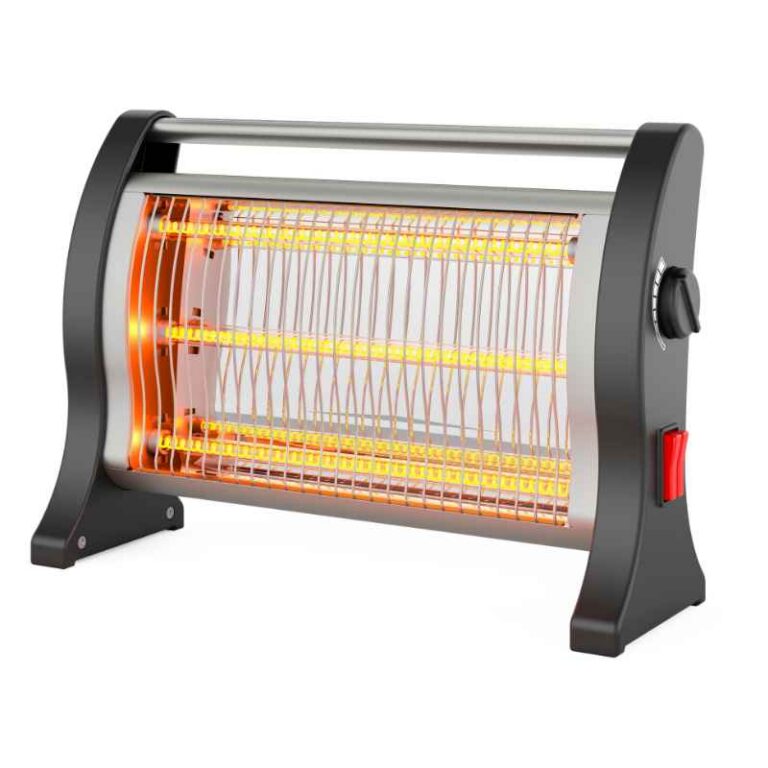
Most infrared heaters with a built-in thermostat do not run at full power the entire time they are plugged in. Once the target area reaches the set temperature, the element cycles off and only kicks back on to maintain it. Manufacturers commonly report a 50% to 70% duty cycle in a moderately insulated room, which is why real-world bills often come in lower than the “watts x hours” ceiling suggests. Panel-style and quartz-tube infrared heaters without a thermostat, left on a simple high/low switch, will run closer to full-time draw and cost more.
How infrared heaters compare to other electric heaters
Watt for watt, infrared elements are no more efficient than ceramic, fan-forced, or oil-filled electric heaters. All resistive electric heat converts essentially 100% of the electricity it draws into heat, so a 1,500W heater of any type costs the same per hour to operate. The reason infrared heaters can feel cheaper in practice is behavioral: because they warm people and objects directly by radiation rather than heating the surrounding air first, occupants often feel comfortable at a lower thermostat setting or in a smaller “zone,” which reduces total runtime. You can read more on how much electricity infrared heaters actually use for a deeper breakdown of usage patterns.
Lowering the running cost
Choose a wattage matched to the space rather than oversizing. A 750W to 1,000W panel is often enough for a small home office, while a garage or workshop may need 1,500W to 2,000W. Position the heater so its radiant field hits people directly rather than a wall or furniture, since wasted radiation means longer runtime to feel warm. Using a heater on a timer or smart plug so it only runs while the space is occupied, rather than heating an empty room, also meaningfully cuts monthly cost.
Frequently Asked Questions
Is it cheaper to run an infrared heater all day at a low setting or in short full-power bursts?
For occupied spaces, running at a lower thermostat setting continuously is usually cheaper than repeatedly heating a cold room from scratch, since reheating a fully cooled space demands full wattage for longer. For rooms used only occasionally, turning the heater off completely when empty saves more than a low idle setting.
Do infrared heaters cost more to run than a furnace?
Per unit of heat, electric resistance heat (including infrared) is generally more expensive than natural gas furnace heat, because electricity costs more per BTU than gas in most U.S. markets. Infrared heaters are usually most cost-effective as supplemental, zone-specific heat rather than a whole-house replacement for central heating.
Does a bigger infrared heater always cost more per month?
Not necessarily. A larger heater that reaches the target temperature quickly and then cycles off frequently can cost about the same as a smaller heater running near-continuously to keep up with heat loss in the same space.
Sponsored / affiliate links. As an Amazon Associate I earn from qualifying purchases. I may earn additional commission from eligible campaigns.