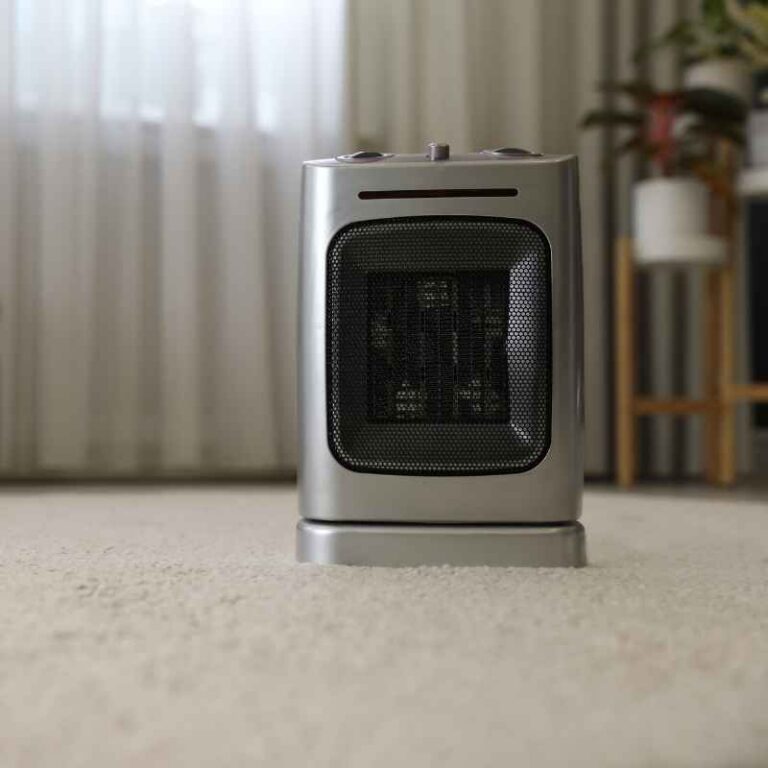
What Size Infrared Heater Do You Need?
Sizing an infrared heater comes down to wattage per square foot, adjusted for ceiling height, insulation, and how cold your climate gets, not a single fixed number. A reasonable starting rule for a well-insulated room is 10 watts per square foot, but a drafty garage or a room with 10-foot ceilings needs considerably more. This guide breaks down that math and the other factors that push the number up or down.
The base wattage-per-square-foot calculation
Most manufacturer sizing charts start around 10 watts per square foot for a room with standard insulation and an 8-foot ceiling in a moderate climate. A 12×12 room (144 square feet) would need roughly 1440 to 1500 watts under that baseline. This assumes the infrared heater is providing primary or supplemental heat for a fully enclosed, reasonably sealed space, not an open garage door or a screened porch, where radiant heat escapes far faster since infrared works by warming objects and people directly rather than heating the surrounding air.
Ceiling height and insulation adjustments
The 10 watts per square foot figure assumes standard 8-foot ceilings; each additional foot of ceiling height adds meaningful volume the heater has to cover and typically justifies increasing wattage by roughly 10% per extra foot, or moving up a size tier. Poor insulation, single-pane windows, an uninsulated garage, or an older home with minimal wall insulation can require 25% to 50% more wattage than the baseline to maintain comfortable warmth, since infrared heaters lose effectiveness faster in a space that bleeds heat through walls and drafts than a well-sealed room does.
Whole-room heating vs. spot heating
Infrared heaters are used two different ways: as primary supplemental heat for an entire room, which needs the full square-footage calculation above, or as spot heating aimed at a specific area like a workbench, a patio seating zone, or a single desk. Spot heating needs far less total wattage because you’re only warming objects and people directly in the heater’s line of sight, not raising the ambient temperature of the whole space. A 750 to 1500 watt panel aimed at a single chair or desk works fine as spot heat even in a large, poorly insulated room where whole-room heating would require several thousand watts.
Electrical circuit limits
Most portable electric infrared heaters top out around 1500 watts because that’s the practical safe limit on a standard 15-amp household circuit at 120 volts, accounting for other devices that might share the circuit. If your sizing calculation calls for more than 1500 watts, you’ll either need a dedicated 20-amp circuit, a 240-volt hardwired unit (common for garage and larger panel heaters), or multiple smaller heaters split across different circuits, since plugging a heater that draws close to or above 1500 watts into a shared circuit with other appliances is a common cause of tripped breakers. Once you’ve settled on wattage, the daily running cost scales directly with it and your local electricity rate.
Frequently Asked Questions
Is a bigger infrared heater always better?
No, oversizing wastes energy and can make a small room uncomfortably hot near the heater while barely helping the far corners, since infrared heat radiates outward from a fixed point rather than circulating evenly like forced air.
How many watts do I need to heat a one-car garage?
A typical one-car garage (roughly 200 to 250 square feet) with average insulation and a garage door as a major heat-loss point often needs 3000 to 4500 watts of infrared heating, frequently split across two units or a hardwired 240-volt panel heater.
Do infrared heaters heat differently than the wattage math for space heaters in general?
The wattage-to-heat conversion is the same physics, but infrared heaters direct that energy as radiant heat toward objects and people in their path rather than warming room air first, so placement and line of sight matter more for infrared than for a convection or fan-forced heater of the same wattage.
Sponsored / affiliate links. As an Amazon Associate I earn from qualifying purchases. I may earn additional commission from eligible campaigns.
 MEGAWISE Portable Air Conditioner and Heater, 420W 110V Compact AC Unit with Remote Control, 1400W Cooling Capacity, 800W Heating, Dehumidifier, Fan, Sleep Timer, ChampagneAZEUS Portable AC and Heater Unit, 420W 110V Compact Air Conditioner for Tent RV Truck Cabin and Small Room, 1400W Cooling, 800W Heating, Remote Control, Dehumidifier, Sleep Timer, Champagne