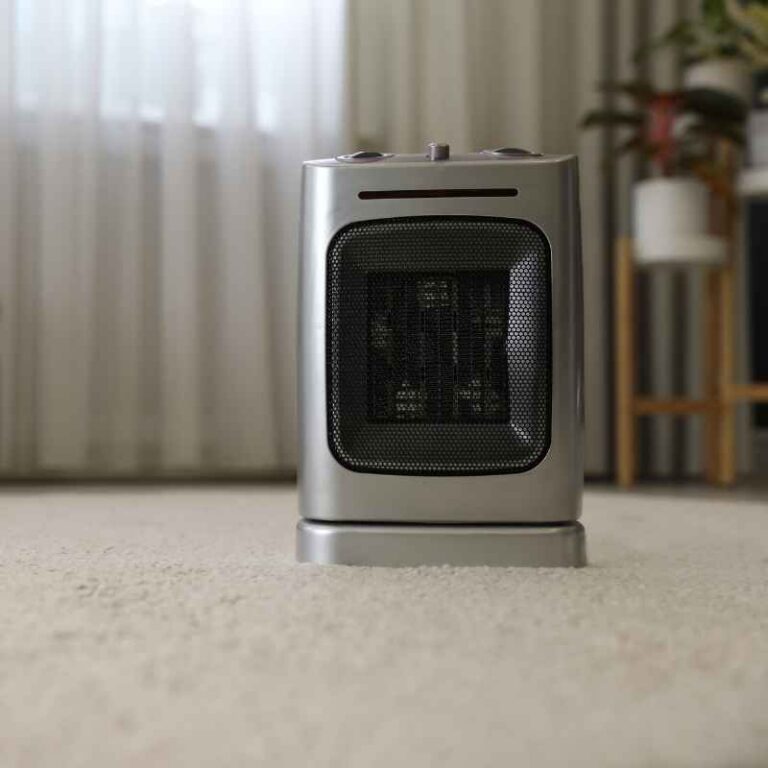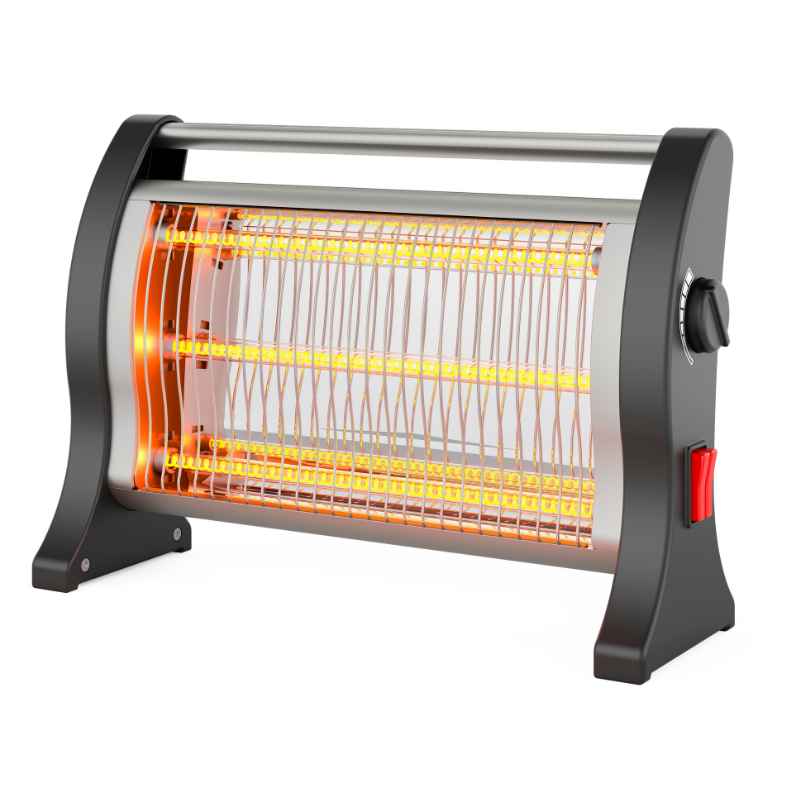
How Much Does It Cost To Run An Infrared Heater Daily?
You’ve probably seen them. Those sleek, modern heaters that promise warmth without that dry, stuffy feeling. Infrared heaters are gaining popularity for a good reason.
They warm objects and people directly, not just the air. This can feel great. But then the question pops up: what about the electric bill?
It’s a common worry. You want to stay cozy, but you don’t want a surprise when your bill arrives. Figuring out the daily cost can feel like a puzzle.
Let’s clear that up together.
The daily cost of running an infrared heater depends on its wattage, how many hours it’s on, and your local electricity rate. A typical 1500-watt heater running for 8 hours might cost between $1.50 and $4.00 daily, depending on electricity prices.
Understanding Infrared Heater Costs
Infrared heaters are different from older types. They use radiant heat. Think of the sun.
It warms you directly. These heaters do the same. They send out invisible infrared waves.
These waves heat up surfaces and people in their path. This means they can feel warm much faster. They also don’t dry out the air as much.
That’s a big plus for many people. But like any electric appliance, they use power. The amount of power they use is measured in watts.
The watts are key. A higher wattage means the heater uses more electricity. It also usually means it produces more heat.
So, a 1500-watt heater uses more power than a 750-watt heater. This is the first piece of the cost puzzle. More watts means potentially higher running costs.
But it’s not the only piece. How long you use it matters just as much. Leaving a powerful heater on all day will cost more than using a smaller one for just an hour.
Your local electricity prices are the third big piece. The price you pay per kilowatt-hour (kWh) changes a lot. It depends on where you live.
It also depends on your power company. Some areas have much cheaper electricity than others. Some have higher rates during peak hours.
Understanding these three things will help you figure out the cost. We’ll break them down more.
Why Infrared Heaters Can Be Efficient
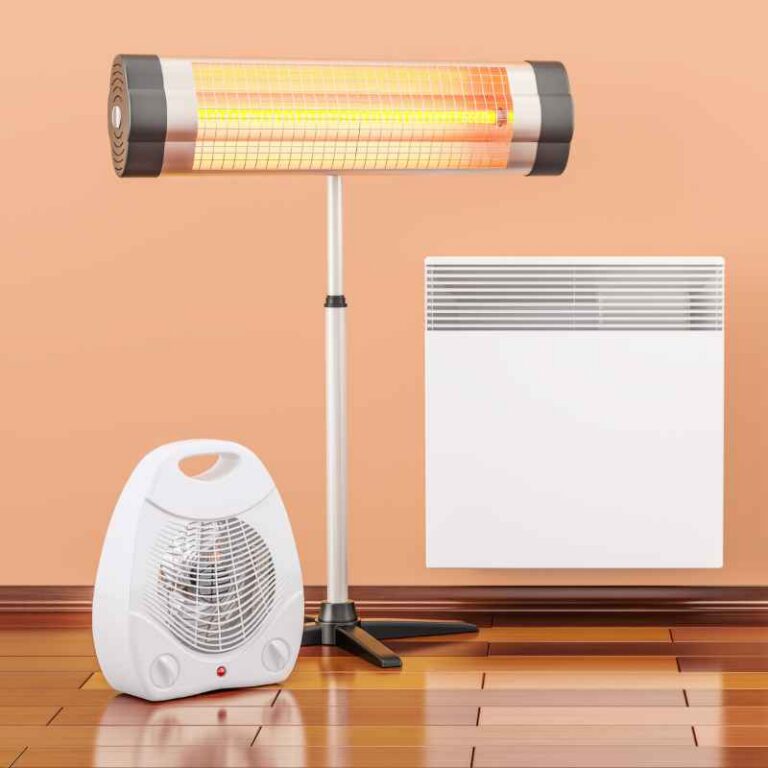
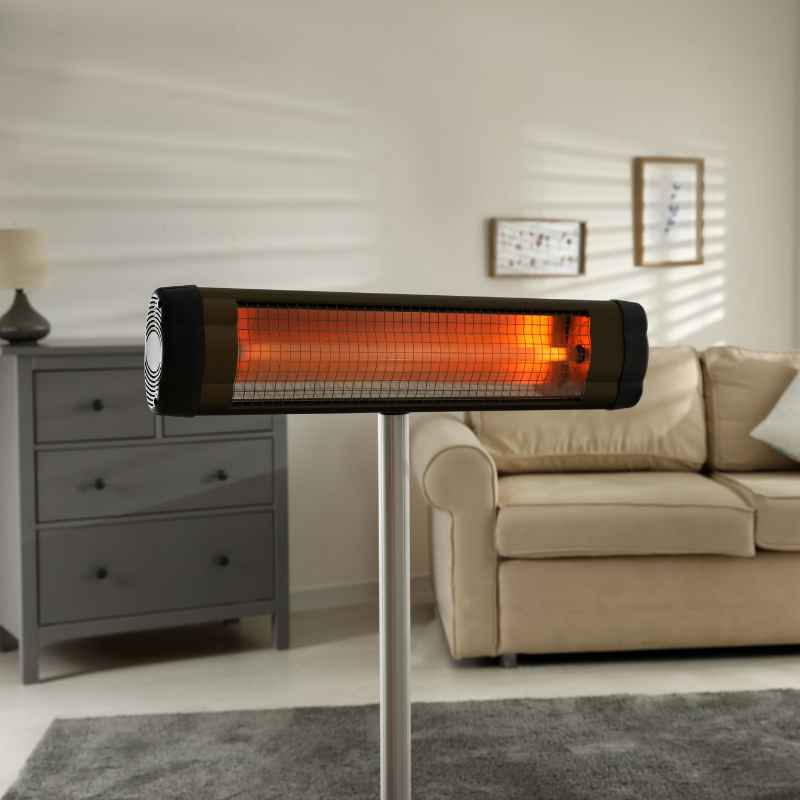
Before we get into the numbers, let’s talk about why infrared heaters are often considered efficient. Unlike convection heaters, which heat the air and then rely on that air to circulate and warm things, infrared heaters send heat directly. This means less energy is wasted heating empty spaces or fighting drafts.
You can often feel the warmth from an infrared heater even if the room air temperature isn’t super high yet.
This direct heating can mean you might feel comfortable at a slightly lower thermostat setting. If you can turn your main thermostat down a few degrees and use an infrared heater for targeted warmth, you could save money overall. It’s like wearing a sweater indoors instead of cranking up the furnace.
The sweater is direct warmth, just like an infrared heater.
Think about your home. Is it well-insulated? Do you have drafts?
These things affect how much heat any heater needs to produce. An infrared heater might be more efficient in a room with some drafts because it heats you directly. The air moving around won’t carry the heat away from you as quickly.
This direct application of heat is a big part of their appeal and potential cost savings.
My Own Infrared Heater Experience
I remember the first time I decided to try an infrared heater. It was a cold October evening, and my home office felt like a freezer. My main heating system just wasn’t cutting it in that room.
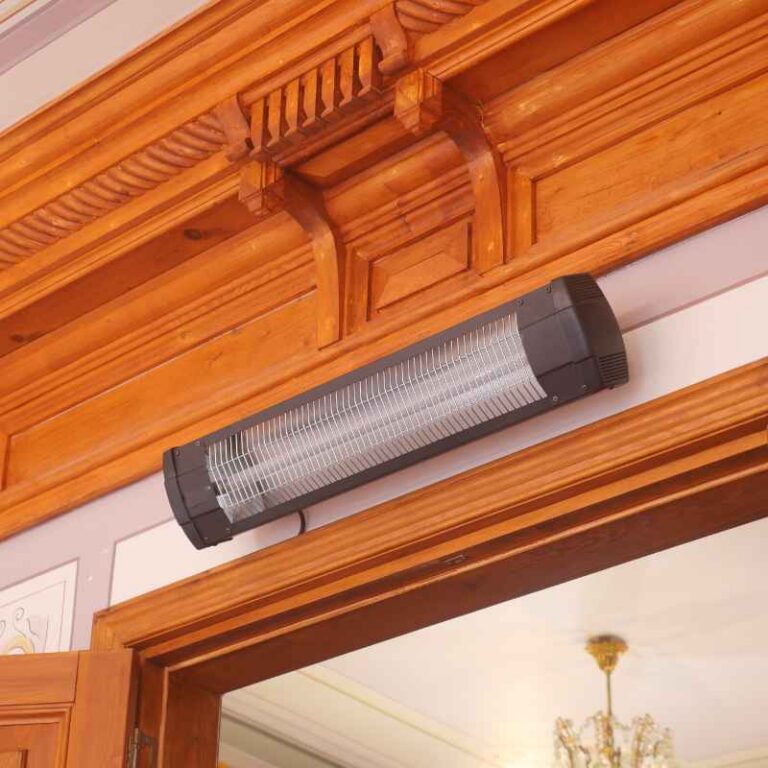
I had heard about these panel-style infrared heaters and decided to give one a shot. It was a sleek, white panel that mounted on the wall. The setup was simple.
The first hour was amazing. I was working late on a project, and the chill just melted away. I could feel the warmth on my skin, and it was so much more comfortable than the dry blast of air from a portable fan heater I used to have.
I felt so relieved, but then a little voice in my head whispered, “How much is this costing you right now?” I had bought it for comfort, but the fear of a sky-high electricity bill lingered.
I checked the heater’s specifications: 400 watts. That seemed pretty low compared to older heaters I’d used. I decided to track it for a few days.
I’d turn it on when I entered the office and off when I left. Most days, it was on for about 4-5 hours. It wasn’t on all the time, just when I needed that extra boost of comfort.
This hands-on experience made me realize that “cost” isn’t just about the heater’s power, but how and when you use it.
Calculating Your Heater’s Wattage
The wattage of your infrared heater is usually listed on a sticker on the back or bottom of the unit. It might also be in the owner’s manual or on the manufacturer’s website. This number tells you how much power the heater uses per hour when it’s running at full power.
For example, if your heater says 1500 watts, it means it uses 1500 watts of electricity every hour it’s switched on. To convert this to kilowatts (kW), which is what your power company uses, you divide by 1000. So, 1500 watts / 1000 = 1.5 kW.
Some infrared heaters have adjustable settings. They might have a low, medium, and high setting. Each setting uses a different amount of wattage.
For instance, a heater might have a 400-watt low setting, an 800-watt medium setting, and a 1500-watt high setting. You’ll want to know which setting you’re using to calculate costs accurately. Always check the label for specific wattage numbers.
Understanding Wattage & Kilowatts
What is Wattage? It’s a measure of power. It tells you how fast the heater uses energy.
What is a Kilowatt (kW)? It’s 1000 watts. Power companies use kilowatts to measure your energy use.
Why it matters: You need kW to calculate cost because you pay per kilowatt-hour (kWh).
How Many Hours Do You Use It?
This is the other huge factor. A heater that uses a lot of watts but is only on for a short time might cost less than a lower-wattage heater that runs all day. You need to be honest with yourself about your usage habits.
Are you using it for a few hours in the evening? Or is it on during the day while you’re home?
Let’s think about common scenarios. Many people use infrared heaters for supplemental heat. This means they use it in a specific room where it’s colder.
They might turn it on when they enter that room and turn it off when they leave. This is called zone heating. Zone heating is often more efficient than trying to heat the whole house.
For example, if you use your heater from 6 PM to 10 PM each night, that’s 4 hours. If you use it from 8 AM to 5 PM while you work from home, that’s 9 hours. The total hours add up quickly.
Keeping a log of when you turn it on and off for a few days can give you a really accurate picture. It’s easy to overestimate or underestimate your actual usage.
Usage Scenarios
Scenario 1: Evening Comfort
- Heater: 1500 watts
- Hours: 4 hours (6 PM – 10 PM)
- Usage: Supplemental heat for living room
Scenario 2: Home Office Warmth
- Heater: 750 watts
- Hours: 8 hours (9 AM – 5 PM)
- Usage: Main heat source for a small office
Your Local Electricity Rate is Key
This is where things get a bit more personal. The cost per kilowatt-hour (kWh) varies greatly. You can usually find this information on your monthly electricity bill.
Look for a line that says “Price per kWh,” “Energy Charge,” or something similar.
As a rough guide for the U.S., average electricity rates can range from about $0.10 to $0.25 per kWh. However, some states have much higher rates. For instance, Hawaii often has the highest rates, sometimes exceeding $0.35 per kWh.
Other states, like those in the Pacific Northwest, might have rates closer to $0.12 per kWh.
So, if your electricity costs $0.15 per kWh, a 1500-watt (1.5 kW) heater running for one hour would cost: 1.5 kW 1 hour $0.15/kWh = $0.225. That’s about 22.5 cents for one hour.
If you live in an area where electricity is $0.25 per kWh, that same heater running for one hour would cost: 1.5 kW 1 hour $0.25/kWh = $0.375. That’s about 37.5 cents for one hour. See how much of a difference it makes?
Always check your bill for your exact rate.
Quick Rate Examples
Example A: Low Rate ($0.12/kWh)
1500-watt heater for 1 hour: 1.5 kW * $0.12 = $0.18
Example B: Average Rate ($0.17/kWh)
1500-watt heater for 1 hour: 1.5 kW * $0.17 = $0.255
Example C: High Rate ($0.28/kWh)
1500-watt heater for 1 hour: 1.5 kW * $0.28 = $0.42
Putting It All Together: The Daily Cost Calculation
Now, let’s combine everything to estimate your daily cost. The formula is simple:
Daily Cost = (Wattage / 1000) Hours Used Cost Per kWh
Let’s use our example: a 1500-watt infrared heater used for 8 hours a day in a home with an electricity rate of $0.17 per kWh.
First, convert watts to kilowatts: 1500 watts / 1000 = 1.5 kW.
Next, plug it into the formula:
Daily Cost = 1.5 kW 8 hours $0.17/kWh
Daily Cost = 12 kWh * $0.17/kWh
Daily Cost = $2.04
So, in this example, the heater would cost about $2.04 per day to run.
Let’s try another example. A smaller 750-watt heater used for 6 hours a day in a home with an electricity rate of $0.22 per kWh.
Convert watts to kilowatts: 750 watts / 1000 = 0.75 kW.
Daily Cost = 0.75 kW 6 hours $0.22/kWh
Daily Cost = 4.5 kWh * $0.22/kWh
Daily Cost = $0.99
This smaller heater costs less than a dollar a day. These calculations give you a clear picture. It’s not just a guess anymore.
Cost Calculation Example Table
| Heater Wattage | Daily Hours Used | Electricity Rate ($/kWh) | Daily Cost ($) |
|---|---|---|---|
| 1500 W (1.5 kW) | 6 | 0.14 | 1.26 |
| 1000 W (1.0 kW) | 10 | 0.19 | 1.90 |
| 750 W (0.75 kW) | 4 | 0.16 | 0.48 |
| 1500 W (1.5 kW) | 8 | 0.25 | 3.00 |
Factors That Affect Your Actual Bill
The calculations above give you a good estimate. But real life can add more layers. Several things can influence the actual cost you see on your bill.
Thermostat Settings: Some infrared heaters have built-in thermostats. These help regulate the temperature. However, how you set them matters.
Setting it too high means it will run more often. Setting it just right for comfort can save energy.
Room Insulation: A poorly insulated room will lose heat faster. This means the heater will need to run more often to maintain the desired temperature. Upgrading insulation or sealing drafts can significantly reduce heating costs.
Outside Temperature: On very cold days, your heater will likely need to work harder and run longer than on milder days. The outside temperature is a direct influence on how much heating your home needs.
Home Size and Layout: The size of the room you’re heating and its location within your home can matter. A room on a north-facing side might stay colder. A large, open-plan area will require more heat than a small, enclosed room.
Use of Other Heating Systems: If you’re using the infrared heater as supplemental heat, your main heating system might still be running. This means the total energy use for heating your home will be higher. The goal is often to use the infrared heater so you can turn down the main system.
Electricity Plan Details: Some utility companies have time-of-use rates. This means electricity costs more during peak hours (like late afternoon) and less during off-peak hours (like overnight). If you run your heater during peak hours, your costs will be higher.
When is an Infrared Heater Cost-Effective?
Infrared heaters shine when used for specific purposes. They are often cost-effective for:
- Zone Heating: Heating just the room you are in. Instead of heating your whole house, you only heat the space where you spend your time. This is usually much cheaper.
- Supplemental Heat: Adding a little extra warmth to a room that feels drafty or cooler than the rest of the house.
- Spot Heating: Warming a specific area, like a workbench in a garage or a seating area in a large room.
- Quick Warm-up: When you need to warm up a space quickly. Infrared heat is felt almost instantly.
- Maintaining a Comfortable Temperature in Specific Areas: For rooms like basements, garages, or sunrooms that might not be heated by your central system.
They are less cost-effective if you try to use them as the sole heat source for a very large, poorly insulated home. In such cases, a central heating system might be more efficient overall, even if it feels less direct.
Cost-Effective Use Cases
Use for:
- Targeted Warmth: Heat only the spot you need.
- Drafty Rooms: Combat cold spots directly.
- Quick Comfort: Feel warm right away.
- Reducing Central Heat Use: Lower your main thermostat.
Less Cost-Effective for:
- Whole House Heating: In large, open spaces.
- Very Poorly Insulated Homes: Heat will escape too fast.
- Constant Operation: If left on 24/7 in unused areas.
Real-World Scenario: The Home Office Warrior
Let’s look at Sarah. She works from home in her home office. It’s a converted spare bedroom.
The room faces north and always feels colder than the rest of the house. Her main furnace struggles to keep it truly comfortable, and the air feels dry when it finally gets warm.
Sarah got a 750-watt infrared panel heater. It mounts on the wall and is quiet. She uses it from 8 AM to 5 PM, Monday to Friday, the hours she’s working.
That’s 9 hours a day, 5 days a week.
Her electricity rate is $0.18 per kWh.
First, convert watts to kW: 750 watts / 1000 = 0.75 kW.
Daily Cost = 0.75 kW 9 hours $0.18/kWh
Daily Cost = 6.75 kWh * $0.18/kWh
Daily Cost = $1.215
So, Sarah’s office heater costs her about $1.22 per day when she uses it. Over a 5-day work week, that’s $6.10. If she uses it year-round for heating (say, 6 months), that’s about $158.60 for the year just for her office comfort.
She says it’s totally worth it. She can keep her main thermostat 2 degrees lower now and feels much more comfortable. The dry air is gone.
The quiet operation is a huge plus. For her, the cost is a small price to pay for her daily well-being and productivity.
What This Means For You: Making Informed Choices
Understanding the cost of running an infrared heater isn’t about finding the cheapest option possible. It’s about making informed choices that fit your needs and budget. Here’s what you should consider:
- Your Goal: Are you trying to heat a whole room? Or just take the chill off your feet while you watch TV? Your goal will determine the size and wattage you need, and how long you’ll use it.
- Your Home’s Needs: Is your home well-insulated? Are there drafty windows? These factors will affect how hard your heater has to work.
- Your Electricity Bill: Know your exact rate per kWh. This is non-negotiable for accurate calculation.
- Your Usage Habits: Be realistic about how many hours per day you’ll actually use the heater.
If you’re looking to supplement your main heat, or warm a small area, an infrared heater can be quite cost-effective. The direct heat means you feel warmer faster, potentially allowing you to use less overall energy. But if you plan to run a high-wattage unit all day, every day, in a large, uninsulated space, expect it to contribute significantly to your electricity bill.
Personal Check-In: Are You on Track?
Ask Yourself:
1. What is my heater’s wattage? (Check the label!)
2. How many hours a day will I really use it? (Be honest!)
3. What is my exact electricity rate ($/kWh)? (Look at your bill!)
4. Is my usage for comfort or necessity? (This helps gauge “worth it.”)
Quick Tips for Managing Heater Costs
Here are some simple ways to keep your infrared heater costs in check:
- Use a Timer: Many infrared heaters have timers. Set them to turn off automatically when you don’t need them.
- Zone Heating is Key: Only heat the rooms you are currently using. Close doors to unused rooms.
- Lower the Thermostat: If you’re using an infrared heater for comfort, try turning down your main thermostat a degree or two.
- Seal Drafts: Check windows and doors for air leaks. Use weatherstripping or draft stoppers.
- Maintain Your Heater: Keep the unit clean. Dust can reduce efficiency.
- Consider a Smart Plug: For heaters without built-in timers, a smart plug can let you schedule on/off times from your phone.
Frequently Asked Questions
How much electricity does a 1500-watt infrared heater use per hour?
A 1500-watt infrared heater uses 1.5 kilowatt-hours (kWh) of electricity per hour when running at full power. This is calculated by dividing the wattage (1500) by 1000.
Can an infrared heater significantly increase my electricity bill?
Yes, it can increase your bill, but the amount depends heavily on its wattage, how many hours you use it, and your local electricity rates. Used for zone heating or supplemental warmth, the increase is often manageable. If used as the primary heat source for a large, uninsulated home, the increase could be substantial.
What is the average cost to run an infrared heater for a day?
The average daily cost can range from about $0.50 to $4.00. This depends on a 1500-watt heater running for 8 hours in an area with an average electricity rate of $0.17/kWh ($2.04/day). Lower wattage, shorter use, or cheaper electricity rates will result in lower daily costs.
Are infrared heaters more efficient than space heaters?
Infrared heaters are often more efficient for direct, personal warmth because they heat objects and people directly, not just the air. This can make you feel warm faster and allow for lower overall room temperatures, potentially saving energy compared to convection space heaters that rely on heating the air.
How do I find my electricity rate per kWh?
Your electricity rate per kilowatt-hour (kWh) is listed on your monthly electricity bill from your utility provider. Look for terms like “Price per kWh,” “Energy Charge,” or “Rate.”
Can I use an infrared heater in my bedroom at night?
Yes, many people use infrared heaters in bedrooms for comfort. Ensure the heater is stable, has safety features like tip-over protection, and is not placed too close to bedding or curtains. Always follow the manufacturer’s safety guidelines for placement and operation.
Final Thoughts on Heater Costs
Figuring out the daily cost of an infrared heater is straightforward once you have the right numbers. Wattage, usage hours, and your local electricity rate are the key ingredients. By understanding these, you can make smart choices about using your heater for maximum comfort and minimum surprise on your bill.
Enjoy the warmth!
Sponsored / affiliate links. As an Amazon Associate I earn from qualifying purchases. I may earn additional commission from eligible campaigns.