Why Heat Pumps Are More Efficient Than Resistive Heaters
It’s a question many homeowners wrestle with, especially when utility bills start to climb or a new heating system is on the horizon. You’ve heard about heat pumps, and you know they’re supposed to be good for the planet and your wallet. But how do they stack up against the old reliable, the trusty electric resistive heater?
You’re looking for clear answers, not jargon. You want to understand the real difference in efficiency. Let’s break it down.
We’ll explore the science in simple terms and look at what this really means for your home and your comfort.
Heat pumps are significantly more efficient than resistive heaters because they move heat rather than generate it. Resistive heaters create heat by passing electricity through a resistor, which wastes a lot of energy. Heat pumps use electricity to transfer existing heat from one place to another, using much less energy overall. This makes them a greener and more cost-effective heating and cooling solution.
How Heat Pumps Work (The Smart Way to Heat)
Think of a heat pump like a refrigerator, but in reverse. A refrigerator takes heat from inside your food cabinet and pumps it outside your kitchen. This makes the inside cold.
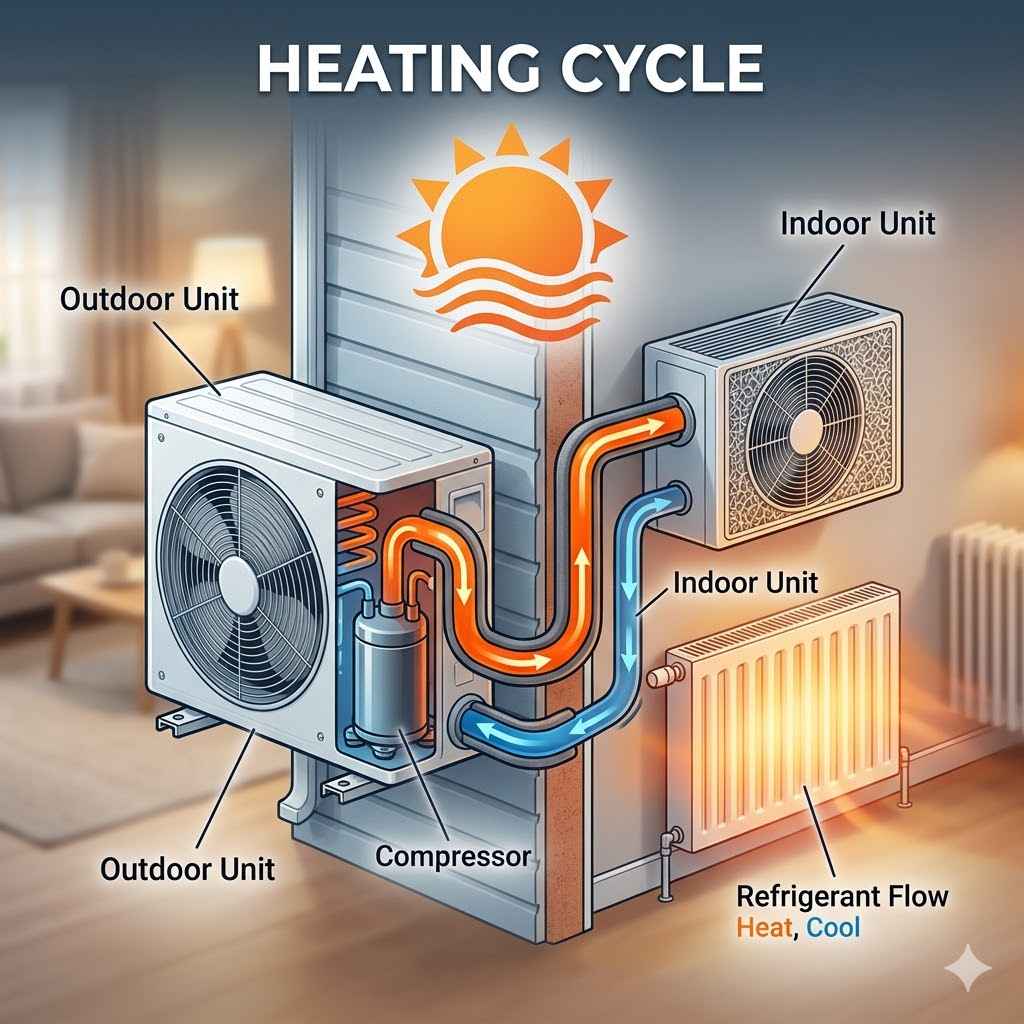
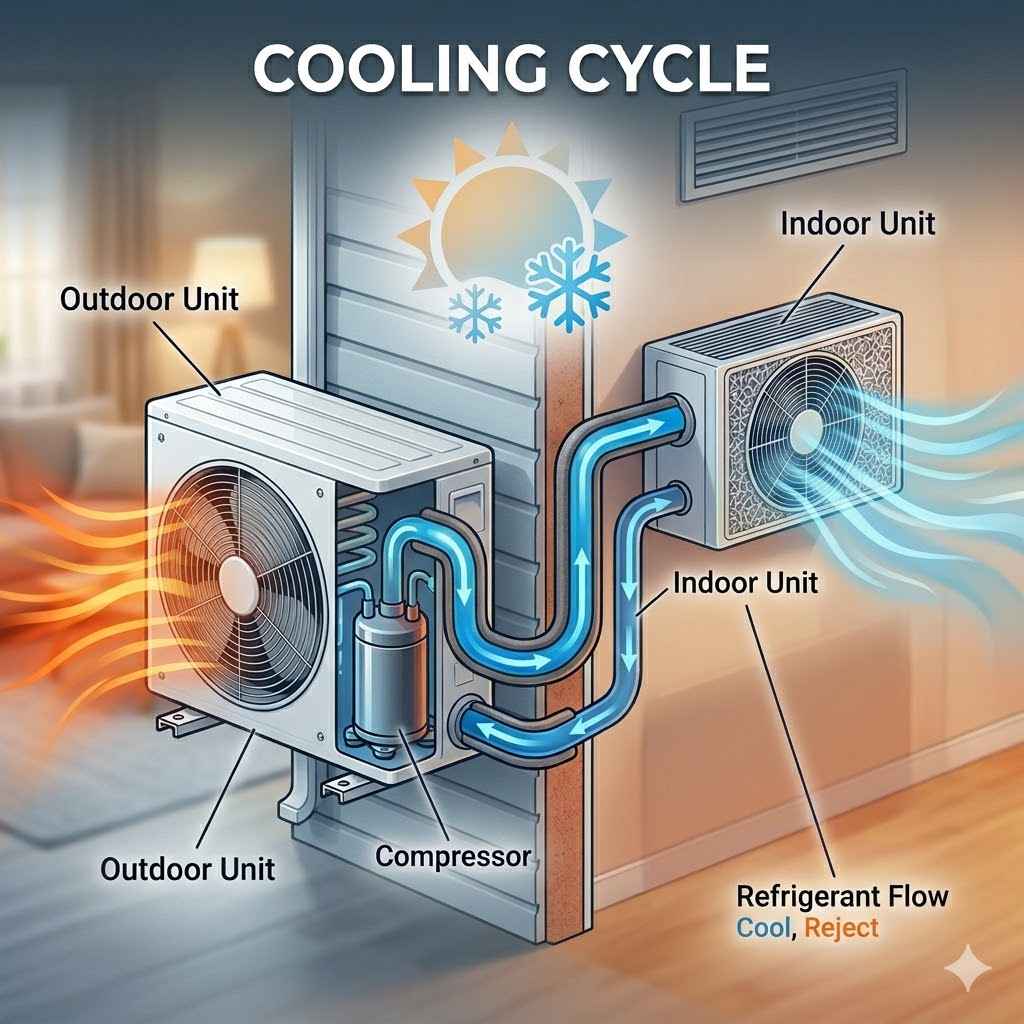
A heat pump does the opposite for your home. In winter, it takes heat from the cold outside air or the ground. Then, it moves that heat inside your home to warm it up.
It uses a special fluid, called a refrigerant, to do this job. This fluid grabs heat from one place and releases it in another.
In the summer, the heat pump flips its role. It grabs heat from inside your home. Then, it pumps that heat outside.
This cools your home down. The magic is in how it moves heat. It doesn’t create heat from scratch using a lot of electricity.
It just relocates heat that’s already there. This is why they are so much more efficient. They use electricity mainly to power a compressor and fans.
These parts help the refrigerant move. They don’t use electricity to directly make heat.
The Science Behind Resistive Heating (The Simple, But Costly Way)
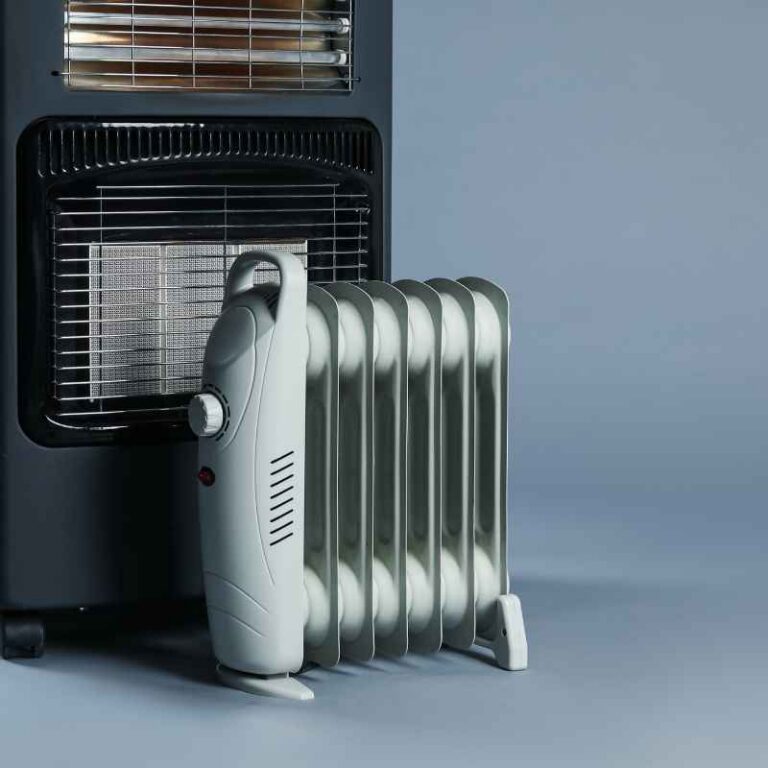
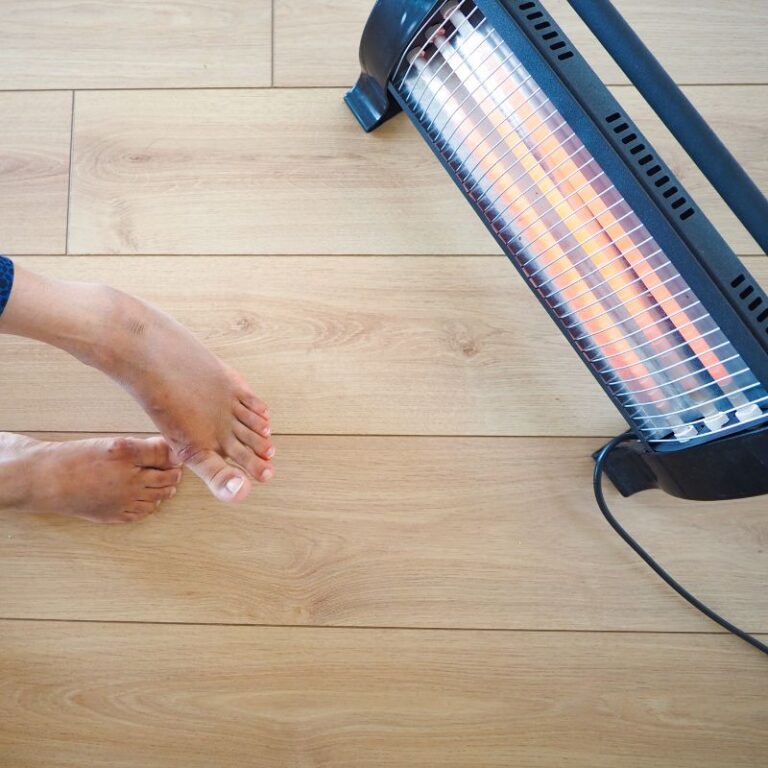
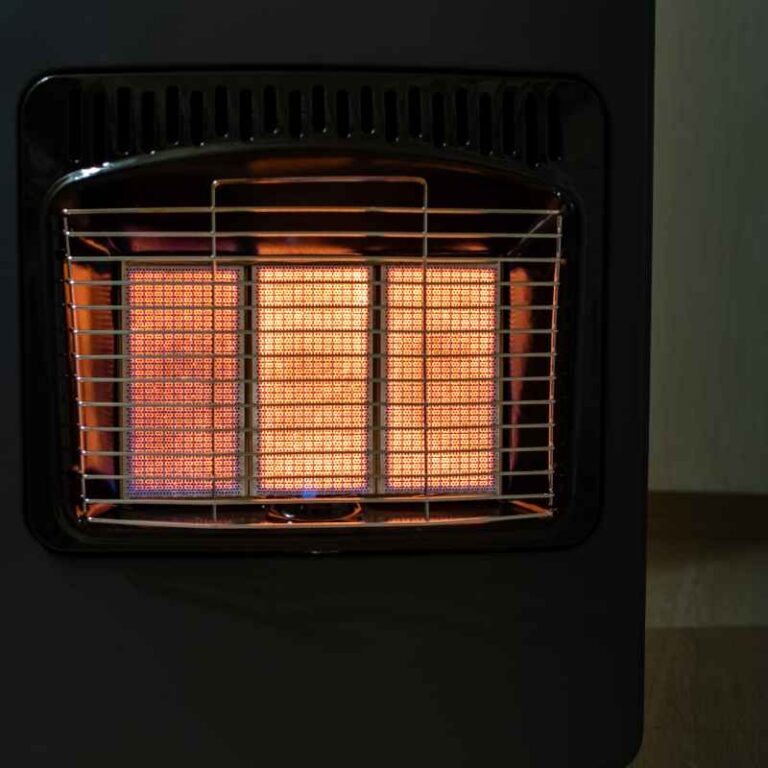
Resistive heaters are the straightforward ones. You probably have them in electric baseboard heaters or in the heating element of some ovens. They work like a toaster.
Electricity flows through a wire that has a lot of resistance. This resistance makes the wire get very hot. That heat then warms up the air around it.
For every bit of electricity you put into a resistive heater, you get one bit of heat out. It’s a one-to-one ratio. This is often called 100% efficiency, but it’s a bit of a trick.
While it sounds good, it means you’re using a lot of power to make heat. There’s no “moving heat” trick here. It’s all about converting electrical energy directly into thermal energy.
This direct conversion uses a lot of electricity. Think about a light bulb. It uses electricity to make light, but it also gets hot.
That heat is wasted light energy. Resistive heaters are similar. They turn electricity into heat, but it’s a very direct and energy-hungry process.
It’s like burning expensive fuel inefficiently.
Heat Pump vs. Resistive Heater: A Quick Look
Heat Pumps:
- Move heat. They use electricity to transfer heat from outdoors to indoors (or vice versa).
- Very efficient. For every unit of electricity used, they can deliver 2 to 4 units of heat.
- Work in many climates. Modern ones handle cold temperatures well.
- Provide cooling. They also act as air conditioners.
Resistive Heaters:
- Generate heat. They convert electricity directly into heat.
- Less efficient. They deliver one unit of heat for every unit of electricity used.
- Simple and reliable. They work even in extremely cold weather.
- Only provide heat. They do not cool.
Understanding Energy Transfer: The Core Difference
The biggest difference is in how they use energy. Resistive heaters are like a campfire. You put wood in, and you get heat.
You can’t get more heat out than the wood you put in. Heat pumps are more like a water pump. You use a little electricity to move a lot of water.
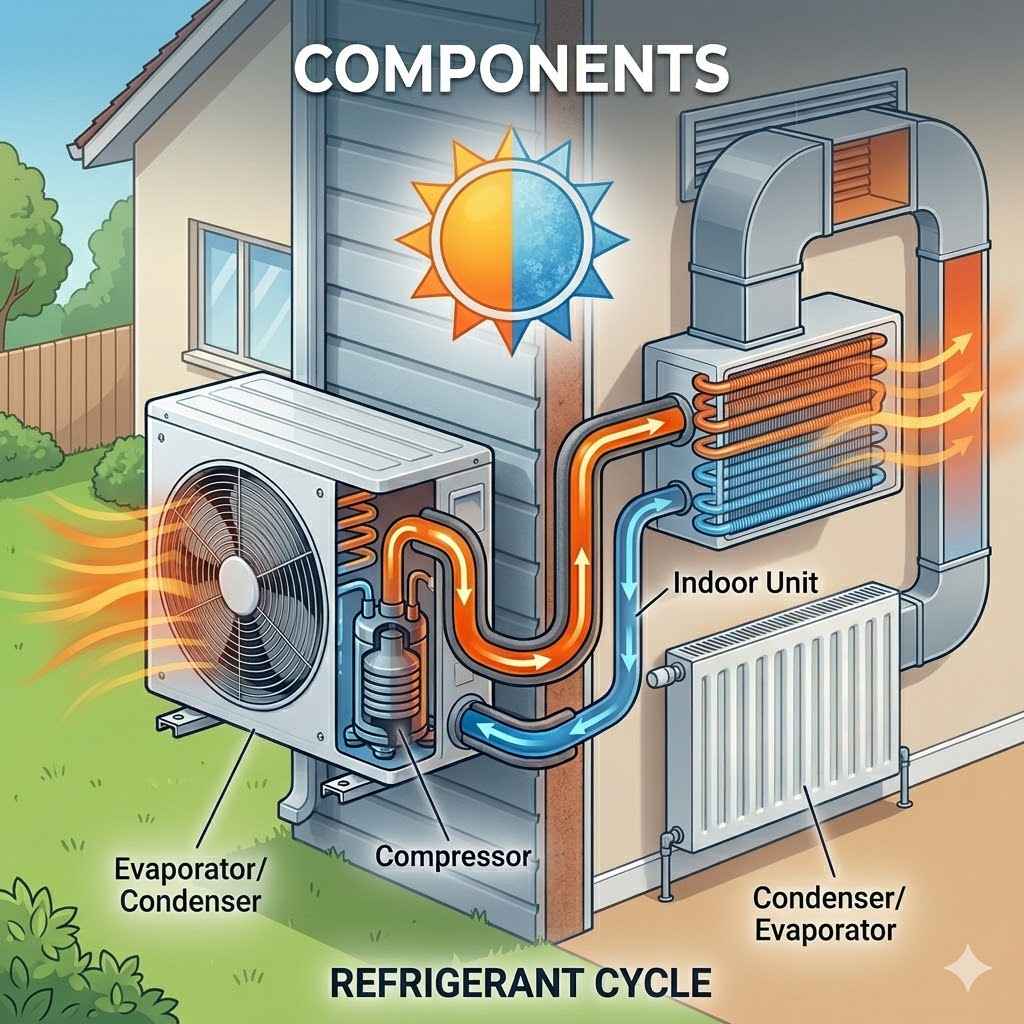
They don’t burn anything or directly convert a lot of electricity into heat. Instead, they use a cycle of evaporation and condensation with their refrigerant.
The refrigerant absorbs heat from a cooler source (like outside air). It then travels to a warmer area (inside your home). There, it releases that heat.
A compressor makes this happen by increasing the pressure and temperature of the refrigerant. This cycle uses electricity, but it’s a smaller amount compared to the heat it delivers. So, while a resistive heater is 100% efficient (1 unit of electricity = 1 unit of heat), a heat pump can be 200-400% efficient (1 unit of electricity = 2-4 units of heat).
Real-World Experience: My Own Heat Pump Journey
I remember when we first bought our house. It had these old electric baseboard heaters. They worked, sure, but our heating bills were astronomical.
Every time winter hit, our budget felt the pinch. I’d look at the thermostat and see it humming away, and I knew I was just watching money turn into warm air, but very expensively. It felt like a constant battle against the cold that was costing us a fortune.
Then, we decided to make the switch to a heat pump. Honestly, I was a bit nervous. I’d heard they didn’t work well in really cold weather.
But the installer assured us that modern systems are much better. The first winter with the heat pump was a revelation. Our heating bills dropped dramatically.
The house stayed consistently warm, not just blasting heat for a bit and then going cold. It felt like a smarter, more gentle way to heat. I remember feeling a sense of relief every time I opened the utility bill.
It was a tangible win.
Heat Pump Efficiency Explained (The Analogy)
Scenario: Heating your home in winter.
Resistive Heater: Imagine you have a bucket of coal. You burn the coal (use electricity) to make heat. For every lump of coal you burn, you get a certain amount of heat.
You can’t get more heat than the coal you use.
Heat Pump: Imagine you have a special device that uses a little bit of electricity to move a big pile of warm rocks from outside into your house. You use a small amount of energy (electricity) to move a much larger amount of heat (the warmth from the rocks).
Why Heat Pumps are Your Friend in Different Climates
For a long time, people thought heat pumps were only good for mild climates. This was because older models struggled when the outside temperature dropped really low. If it was below freezing, there wasn’t much heat to grab from the air.
This meant they often needed a backup heat source, usually resistive heaters, to keep the house warm. This backup would then use a lot of electricity.
But technology has come a long way. New “cold climate” heat pumps are designed to work efficiently even when it’s very cold outside, sometimes down to -13°F (-25°C) or even colder. They use advanced compressors and refrigerants.
These allow them to extract heat from the air much more effectively at low temperatures. So, you can often rely on a heat pump as your primary heating source in many parts of the U.S., not just in the south.
What “Efficiency” Really Means for Your Home
When we talk about efficiency, it’s about getting the most comfort for the least amount of energy used. Resistive heaters are like using a gas guzzler for a short trip. You’re burning a lot of fuel (electricity) for a small return.
Heat pumps are like a hybrid car. They use energy much more wisely. For every dollar you spend on electricity, a heat pump gives you more warmth than a resistive heater.
This means lower monthly energy bills. It also means a smaller carbon footprint. Since heat pumps use less electricity, they rely less on power plants that burn fossil fuels.
They are a key technology for reducing home energy consumption and helping the environment. Plus, most heat pumps also provide air conditioning. This means one system can handle both your heating and cooling needs, simplifying your home’s climate control.
Common Heat Pump Types Explained
Air Source Heat Pumps:
- Most common type.
- Extract heat from the outside air.
- Can also provide cooling.
Geothermal Heat Pumps:
- Extract heat from the earth using underground pipes.
- Very stable temperatures underground mean high efficiency year-round.
- Higher upfront cost but very low running costs.
Water Source Heat Pumps:
- Use a nearby body of water (pond, lake) as the heat source/sink.
- Less common for individual homes.
The Energy Factor: Looking at Numbers
To understand efficiency better, we use metrics like SEER (Seasonal Energy Efficiency Ratio) for cooling and HSPF (Heating Seasonal Performance Factor) for heating. These scores help compare different models. For resistive heaters, the conversion is always 1:1.
This means they have an efficiency rating of 100% or a COP (Coefficient of Performance) of 1. They deliver 1 unit of heat for every 1 unit of electricity.
Heat pumps, however, have COPs that can range from 2 to over 4. This means for every unit of electricity they consume, they can deliver 2 to 4 units of heat. For example, a heat pump with a COP of 3 is three times more efficient than a resistive heater.
This difference is huge over a heating season. The higher the COP, the less electricity you use, and the lower your bills will be. Look for Energy Star certified models when you’re shopping.
When Resistive Heat Might Still Be Needed (But Not as Primary)
Even with advanced heat pumps, there are still some situations where resistive heat has a role. As mentioned, older heat pump models might need backup heat when it gets extremely cold. This is often built into the system.
The heat pump runs first, and if it can’t keep up, the resistive elements kick in. However, the goal with modern systems is to minimize the use of this backup heat, as it’s the most expensive way to heat your home.
Another scenario is for quick bursts of heat in small spaces. Think of a small bathroom heater. For a room that’s only used for short periods, a small, portable resistive heater might be convenient.
However, for whole-house heating, it’s almost always more efficient and cost-effective to use a heat pump. The upfront cost of a heat pump is higher, but the long-term savings on energy bills make it a smart investment.
Cost Comparison Snapshot
Assumption: Heating a typical home for one hour.
Resistive Heater: Uses 1 unit of electricity. Delivers 1 unit of heat. Cost = 1x electricity price.
Heat Pump (COP 3): Uses 1 unit of electricity. Delivers 3 units of heat. Cost = 1/3 x electricity price for the same amount of heat.
Real-world impact: Over a year, this can save hundreds or even thousands of dollars.
Understanding Your Home’s Needs
To figure out the best system for your home, you need to consider a few things. First, where do you live? What are your typical winter and summer temperatures?
How well is your home insulated? A well-insulated home will make any heating system more efficient. Second, what is your budget?
Heat pumps have a higher upfront cost than resistive heaters, but they pay for themselves over time.
Third, what are your energy costs? If electricity is very expensive in your area, the savings from a heat pump will be even more significant. It’s also worth looking into any rebates or tax credits available for installing energy-efficient systems.
These can help reduce the initial investment. Talking to a qualified HVAC professional is crucial. They can assess your home and recommend the best type and size of heat pump for your specific needs.
Installation and Maintenance Matters
The efficiency of a heat pump also depends on proper installation and regular maintenance. An improperly installed unit might not run as efficiently. It could also break down more often.
This is why it’s so important to choose a reputable installer. They need to understand how to size the unit correctly for your home and ensure all the connections are secure.
Maintenance is also key. Just like a car needs oil changes, a heat pump needs to be checked regularly. This usually involves cleaning the outdoor unit and indoor air handler.
It also means checking the refrigerant levels and electrical connections. These simple steps ensure your heat pump runs at its best and lasts for many years. Most manufacturers recommend annual check-ups.
Regular Heat Pump Maintenance Checklist (DIY & Pro)
DIY Checks (Monthly/Seasonally):
- Clean Air Filters: Change or clean filters regularly (monthly is ideal). Dirty filters block airflow, reducing efficiency.
- Clear Outdoor Unit: Keep the area around the outdoor unit clear of leaves, grass, and debris. Ensure good airflow.
- Inspect for Leaks: Look for any signs of water leaks around the indoor unit.
Professional Checks (Annually):
- System Performance Test: Check refrigerant charge, pressures, and temperatures.
- Electrical Connections: Inspect and tighten electrical connections.
- Motor & Fan Check: Ensure motors are clean and fans are balanced.
- Ductwork Inspection: Check for leaks or damage in ductwork.
What This Means for Your Home Comfort
Beyond just saving money, heat pumps often provide a more consistent level of comfort. Resistive heaters can cycle on and off, leading to temperature swings. A heat pump, especially a variable-speed model, can run more continuously at a lower speed.
This maintains a steady temperature throughout your home. It also means less noise, as the system isn’t constantly starting and stopping at full power.
The air from a heat pump can feel different too. It’s often not as intensely hot as air from a resistive heater. Some people might initially perceive this as “not warm enough.” However, it’s simply a more gentle, steady warmth.
This consistent temperature can feel more comfortable and less drying than the blast of hot air from other systems. It’s a subtle but noticeable difference in how your home feels.
Making the Smart Switch: When to Consider an Upgrade
If your current heating system is old and inefficient, it’s probably costing you more than you think. Replacing an old resistive heating system with a modern heat pump is a significant upgrade. It can lead to substantial savings on your energy bills.
It also reduces your home’s environmental impact. Many homeowners find that the energy savings alone pay for the new system over time.
Consider an upgrade if your current system frequently breaks down, requires expensive repairs, or if you’re simply tired of high energy bills. Incentives like federal tax credits and local utility rebates can make the initial investment much more manageable. It’s a step towards a more sustainable and cost-effective home comfort system.
Think of it as an investment in your home’s future and your comfort.
Frequent Questions About Heat Pump Efficiency
Are heat pumps more expensive to install than resistive heaters?
Yes, heat pumps generally have a higher upfront installation cost compared to simple resistive heating systems like electric baseboard heaters. However, their significantly higher energy efficiency and lower operating costs mean they typically pay for themselves over time through reduced energy bills.
Do heat pumps work in very cold weather?
Modern cold-climate heat pumps are designed to work efficiently even in sub-zero temperatures, often down to -13°F (-25°C) or lower. Older models or those not specifically designed for cold climates may require a supplemental heat source, often resistive heat, when temperatures drop significantly.
How much can I save by switching to a heat pump?
Savings vary widely depending on your climate, current heating system, electricity rates, and how well your home is insulated. However, many homeowners see their heating costs reduced by 30% to 50% or even more after switching to an efficient heat pump system.
Are heat pumps complicated to maintain?
No, heat pumps are not overly complicated to maintain. Regular tasks include changing air filters and keeping the outdoor unit clear of debris. Annual professional check-ups are recommended to ensure optimal performance and longevity, similar to maintaining a car.
Can a heat pump replace my air conditioner?
Yes, a heat pump is essentially a reversible air conditioner. In the summer, it reverses its operation to cool your home by moving heat from inside to outside. So, one heat pump system can handle both your heating and cooling needs.
What is a Coefficient of Performance (COP) for a heat pump?
The COP is a measure of a heat pump’s efficiency. It represents the ratio of heating or cooling provided to the electrical energy consumed. A COP of 3 means the heat pump delivers 3 units of heat for every 1 unit of electricity used, making it much more efficient than resistive heating (which has a COP of 1).
Conclusion: Smarter Heating for Your Home
The choice between a heat pump and a resistive heater is clear when it comes to efficiency. Heat pumps move heat, using a fraction of the electricity resistive heaters need to generate it. This translates to significant savings and a smaller environmental impact.
While resistive heaters are simple, they are energy-hungry. For long-term comfort and cost savings, especially with today’s advanced cold-climate models, heat pumps are the smarter choice for most American homes.
Sponsored / affiliate links. As an Amazon Associate I earn from qualifying purchases. I may earn additional commission from eligible campaigns.