How Much Does a New Furnace Cost to Install?
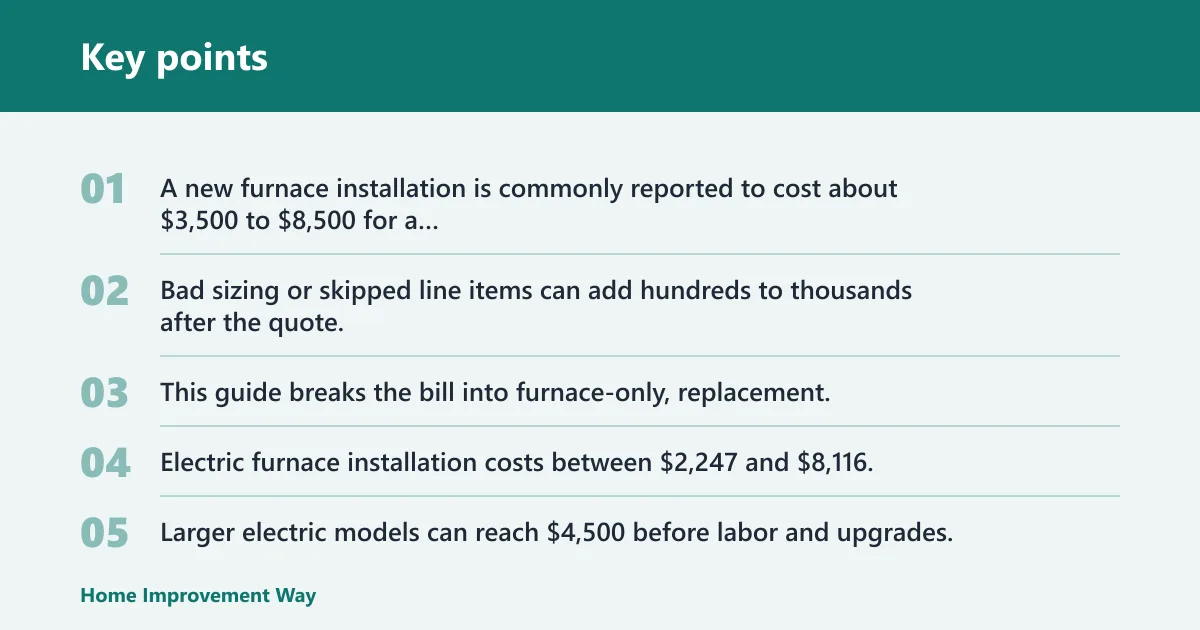
A new furnace installation is commonly reported to cost about $3,500 to $8,500 for a replacement, and about $5,000 to $14,000+ for a full first-time system with ductwork or major venting work. Bad sizing or skipped line items can add hundreds to thousands after the quote. This guide breaks the bill into furnace-only, replacement, and full-system costs so you can budget accurately before you get estimates.
New furnace cost at a glance
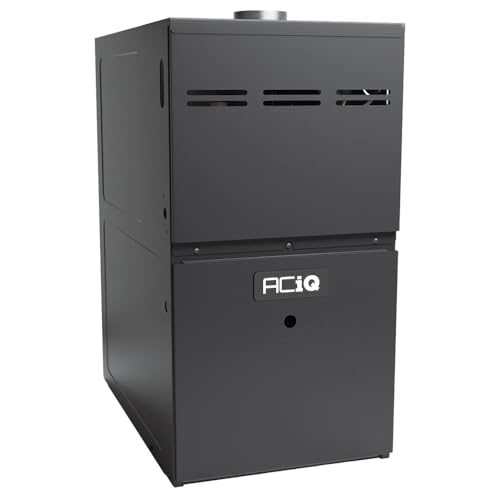
Installed price range by fuel type
Fuel type changes the bill fast. Electric furnace installation costs between $2,247 and $8,116, with HomeAdvisor listing an average of $5,148 and the furnace unit itself ranging from $800 to $2,600. Larger electric models can reach $4,500 before labor and upgrades.
Gas and oil systems usually depend more on venting, fuel connection work, and local code requirements. That is why two quotes for the same home can differ by a few thousand dollars even when the furnace capacity looks similar on paper.
Furnace-only versus full-system pricing
A furnace-only replacement is not the same as a full new install. If the home already has usable ducts, gas or electrical service, and venting that matches the new unit, your quote can stay closer to the replacement price. If ducts need repair, the panel needs an upgrade, or a new vent run is required, the total rises quickly.
What usually drives the low and high ends
Lower bids usually come from a straight swap of a similar-size furnace in a house with working ducts and utility hookups. Higher bids usually involve larger BTU capacity, efficiency changes, duct repair or replacement, a permit, disposal of the old unit, and electrical or gas work.
Furnaces last about 15 to 20 years, so replacement often happens when a system is older and more likely to need more than a simple swap.
Furnace cost worksheet
Use this worksheet as a budget check before you call contractors. The totals are planning ranges, not quotes, but they help you separate the furnace price from the rest of the job.
| Scenario | Equipment | Labor | Ductwork | Permits | Disposal | Thermostat | Electrical or gas upgrades | Low total | Mid total | High total |
|---|---|---|---|---|---|---|---|---|---|---|
| Furnace-only replacement | $800 to $2,600 | $1,800 to $4,000 | $0 to $500 | $200 to $500 | $100 to $300 | $0 to $250 | $0 to $1,800 | $3,500 | $6,000 | $9,450 |
| Furnace with duct repairs | $800 to $2,600 | $2,000 to $4,500 | $500 to $2,000 | $200 to $500 | $100 to $300 | $100 to $250 | $0 to $1,800 | $4,700 | $7,750 | $11,950 |
| Furnace plus AC install | $3,000 to $8,000 | $3,000 to $6,500 | $500 to $2,000 | $200 to $500 | $100 to $300 | $100 to $250 | $500 to $1,800 | $7,400 | $11,000 | $19,350 |
The worksheet shows why a furnace quote can look low at first and then climb after field work starts. Ask contractors to separate equipment, labor, ducts, permits, disposal, thermostat work, and utility upgrades in writing.
Say your 1,600-square-foot home already has sound ducts, a working gas line, and a matching vent path. The quote may stay close to a furnace-only replacement. Now suppose the same home needs a larger return duct and a new thermostat. That added scope can move the job into a higher bracket even though the furnace size stays the same.
How much does a gas furnace cost to install?
A gas furnace install usually costs less than a full first-time system because the home may already have gas service, venting, and ducts in place. The biggest swings come from furnace size, efficiency, labor, venting changes, and whether the contractor must add or modify the gas line.
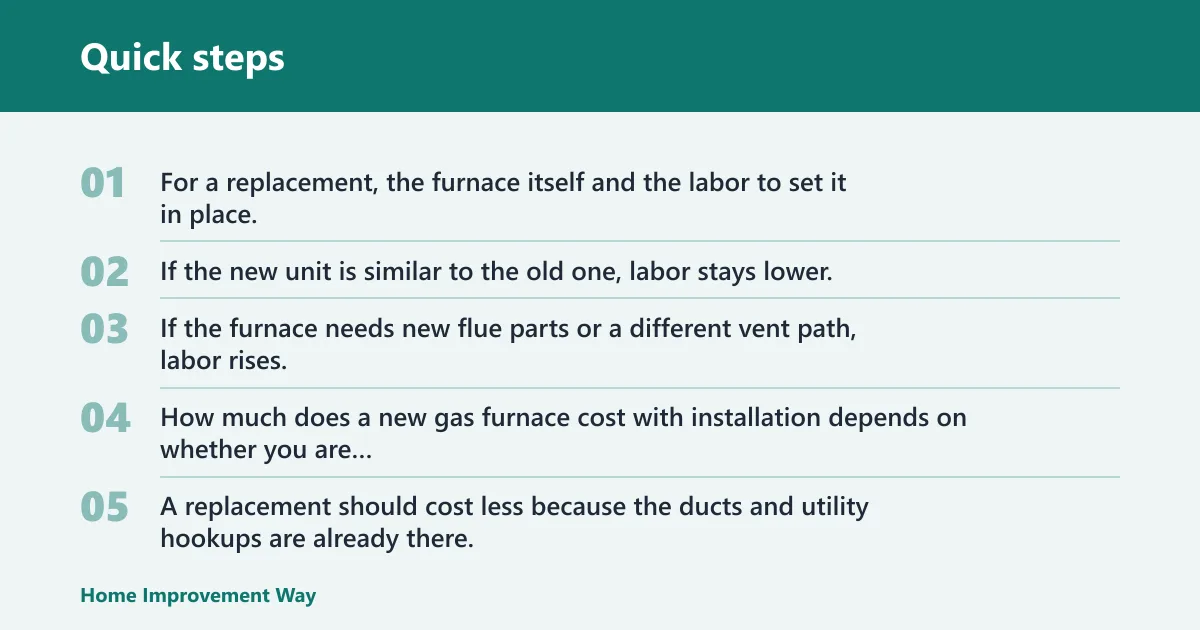
Equipment and labor ranges
For a replacement, the furnace itself and the labor to set it in place, connect the venting, and commission the system drive most of the bill. If the new unit is similar to the old one, labor stays lower. If the furnace needs new flue parts or a different vent path, labor rises.
Replacement cost versus new install cost
How much does a new gas furnace cost with installation depends on whether you are replacing an existing unit or adding heat to a home for the first time. A replacement should cost less because the ducts and utility hookups are already there. A first-time install can cost much more because it may require ductwork, venting, or gas line work.
Gas line, venting, and utility factors
Gas furnace pricing also changes with local fuel access and code requirements. If the existing gas line is undersized, the installer may need to upgrade it. If the venting does not fit the new furnace, the contractor may need new piping or a revised exhaust route, which can add both material and labor cost.
How much does an electric furnace cost to install?
Unit price and labor
Electric furnace pricing is often easier to estimate than fuel-burning systems because there is no gas line or combustion venting to plan around. Even so, labor still matters. The installer must size the unit correctly, connect it safely, and verify that the home’s electrical service can handle the load.
When an electrical panel upgrade is needed
Electrical panel upgrades may cost $500 to $1,800. That extra line item matters when the existing panel cannot support the new furnace or when the home’s service is already close to capacity. If the quote does not mention the panel, ask whether the electrician expects one.
Operating cost tradeoffs
Electric furnaces can be simpler to install than fuel-burning systems, but operating cost still depends on local electricity rates. A higher-efficiency electric unit may help reduce ongoing energy use, yet energy bills continue after install, so the purchase price should not be the only comparison.
How much does a new oil furnace cost installed?
An oil furnace often costs more to set up than a simple gas replacement because the quote may need to include oil-specific venting, service connections, and tank-related work. If the home already has an oil system in place, replacement is easier. A first-time install can be more expensive because the fuel setup is more involved.
Fuel-specific pricing
Oil furnace prices vary with burner setup, tank condition, and local service availability. Contractors may also charge more when the home needs a more specialized combustion adjustment or a new fuel line connection. Ask for the furnace price and the oil-system labor as separate line items.
Tank, venting, and service considerations
Oil systems need clean venting and a tank arrangement that matches the furnace. If the tank is aging, damaged, or poorly located, the total can rise quickly. You should also ask who will service the system after install, since oil equipment needs ongoing maintenance and fuel delivery planning.
Replacement versus first-time install
How much does a new furnace cost to replace is usually lower than first-time installation, and that holds for oil as well. A replacement uses the existing footprint, while a first-time install may need tank placement, vent work, and new supply connections before the furnace can even be started.
What extra costs should you budget for?
What extra costs should I budget for with a furnace install? The usual add-ons are ductwork, permits, disposal, thermostat replacement, and any gas or electrical upgrades. Those items can be minor on a simple swap or large enough to change the quote by several thousand dollars.
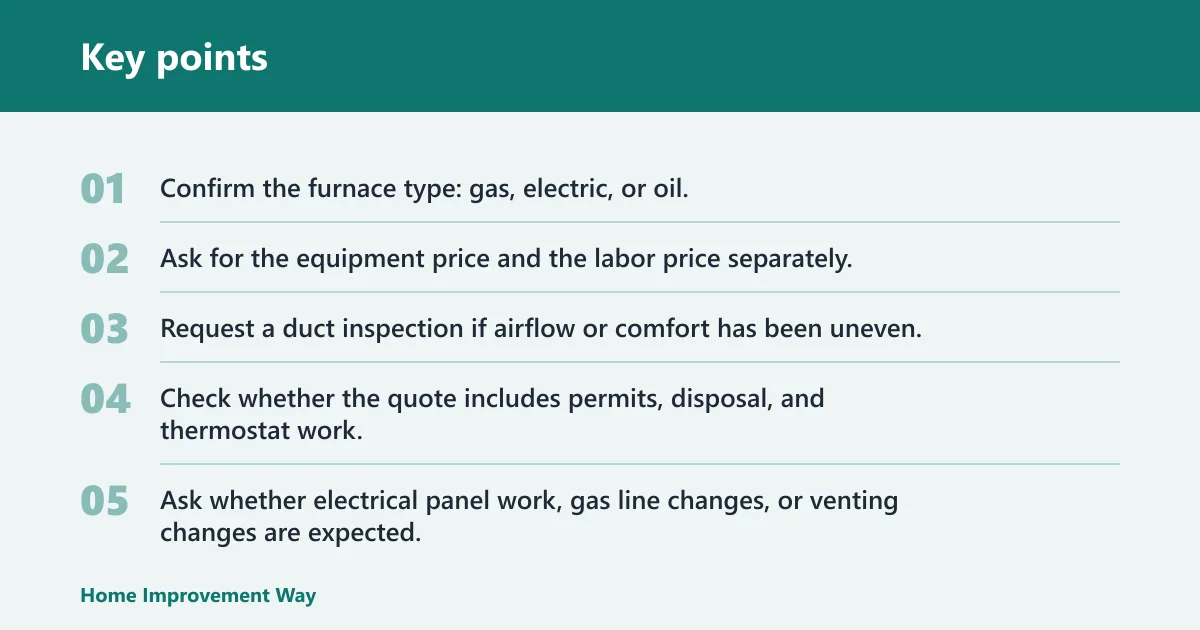
Ductwork repair or replacement
Ductwork replacement runs from $35 to $55 per linear foot, and totals around $500 to $2,000 for an average single-family home. If only a short section is damaged, repair may be enough. If the ducts are leaky, undersized, or poorly routed, replacement is more likely.
Do not assume ducts are fine just because the old furnace ran. A new furnace can expose airflow problems that the old unit masked for years. If the contractor cannot verify supply and return performance, ask for a duct inspection before you sign.
Building permits and disposal
Building permits may cost $200 to $500. They are not optional in many areas, because the work needs to meet code. Disposal is smaller, but it still belongs in the budget because the old furnace has to be removed and hauled away.
Thermostat replacement
A thermostat replacement is optional, but it often makes sense if the old control is incompatible with the new furnace or if the homeowner wants a better match for staging or blower controls. Budget for it separately so the contractor does not bury it inside the labor line.
Electrical or gas upgrades
Electrical panel upgrades may cost $500 to $1,800, and gas line or venting changes can add more. These costs show up most often when the new furnace has different power needs, a different vent path, or a higher BTU rating than the old system.
A common first-timer mistake is budgeting for the furnace unit but forgetting to include labor, ductwork adjustments, and permit fees. The furnace may be the headline item, but labor, vents, and utility work often decide whether the final bill lands near the low end or thousands higher.
- Confirm the furnace type: gas, electric, or oil.
- Ask for the equipment price and the labor price separately.
- Request a duct inspection if airflow or comfort has been uneven.
- Check whether the quote includes permits, disposal, and thermostat work.
- Ask whether electrical panel work, gas line changes, or venting changes are expected.
- Compare the BTU size against the home’s actual heating load, not just square footage.
How much furnace size and BTU affect price
BTU is the furnace capacity number that should match the home’s heating load. Bigger is not automatically better. If the furnace is undersized, it may struggle to heat the home. If it is oversized, it may short-cycle and waste energy, which can wear parts faster and raise bills.
Matching BTU to home size
Contractors use the home’s layout, insulation, windows, climate, and duct design to choose furnace capacity. Square footage matters, but it is only one input. A two-story home with leaky ducts may need a different BTU size than a smaller, tighter house with a simpler floor plan.
Why sizing affects long-term cost
Correct sizing matters because the wrong furnace can cost more to run and may not last as long. A furnace has about a 15 to 20 year lifespan, but poor sizing, airflow problems, or repeated short cycling can shorten that useful life. That can erase any upfront savings from choosing the cheapest quote.
Efficiency and lifespan considerations
Higher efficiency can reduce energy use, but it does not cancel the need to budget for fuel or electricity after install. The right choice is usually the furnace that fits the home, the fuel setup, and the duct system without forcing expensive upgrades.
Frequently asked questions
How much does a new furnace cost to install?
The final number depends on fuel type, capacity, labor, permits, disposal, and whether the home needs utility upgrades.
How much does a new furnace cost without installation?
Without installation, the furnace itself can be far less expensive than the full job. Electric units typically range from $800 to $2,600, and larger electric models can cost up to $4,500. Gas and oil equipment varies by capacity and efficiency, so compare the equipment line separately from labor.
How much does a new gas furnace cost to install?
A gas furnace install usually costs less than a full first-time system if the home already has ducts and a usable gas hookup. The total rises when venting changes, gas line work, or local permit requirements are needed. Always ask for those items as separate lines on the estimate.
How much does a new gas furnace cost to buy and install?
How much does a new gas furnace cost to buy and install depends on whether you are replacing an existing unit or adding heat to a home for the first time. Replacement is usually cheaper. First-time install costs more when the quote includes ductwork, venting, and utility changes.
How much does a new furnace and AC cost installed?
A furnace plus AC bundle costs more than a furnace-only job because you are paying for two major pieces of equipment, plus labor and any shared duct or refrigerant work. If the system needs new ducts or electrical upgrades, the installed total can move well above a simple replacement quote.
What extra costs should I budget for with a furnace install?
Budget for ductwork, permits, disposal, thermostat replacement, and any electrical or gas upgrades. Those items often determine the real final price.
Sponsored / affiliate links. As an Amazon Associate I earn from qualifying purchases. I may earn additional commission from eligible campaigns.